
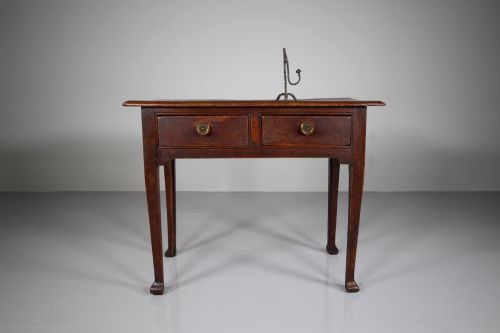
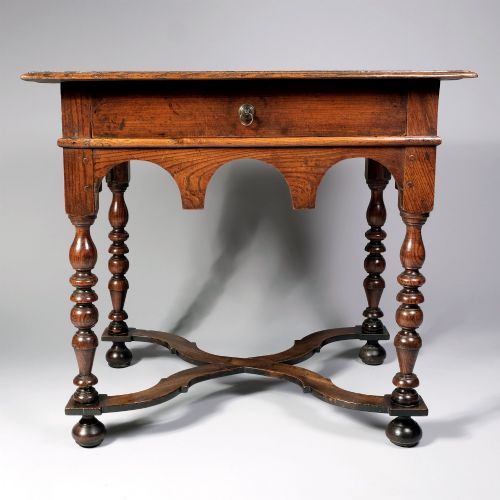
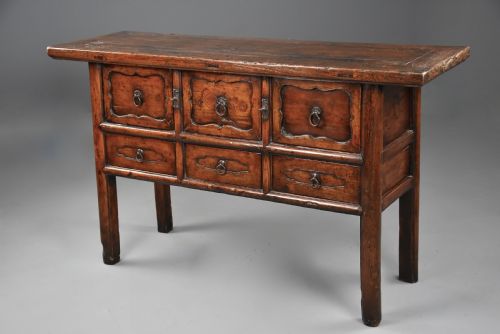
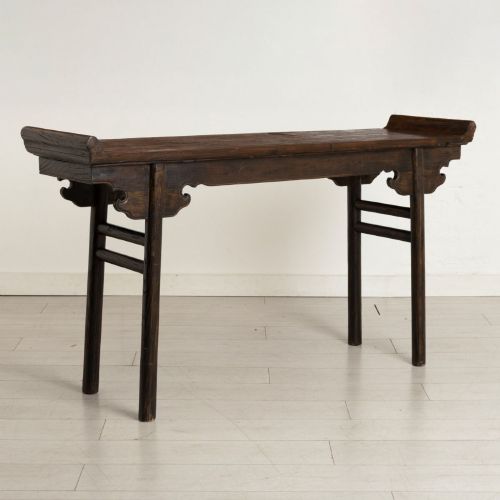


Brown Elm Console Table
A brown elm console table brings rich timber grain and linear utility into a room, offering sturdy surface space shaped by centuries of woodworking tradition.
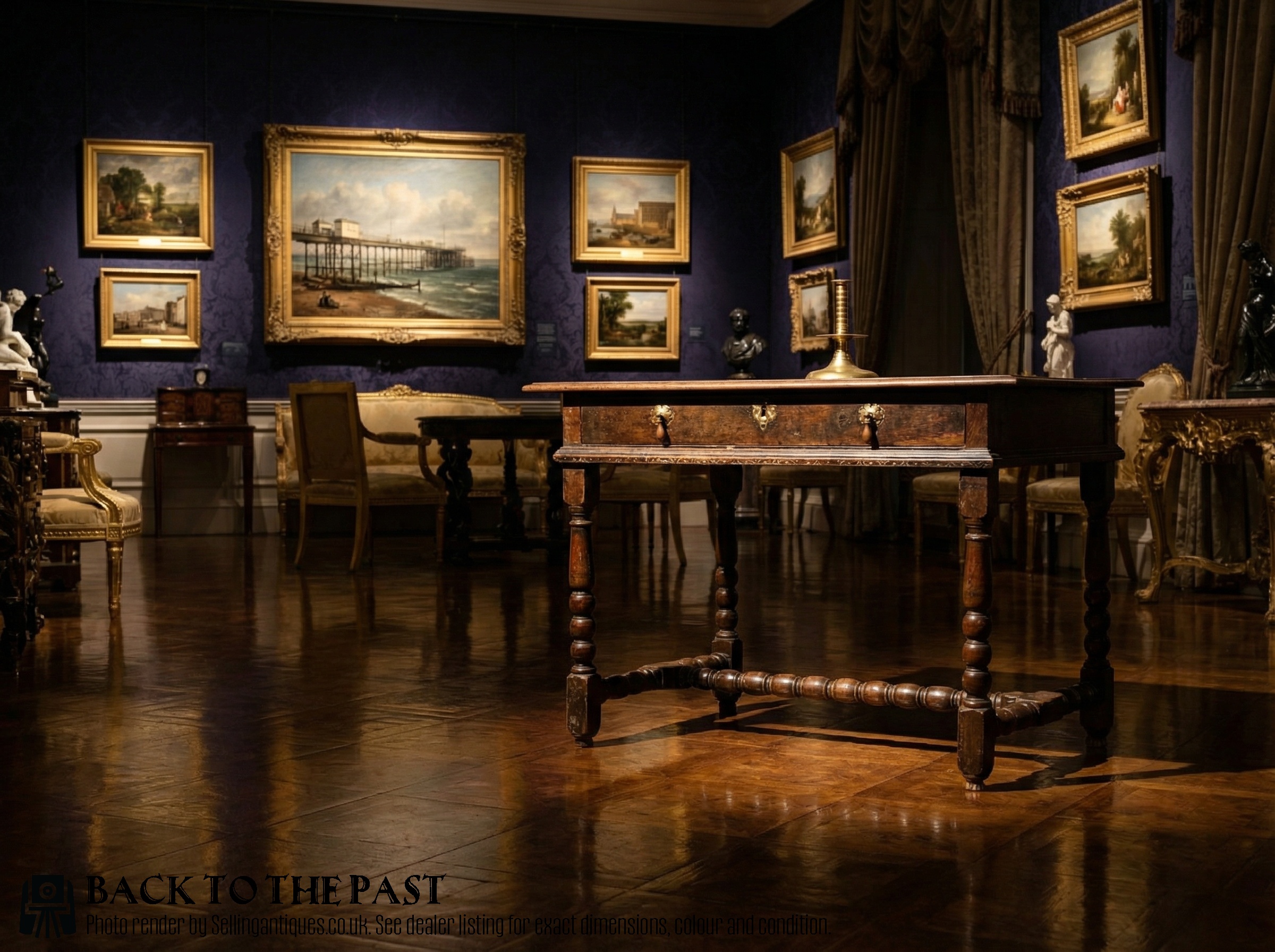
Brown Elm Console Table
When you search for a brown elm console table, you are looking at sturdy side pieces and altar forms spanning centuries of English and Chinese provincial design. These tables range from late seventeenth-century William and Mary examples to nineteenth-century Chinese altar tables and Georgian side tables.
You are most likely to meet pieces built from solid elm, often featuring secondary woods like oak, fruitwood, or hardwood, deployed in domestic settings as side tables, dressers, or writing desks. The forms reflect both English provincial utility and Chinese traditional craftsmanship, marked by plank tops and trestle or cross bases.
How they were made
Makers utilised solid elm timber, frequently paired with oak, fruitwood, or brass accents, selecting woods for their resilience and distinct grain patterns. Surface finishes include natural wax treatments that develop a deep patina over decades of use, alongside occasional lacquer work.
Construction techniques rely on traditional joinery suited to heavy hardwoods, visible in plank-top surfaces, trestle supports, and carved detailing on regional Chinese and English provincial furniture.
Listings span the 17th, 18th, and 19th centuries, incorporating oak, fruitwood, brass, and lacquer alongside primary elm.
What varies in quality
The distinction between ordinary and exceptional pieces lies in the depth of the timber's patina and the crispness of any carved detailing. Figured grain patterns and untouched surface finishes elevate a piece significantly.
Proportions and structural integrity also dictate distinction, separating simple utilitarian items from well-balanced tables with refined regional characteristics.
The Brown Elm Console Table Glossary
- Patina
- The deep surface sheen developed through age, handling, and waxing over many decades. It gives older timbers a warm, lustrous appearance.
- Altar table
- A traditional Chinese form characterised by an elongated rectangular top, often with upturned flanges at the short ends. These pieces were originally designed for ceremonial display.
- Plank top
- A solid wooden surface constructed from broad boards joined edge to edge. This method provides a sturdy, utilitarian top common in provincial tables.
- Demi lune
- A half-moon shape used for tables designed to sit flush against a wall. They frequently function as tea or side tables in Georgian interiors.
Brown Elm Console Table: Frequently Asked Questions
How do I date a table?
Dating relies on stylistic markers, construction methods, and timber characteristics recorded across periods like the Georgian era or the Qing Dynasty. Joinery details and tool marks often point to a specific century.
Comparing known regional forms, such as English provincial side tables versus Chinese altar tables, helps narrow down the period of manufacture.
Are these tables solid elm?
Many listings feature solid elm primary construction, sometimes paired with secondary woods like oak, fruitwood, or general hardwood in structural elements.
Varieties such as locust wood elm also appear, showing how regional timber choices influence the exact material makeup of each piece.
Where did these tables originate?
The pieces originate from distinct design traditions, primarily English provincial workshops and Chinese regional traditions spanning various dynasties.
English examples often align with Georgian or William and Mary periods, while Asian pieces showcase Chinese traditional and Qing Dynasty aesthetics.
How do I care for elm?
Elm furniture responds best to regular dusting with a soft cloth and occasional applications of beeswax to nourish the wood and maintain its patina.
Keep wooden tables away from direct heat sources and strong sunlight to prevent the timber from drying out or splitting.