


18th Century Chinese Table
These pieces for an 18th century chinese table bring together hardwood forms, red lacquer finishes and export mahogany designs.
18th Century Chinese Table
An 18th century chinese table encompasses low tables, daybeds, altar tables, side tables, tea tables, writing tables and silver tables originating from the Qing Dynasty and Chinese Export traditions alongside Georgian interpretations. When searching for an 18th century chinese table, buyers encounter indigenous hardwood constructions with corner legs as well as European mahogany adaptations influenced by Chinese Chippendale style.
The domestic forms include low tables, daybeds and altar tables fashioned from elm, padouk and rosewood. These pieces reflect the clean structural lines typical of traditional Chinese furniture making.
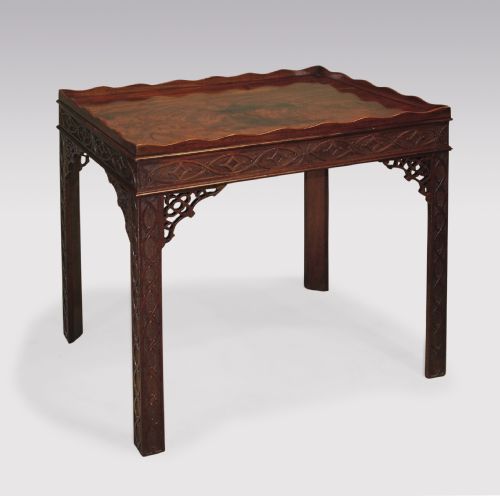
The export and hybrid forms feature silver tables, tea tables and writing desks produced for Western markets or built in Britain using Chinese design motifs. Mahogany and lacquer dominate these particular iterations, bridging eastern joinery and western reception room utility.
Materials and Technique
Makers utilised dense hardwoods such as elm, padouk and rosewood alongside imported mahogany for structural frames. Traditional Chinese tables often relied on frame and panel joinery with corner leg construction, achieving stability without metal fasteners.
Surface treatments included red lacquer finishes applied to low occasional furniture, complemented by brass hardware and paktong mounts. Export pieces occasionally integrated European ormolu mounts to embellish mahogany and lacquer surfaces.
Western interpretations combined mahogany frames with fretwork and glazing techniques characteristic of the Chippendale period. This merging of manufacturing methods yielded distinct hybrid pieces that served tea, writing and display functions.
Materials recorded on this page span padouk, rosewood, elm, mahogany, brass, paktong and ormolu mounts.
Gradations in Quality
The calibre of an 18th century chinese table rests upon the selection of timber and the integrity of the joinery. Dense rosewood, padouk and elm exhibit deeper grain character and structural durability compared to secondary woods.
Surface finish preservation distinguishes superior examples, particularly where red lacquer and patinated mahogany retain their original depth. The refinement of carved details on altar tables and Chinese Chippendale frames further separates standard output from exceptional workshop production.
The 18th Century Chinese Table Glossary
- Altar table
- A long, narrow table traditionally placed against a wall in a principal room, often featuring upturned flanges at the short ends.
- Chinese Chippendale
- An 18th-century European style incorporating Chinese architectural motifs, fretwork railings and pagoda silhouettes into mahogany furniture.
- Padouk
- A heavy, durable tropical hardwood with a reddish-brown hue utilised in high-status export furniture.
- Paktong
- A copper-nickel-zinc alloy originating in China, prized for its bright appearance and used for decorative mounts and candlesticks.
- Qing Dynasty
- The imperial dynasty ruling China from sixteen forty-four to nineteen twelve, defining the prevailing aesthetic of the period's material culture.
18th Century Chinese Table: Frequently Asked Questions
How do I identify a genuine 18th century chinese table?
Examine the timber species, joinery methods and surface patina to determine authenticity. Traditional domestic pieces utilise hardwoods like elm and padouk with frame and panel construction.
Compare the proportion and carving style against known Qing Dynasty or Chinese Export examples. Wear patterns on footings and touch points should align with age.
What is the difference between domestic and export tables?
Domestic tables were made within China for local use, featuring indigenous hardwoods, altar forms and low daybed designs tailored to floor-level living.
Export tables were produced specifically for Western markets, often employing mahogany and incorporating European furniture forms such as writing desks, silver tables and tea tables.
Where should I place a low table or daybed?
Low tables and daybeds function effectively as central coffee tables or sculptural seating elements within contemporary living spaces. Their modest height suits minimalist arrangements and allows sightlines to remain open.
Position them away from direct heat sources to protect ancient hardwood and lacquer surfaces from drying and splitting.
How do I care for lacquer and hardwood surfaces?
Maintain stable indoor humidity levels to prevent timber movement and preserve fragile red lacquer finishes. Dust regularly with a soft, dry cloth without applying modern chemical polishes.
Protect surfaces from moisture and direct sunlight by using coasters and placing pieces away from unshaded windows.