
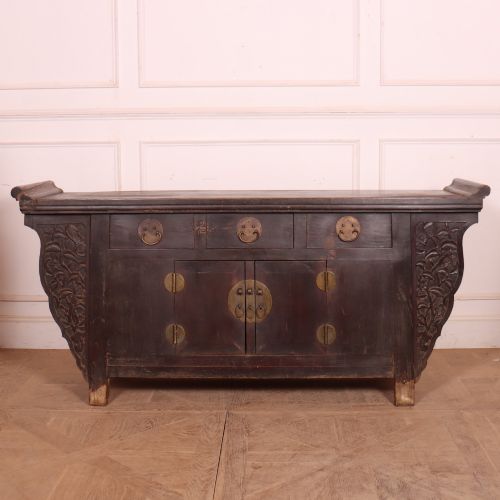
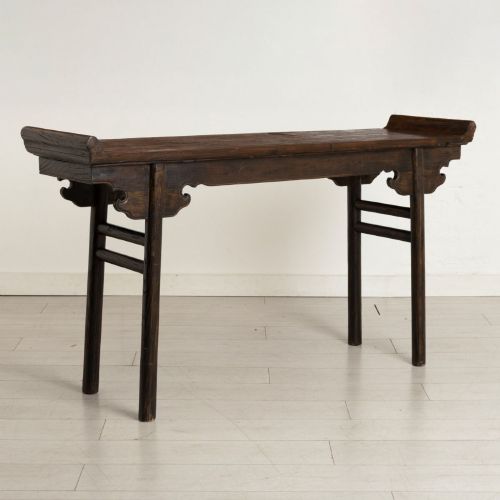
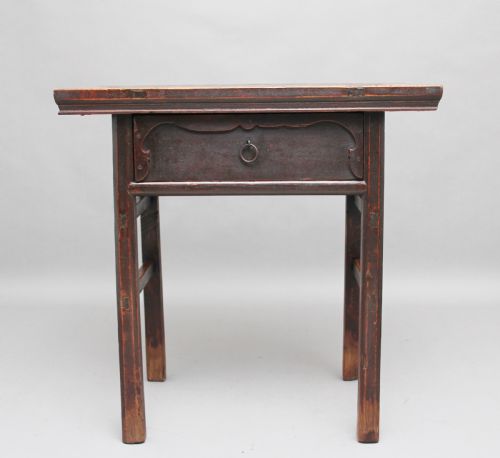


Elm Wood Altar Table
An elm wood altar table brings sculptural presence and rich grain to a room, holding centuries of Chinese provincial craftsmanship in its timber.
Elm Wood Altar Table
When you search for an elm wood altar table, you encounter substantial furniture pieces originating from China across the eighteenth and nineteenth centuries, including the Qing Dynasty period. These tables serve multiple domestic functions today, appearing frequently as console tables, side tables, and low tables alongside traditional altar forms.
What varies in quality
Quality rests in the handling of the elm grain and the integrity of the original timber construction across the plank top and structural frame. Pieces showing finer carving work or retaining more of their original surface character sit at a different level from simpler utility items.
Proportion and scale also dictate distinction, where larger altar styles and balanced console forms demonstrate greater sculptural presence than smaller side tables.
Listings span the eighteenth century through to nineteen twenty, covering Qing Dynasty and regional Chinese styles.
The Elm Wood Altar Table Glossary
- Elm
- A native hardwood valued for its pronounced grain pattern and durability in traditional Chinese furniture making. It accepts polish and lacquer well.
- Altar table
- A long, narrow table form traditionally used for ritual displays in Chinese households. They feature distinct stepped or flanged ends.
- Plank top
- A table surface constructed from solid boards joined together rather than veneered panels. This method forms the primary working surface on these tables.
- Qing Dynasty
- The final imperial dynasty of China, spanning from sixteen forty-four to nineteen twelve. Pieces from this era reflect established regional woodworking traditions.
- Console table
- A table designed to stand against a wall, sharing functional similarities with narrow altar forms. They often double as hallway or living room furniture.
Elm Wood Altar Table: Frequently Asked Questions
How do I use an altar table at home?
An elm wood altar table fits naturally in a hallway, living room, or behind a sofa as a narrow console.
Its shallow depth allows it to display ceramics, lamps, or books without taking up excessive floor space.
What is the difference between an altar table and a side table?
Altar tables typically feature a long, narrow format with distinctive ends, often originating from ritual contexts in Chinese homes.
Side tables tend to be more compact and boxy, designed for general utility rather than display.
How do I care for antique elm furniture?
Maintain the timber by dusting with a dry cloth and avoiding placement near direct heat sources or strong sunlight.
Occasional applications of natural wax help preserve the dry, patinated finish of the antique wood.
How can I tell the age of these tables?
Age is determined by observing construction methods, joinery wear, and the natural oxidation of the elm timber over time.
Stylistic markers aligned with nineteenth-century Chinese regional production also help date individual pieces.