


Traditional Chinese Hall Table
A traditional chinese hall table brings sculptural timber grain and centuries of regional craftsmanship straight into an interior.
Traditional Chinese Hall Table
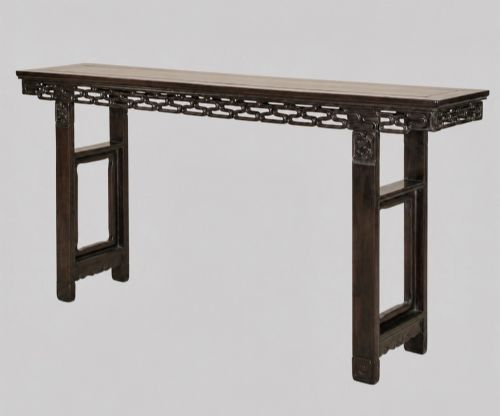
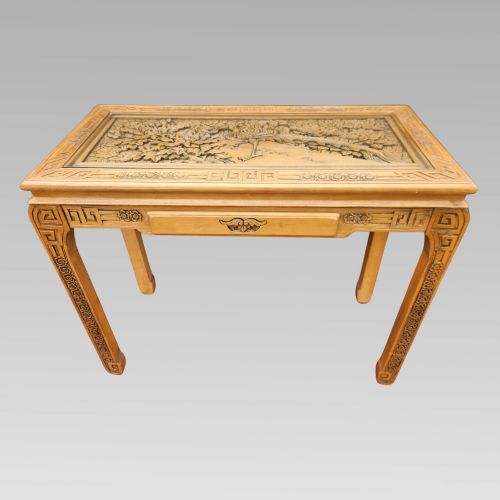
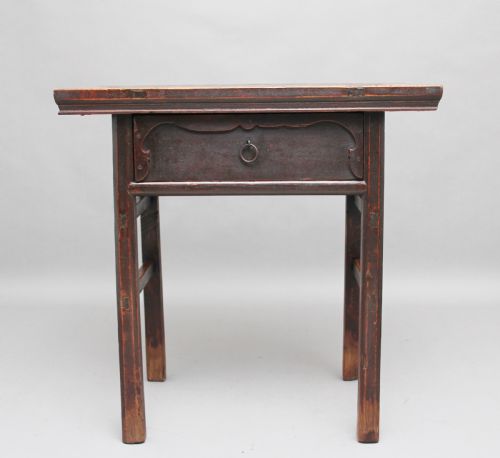
A traditional chinese hall table encompasses console tables, altar tables, side tables, and writing desks originating from various historical periods such as the Qing Dynasty and the nineteenth century. These forms served specific domestic and ceremonial functions in Chinese interiors, ranging from placement against walls to display ritual objects.
The version most commonly encountered on this page is the elm or hardwood console and altar table, often featuring carved details or simple provincial lines. These pieces reflect regional aesthetics spanning Chinese provincial, regional, and export traditions.
Makers and workshops across different centuries produced these items using native timbers, incorporating structural joinery designed to withstand humidity and shifting temperatures. The forms vary from elongated altar structures with upturned ends to compact three-drawer side tables.
How they were made
Artisans constructed traditional chinese hall table forms primarily from elm and dense hardwoods such as hongmu and camphorwood, selecting timber for its durability and grain pattern. These woods were joined using intricate mortise and tenon joinery that avoided the need for metal nails.
Surface finishes include clear wax to highlight the natural grain, red and black lacquer applications, and inset marble panels. Brass hardware frequently appears on drawers, providing functional pulls and subtle decorative contrast against the dark wood or lacquered surfaces.
The furniture spans provincial workshops and Qing Dynasty export production, including side tables, writing desks, and altar forms.
What varies in quality
The distinction between tiers of the traditional chinese hall table range rests upon the selection of timber and the crispness of any carved ornamentation. Dense hardwoods and well-figured elm command greater attention than softer, plainer secondary woods.
Structural integrity and the survival of original surface finishes also determine the standing of a piece. Tables retaining their early lacquer, inset marble tops, and uncompromised joinery demonstrate superior craftsmanship from their period of origin.
The Traditional Chinese Hall Table Glossary
- Altar table
- A traditional chinese hall table form characterised by an elongated rectangular top, sometimes with upturned flange ends, originally used for domestic or temple offerings.
- Elm
- A resilient domestic timber favoured for furniture making due to its fibrous grain and flexibility, commonly seen in provincial tables.
- Hongmu
- A translation meaning red wood, referring to dense and heavy tropical hardwoods used in high-status Qing Dynasty furniture.
- Lacquer
- A durable resin finish applied in multiple layers to wood surfaces, yielding a smooth red or black coating that protects the timber beneath.
Traditional Chinese Hall Table: Frequently Asked Questions
How do I use a traditional chinese hall table at home?
These tables fit well in narrow entryways, hallways, or living spaces as a surface for lamps, ceramics, or decorative objects. Their slim profile allows them to sit flush against walls without dominating a room.
Altar and console variants also function effectively as display pieces behind sofas or beneath large mirrors, bringing architectural form and historical timber texture into contemporary interiors.
What is the difference between an altar table and a console table?
Altar tables traditionally feature raised flanges at the short ends of the top board and often possess more architectural, recessed leg placements. They derive from ritual furniture used in temples and ancestral halls.
Console tables generally feature flat, clean tops designed strictly for domestic display against a wall, though historical overlap in proportion makes the terms interchangeable in many listings.
How can I tell the period of a traditional chinese hall table?
Dating relies on timber patination, construction methods, and stylistic indicators associated with the Qing Dynasty or nineteenth-century production. Elm and hardwood pieces show natural wear and dry grain structure developed over generations of use.
Evaluating the joinery and the presence of period materials like brass hardware or lacquer helps place the object within its historical manufacturing window.
Are these tables made of solid wood?
Traditional construction methods utilise solid timbers such as elm, camphorwood, and various dense hardwoods for the frame, panels, and structural members. Carpenters relied on interlocking joinery rather than laminates or veneers.
Secondary woods may appear in less visible areas like drawer linings, but the primary structure remains solid timber built to expand and contract with environmental changes.