


Chinese Wood Altar Table
A Chinese wood altar table brings sculptural presence and quiet lineage to a room, carrying the elongated proportions and upturned ends of temple furniture.
Chinese Wood Altar Table
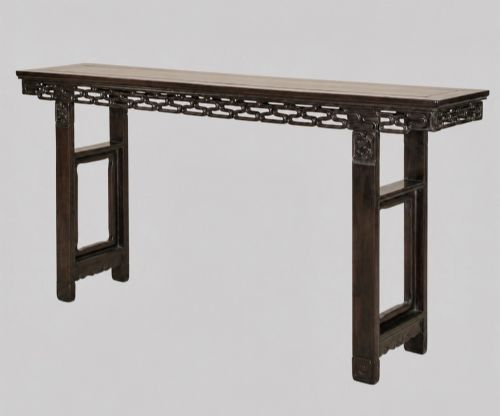
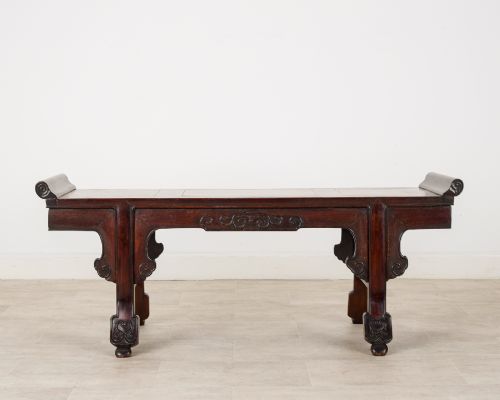
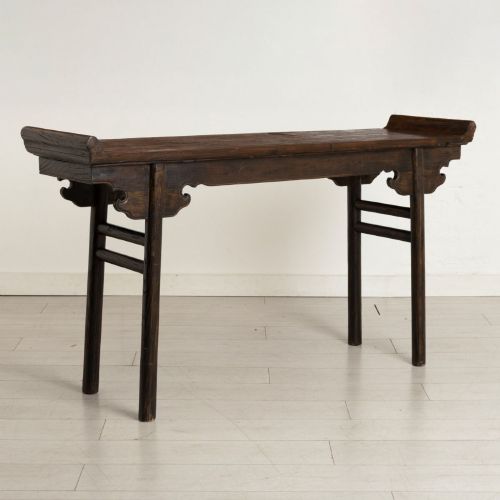
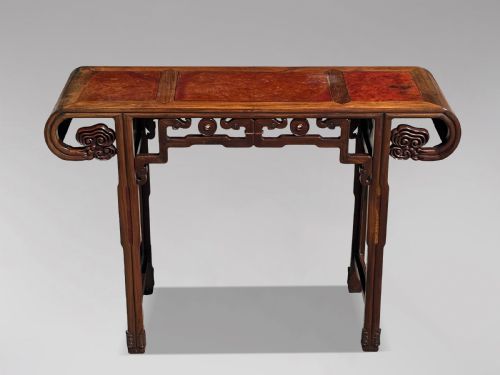
A Chinese wood altar table is a long, narrow console designed originally for ritual offerings, distinguished by its linear silhouette and often featuring flanged or scroll ends. The pieces seen here emerge predominantly from the nineteenth century, including examples made during the Qing Dynasty and through to the early twentieth century.
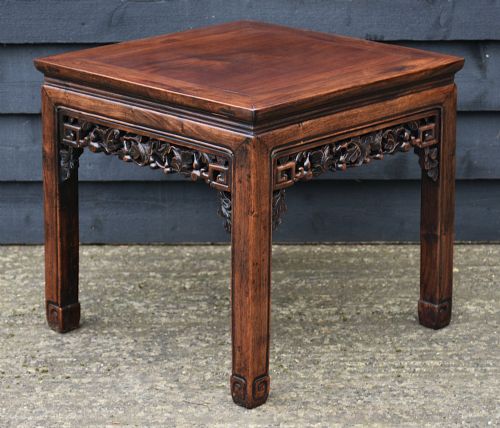
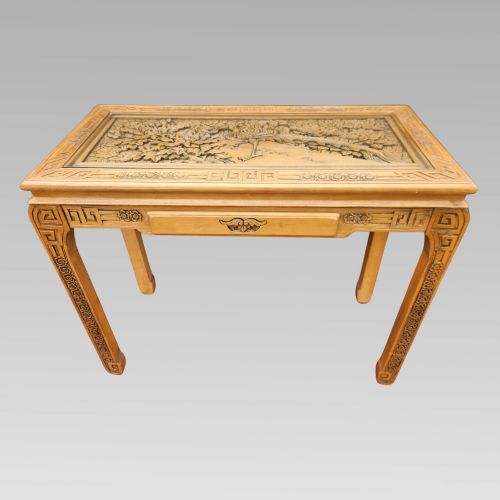
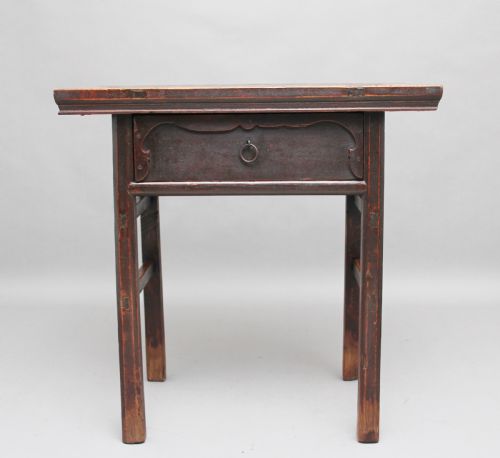
While true ritual pieces survive, the selection includes related forms sharing the same vocabulary, such as low kang tables, side tables, and occasional writing desks. They appear in both provincial elm and dense tropical hardwoods, moving easily from traditional settings to contemporary spaces as serving surfaces or hall consoles.
How they were made
Joinery forms the backbone of these tables, relying on precise mortise and tenon joints that allow the timber to expand and contract without metal fasteners. Artisans selected durable native timbers, pairing figured elm with dense tropical hardwoods like hongmu and general Asian hardwoods.
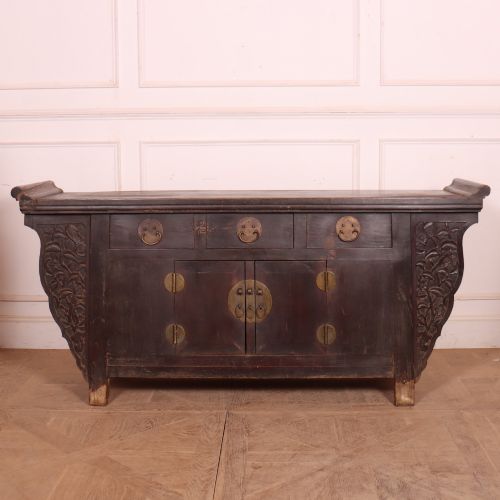
Surface treatments vary from the visible grain of waxed elm to layered red lacquer finishes and applied brass details. Carving is deployed selectively, appearing on aprons and spandrels to frame the clean lines of the plank top.
Listings feature eighteenth-century examples alongside nineteenth-century elm and hardwood tables, accompanied by sideboards, desks, and benches.
What varies in quality
The distinction between ordinary and exceptional tables rests in the timber selection and the crispness of the joinery. Dense hardwoods command greater respect than softer domestic woods due to their weight and the precision they demand from the maker.
Proportion and restraint separate superior examples from heavier, clumsier work. Well-judged scroll ends, balanced spandrels, and original lacquer surfaces hold more weight in evaluation than heavy, later carving.
The Chinese Wood Altar Table Glossary
- Altar table
- A long, narrow ceremonial table characterised by an overhanging top, frequently with upturned flanges at the short ends. These architectural details originate from temple architecture.
- Hongmu
- A generic trade term for dense, heavy Asian hardwoods translated literally as red wood. It encompasses timbers like padauk and rosewood, prized for their dark colour and fine grain.
- Kang table
- A low platform table traditionally used on a heated brick sleeping platform in northern China for dining or writing. Miniature versions mirror the proportions of full-sized altar tables.
- Qing Dynasty
- The final imperial dynasty of China, spanning from sixteen forty-four to nineteen twelve. Furniture from the late nineteenth century reflects both traditional scholarly taste and early export influences.
- Locust wood
- A regional variety of elm utilised by traditional provincial cabinetmakers. It provides a robust, heavily figured surface for utilitarian tables.
Chinese Wood Altar Table: Frequently Asked Questions
How were Chinese altar tables used?
These tables stood against interior walls in domestic halls or temples to hold ritual vessels, ancestral tablets, and seasonal flower arrangements. Their elevated ends helped secure ceremonial objects while framing the display.
Over time, the form transitioned into secular domestic spaces to serve as display consoles or serving furniture, retaining its dignified profile.
What is the difference between elm and hardwood tables?
Elm tables typically display prominent grain patterns with a warm, honey tone, reflecting a provincial workshop tradition. They offer a rustic presence suitable for everyday domestic use.
Hardwood examples, constructed from denser timbers like hongmu, feature darker tones and a finer weight. These pieces often incorporate subtle carved details and traditional joinery designed for formal reception rooms.
How do I style an altar table at home?
The narrow proportions make these tables suited for entryways, hallways, or positioned behind a sofa as a slim console. Their length draws the eye along a wall without occupying excessive floor space.
Keep the surface styling restrained to honour the linear design. Pairing the table with a simple ceramic lamp or a low bronze vessel allows the architectural apron and scroll ends to remain visible.
How can I tell the period of a table?
Dating relies on assessing the timber shrinkage, the wear patterns on the footpads, and the construction methods used in the frame. Nineteenth-century examples often display hand-cut joinery and dry patination built up over generations.
Stylistic cues such as late Qing carved aprons or Kangxi-period lacquer design provide markers, though many provincial forms remained consistent across decades.