
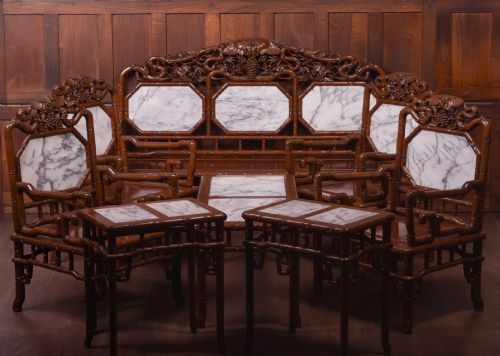
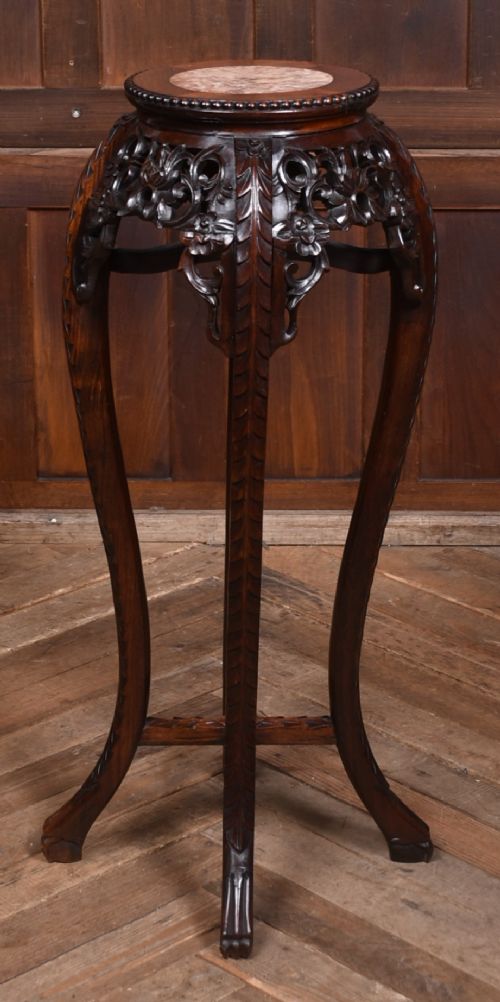


Dark Timber Chinese Table
A dark timber chinese table brings dense native grain and traditional joinery from the nineteenth and early twentieth centuries into a modern room.
Dark Timber Chinese Table
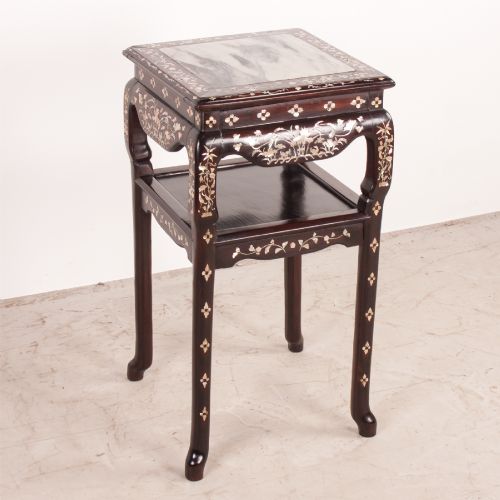
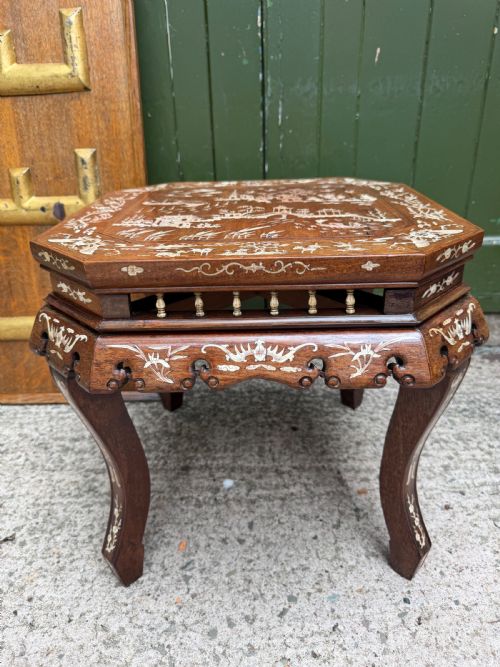
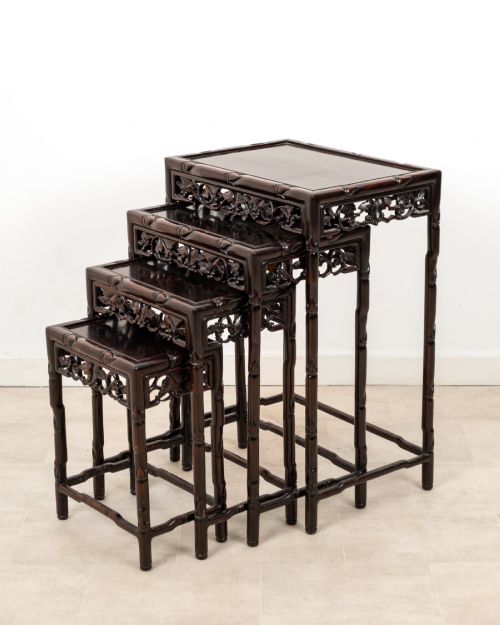
A dark timber chinese table spans functional surfaces and display pieces, taking forms such as nests of four, low opium tables, altar tables, and plant or jardiniere stands. These items emerge primarily from the nineteenth century, including the Qing dynasty, alongside Edwardian and Victorian periods.
The selection on this page relies heavily on denser woods like hardwood, rosewood, hongmu, and elm. Many pieces serve specific domestic roles, functioning as coffee tables, occasional tables, side tables, console tables, and pedestals.
Buyers encounter diverse stylistic interpretations ranging from Chinese export and traditional designs to rustic vernacular elm pieces and later Chinoiserie adaptations. Each form reflects the specific domestic or ritual purpose for which the maker originally designed it.
What varies in quality
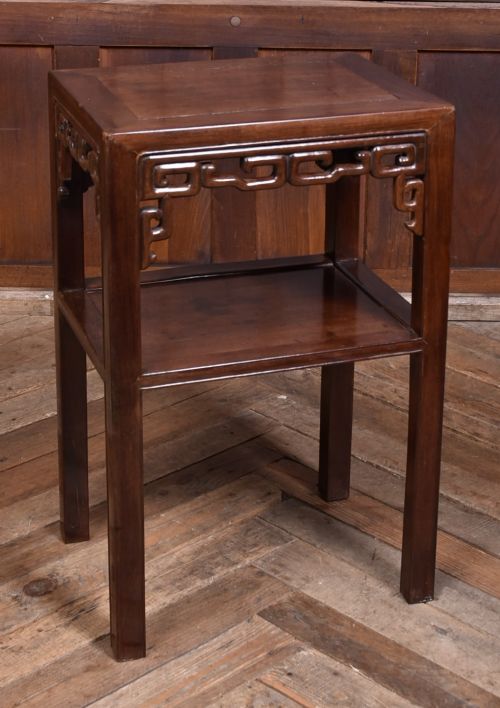
Depth and crispness of hand carving separate standard commercial output from superior scholar's pieces. Crisp relief work on aprons and legs demonstrates higher workshop skill.
The selection of timber density and grain figure dictates overall grade. Dense hongmu and well-figured elm command greater appreciation than softer, plainer secondary woods.
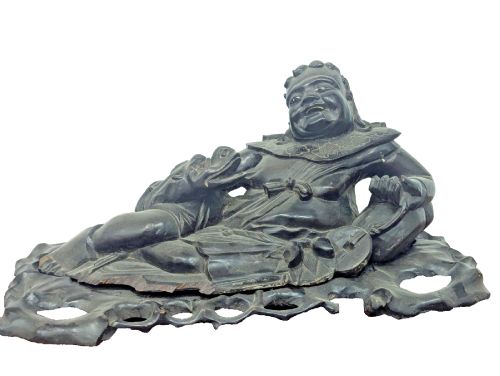
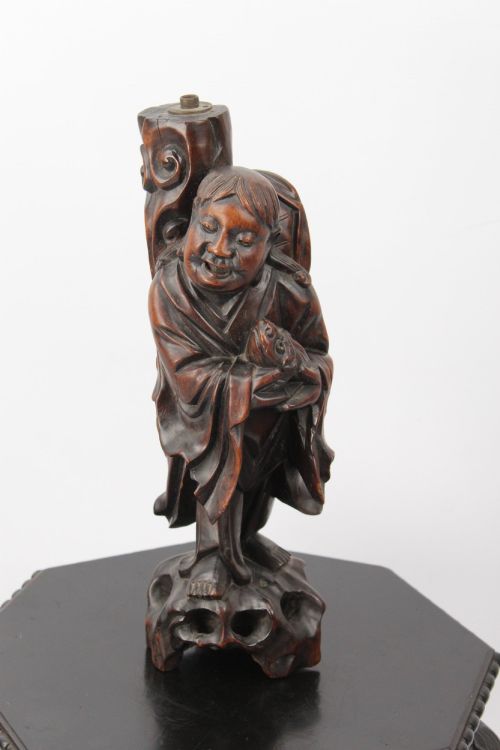
Several items double as resting places for laughing Buddhas and Daoist immortals, ensuring your furniture comes with built-in spiritual company.
The Dark Timber Chinese Table Glossary
- Hongmu
- A dense, dark tropical hardwood valued in traditional Chinese furniture making. It translates literally to red wood and patinates richly over time.
- Elm
- A resilient native timber used for rustic vernacular tables and stools. Its visible grain handles daily wear with distinct character.
- Altar table
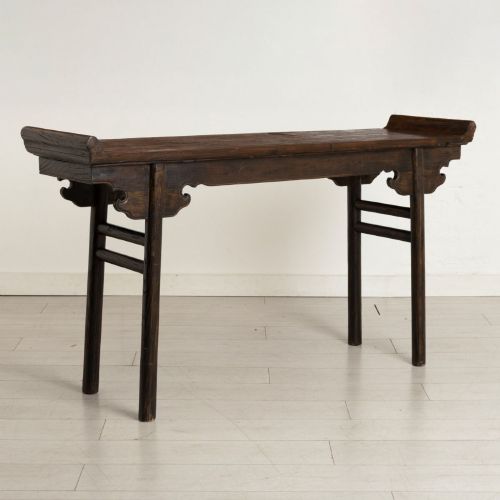
- A long, narrow ceremonial table featuring upturned flange ends. These evolved from domestic and temple contexts into prominent display surfaces.
- Jardiniere stand
- A tall pedestal or small table designed to hold heavy ceramic plant pots. They often incorporate inset marble tops to protect against moisture.
- Opium table
- A low, domestic leisure table with short legs. They function well as contemporary coffee tables.
Dark Timber Chinese Table: Frequently Asked Questions
How do I use a plant stand today?
These tall stands suit corners or empty wall spaces well. They support trailing plants, lamps, or small sculptures effectively.
Their narrow footprints allow them to fit into compact rooms without dominating the floor plan.
What is a nest of tables used for?
A graduated set provides flexible surface area for drinks or books in a living space. The smaller tables tuck neatly beneath the largest one when not needed.
This modular design originated to save space in traditional interiors.
How do I identify a scholar's table?
Scholar's tables generally feature restrained carving and superior hongmu or hardwood construction. They were built for writing, painting, and quiet contemplation.
Their proportions remain balanced and lack excessive ornamentation.
Where does elm feature in these pieces?
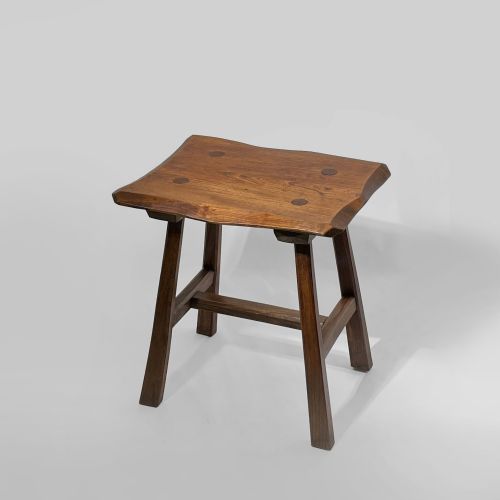
Elm appears primarily in rustic vernacular low tables, side tables, and stools. The timber offers a lighter, figured alternative to dense hongmu.
These pieces often display simpler lines suited to everyday domestic use.
What distinguishes an altar table?
Altar tables feature elongated proportions and characteristic protruding flange ends along the top surface. They originated from domestic shrines and ceremonial spaces.
Their raised ends served both a symbolic and practical retention purpose.