

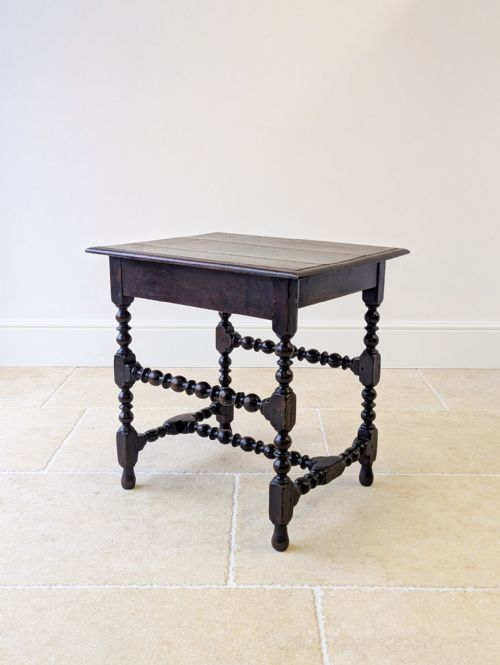
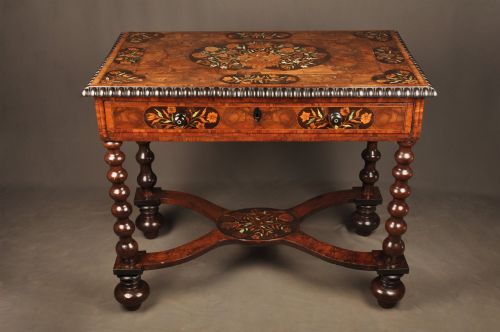
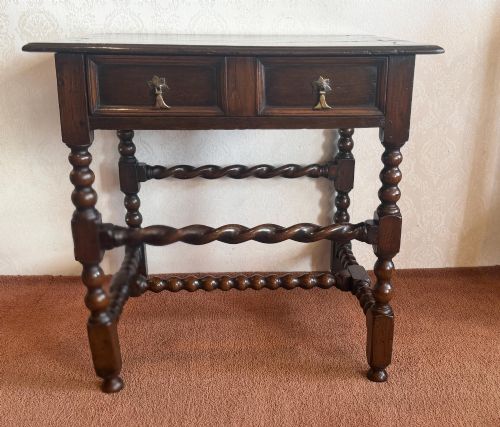


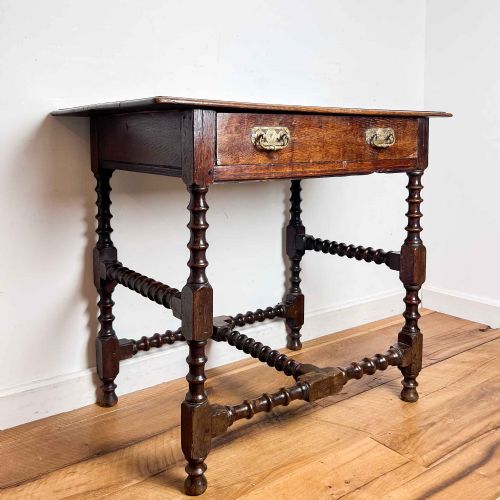
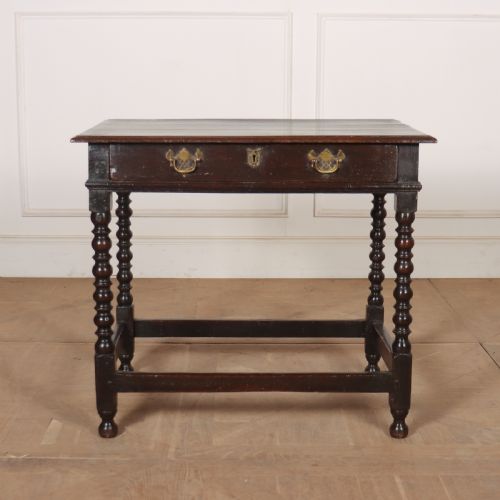
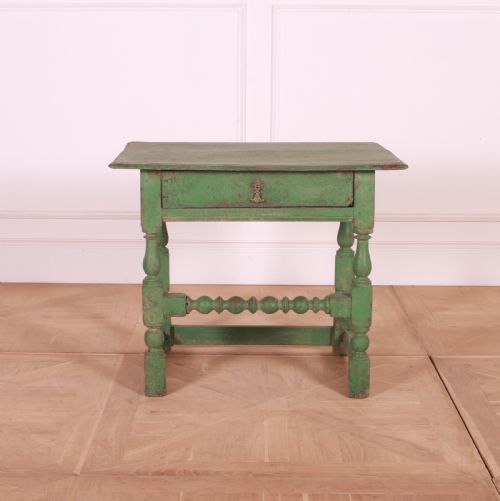


Bobbin Stretcher Table
A bobbin stretcher table brings structural turnings and timber warmth into a room, offering surface space defined by traditional joinery.
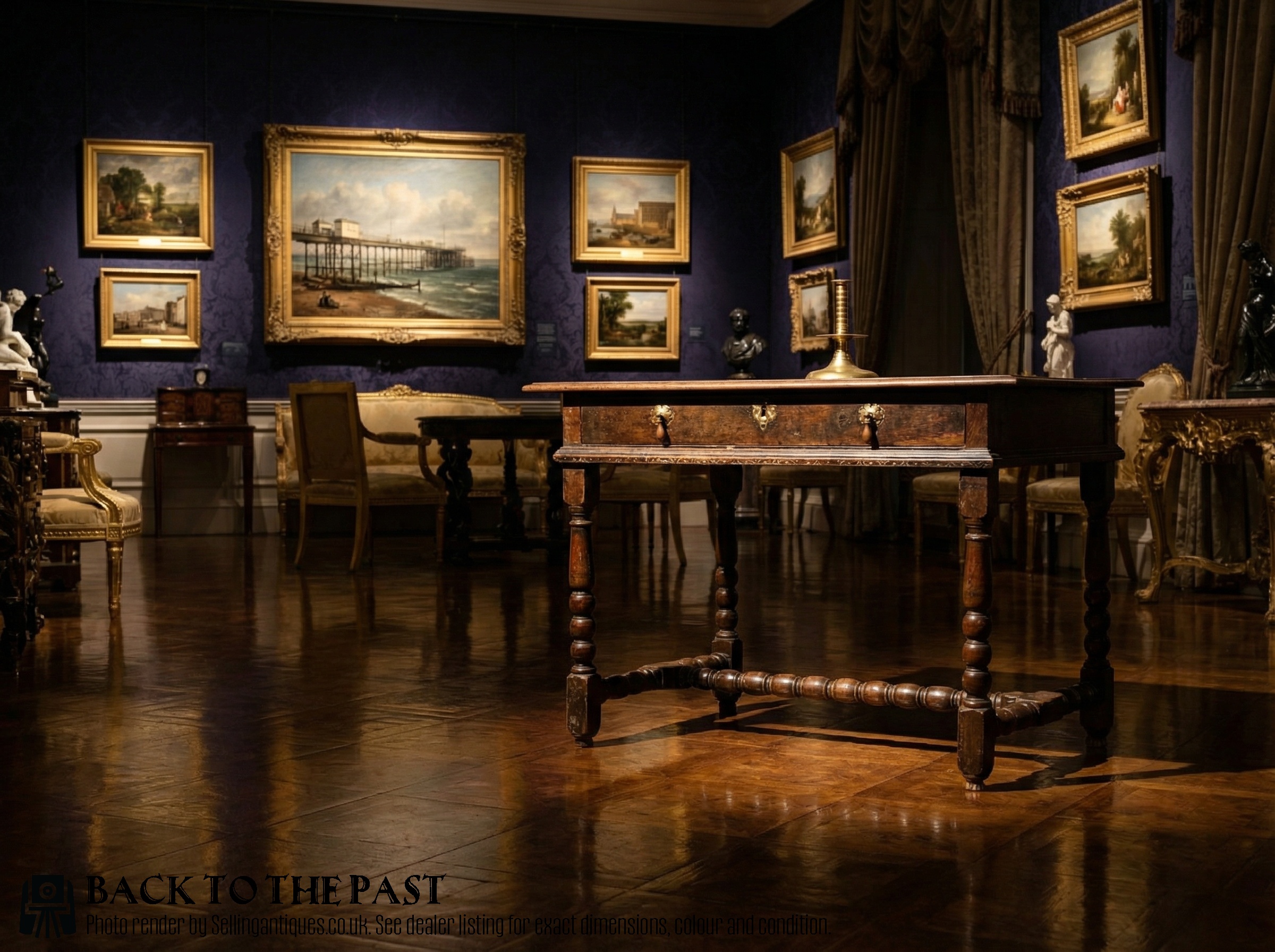
Bobbin Stretcher Table
A bobbin stretcher table unites functional surface timber with distinctive spool-shaped turnings beneath, serving primarily as a side or occasional table within domestic interiors. These pieces appear in forms ranging from compact side tables to broader centre and lamp tables, providing practical display and storage.
The material palette of these tables spans native hardwoods, with oak and yew wood predominating alongside elm, cherry, and fruitwood marquetry. Surviving examples cross several centuries, stretching from seventeenth-century origins through eighteenth-century provincial work to later revival periods.
Materials and construction
Makers utilised solid timbers such as oak, yew wood, walnut, and cherry for the primary tabletops and framework, frequently combining different woods within a single piece like oak and elm. The distinctive stretcher base required precise turning on a lathe to form the repeating bobbin or spool motifs.
Joinery techniques relied upon traditional pegged mortise and tenon joints to secure the legs and stretchers, ensuring rigidity beneath the top boards. Drawer boxes incorporated hand-cut joinery to house iron or brass hardware securely.
Listings feature oak, yew wood, elm, and cherry, spanning seventeenth-century origins to twentieth-century revivals.
Markers of quality
Quality rests upon the crispness of the bobbin turnings and the selection of figured timber for the top, where rich grain patterns elevate the piece. The proportion between the turned base and the upper surface dictates the visual balance.
Integrity of construction separates superior examples, visible in tight joints and the preservation of original timber patination through centuries of use.
The Bobbin Stretcher Table Glossary
- Bobbin turning
- A form of woodturning on a lathe that produces a series of rounded, spool-like shapes along the length of a leg or stretcher. This decorative technique gained prominence during the seventeenth century.
- Stretcher
- A horizontal wooden brace connecting the legs of a table to provide structural rigidity. On these pieces, the stretcher itself carries the bobbin-turned decoration.
- Side table
- A small functional table designed to stand against a wall or beside seating. These often feature single drawers beneath the top surface.
- Marquetry
- Inlaid patterns of different coloured woods applied to a surface to create decorative images or geometric designs. It appears on selected continental and English tables.
Bobbin Stretcher Table: Frequently Asked Questions
Where should I place a bobbin stretcher table?
These tables suit hallways, living rooms, or bedrooms as compact side surfaces for lamps or small decorative items. Their finished timber backs also allow them to sit away from walls as centre tables.
Ensure the dimensions match the available floor space so the turned stretchers remain visible rather than crowded by surrounding furniture.
How do I care for antique timber tables?
Maintain the wood by applying natural beeswax periodically to nourish the surface and preserve the historic patina. Avoid placing the timber in direct sunlight or near heat sources to prevent splitting.
Dust regularly with a soft, dry cloth rather than using silicone-based sprays that can damage old finishes.
How can I tell the age of these tables?
Dating relies upon examining the timber species, tool marks left by hand-working, and the style of the joinery beneath the top. Seventeenth and eighteenth-century examples often show hand-sawn board marks and pegged joints.
Later revival pieces from the nineteenth and twentieth centuries display more uniform machining and different secondary woods.
What is the difference between a side table and a centre table?
A side table typically stands against a wall and may incorporate one or more drawers at the front for storage. A centre table is finished on all sides to stand freely in the middle of a room.
Both variants utilise the characteristic bobbin stretcher framework to stabilise the legs.