


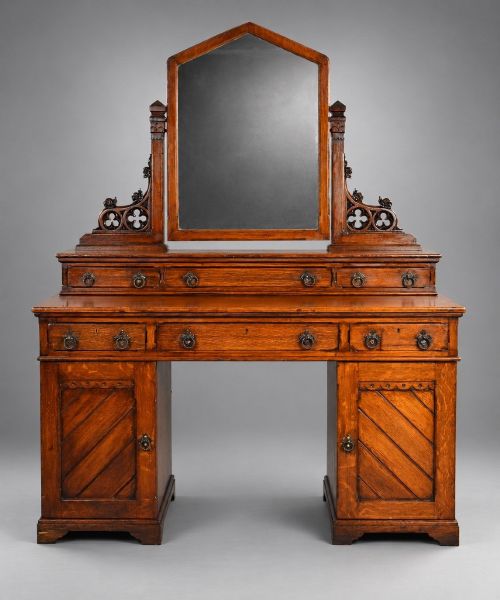
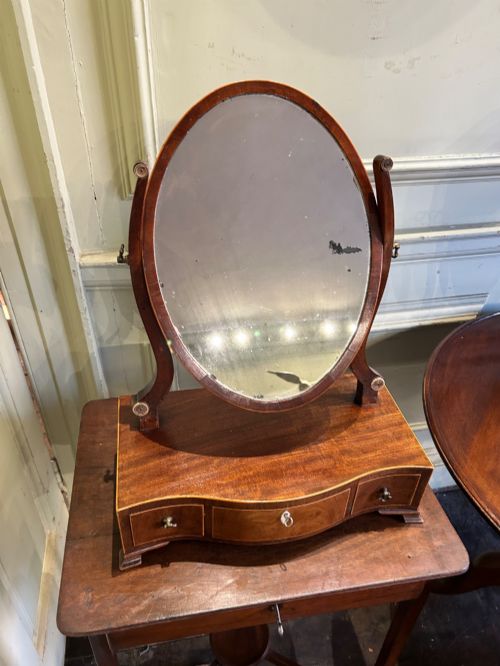
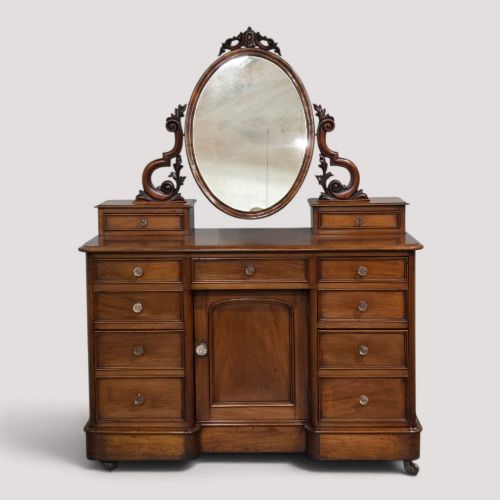
Brown Dressing Mirror
A brown dressing mirror brings warm timber and adjustable glass to a bedroom, offering a practical standing frame for full-length reflection.
Brown Dressing Mirror
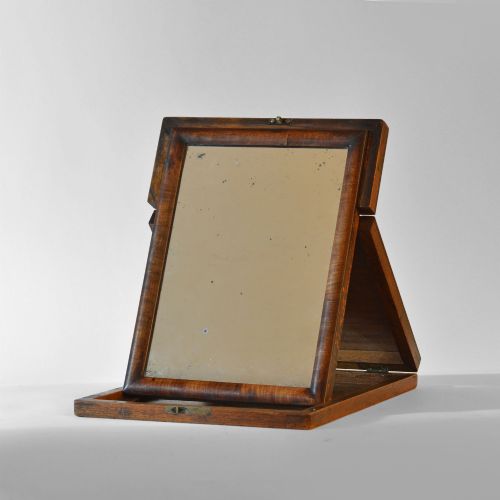
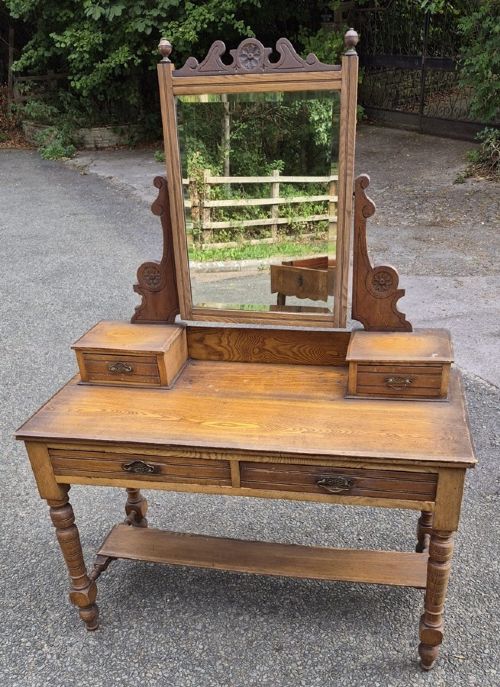
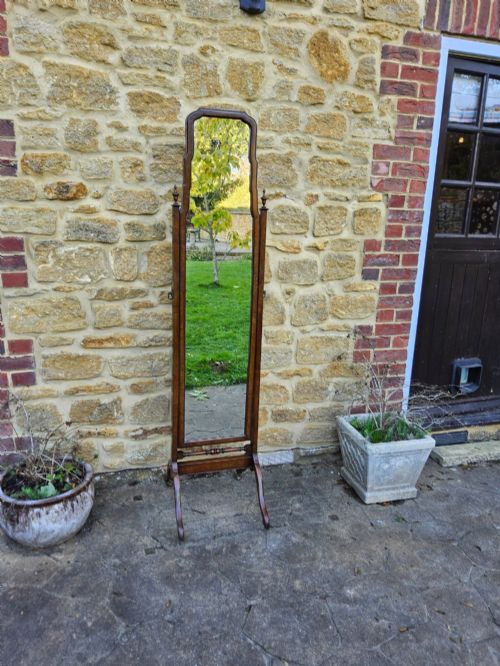
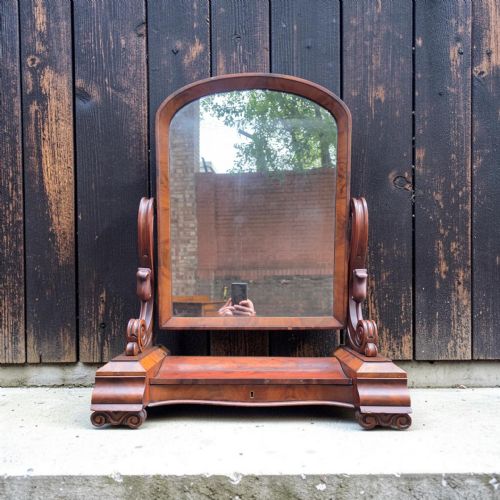
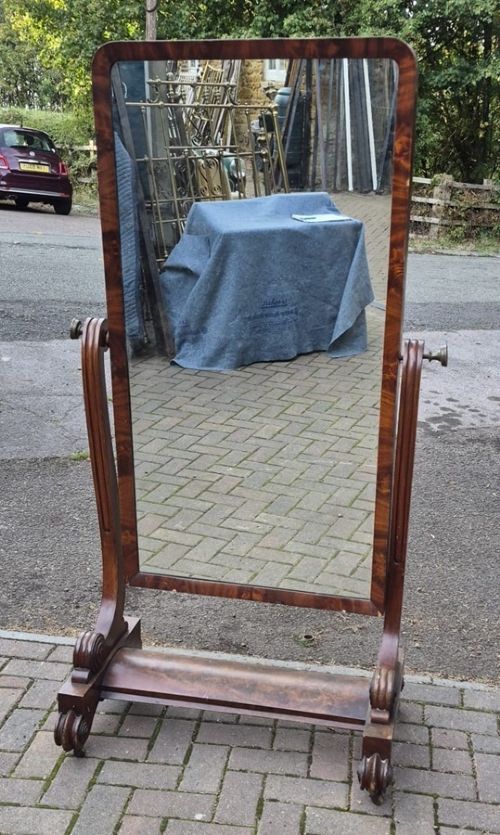
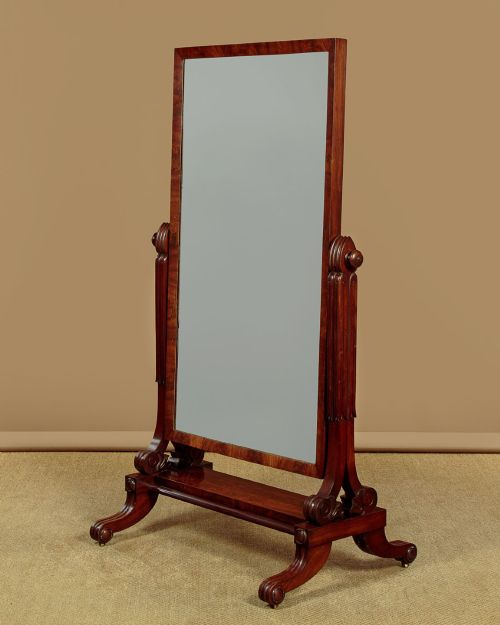
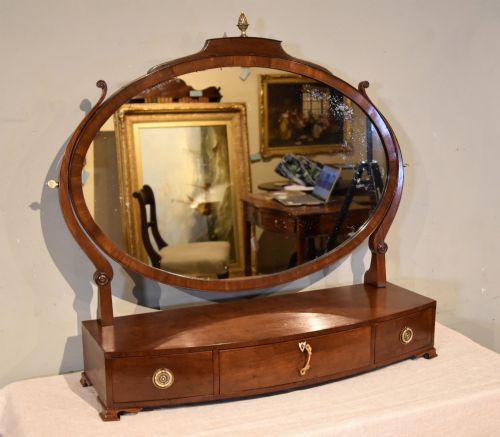
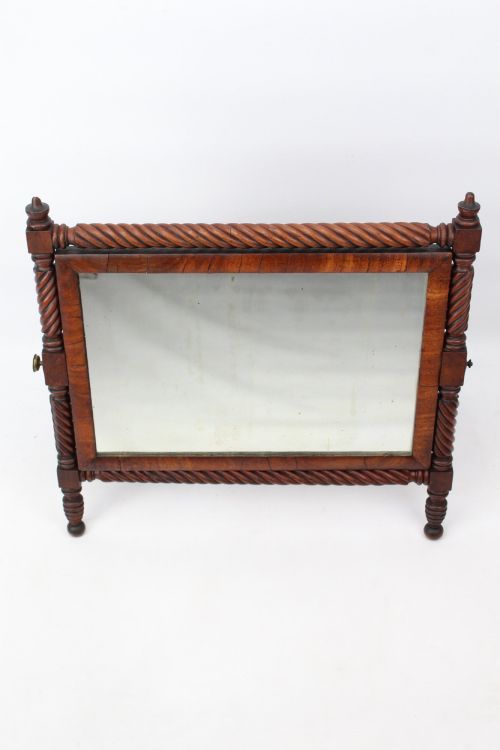
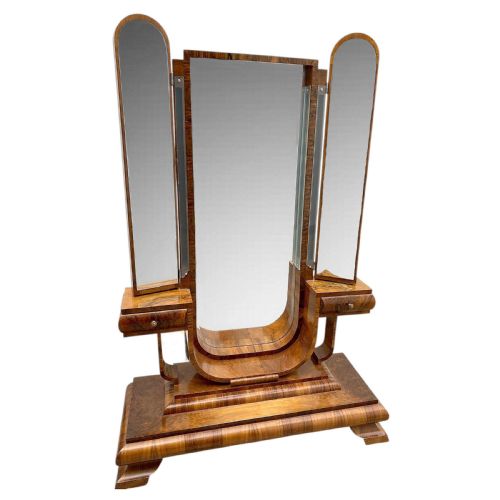
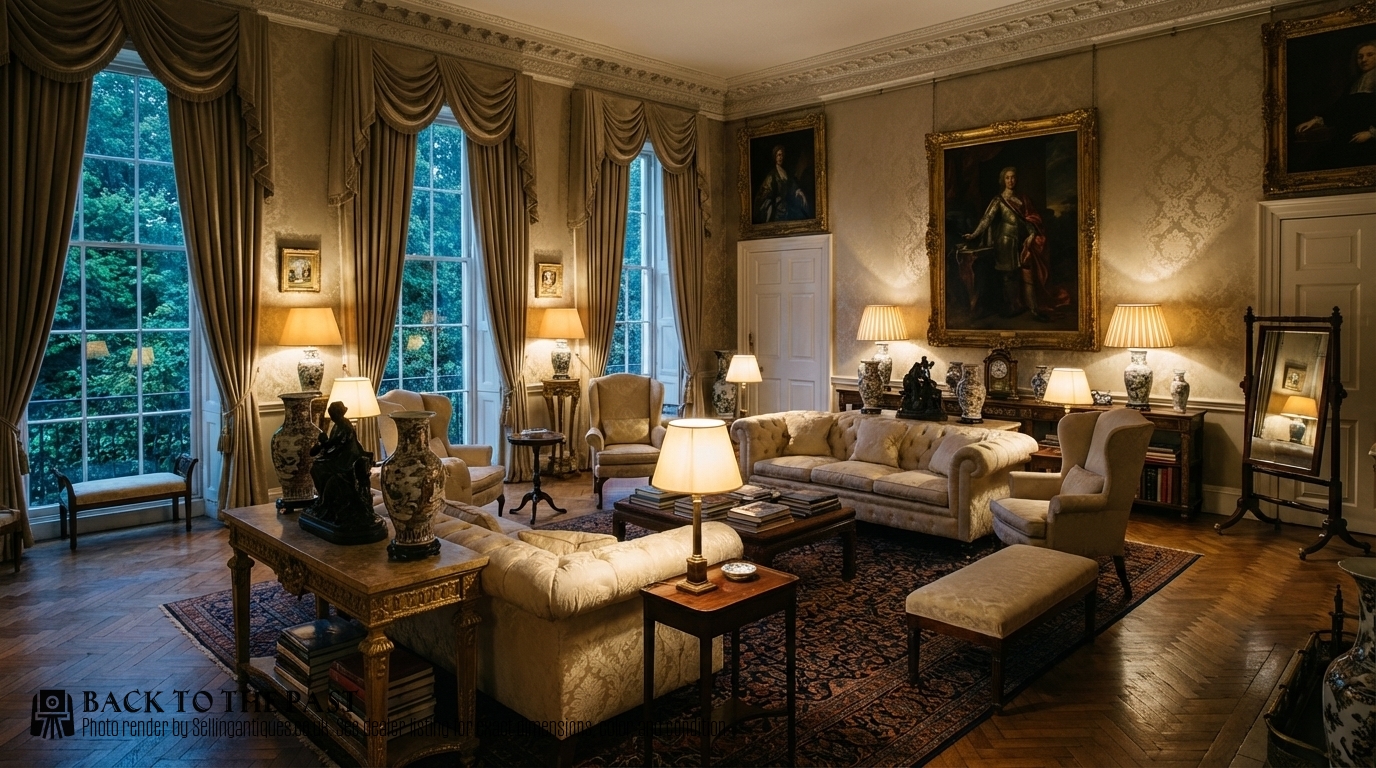
A brown dressing mirror is fundamentally a cheval mirror designed for daily grooming and reflection. These large, pivoting glasses stand independently on their own frames rather than hanging on a wall or sitting on a chest.
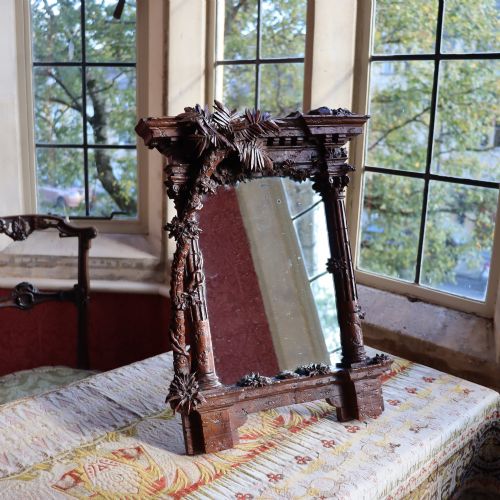
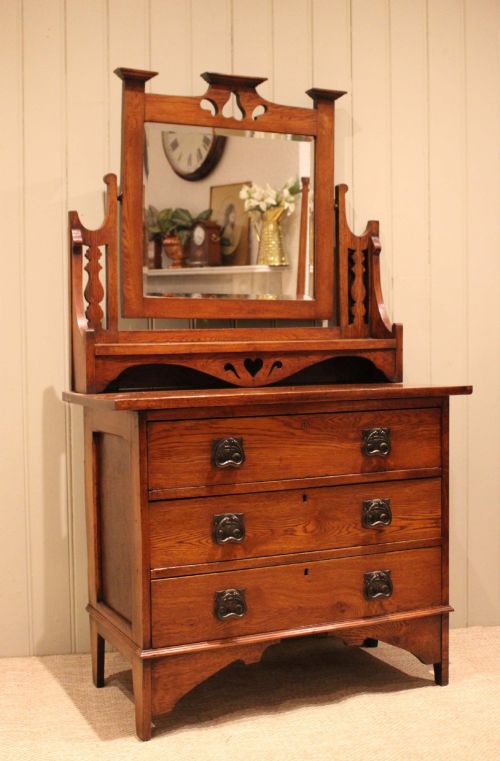
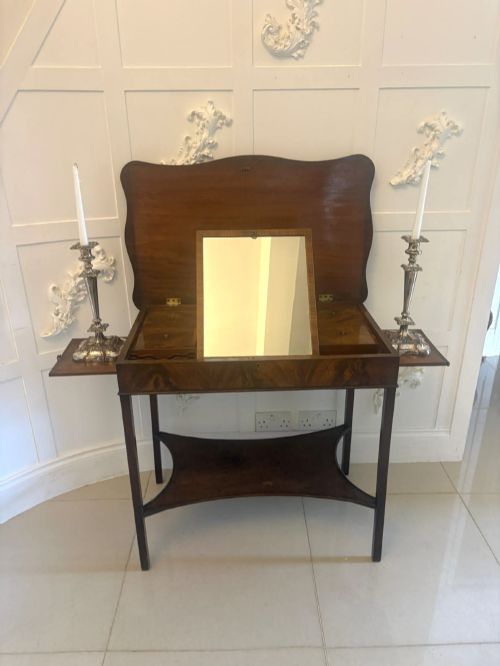
The versions you meet on this page span the eighteenth, nineteenth, and early twentieth centuries, reflecting changing domestic tastes across the Georgian, Regency, William IV, and Edwardian eras. Mahogany is the defining timber throughout these periods, providing a rich, dark brown surface that grounds the furniture.
Form follows function across the selections, moving from upright turned frames to sophisticated pieces supported by sabre legs with brass castors. Each standing glass tilts within its upright supports to adjust the angle for the user.
How they were made
Cabinetmakers constructed these standing mirrors using solid mahogany and mahogany veneers over secondary timbers. The frames rely on traditional joinery methods to support the heavy weight of a tall pivoting glass plate without sagging.
Metal components play a structural and decorative role, featuring brass sabots and castors on the legs alongside the pivotal hardware that allows the mirror plate to swing. Selected examples incorporate fine line inlay to articulate the uprights and bases.
Brown Dressing Mirror Retail Price Guide 2026
Typical asking prices for brown dressing mirror among the pieces listed under this phrase on Sellingantiques today, from the lower quarter to the upper quarter. They describe what is for sale here now, not the wider market.
Tiny brass wheels ensure that centuries-old glass can still glide smoothly across your bedroom floor.
What varies in quality
Quality reveals itself in the selection of the mahogany timber and the crispness of the turning or inlay. Richly figured grain and thoughtful proportions elevate an example far above utilitarian workshop production.
The integrity of the pivoting mechanism and the quality of the original brass castors determine how successfully the object functions today. Heavy brass mounts and balanced frames indicate a higher tier of original craftsmanship.
The Brown Dressing Mirror Glossary
- Cheval mirror
- A large standing dressing glass that pivots vertically within a floor-standing frame. This form emerged to allow full-length viewing in dressing rooms and bedrooms.
- Sabre leg
- A curved, outwardly sweeping leg of circular or rectangular section that tapers toward the floor. It is characteristic of Regency seating and support furniture.
- Sabot
- A metal shoe or sleeve fitted to the foot of a piece of furniture for protection and decoration. Brass is the standard metal used on these mahogany frames.
- Castor
- A small wheel fitted to the base of a leg to allow smooth movement across the floor. They are frequently mounted beneath brass sockets on nineteenth-century frames.
Brown Dressing Mirror: Frequently Asked Questions
Where should I place a cheval mirror?
These tall dressing glasses require adequate floor space and enough clearance to tilt the frame fully. Bedrooms and dressing rooms remain the traditional locations for daily use.
Position the frame away from direct moisture sources to protect the wooden structure and the silvering behind the glass over time.
How do I tilt the mirror glass?
Most frames use side screw pins or pivot hardware set into the upright supports. You gently loosen or adjust these fittings to alter the angle of the glass.
Ensure you support the weight of the frame with one hand while adjusting the fixings to prevent sudden movement.
How do I identify a Regency frame?
Regency pieces often display distinct classical restraint, utilising clean lines, turned uprights, or sabre legs. The timber grain is typically visible beneath a warm polish.
Look for refined brass mounts and proportioned frames that reflect early nineteenth-century design principles.