
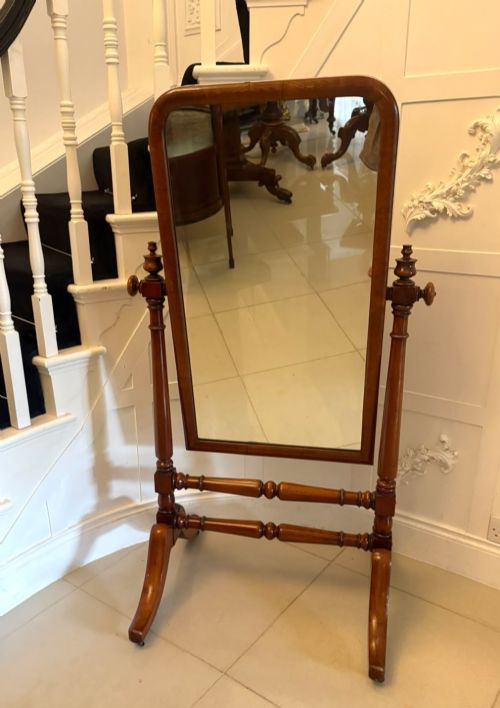
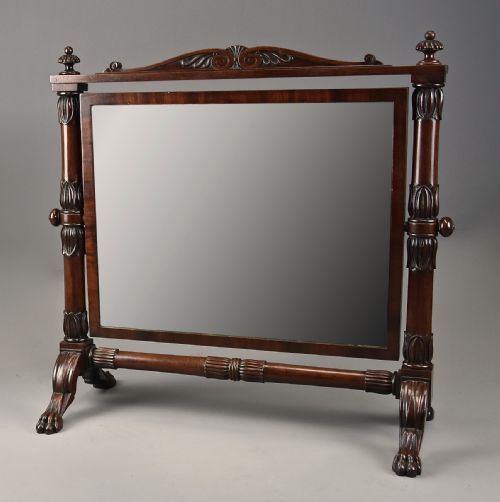
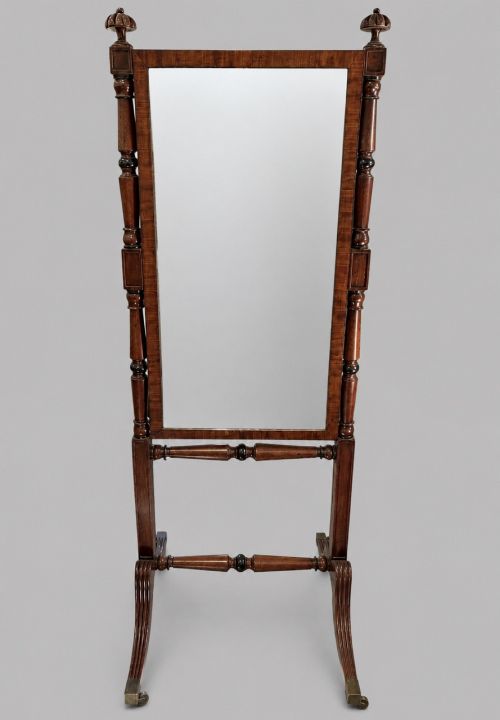
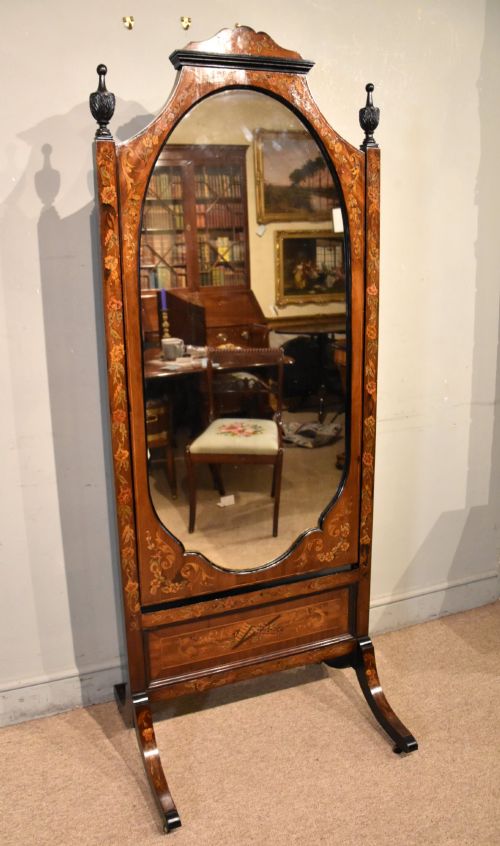


Wooden Cheval Mirror
A wooden cheval mirror provides a full-length reflection in a freestanding frame, offering a practical addition to a bedroom or dressing room.
Wooden Cheval Mirror
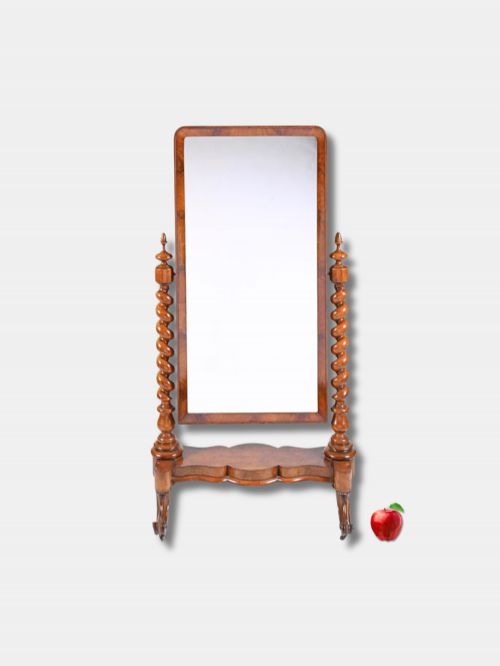
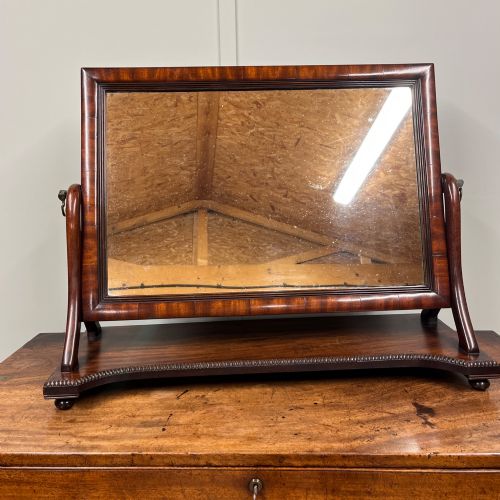
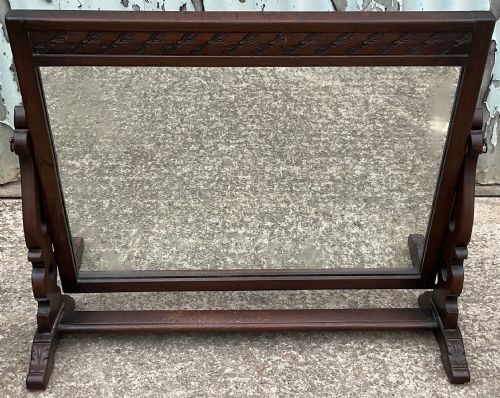
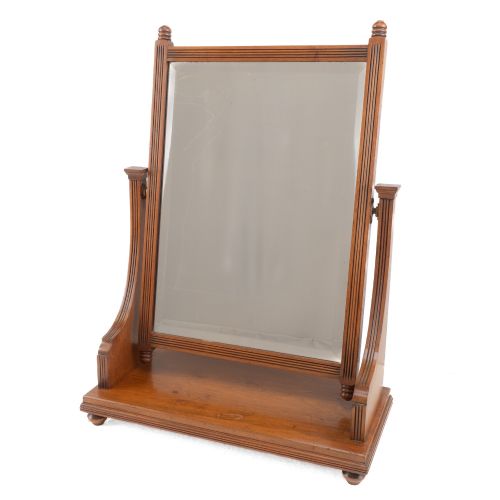
A wooden cheval mirror stands independently on the floor or sits upon a tabletop, serving as both a functional dressing glass and a decorative item of furniture. Buyers seeking this phrase encounter several distinct variations, ranging from large floor-standing cheval glasses to smaller toilet and dressing table mirrors.
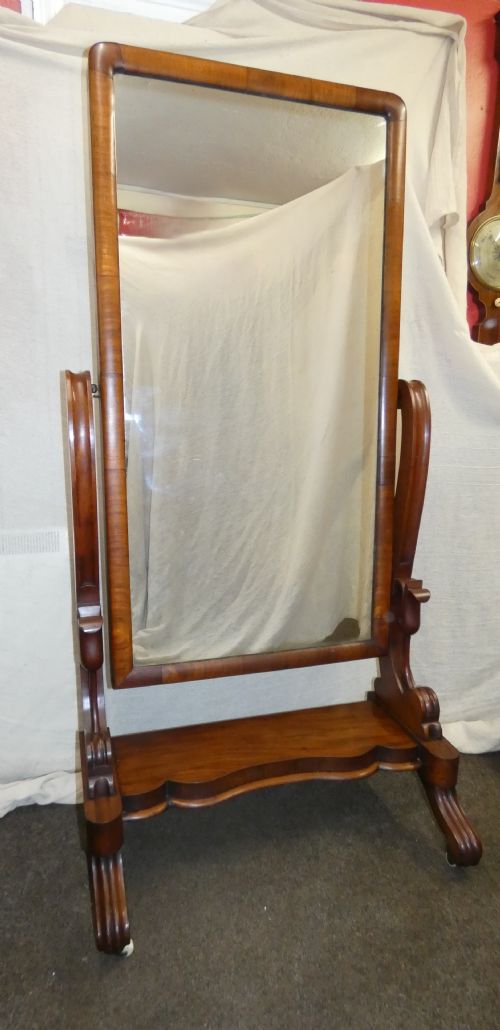
The pieces recorded span from the Georgian and Regency eras through the Victorian and Edwardian periods into the early twentieth century. Victorian and nineteenth-century mahogany examples appear most frequently among the current listings, alongside walnut, oak, and occasional painted or satinwood pieces.
Materials and construction
The frames rely heavily on hardwoods such as mahogany, walnut, and oak, frequently enhanced with veneers like burr walnut or satinwood. Supporting elements incorporate brass fittings, mirror glass, and occasionally carved wooden ornamentation or barley twist supports.
Joinery techniques and turning methods dictate the construction of the uprights and swing frames. Makers utilised timber stability to house pivoting mirror plates securely within the freestanding structures.
Listings feature mahogany, walnut, oak, and satinwood across periods from George III to the Edwardian era.
Craftsmanship and design
The distinction between standard examples and the finest pieces rests upon timber selection and decorative detail. Superior items display figured veneers, intricate carving, or specific styling in the manner of notable designers, whereas simpler versions rely on plain mahogany or oak construction.
Proportion and scale also separate the items, with large floor-standing mirrors and exhibition quality pieces showing more ambitious design elements than smaller toilet or table top dressing glasses.
P & MA Nicholson
The Wooden Cheval Mirror Glossary
- Cheval mirror
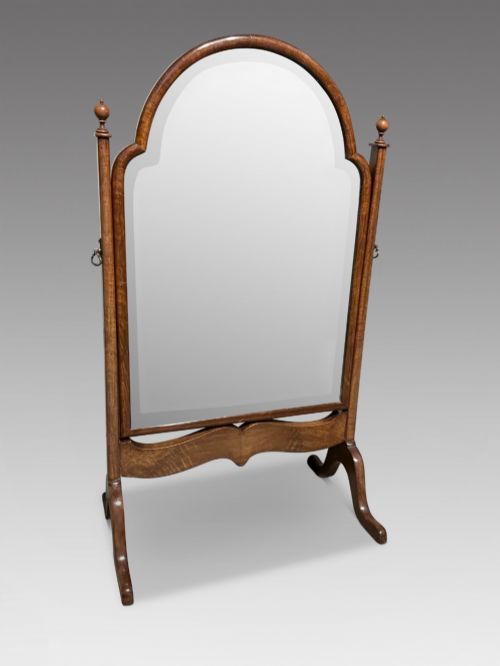
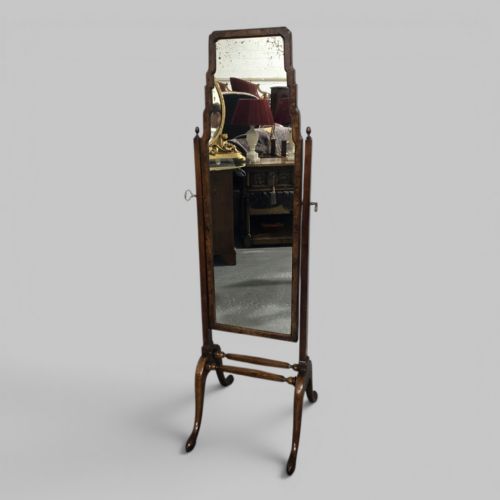
- A freestanding full-length mirror suspended on a frame with pivoting side supports. The term derives from the French word for horse.
- Swing mirror
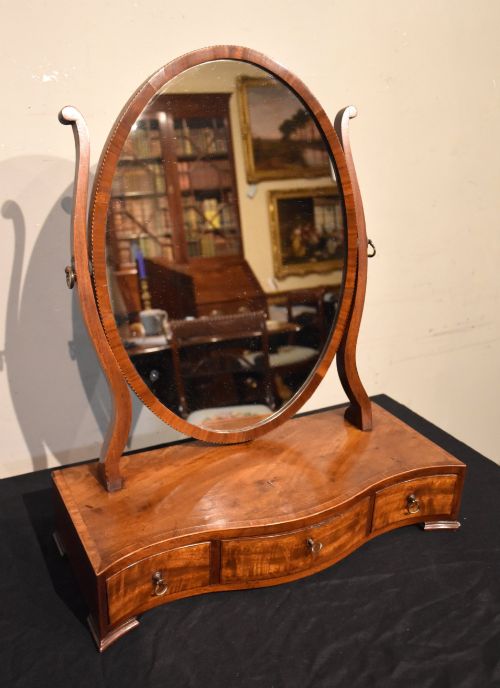
- A dressing glass mounted on uprights that tilts back and forth on pivots. These often incorporate small drawers in the base plinth.
- Toilet mirror
- A smaller dressing table glass designed to sit upon a chest of drawers or a table surface. They date across the Georgian, Victorian, and Edwardian periods.
- Barley twist
- A decorative turning technique resembling a twisted rope, seen on the upright supports of certain nineteenth-century examples.
Wooden Cheval Mirror: Frequently Asked Questions
What is a wooden cheval mirror?
A wooden cheval mirror is a freestanding dressing glass that tilts within a vertical frame, designed to show the full figure.
These pieces range from tall floor-standing furniture items to smaller tabletop versions seen across various historical periods.
How do I date a wooden cheval mirror?
Dating relies on identifying the prevailing timber, construction methods, and stylistic details such as Regency curves or Victorian turning.
Comparing the mirror frame design and support structure to documented periods helps narrow down the decade of manufacture.
Where should I place a wooden cheval mirror?
These mirrors suit bedrooms, dressing rooms, or hallways where a full-length reflection is required.
Positioning them near natural light sources helps maximise their function while highlighting the wood grain of the frame.
What is the difference between a cheval mirror and a toilet mirror?
A cheval mirror stands tall on the floor and shows the entire body of the viewer.
A toilet mirror is much smaller and sits on top of a dressing table or chest to reflect the upper body.