


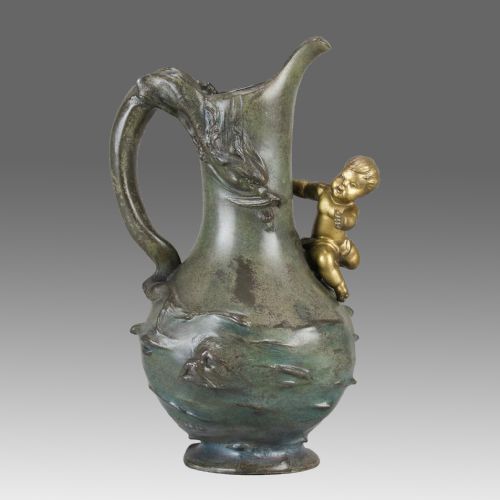
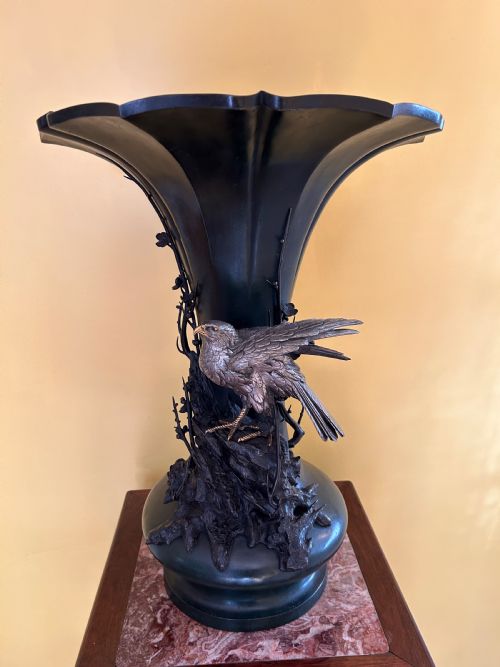


Bronze Vessel Sculpture
A bronze vessel sculpture brings classical form and foundry mastery into a room, combining the permanence of metal with sculptural grace.
Bronze Vessel Sculpture
A bronze vessel sculpture occupies the space between utilitarian form and figurative art, presenting cast metal objects shaped as vases, urns, and pitchers embellished with sculptural figures or relief work. When searching for a bronze vessel sculpture, buyers encounter works ranging from classical European antiquities to intricate Japanese metalwork.
The pieces appearing on this page span the nineteenth century and the early twentieth century, capturing distinct aesthetic movements. European examples draw heavily on neoclassical motifs and flowing art nouveau designs, while pieces from the Japanese Meiji period introduce mixed metals and naturalistic subjects.
Forms vary from monumental garden planters and lidded urns to cabinet-sized vases featuring frogs, water carriers, and mythological nymphs. European foundry output sits alongside signed Japanese works, offering collectors a diverse selection of sculptural vessels.
Assessing quality in cast bronze
Quality rests in the crispness of the chasing and the subtlety of the patina applied across the bronze surface. Finer works display meticulous detail in human figures, foliage, and relief ornament without losing the structural integrity of the vessel.
The reputation of the foundry and the clarity of the casting mark distinguish standard production pieces from exceptional works. Superior examples maintain balance between the sculptural elements and the vessel body, with careful finishing visible in every contour.
The inventory spans the nineteenth century, the Meiji period, and the early twentieth century up to nineteen-ten.
Charles Korschann·Jean Dunand·Vincenzo Gemito·Georges Van De Voorde·Barbedienne Paris·Genryusai Seiya·Auguste Cain
The Bronze Vessel Sculpture Glossary
- Patinated bronze
- Bronze that has been treated with chemical solutions to produce a specific surface colour or aged tone.
- Gilt bronze
- Bronze that has been coated with a thin layer of gold or gold leaf, also known as ormolu.
- Mixed metal
- A technique combining bronze with contrasting metals such as silver, copper, or shakudo to create decorative surface patterns.
- Grand Tour
- Nineteenth-century European travel tradition that inspired souvenir bronzes modelled on classical antiquities.
- Meiji period
- The era of Japanese history from 1868 to 1912 noted for exceptional bronze casting and mixed metalwork.
Bronze Vessel Sculpture: Frequently Asked Questions
What is a bronze vessel sculpture?
A bronze vessel sculpture is a cast metal object that serves simultaneously as a decorative container, such as a vase or urn, and a piece of standalone sculpture.
These pieces often feature figurative elements, mythological scenes, or natural motifs integrated directly into the body of the vessel.
How do I clean antique bronze?
Antique bronze should be dusted gently with a soft, dry cloth to prevent the accumulation of dirt within intricate crevices.
Avoid using commercial metal polishes, abrasive cleaners, or water, as these can strip away the historical patina that gives the metal its character.
Where were these sculptures made?
The pieces available originate primarily from European foundries in France and Italy alongside Japanese workshops active during the Meiji period.
European makers often reinterpreted classical antiquity or embraced contemporary art nouveau styles, while Japanese artists focused on mastery of mixed metals.
How can I tell the period?
Dating relies on stylistic markers such as neoclassical motifs from the nineteenth century or flowing organic lines characteristic of art nouveau.
Foundry marks, signatures, and material combinations like mixed metal inlay also provide clear indicators of when a piece was cast.