


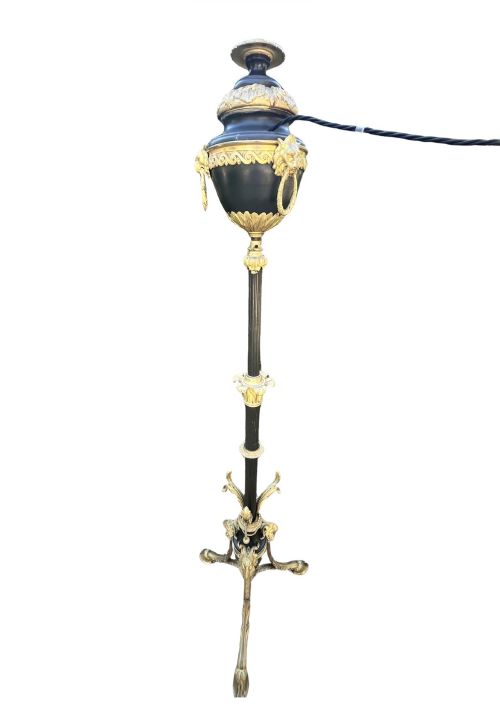
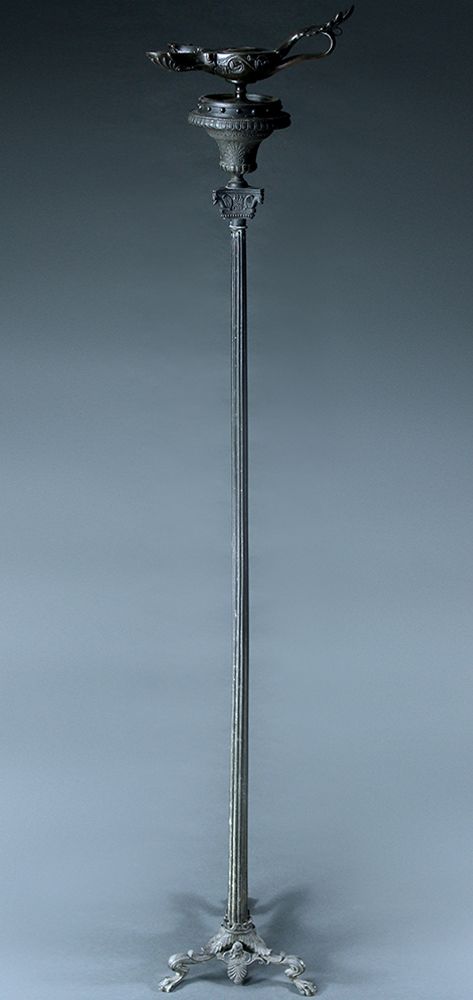


Bronze Standing Lamp
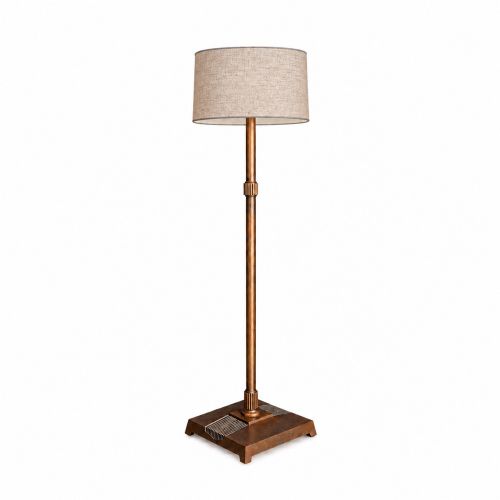
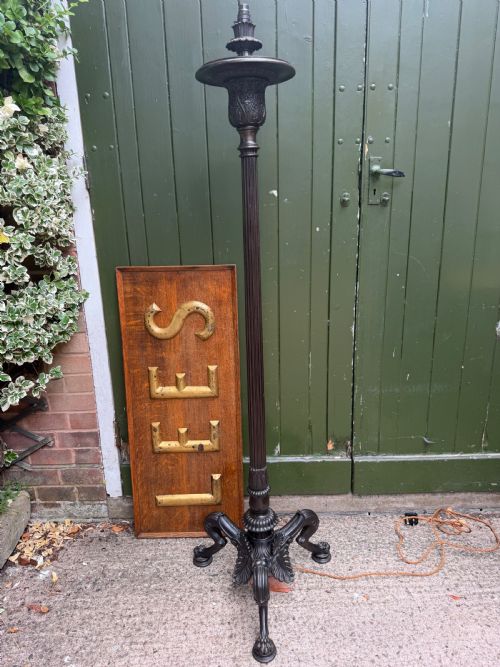
These bronze standing lamp examples bring sculptural presence and steady illumination to a room, spanning grand nineteenth-century revival styles and sleek Edwardian lines.
Bronze Standing Lamp
A bronze standing lamp serves as a substantial focal point in a room, combining practical lighting with sculptural form. When exploring these pieces, buyers most frequently encounter floor lamps and standard lamps dating from the nineteenth century through the Edwardian era.
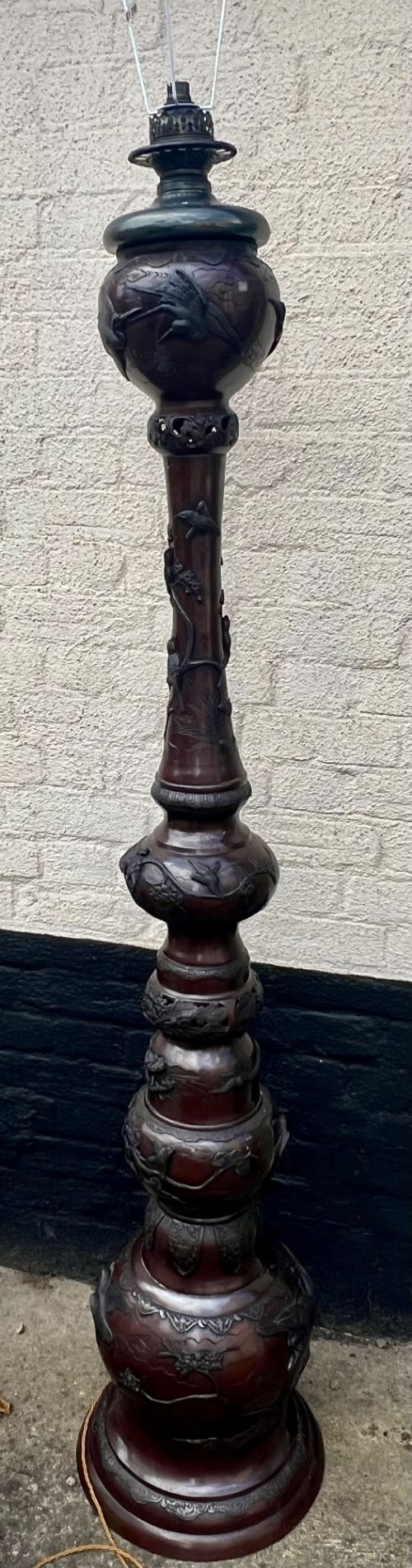
The selection ranges from classical Grecian standard lamps and Neo-Pompeian torchieres to Japanese Meiji period floor lamps and Louis XVI style gilt bronzes. Alongside tall lighting, the archive and current listings include related forms such as occasional tables, gueridons, and torcheres designed to hold or accompany lights.
Origins vary across English, French, Italianate, and Swedish workshops, reflecting diverse regional interpretations of neoclassical, Baroque, and Art Deco aesthetics. Buyers find both single statement pieces and matched pairs intended to anchor either side of a grand interior space.
Assessing Quality and Execution
The standard of a bronze standing lamp is determined by the crispness of the metal casting and the depth of the hand-chasing on the bronze, ormolu, or gilt brass. Finer examples display meticulous detailing in classical motifs, figural elements, and mounts, whereas simpler pieces rely on basic cast forms with minimal surface finishing.
Material integration also dictates quality, particularly in the selection of veined marble bases, rich mahogany timbers, and the structural integrity of adjustable height mechanisms or multi-arm configurations. Pieces signed by known makers or bearing distinct foundry marks command greater attention for their documented provenance and superior craftsmanship.
Bronze Standing Lamp Retail Price Guide 2026
Typical asking prices for bronze standing lamp among the pieces listed under this phrase on Sellingantiques today, from the lower quarter to the upper quarter. They describe what is for sale here now, not the wider market.
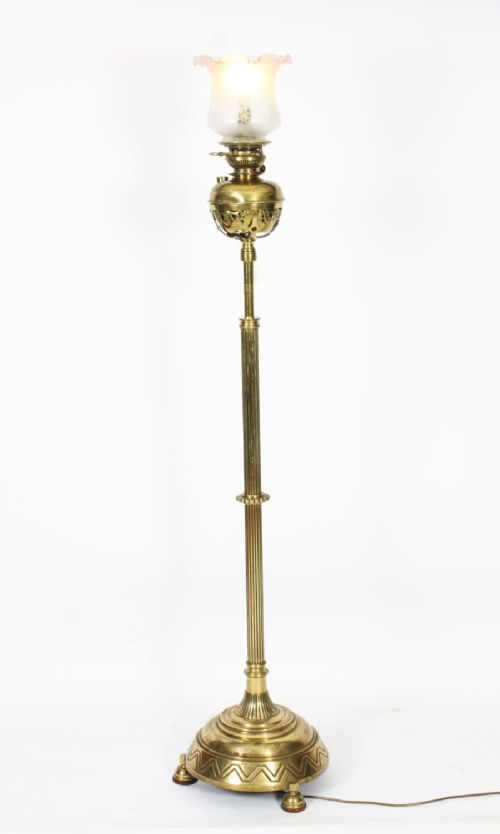
Several lamps include adjustable height mechanisms, allowing Victorian readers to lower their light source precisely toward an evening book.
Humphrey Hopper·Coutan·Linke
The Bronze Standing Lamp Glossary
- Torchere
- A tall ornamental stand or floor lamp designed to hold a light, originating from seventeenth-century candle stands. They often feature slender columns supported by tripod bases.
- Ormolu
- Gilt bronze produced by applying a finely ground high-carat gold-mercury amalgam to a bronze object, which is then fired. This technique creates a rich, durable golden surface seen on finer decorative mounts.
- Gueridon
- A small French occasional table, frequently round and supported by a central column or figures. These pieces often appear alongside lamp standards in period interiors.
- Patinated Bronze
- Bronze that has been treated chemically or naturally to produce a specific surface colour and texture. This finish protects the metal while adding depth to the sculptural details.
- Standard Lamp
- A British term for a tall floor lamp designed to stand independently in a room. They typically support a fabric shade and provide ambient illumination.
Bronze Standing Lamp: Frequently Asked Questions
How do I distinguish a torchere from a standard lamp?
A torchere traditionally refers to a tall, decorative stand or light holder rooted in classical forms, often featuring a slender column and tripod base. A standard lamp is generally designed specifically to support an electrical or oil fitting with a shade for room illumination.
While some nineteenth-century examples blur these lines through later conversions, torcheres lean more toward sculptural display pieces.
Where should I place a bronze standing lamp in a room?
These lamps suit corners, beside heavy period seating, or flanking a fireplace where their height and weight anchor the spatial composition. Tall standard lamps and torcheres provide effective ambient lighting when paired with complementary side tables or gueridons.
Placement should account for the substantial weight of bronze and marble bases, ensuring stability on firm flooring.
How do I identify the period of a bronze lamp?
Dating relies on stylistic cues such as Neoclassical motifs, Louis XV or XVI curves, and Edwardian proportions, alongside construction methods like casting seams and screw threads. Evidence of hand-chasing and the specific composition of the patination or ormolu offer further chronological clues.
Signatures or stamps from makers and foundries provide the most definitive dating references when present.
Were these lamps originally made for electricity?
Most nineteenth-century and Edwardian pieces began as oil lamps, gas standards, or candle-holders before being adapted for modern electrical wiring later in their lifespan. This conversion process is standard for antique lighting and rarely detracts from the piece if executed with care.
Checking the internal wiring and fitting compatibility ensures safe daily use in a modern interior.