
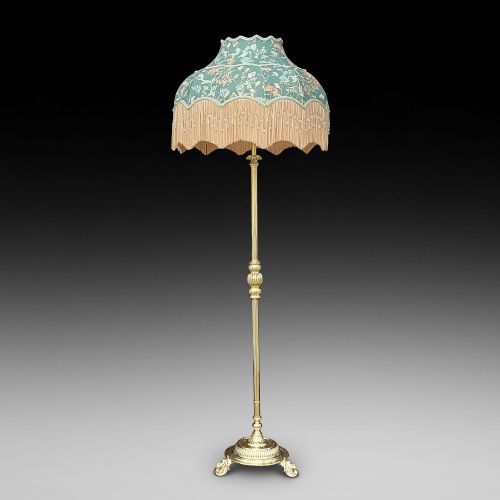
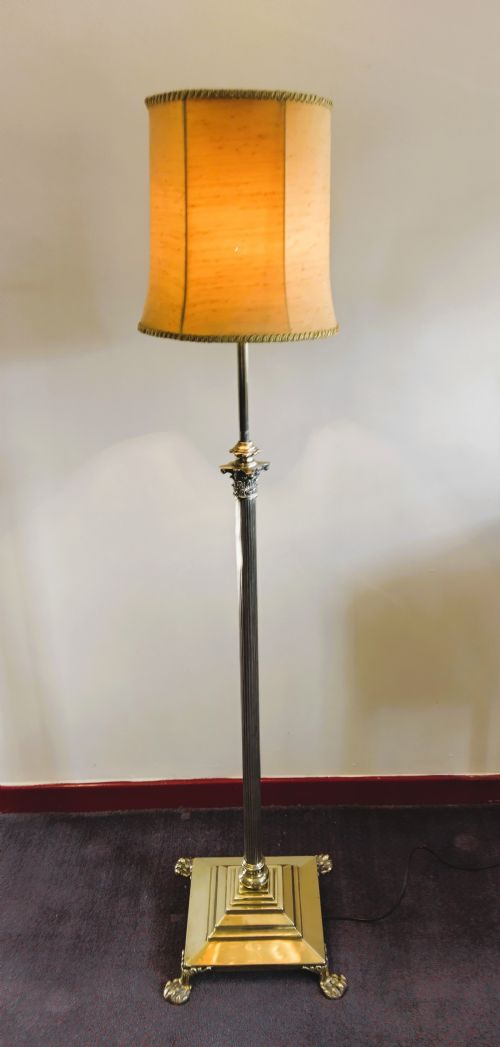


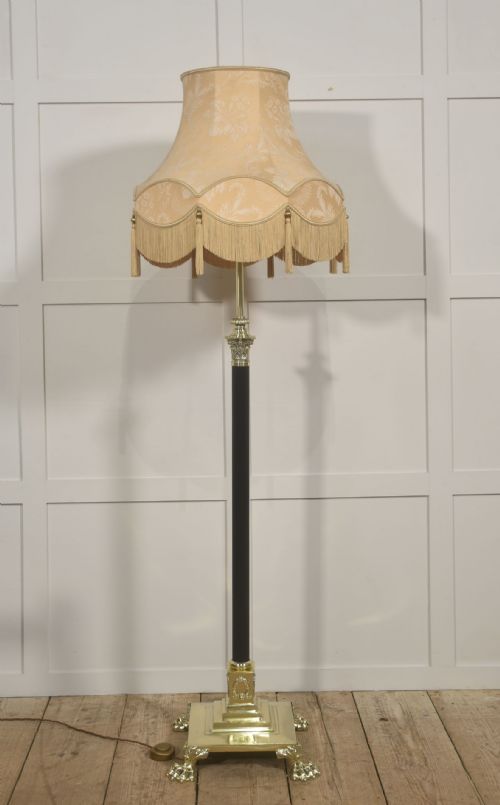


Brass Adjustable Floor Light
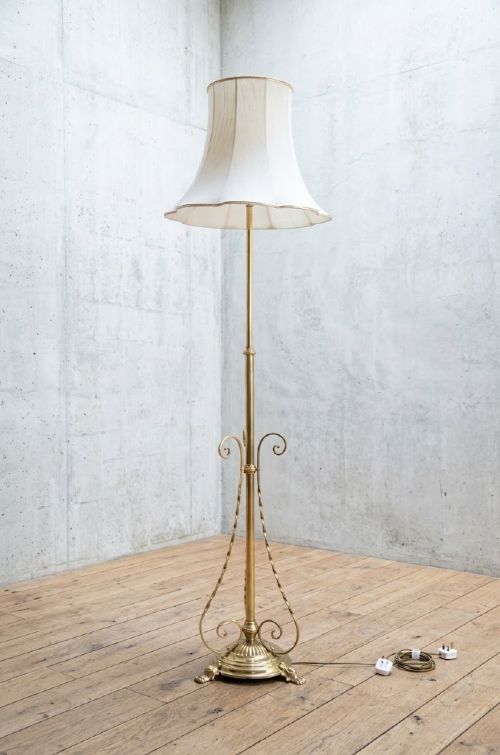
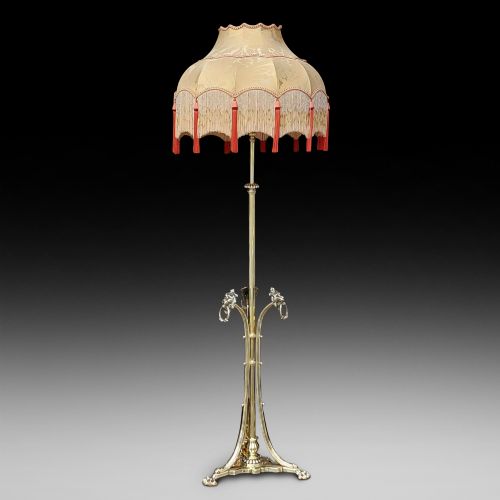
A brass adjustable floor light stands as a functional centrepiece, offering adaptable illumination through telescoping metal columns and historic character.
Brass Adjustable Floor Light
A brass adjustable floor light is a tall standing lamp designed to direct illumination at varying heights using telescopic or swivel mechanisms. When searching for a brass adjustable floor light, buyers encounter standard lamps that often originate from the Victorian, Edwardian, and Arts and Crafts periods. Many examples survive from around 1900, alongside pieces spanning the nineteenth century through the mid-twentieth century.
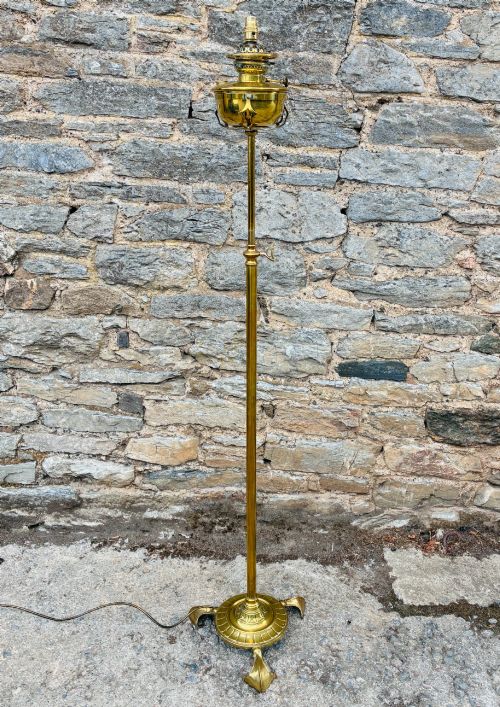
The most common forms on this page include converted oil lamps, telescopic standards, and column lamps. Early versions frequently incorporate mechanisms designed for paraffin or oil before later electrical conversion, while tripod bases and heavy weighted stands provide stability for the extended height.
How they were made
Makers utilised solid brass, copper, and cast iron to construct the heavy columns and weighted bases required to support extended heights safely. Tubing was drawn and threaded, while decorative mounts incorporated cast elements in styles ranging from Neoclassical to Art Nouveau.
Many of these lamps were originally produced as oil-burning standards before being adapted for electricity during subsequent decades. Original components such as keys, keyscrews, and sliding stems remain integrated into the brass framework.
Current listings feature pieces spanning the Victorian and Edwardian eras, with notable representation from the Arts and Crafts and Art Nouveau periods.
What varies in quality
The standard of a brass adjustable floor light depends upon the weight of the metal and the precision of the mechanical adjustment. Superior examples feature substantial gauge brass, heavy cast iron or marble internal ballast in the base, and smoothly operating telescopic screw mechanisms that hold position securely without slipping.
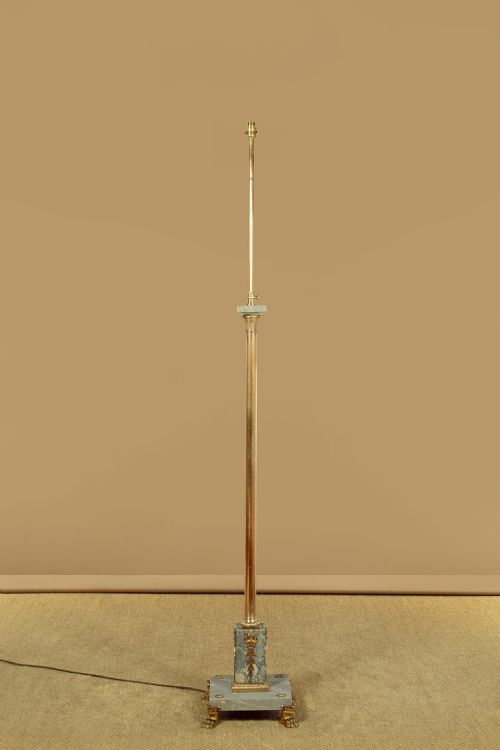
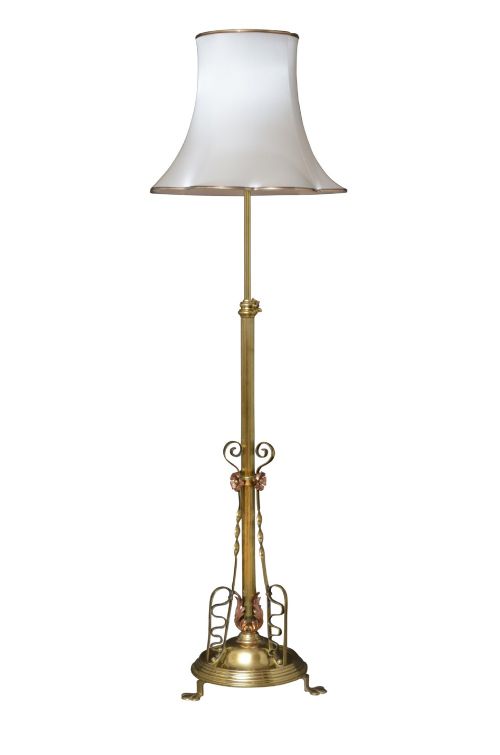
Design integrity and ornamentation also divide mass production from finer workshops. Hand-hammered surfaces on Arts and Crafts models, crisp Corinthian column capitals, and integrated copper or cranberry glass details indicate a higher grade of manufacture.
Messenger·W A S Benson
The Brass Adjustable Floor Light Glossary
- Telescopic
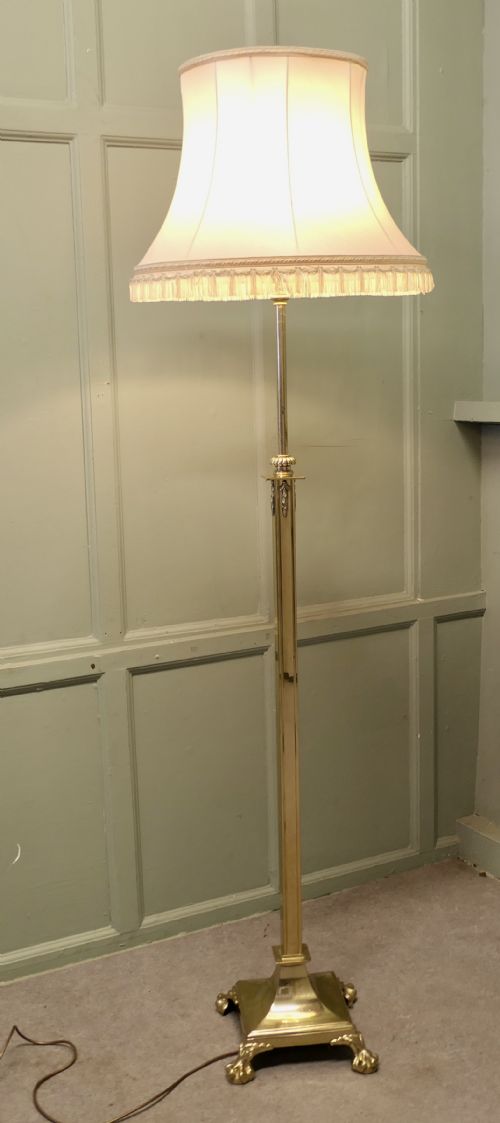
- A sliding column mechanism that allows the height of the lamp standard to be raised or lowered. This adjustment is typically secured by a side thumbscrew or key.
- Standard lamp
- A traditional British term for a floor-standing lamp base designed to support a shade and bulb. These fixtures generally stand higher than desk or table lamps.
- Corinthian column
- An architectural column capital featuring ornate acanthus leaves, frequently utilised on formal Victorian and Edwardian brass floor standards. This classical motif adds vertical decorative detail.
- Bouillotte
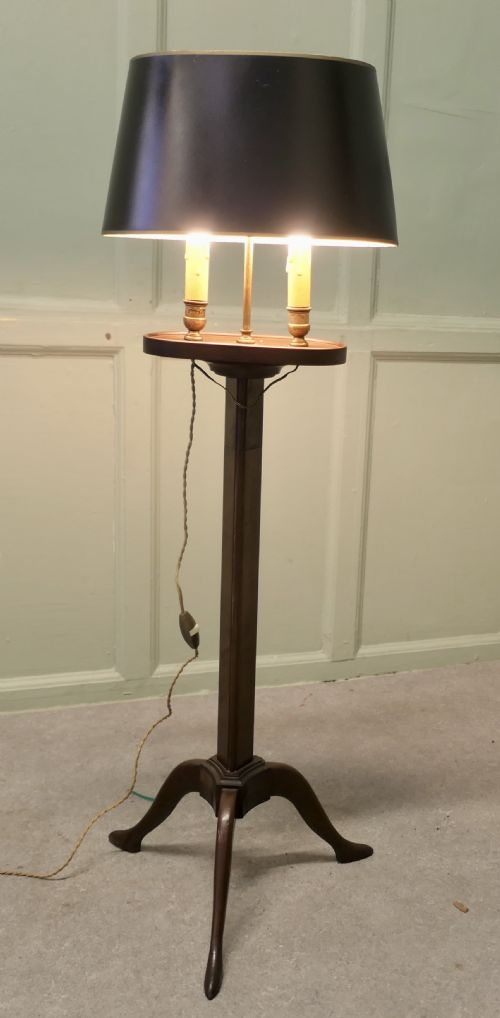
- A type of lamp featuring adjustable twin or multi-directional candle arms, adapted in later periods for electric bulbs. These forms often incorporate a central metal shade.
- Tripod base
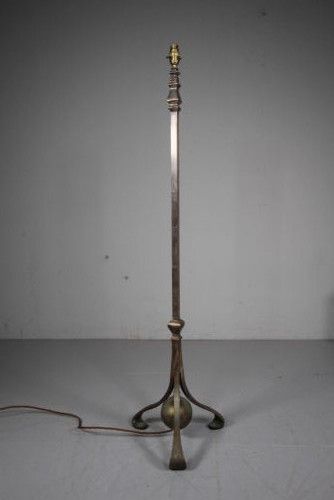
- A three-legged support structure commonly found on Arts and Crafts and industrial floor standards. This configuration provides a wide footprint for stability.
Brass Adjustable Floor Light: Frequently Asked Questions
Were these lamps originally electric?
Many older floor standards were originally manufactured for oil or paraffin before being converted to electricity during the twentieth century.
Converted pieces retain their original reservoirs, burners, or telescopic stems alongside modern internal wiring.
How do I identify an Arts and Crafts standard lamp?
Arts and Crafts floor lights usually display simpler, hand-finished metalwork with exposed rivets, hammered textures, and tripod bases.
They reject excessive Victorian ornamentation in favour of honest construction and functional form.
What materials are used in these bases?
The primary material is brass, often paired with copper, cast iron, marble, or onyx to provide a heavy counterweight at the base.
This added weight prevents the tall standards from tipping when the column is fully extended.