
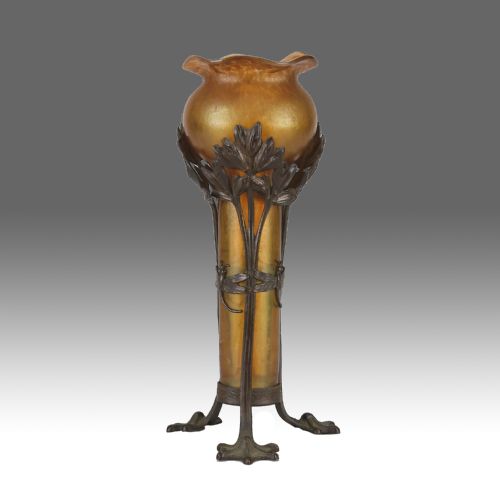
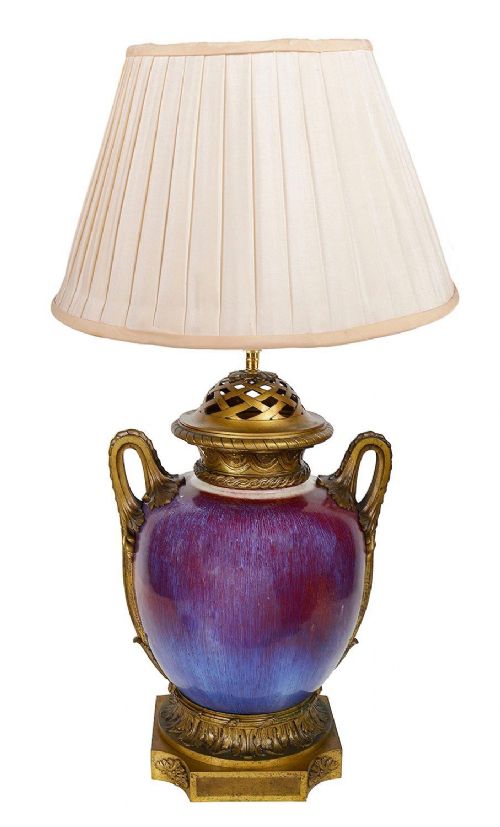
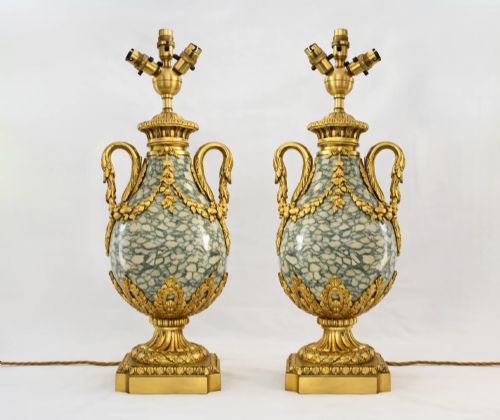


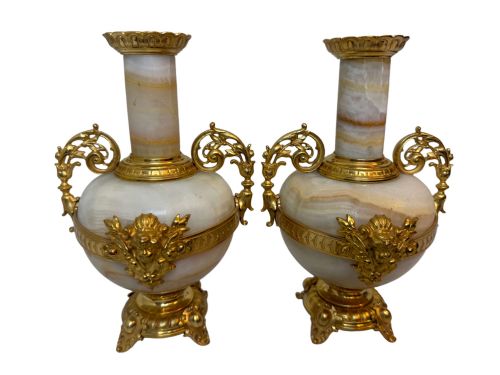
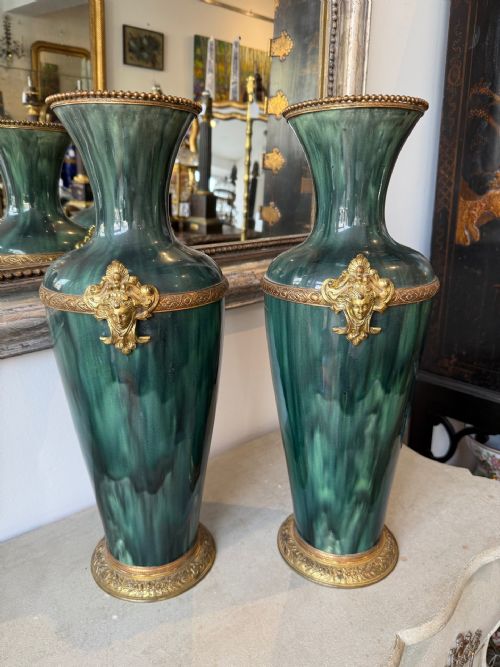

Bronze Mounted Vase
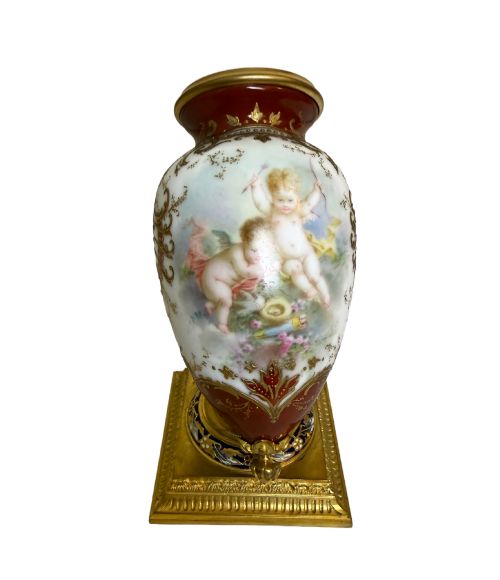
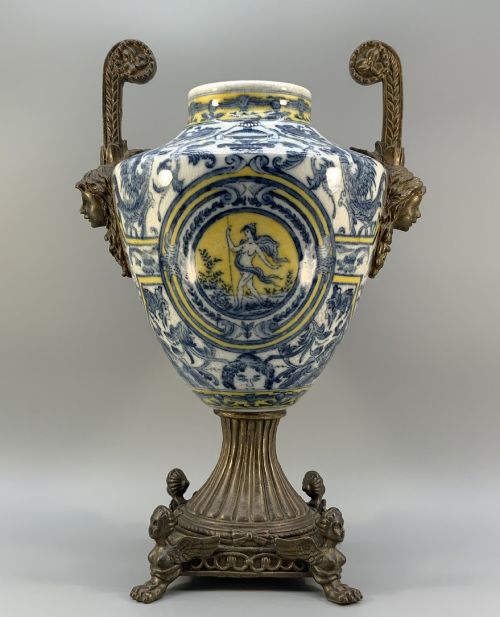
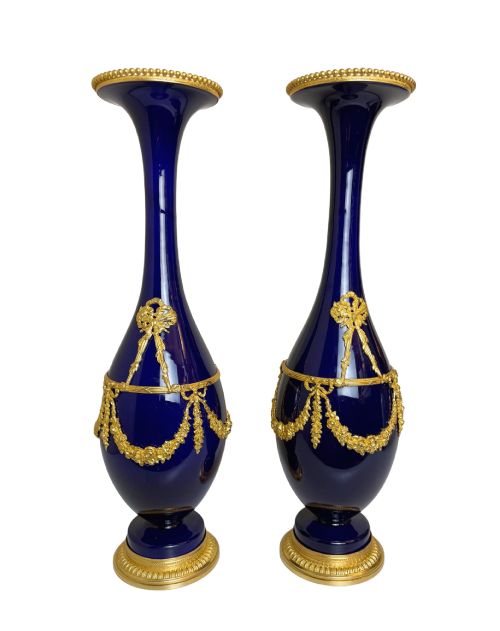
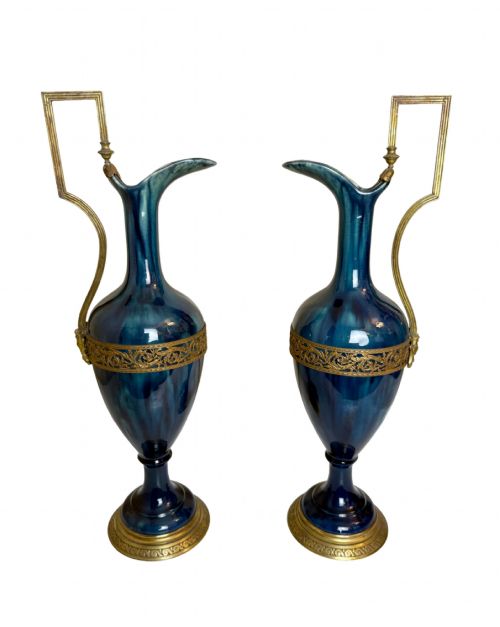
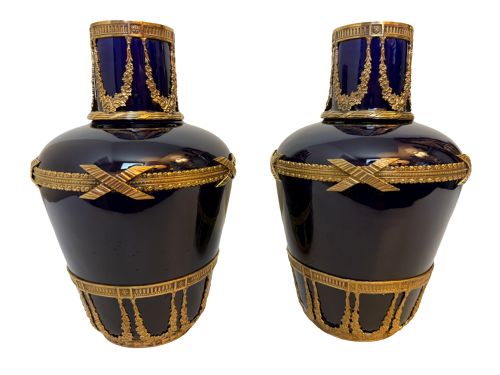
A bronze mounted vase brings together finely glazed ceramic or carved stone with rich cast metalwork, offering a striking focal point for a formal interior.
Bronze Mounted Vase
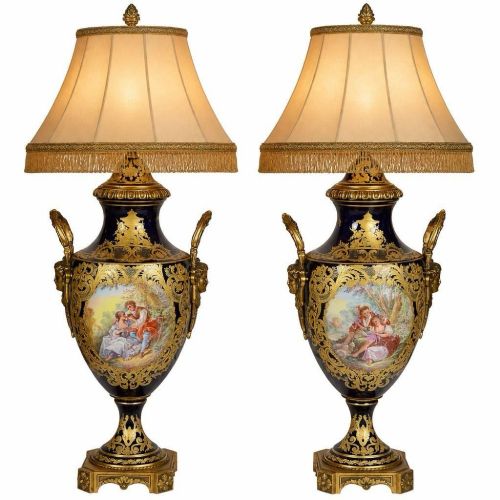
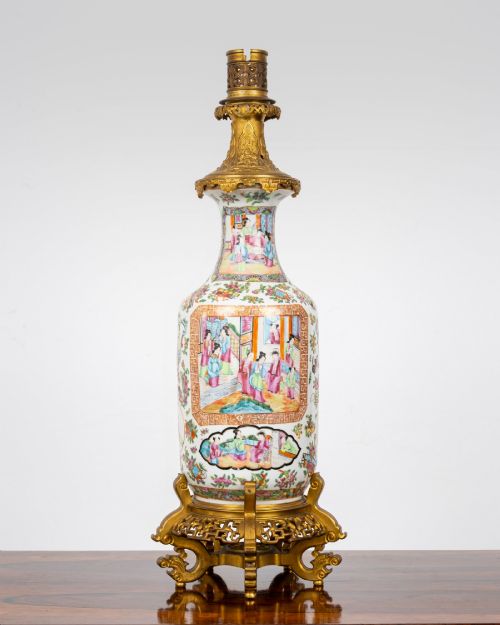
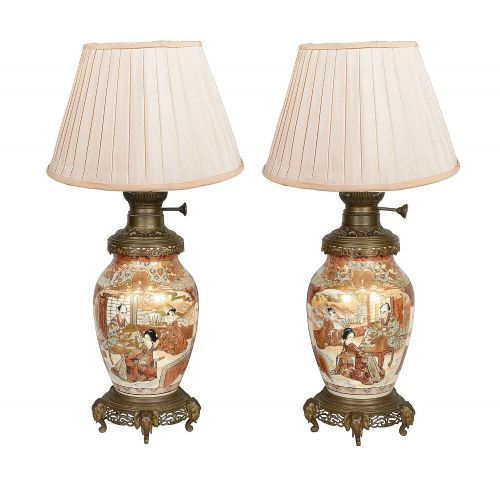
A bronze mounted vase merges a vessel body made from porcelain, pottery, glass or stone with decorative metal fittings cast in bronze, ormolu or brass. These pieces often serve double duty as decorative urns or adapted table lamps, particularly when wired for modern interiors.
The versions most frequently met on this page date from the nineteenth century, drawing heavily on French Rococo Revival, Louis XVI style and Chinoiserie aesthetics. Makers frequently employed imported Chinese celadon, powder blue, and Sang de Boeuf porcelain bodies alongside European ceramics styled after Sevres or Meissen.
Vessels span a range of functional forms including lidded jars, potpourri containers, cassolettes, and tazzas. The metal mounts typically frame the rim, form the foot, or provide sweeping handles that complement the contours of the central vessel.
Materials and Construction
The creation of these works required close collaboration between ceramicists, glassmakers, stone carvers, and bronze founders. Vessel bodies were thrown, moulded, or carved from materials such as marble, onyx, faience, and hard-paste porcelain before receiving coloured glazes, enamel work, or delicate pâte-sur-pâte decoration.
Metal mounts were produced through traditional lost-wax casting or sand-casting in bronze or brass. Artisans then chased the surface details by hand and applied mercury gilding to create the bright ormolu finish characteristic of finer examples.
Assessing Craftsmanship and Detail
Quality rests primarily in the crispness of the bronze chasing and the harmony between the metal mount and the vessel it frames. Superior pieces display deeply articulated foliage, scrolls, or figural mounts that follow the exact contours of the porcelain or stone without awkward gaps.
The underlying ceramic or stone body also dictates the tier of the piece, with hand-painted Sevres style porcelain, rich cloisonne enamel, or finely figured marble elevating the overall work. Secondary elements such as matching pairs and intact original covers contribute significantly to the cohesion of the object.
Sevres·Meissen·Loetz·Zsolnay
The Bronze Mounted Vase Glossary
- Ormolu
- Gilded bronze, produced by applying a mercury-gold amalgam to cast bronze and heating it to drive off the mercury. This technique creates a durable, bright yellow-gold finish common on nineteenth-century French mounts.
- Sang de Boeuf
- A deep, copper-red ceramic glaze developed in China and later replicated by European potteries. The rich crimson surface frequently provides a striking contrast against bright ormolu mounts.
- Cloisonne
- An enamel technique where thin metal wires are soldered to a metal base to create compartments filled with coloured paste and fired. These decorated bodies are then mounted in bronze for display.
- Pate-sur-pate
- A method of ceramic decoration where wet white slip is built up in successive layers on a contrasting coloured clay body to create low-relief cameos. This painstaking process yields a translucent, layered design.
Bronze Mounted Vase: Frequently Asked Questions
What is a bronze mounted vase?
A bronze mounted vase is a decorative vessel combining a ceramic, glass, or stone body with cast bronze or ormolu metal fittings. These additions serve to reinforce the rim, form the base, or provide decorative handles and feet.
Such objects gained immense popularity during the nineteenth century, drawing on earlier French and Asian design traditions to create ornate decorative pieces for mantelpieces and side tables.
Were these vases used as lamps?
Many surviving examples have been adapted as table lamps, particularly those originating from the nineteenth century. Dealers and former owners frequently converted large vases and urns by running electrical wiring through the central core while preserving the original metal mounts.
This conversion allowed decorative porcelain and cloisonne vessels to function as practical lighting fixtures in period interiors without damaging the antique body.
How do I identify French Louis XVI style mounts?
Louis XVI style mounts rely on classical symmetry, straight architectural lines, and restrained decorative motifs such as beading, acanthus leaves, and ribbon ties. The bronze work on these pieces feels orderly and balanced compared to the more exuberant asymmetry of Rococo designs.
Examining the cast bronze details reveals crisp chasing and structured geometric patterns that echo neoclassical architecture and furniture from the eighteenth century.
How should I clean ormolu mounts?
Ormolu mounts require gentle dusting with a soft, dry brush to prevent the accumulation of dirt in the recessed chased details. Chemical polishes or abrasive cloths must be avoided because they strip away the thin layer of historical mercury gilding.
Professional conservation cleaning is recommended for pieces with significant tarnish to preserve the integrity of the underlying bronze surface.