


Bronze Male Nude Sculpture
These bronze male nude sculpture pieces capture classical forms and mythological subjects, offering collectors enduring studies of the human figure.

Bronze Male Nude Sculpture
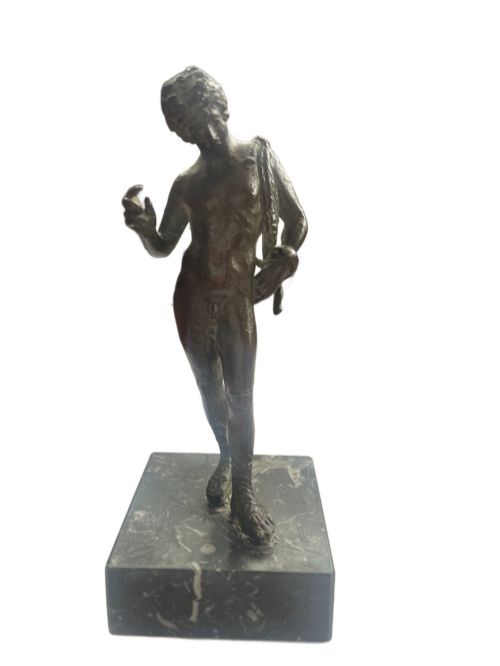
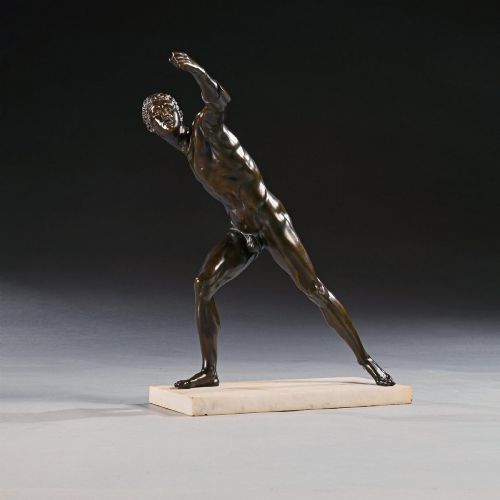
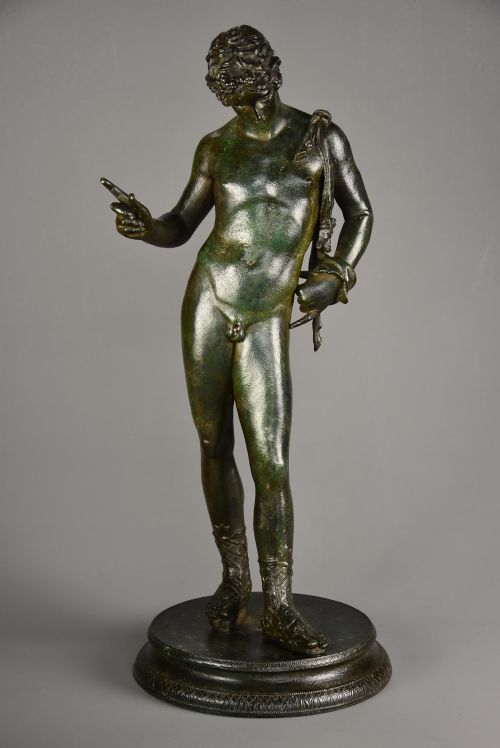
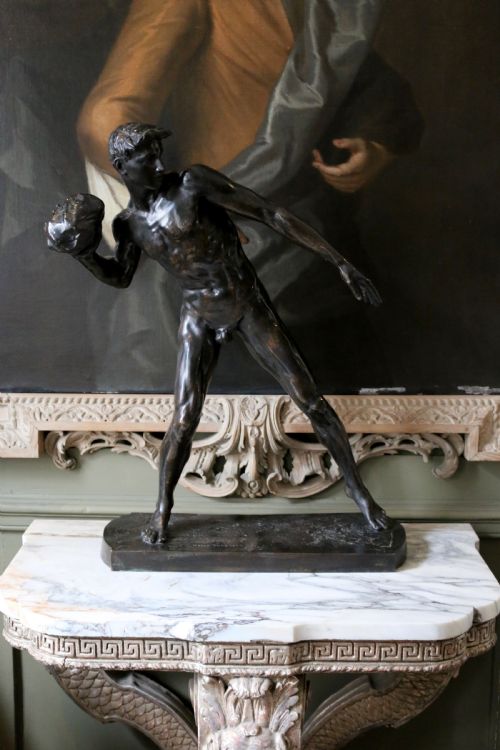
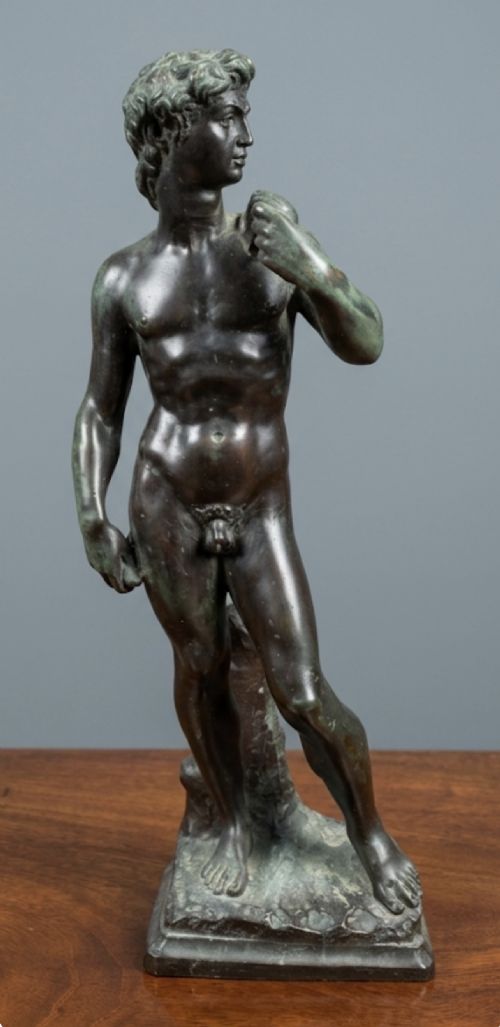
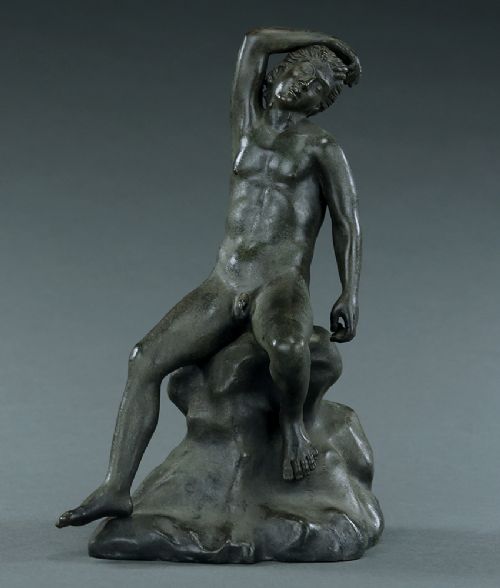
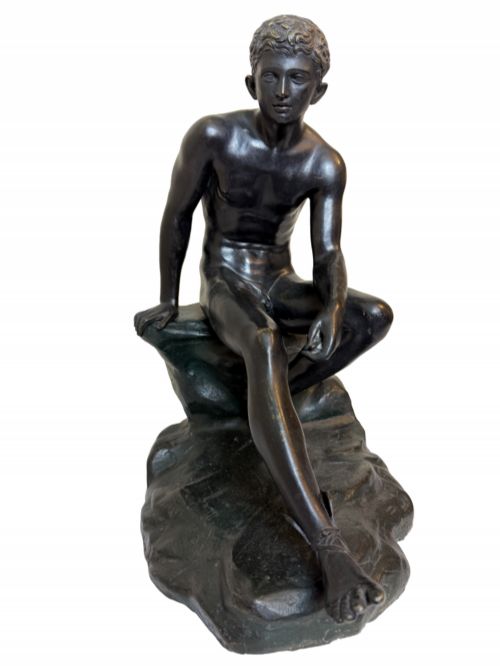
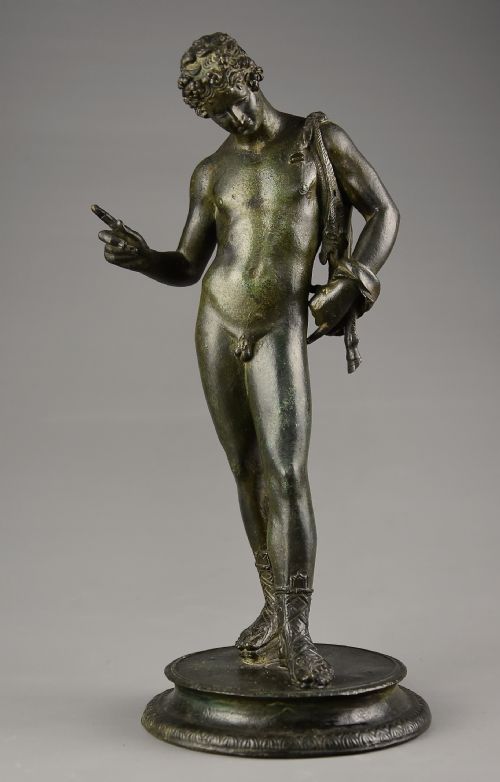
A bronze male nude sculpture embodies classical heroism, athleticism and mythological drama through enduring metal casts. When exploring this selection, buyers frequently encounter Grand Tour souvenirs originating from Italy, depicting iconic ancient subjects like Narcissus, Bacchus and various gladiators.
The objects span from the Victorian era into the early twentieth century, showing influences from Neoclassical and Academic Realism styles. Many works take the form of small or large scale figures standing alone, resting upon rocks or mounted atop dedicated marble plinths.
Materials and casting methods
Foundries utilised traditional metal casting to shape molten bronze into intricate anatomical studies, often applying patination to achieve deep dark tones or striking green verdigris surfaces. Artisans frequently paired the heavy metal figures with contrasting fossil marble or standard stone bases to provide stability and visual weight.
Makers pursued surface finish with meticulous chiselling and polishing after the cast cooled, highlighting muscular definition and drapery. The interaction between the metallic alloy and the underlying stone plinth defines the physical presence of each piece.
Assessing sculptural execution
Quality rests in the crispness of the anatomical rendering and the subtlety of the surface patination. Master foundries achieved lifelike tension in muscle and sinew, whereas lesser examples lose anatomical precision in softer, blurrier contours.
The depth and longevity of the chemical patina distinguish superior works, alongside the quality of the marble or stone base chosen to support the heavy metal figure. The most accomplished castings retain fine details in hair, facial expression and accessories without losing the natural flow of the body.
Hamo Thornycroft·Eugene Barillot·Raoul Francois Larche·Franz Iffland·Michele Amodio
The Bronze Male Nude Sculpture Glossary
- Grand Tour
- A cultural journey undertaken by wealthy young Europeans in the eighteenth and nineteenth centuries, acquiring souvenir bronzes of classical statues. These items formed the basis of many private collections.
- Patination
- The chemical or natural process of colouring the bronze surface, producing shades from dark brown to bright verdigris. This layer protects the metal and enhances visual depth.
- Neoclassical
- An artistic movement drawing inspiration from the classical art and culture of ancient Greece and Rome. It prioritises proportion, restraint and heroic subject matter.
- Plinth
- A heavy base or slab upon which a statue is mounted. In these collections, bases often consist of fossil marble or carved stone.
Bronze Male Nude Sculpture: Frequently Asked Questions
What is a Grand Tour bronze?
A Grand Tour bronze is a nineteenth-century souvenir cast in Italy, reproducing famous classical sculptures from museums and archaeological sites for travellers.
These pieces brought ancient Greek and Roman ideals into Victorian drawing rooms and studies as decorative art.
Why do many figures depict Narcissus?
Narcissus was one of the most celebrated antique statues discovered in Pompeii and Naples during the nineteenth century. Travellers eagerly bought reduced bronze replicas of this graceful figure for their homes.
Sculptors also adapted the pose to represent other mythological youths such as Bacchus and Dionysus.
How should I clean my bronze?
Bronze requires very little maintenance beyond occasional dusting with a soft, dry cloth. Avoid using water, soap or metal polishes, which can strip away the historical patination.
A very light application of microcrystalline wax can help protect the surface if handled frequently.
How do I date a nineteenth-century bronze?
Dating relies on examining the casting technique, the style of the patination and the materials used for the base. Finer chiselling and specific foundry marks often point to the Victorian period or earlier.
The inclusion of fossil marble bases frequently links pieces directly to nineteenth-century Neapolitan workshops.