



Bronze Fire Fender
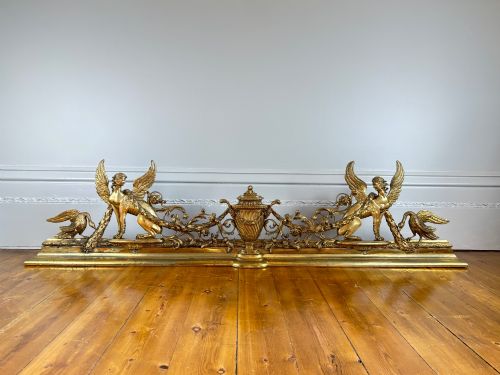
These bronze fire fenders frame a hearth with substantial metalwork, offering both safety and style for a period fireplace.
Bronze Fire Fender
A bronze fire fender sits on the hearth to contain stray embers while defining the fireplace opening in a room. When you search for a bronze fire fender, you find functional hearth surrounds dating from the nineteenth century, including Victorian pieces and French designs.
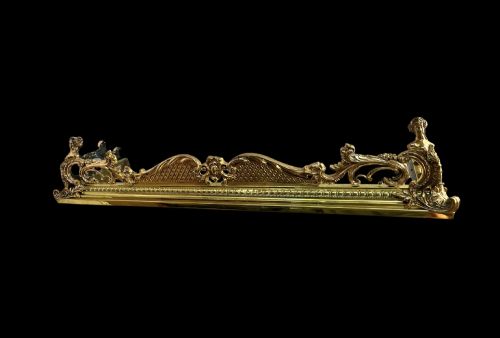
Victorian English pieces and French chateau styles appear regularly, showing influences ranging from Louis XV Rococo to Neoclassical Revival. These hearth accessories range from restrained linear frames to ornate, gilded works of metal art.
How they were made
Foundry workers cast these pieces using bronze, gilt bronze, ormolu, and brass, often combining them with iron or polished steel components. Metal is shaped and joined to create rigid frames or adjustable mechanisms that fit different hearth sizes.
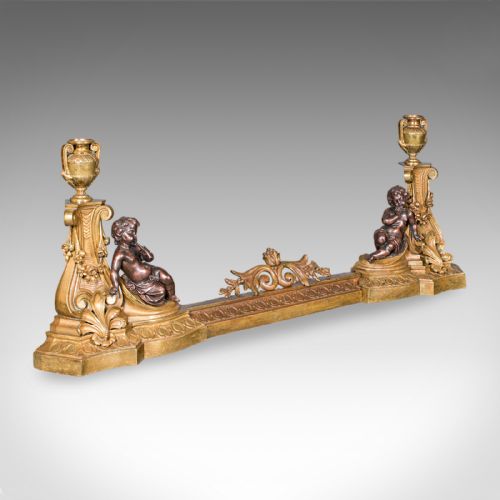
Surface decoration involves parcel gilding, patination, and fine chasing to highlight sculptural motifs such as cherubs, scrolls, and foliate patterns. Many French extendable fenders utilise sliding sections locked together with iron supports.
The combination of cast bronze figures with heavy steel or iron bases ensures both ornamental richness and durability under high hearth temperatures.
What varies in quality
The distinction between standard production and exceptional work lies in the crispness of the casting and the depth of the chasing. Superior pieces display finely detailed bronze putti, sharp acanthus leaves, and smooth operation in adjustable sliding mechanisms.
Finishes also separate pieces, with heavy ormolu and deep fire-gilding retaining their lustre far better than simpler plated surfaces. The weight of the metal and the structural integrity of the corner joints determine how well the fender withstands daily hearth use.
E F Caldwell New York
The Bronze Fire Fender Glossary
- Ormolu
- Gilded bronze produced by applying a mercury and gold amalgam to a bronze base and firing it. This technique creates a rich, durable golden surface seen on finer French hearth furniture.
- Chenet
- An alternative term for an andiron, often placed at the ends of a hearth. These decorative metal supports frequently match or accompany the design of a fire fender.
- Fire Kerb
- A low barrier placed around the hearth to keep burning fuel contained. It serves the same practical purpose as a fender.
- Patinated Bronze
- Bronze that has been chemically treated to alter its surface colour. This process produces dark brown, green, or antique tones on the metal.
Bronze Fire Fender: Frequently Asked Questions
How do adjustable fire fenders work?
Adjustable fire fenders consist of overlapping metal sections that slide outward to fit different fireplace widths. This mechanism allows a single fender to adapt to various hearth sizes.
Makers often built these sliding joints with internal stops or locking screws to keep the frame secure once positioned against the fireplace surround.
What is the difference between ormolu and bronze?
Bronze is a copper alloy used to cast the structural body and decorative figures of the fender. Ormolu refers specifically to the application of a gold finish onto that bronze surface.
While solid bronze shows a natural metallic tone or patination, ormolu provides a bright golden appearance characteristic of French decorative arts.
How do I clean a bronze fire fender?
Dust the metal regularly with a soft, dry cloth to prevent soot and ash accumulation. Avoid abrasive cleaners or harsh polishes that can strip away historic patination or delicate gilding.
For gilded or ormolu surfaces, gentle dusting is generally sufficient to maintain the finish without damaging the metalwork.
Where were most antique fire fenders made?
Surviving nineteenth-century fire fenders originate primarily from British and French workshops. English pieces often feature heavier iron and brass construction, while French examples frequently showcase elaborate gilt bronze and Rococo revival styling. Nineteeth-century makers in New York also produced high-end cast metalwork for domestic hearths.