

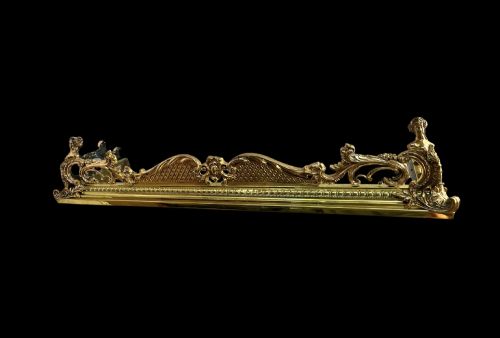
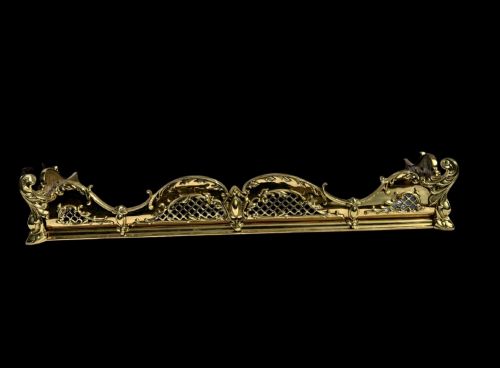


Ornate Brass Fender
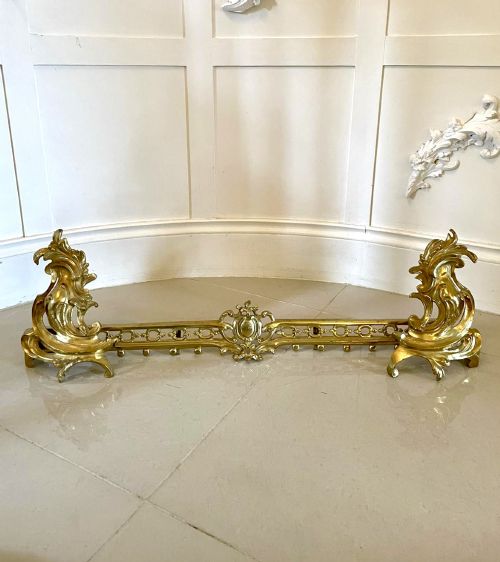
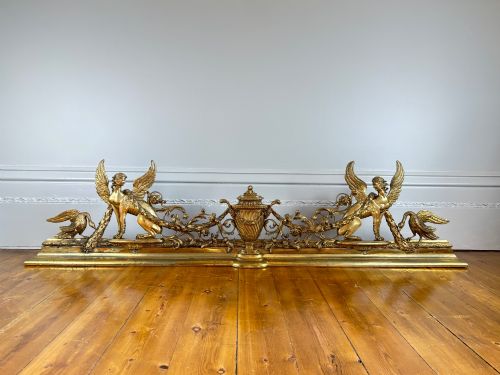
An ornate brass fender defines a hearth, bringing polish and weight to a fireplace with its pierced metalwork and classical or rococo curves.
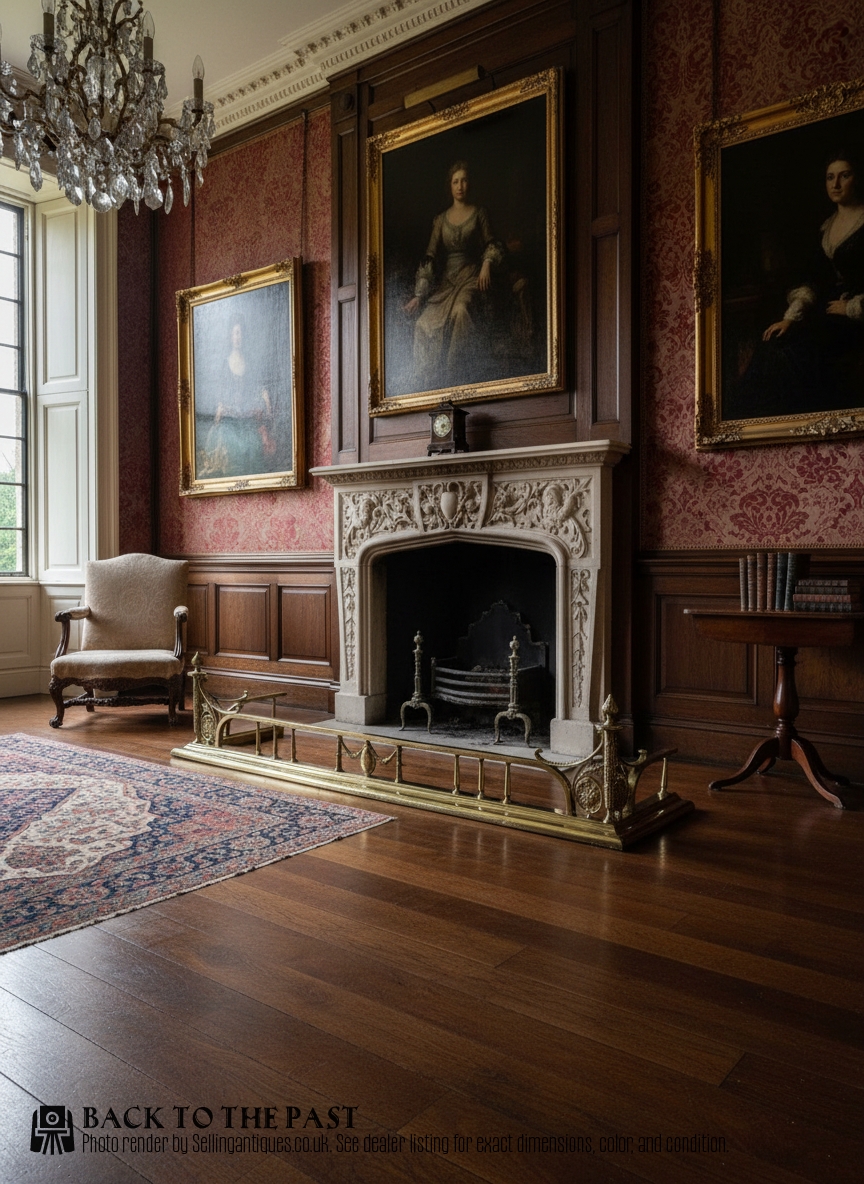
Ornate Brass Fender
When you search for an ornate brass fender, you find hearth surrounds designed to keep embers on the fire pit while framing the fireplace with decorative metalwork. These pieces sit directly on the floor in front of the hearth, often incorporating adjustable sliding sections to fit different fireplace widths.
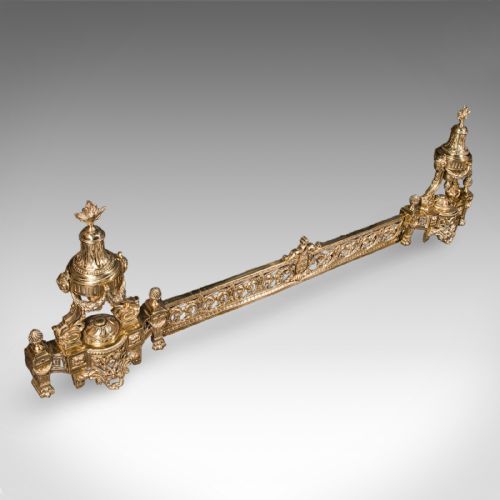
You are most likely to meet Victorian and 19th-century examples on this page, spanning periods from 1860 to 1920. Styles range from simple English brass kerbs to French Rococo Revival and Louis XVI Neoclassical designs adorned with intricate castings.
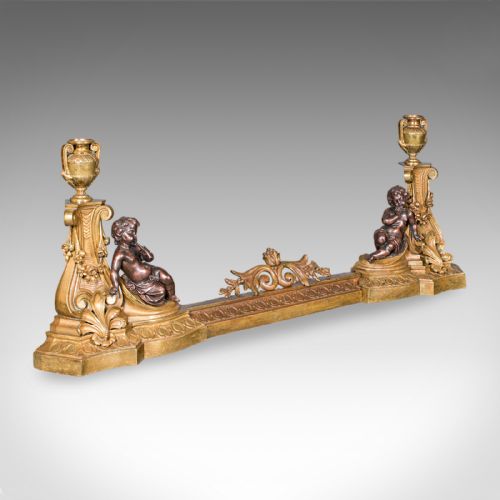
The objects take the form of fireplace accessories, fire kerbs, and hearth guards. Many items combine heavy cast frames with pierced galleries, sometimes pairing brass with bronze, copper, or cast iron elements.
What varies in quality
The distinction between standard production and top-tier work lies in the crispness of the casting and the depth of the chased detail. Finer pieces display sharply rendered foliage and figures without the softening common in secondary casts.
Weight and structural substance separate substantial hearth furniture from lighter alternatives. Heavier gauges of brass and solid bronze components provide stability and resistance to warping under hearth heat.
The sophistication of the mechanism and the integrity of the original fire-gilding or ormolu finish determine the desirability of surviving French and English examples.
Some extending models still retain their original adjustment screws, proving that hearth furniture needed to survive moving house.
E F Caldwell New York
The Ornate Brass Fender Glossary
- Fender
- A low metal guard placed before an open fireplace to contain falling coals and sparks. It also serves as a decorative boundary for the hearth.
- Ormolu
- Gilded bronze produced by applying a mercury and gold amalgam to a bronze base and heating it. This technique creates a durable, golden finish seen on French decorative metalwork.
- Chenet
- An alternative term for a firedog, often matching or pairing with a fender to support logs and decorate the hearth opening.
- Extending fender
- A hearth guard constructed in sliding sections that adjust in length to fit various fireplace openings. This mechanical design allowed standard models to suit different rooms.
- Rococo Revival
- A 19th-century design style emulating the asymmetrical curves, C-scrolls, and naturalistic motifs of the 18th-century French Rococo movement.
Ornate Brass Fender: Frequently Asked Questions
How do I measure for a fender?
Measure the width of your hearth opening and the clearance space available on the floor in front of the fireplace surround. Adjustable models offer flexibility if your hearth width falls between standard measurements.
Account for the depth of any projecting hearth stones so the fender sits securely without tipping or overlapping uneven flooring.
Were these used with coal or wood fires?
These metal guards were employed in Victorian and period drawing rooms burning coal or wood in open grates. The low metal barrier caught stray embers and protected surrounding carpets from sparks.
Heavier models often integrated fire irons or paired with matching chenets to manage the burning fuel inside the grate.
How do I clean antique brass?
Dust the metal gently with a soft cloth to remove surface grit without disturbing the aged patina. Avoid harsh chemical polishes that strip away the historical darkening accumulated in recessed areas.
Gentle application of a traditional wax or specialised metal cleaner maintains the surface sheen while preserving the character of the piece.
How do I distinguish French from English styles?
French pieces often display Louis XV or Louis XVI Neoclassical motifs, utilising gilt bronze, ormolu, and asymmetrical rococo scrolling. English examples tend towards heavier cast brass frames with simpler geometric pierced galleries or Victorian Gothic details.
French items frequently incorporate sliding extension mechanisms signed or stamped by continental workshops.