
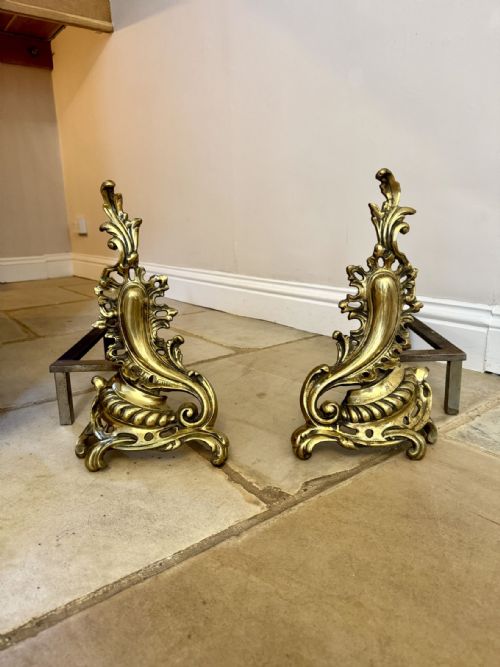
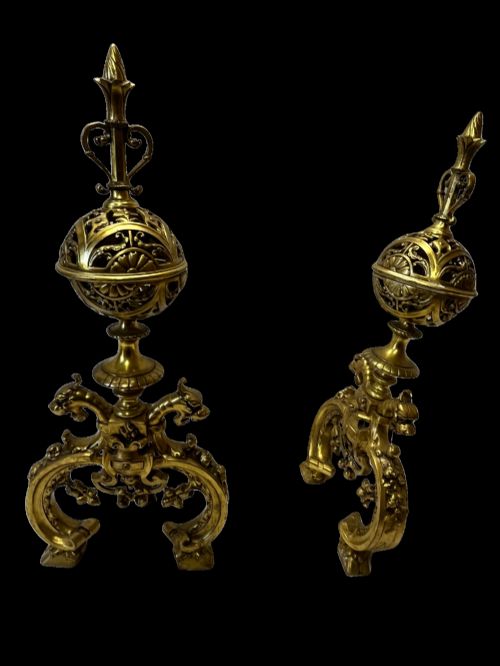


French Rococo Fire Dogs
French rococo fire dogs are sculptural hearth furnishings combining asymmetrical scrollwork and gilt finishes that anchor a formal fireplace.
French Rococo Fire Dogs
French rococo fire dogs, frequently termed chenets, are ornamental metal supports placed within a hearth to hold logs above the floor and improve airflow. You will most commonly encounter pairs dating from the nineteenth century executed in revival styles echoing eighteenth-century Louis XV design.
The objects take diverse forms ranging from simple cast brass rests to elaborate compositions featuring patinated bronze figures and adjustable fender frames. These pieces serve both a functional purpose in managing wood fires and a decorative role as the visual centre of the fireplace.
Makers working in the nineteenth century drew heavily upon rococo motifs, producing heavy bronze and brass accessories shaped with characteristic curves and asymmetrical foliage. Surviving examples demonstrate how these hearth ornaments transformed utilitarian iron fire dogs into displays of metallic craftsmanship.
How they were made
The construction relies heavily on metal casting techniques using brass, bronze, and iron to shape the primary structural supports and decorative shields. Founders poured molten metal into moulds before hand-chasing the surfaces to sharpen the intricate scrolls and floral patterns.
Gilt bronze and ormolu finishes involve the application of gold or gold amalgam to a bronze base, creating a brilliant reflective surface that contrasts with dark patinated bronze elements. Iron components frequently provide the robust internal bars and billets necessary to withstand intense hearth heat.
Certain fire dogs conceal small cherubs hiding amongst the asymmetrical bronze foliage, keeping watch over the hearth.
What varies in quality
The finesse of the metal chasing separates superior pieces from standard production, as skilled artisans spent hours refining the cast details of leaves, cherubs, and asymmetrical scrolls. Heavy gauge bronze and thick fire gilding indicate a higher grade of manufacture than thin brass plating over coarse cast iron.
Integration of multiple metals, such as combining patinated bronze figures with bright ormolu mounts, points to greater labour input and artistic ambition. The crispness of the casting and the weight of the metal determine the visual presence and stability of the pair on the hearth.
The French Rococo Fire Dogs Glossary
- Chenet
- An alternative term for a fire dog or firedog used to support logs in an open fireplace. These metal supports often feature decorative front terminals.
- Ormolu
- Finely ground high-carat gold applied to a bronze object through a mercury amalgamation process or later electroplating methods. This technique yields a durable, rich golden sheen.
- Patinated Bronze
- Bronze treated with chemical solutions or heat to produce a controlled surface colouration, typically dark brown or green. This finish contrasts sharply with gilt highlights.
- Rococo
- An eighteenth-century artistic style characterised by elaborate ornamentation, C-scrolls, S-scrolls, and asymmetrical organic forms. Nineteenth-century revival pieces heavily imitate these aesthetic choices.
- Fire Fender
- A low metal guard placed around the hearth to contain sparks and ash. Some listings include fender forms combined directly with the fire dogs.
French Rococo Fire Dogs: Frequently Asked Questions
What are french rococo fire dogs used for?
These metal supports sit inside an open hearth to elevate firewood above the floor, which improves airflow beneath the logs and aids combustion.
Beyond their practical function, they serve as prominent decorative ornaments that frame the fireplace opening and showcase metalwork.
How do you clean ormolu fire dogs?
Cleaning requires only gentle dusting with a soft cloth to remove soot and surface debris without scratching the delicate gold surface.
Harsh chemical polishes must be avoided entirely because they strip away the thin layer of gold or ormolu finish permanently.
Are these fire dogs suitable for active fires?
Many antique examples are robust enough to hold burning logs, particularly those constructed with heavy iron billets and sturdy bronze frames.
However, collectors often use delicate gilt ormolu pieces for decorative display only to protect the historic finishes from heat damage.
How do you date nineteenth century chenets?
Dating relies on examining the casting quality, the type of screw threads used in assembly, and the specific style of the bronze patination.
Nineteenth-century revival pieces frequently combine machine-made threaded bolts with hand-chased rococo ornamentation characteristic of the period.