




French Fireplace Fender
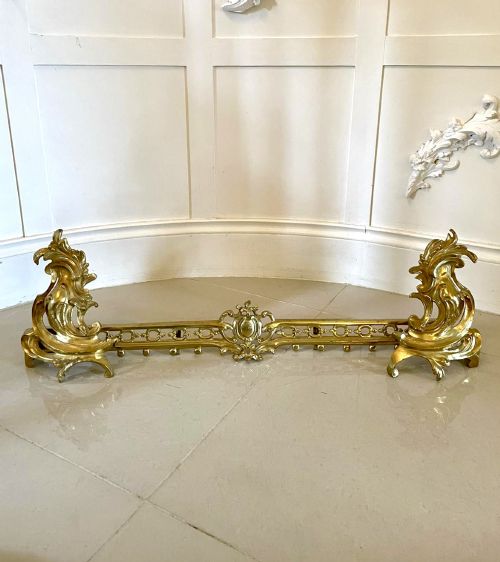
A french fireplace fender frames a hearth with distinct metalwork, adding period character and containing stray embers with decorative grace.
French Fireplace Fender
A french fireplace fender serves as a decorative and practical barrier placed on the hearth in front of an open fire. These pieces emerge primarily from the nineteenth century, spanning Victorian periods and decades such as 1850, 1860, 1880, 1890, 1900, and 1920.
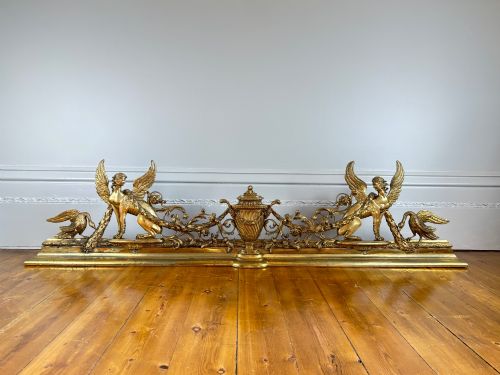
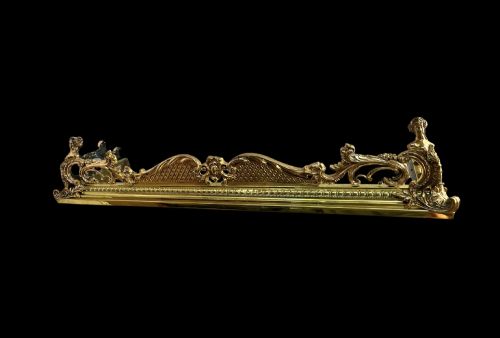
The selections encountered here showcase distinct stylistic influences including French Rococo, Rococo Revival, Neoclassical Revival, Louis XVI Neoclassical, French Empire, and general Louis XV style variants. Forms include adjustable widths and accompanying chenets or fire grates.
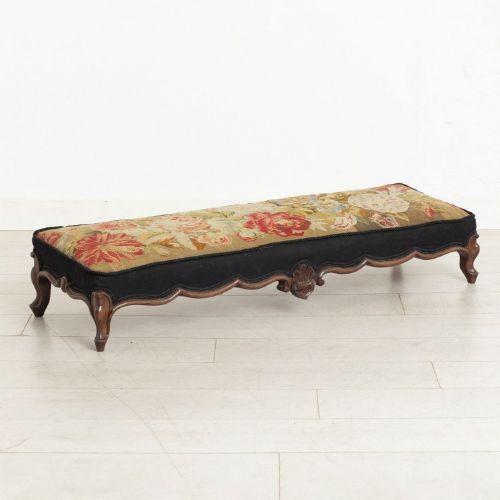
Buyers also encounter related fireplace accessories alongside footstools framed in walnut with cabriole legs. The core offering remains metal hearth furniture built to define the fireplace surround.
Materials and construction methods
Metalworking dominates these creations, utilising gilt bronze, brass, ormolu, bronze, gilded brass, cast brass, and cast iron. Artisans employed casting techniques to shape intricate scrollwork and figural elements for hearth surrounds.
Gilding and parcel gilt treatments appear on bronze and brass components, while select pieces combine steel with bronze. Walnut timber appears in related footstool frames featuring carved cabriole legs.
Styles represented across the selection range from Rococo Revival and French Empire to Louis XVI Neoclassical designs.
Distinctions in craftsmanship and material
Quality reveals itself in the crispness of the cast ornamentation and the depth of the metal finishing. Heavy cast bronze and finely chased ormolu display superior detail compared to simpler cast iron or basic brass iterations.
The integrity of the gilding and the precision of adjustable mechanisms differentiate standard production from finer workshop output. Robust construction in the extending framework ensures longevity and smooth operation.
Artistic execution in decorative motifs, such as cherub figures or refined rococo scrolls, elevates specific examples. The choice of heavier metals like solid bronze and gilt brass indicates a higher grade of manufacture.
E F Caldwell New York
The French Fireplace Fender Glossary
- Ormolu
- Gilded bronze produced by applying a mercury and gold amalgam to bronze. This technique creates a rich golden finish characteristic of fine decorative hardware.
- Chenet
- An alternative term for an andiron used at the sides of a hearth. These metal supports often accompany a fender to hold logs.
- Louis XV style
- A design aesthetic characterised by asymmetric curves, natural scrollwork, and rococo ornamentation. This style heavily influences nineteenth-century hearth furnishings.
- Neoclassical Revival
- A revival movement drawing on classical Greek and Roman motifs. Pieces in this style feature strict symmetry, urns, and architectural friezes.
- Extending fender
- A metal hearth guard built with sliding sections. This design allows the overall width to adjust to different fireplace dimensions.
French Fireplace Fender: Frequently Asked Questions
What is a french fireplace fender used for?
A french fireplace fender acts as a protective barrier placed on the hearth around an open fire. It prevents hot embers from rolling onto the floor while anchoring the visual composition of the fireplace.
Beyond safety, these metal surrounds add decorative structure to a room. They frame the hearth and coordinate with other fireplace accessories like andirons and grates.
How do I measure for an adjustable fender?
Measure the width of your hearth opening directly where the fender will sit. Account for any protruding hearth stones or surround mouldings that might interfere with placement.
Many nineteenth-century examples feature extending mechanisms that slide to fit various widths. Checking the minimum and maximum extension measurements ensures the piece spans the exact hearth space required.
How do I clean gilt bronze and ormolu?
Dust gilt bronze and ormolu gently with a soft, dry cloth to remove surface particles. Avoid harsh chemical cleaners or abrasive polishes that can strip the delicate gilded surface.
Professional conservation care is advised for valuable pieces with tarnished gilding. Gentle maintenance preserves the historic metal finish without causing abrasion.
What distinguishes Louis XV style from Neoclassical?
Louis XV style emphasises asymmetrical curves, naturalistic leaf motifs, and flowing rococo scrolls. The forms feel organic, exuberant, and focused on movement.
Neoclassical design returns to straight lines, geometric symmetry, and classical architectural details. These pieces display restrained ornamentation inspired by antiquity.