

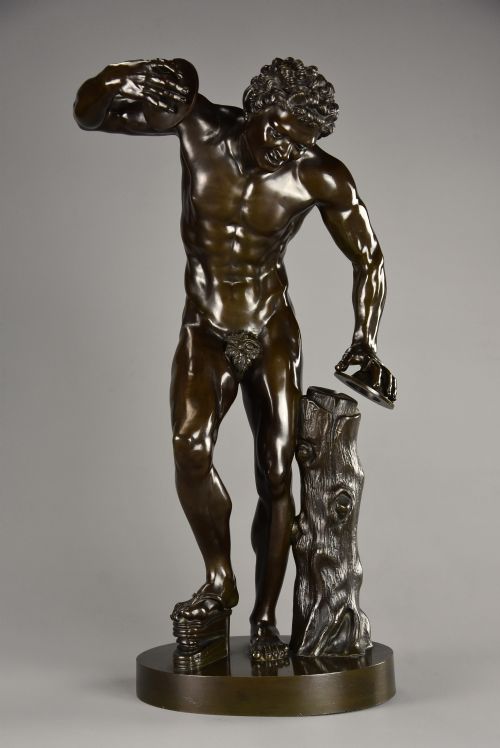


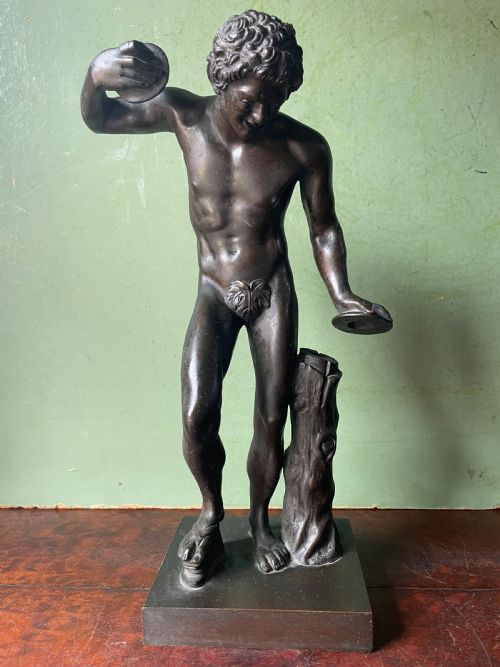
Bronze Faun Statue
A bronze faun statue captures classical mythology in cast metal, bringing nineteenth-century Grand Tour souvenirs and European sculpture directly into a room.
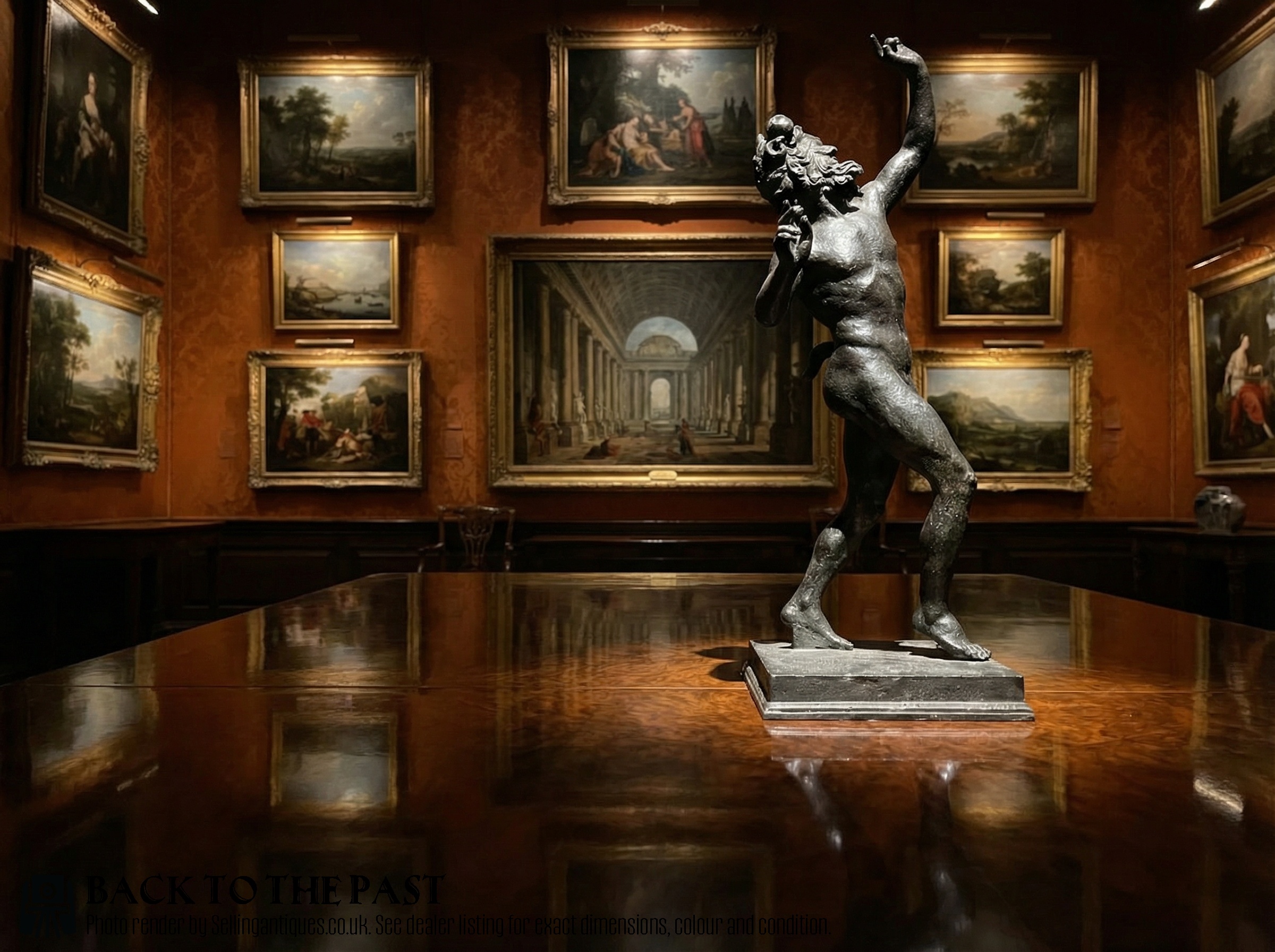
Bronze Faun Statue
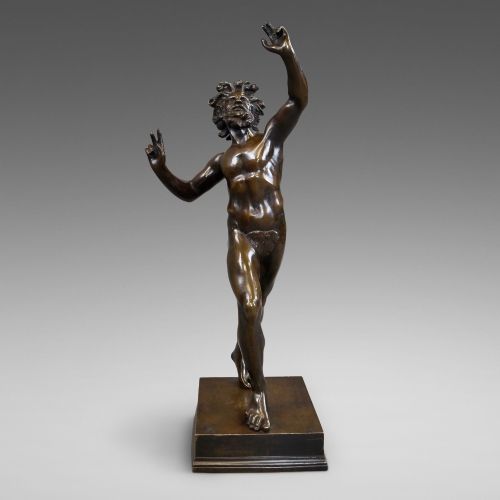
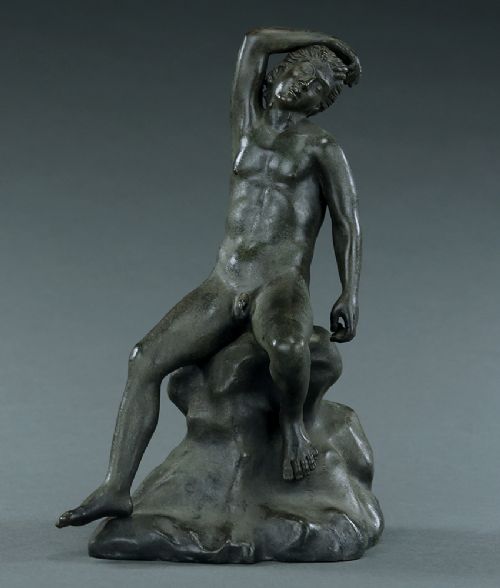
A bronze faun statue represents mythological subjects rooted in antiquity, most frequently depicting the Dancing Faun of Pompeii or figures accompanied by cymbals, pipes, and goats. These sculptures draw heavily upon classical antiquity and Renaissance ideals, capturing dynamic poses of dancing, playing music, or resting.
The versions most commonly met on this page belong to the nineteenth century, emerging predominantly as French and Italian Grand Tour souvenirs or reductions after ancient marbles. Makers frequently cast these pieces in varying sizes to serve as decorative cabinet bronzes or larger salon sculptures.
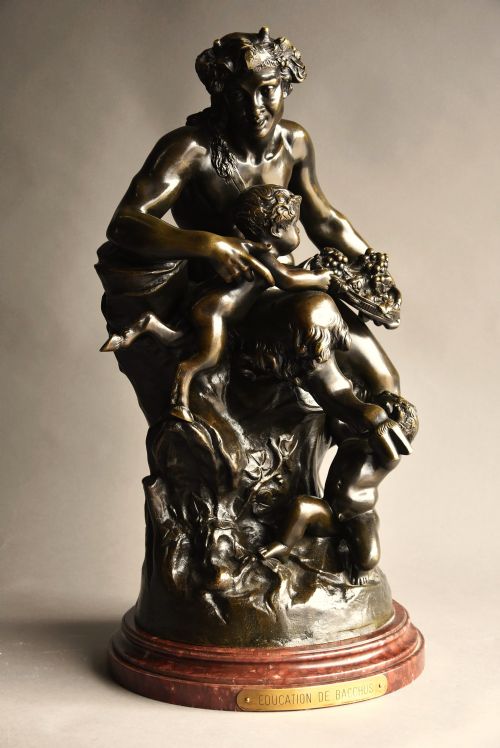
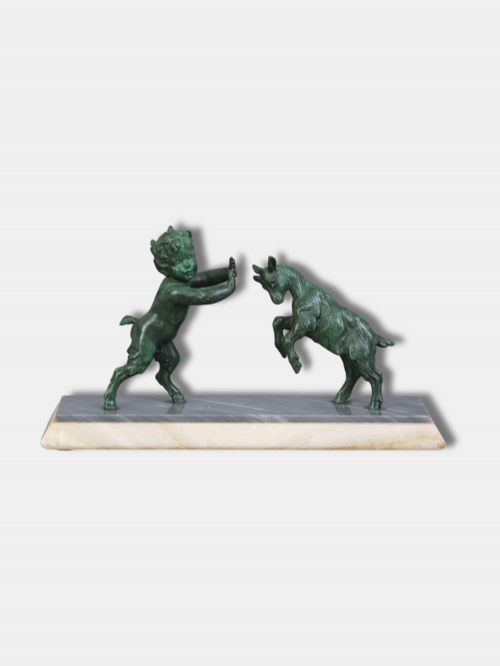
Object forms span single figures to small groups involving satyrs, Bacchus, and infant companions, rendered in media that include patinated bronze and occasional plaster variants. Stylistically, they cross Neoclassical, Classical Revival, and Rococo Revival idioms while maintaining a distinct focus on mythological narrative.
How they were made
Foundries produced these sculptures primarily through metal casting using bronze, occasionally supported by stone or marble bases. Artisans applied chemical patination to achieve surface tones ranging from deep dark finishes to green verdigris.
Sculptors executed reductions and souvenir figures by scaling down ancient prototypes, finishing details by hand with chisels and punch tools to sharpen facial expressions, hair, and musical instruments.
Several dancing fauns balance precariously on one foot while perpetually poised to strike their cymbals or play the pipes.
What varies in quality
Quality rests primarily on the sharpness of the casting and the sensitivity of the hand-chased surface details, distinguishing mass-produced commercial foundry work from finely articulated studio pieces. Foundries that retained skilled artisans produced muscular definitions, expressive hands, and crisp drapery that remain clear even in small souvenir reductions.
The depth and nuance of the patination heavily influence the visual success of the piece, separating uniform factory spray treatments from layered, chemical patinas that mimic ancient burial surfaces. Additionally, the presence of maker stamps or foundry marks points directly to workshop provenance and elevated standards of production.
Claude Michel Clodian·Emile Carlier·Duchemin·Augusto Rivalta
The Bronze Faun Statue Glossary
- Grand Tour
- A traditional trip of Europe undertaken by upper-class Europeans to view classical antiquities. Souvenirs purchased on these journeys formed the basis for many nineteenth-century bronze sculptures.
- Patina
- A thin layer that naturally or artificially forms on the surface of bronze through oxidation or chemical treatment. Artisans apply specific chemical solutions to create desired green or dark brown surface tones.
- Reduction
- A small-scale copy of a larger sculpture, often produced in bronze after famous ancient statues found in Italian museums. These pieces allowed collectors to display miniature versions of museum masterpieces at home.
- Neoclassical
- An artistic movement drawing inspiration from the classical art and culture of ancient Greece and Rome. This aesthetic governed the proportions, subject matter, and idealized forms of nineteenth-century bronzes.
Bronze Faun Statue: Frequently Asked Questions
What is a Grand Tour bronze faun?
A Grand Tour bronze faun is a nineteenth-century souvenir cast in Europe, usually modeled after ancient Roman sculptures excavated in Pompeii or housed in Italian galleries.
These pieces served as portable tokens of classical education and cultural travel for collectors returning home to Britain and France.
How do I identify a nineteenth-century bronze faun?
Examine the base materials, the casting seams, and the quality of the surface patination for indicators of nineteenth-century foundry work.
Many of these figures feature distinct green or dark brown chemical patinas and rest on integral bronze or marble plinths.
Who is the dancing faun depicted in these sculptures?
The subject derives primarily from the famous ancient bronze statue discovered in the House of the Faun in Pompeii, known for its energetic, balanced pose.
Variations frequently include companions such as Bacchus, pan pipes, cymbals, or small goats associated with mythological revelry.
Where should I display a bronze faun?
These sculptures suit tabletops, mantelpieces, and dedicated display cabinets where their patinated surfaces catch ambient light.
Keep them away from direct heat sources and moisture to preserve the stability of the metal and the applied patina.