




Bronze Dancing Faun
A bronze dancing faun brings classical antiquity into a room through nineteenth-century Italian and French souvenir sculptures modelled on the ancient Pompeii discovery.
Bronze Dancing Faun
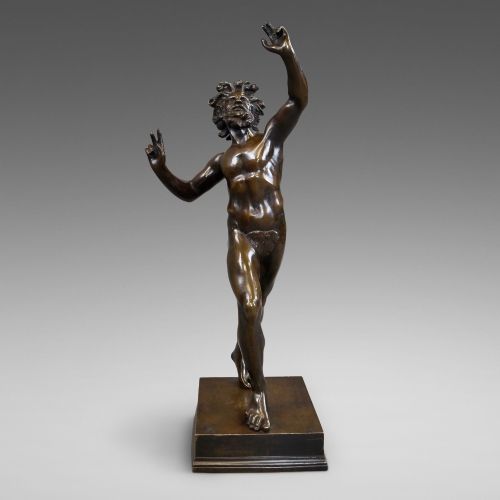
When you search for a bronze dancing faun, you encounter classical revival sculptures produced primarily during the nineteenth century as Grand Tour souvenirs. These figures draw directly upon the ancient Roman bronze discovered in the House of the Faun in Pompeii.
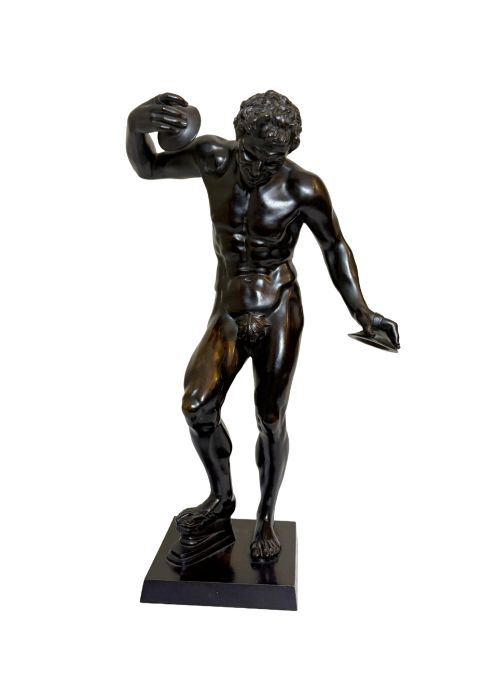
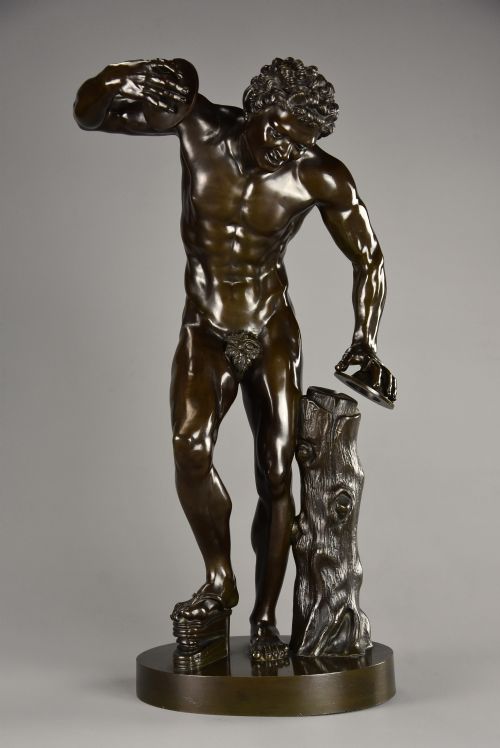
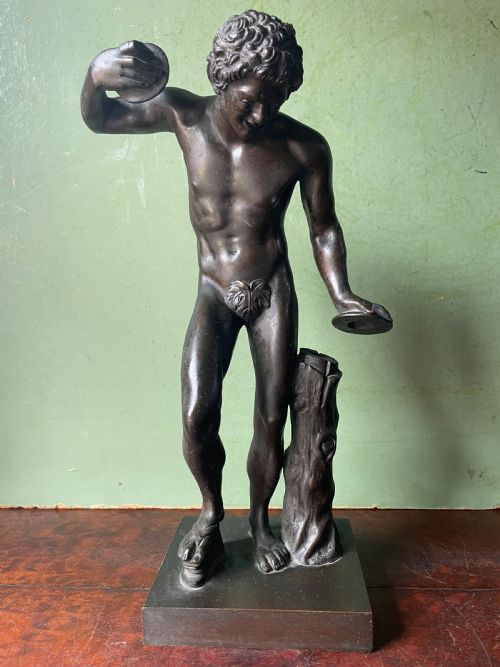
The pieces on this page appear as freestanding figures cast in bronze, occasionally mounted on marble bases or accompanied by related mythological figures such as Bacchus, Silenus or Dionysus. Most examples take the form of reductions after the antique, capturing the dynamic posture of the dancing faun holding cymbals or clappers.
How They Were Made
Foundry work relied on traditional casting methods to translate archaeological finds into tabletop souvenirs. Makers applied chemical treatments to create deep patinations, ranging from dark bronze tones to distinct green patination.
Many sculptures incorporate mixed media, pairing cast metal figures with plinths or bases made from stone, plaster or Siena marble. Finishing involved meticulous chasing of the metal surface to define musculature and detail.
Several fauns hold miniature metal cymbals frozen mid-clash, caught forever in the middle of a frantic mythological dance.
What Varies in Quality
Distinction across the range rests upon the crispness of the cast and the sensitivity of the chasing work on the metal. Superior examples preserve fine anatomical details and clean definition in the fingers, hair and cymbals.
Quality also emerges in the application of the patina and the choice of mounting materials, such as heavy marble bases. Stamped foundry marks or named makers elevate certain pieces above anonymous workshop souvenirs.
Duchemin·Augusto Rivalta
The Bronze Dancing Faun Glossary
- Grand Tour
- A traditional educational journey through Europe undertaken by upper-class travellers during the eighteenth and nineteenth centuries. Souvenirs collected along the way included bronze reductions of classical antiquities.
- Reduction
- A scale copy made smaller than the original ancient sculpture. These bronze figures allowed collectors to display famous museum pieces within domestic interiors.
- Patination
- The surface coloration of metal achieved through chemical application or age. Variations include dark bronze patines and green patination.
- Cymbals
- Small handheld percussion instruments held by the faun in many representations. They reflect the frenetic musical imagery associated with classical Dionysian revels.
Bronze Dancing Faun: Frequently Asked Questions
What is a bronze dancing faun?
A bronze dancing faun is a nineteenth-century sculpture modelled after the famous Roman bronze discovered in Pompeii. These figures depict a mythological follower of Bacchus in an energetic pose.
Most examples served as Grand Tour souvenirs for travellers visiting Italy during the Victorian era.
Where were these sculptures made?
The majority of these souvenirs originated in Italian workshops, particularly in Naples and Rome, catering to foreign visitors. French founders also produced notable bronze reductions after the antique.
Workshops utilised local foundries to cast copies of excavated museum pieces.
How do I display a bronze faun?
These sculptures suit tabletops, desk surfaces or dedicated display cabinets where their patinated surfaces catch the light. Many pieces incorporate stone or marble bases that provide stability.
Keep them away from direct heat sources to protect the bronze patina and any mounted marble elements.
How are periods identified?
Nineteenth-century dating relies on the cast quality, handling of the metal and characteristics of the patina. Victorian souvenirs often show specific surface treatments typical of mid to late nineteenth-century European foundries.
Archival records and occasional stamps help connect individual bronzes to specific periods and makers.