




British Marine Art Painting
British marine art painting captures coastal scenes, bustling harbours, and open waters across centuries of maritime history.
British Marine Art Painting
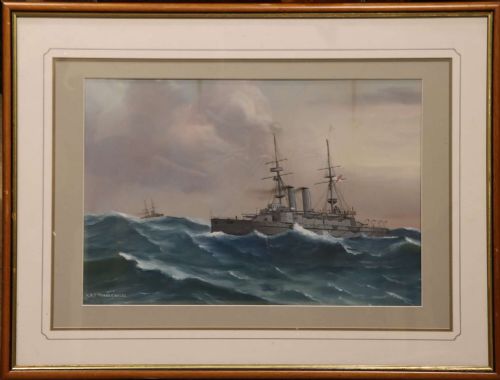
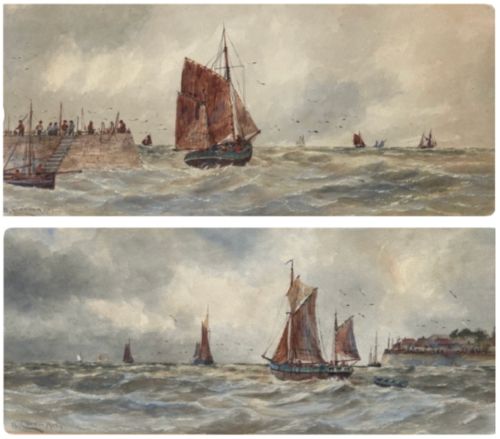
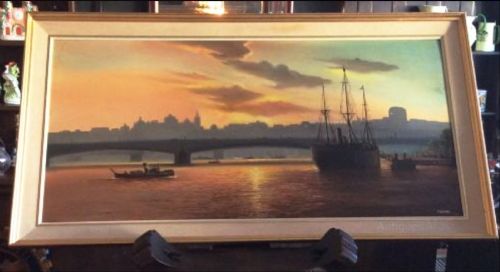
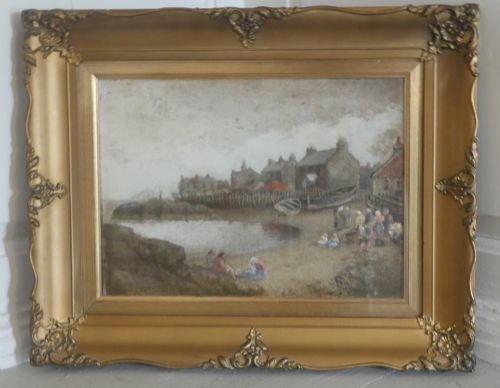
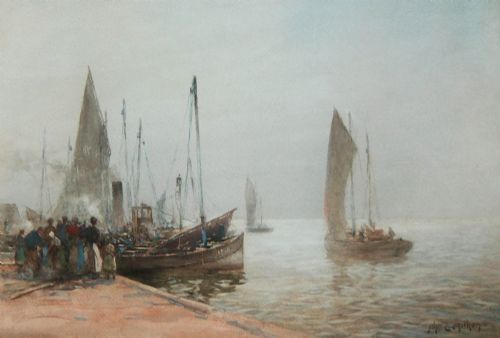
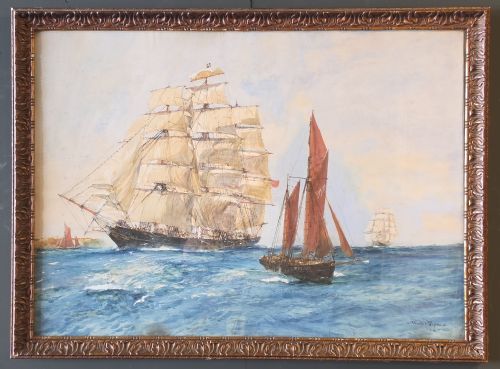
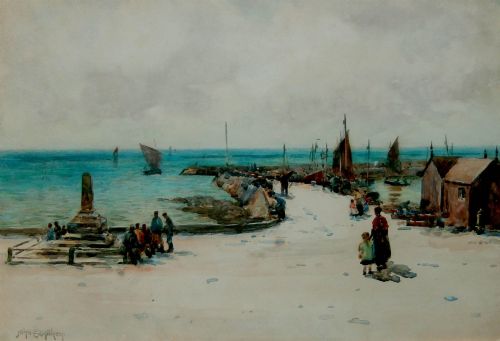
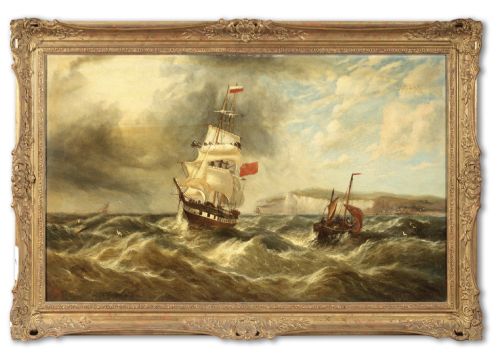
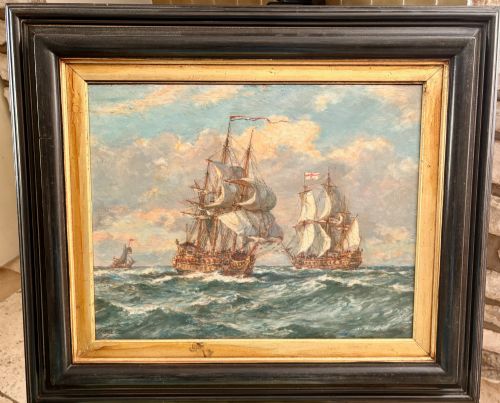
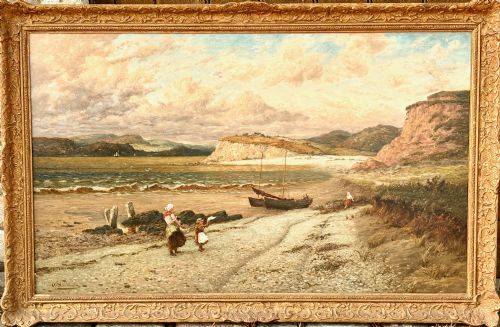
A British marine art painting depicts coastal landscapes, river scenes, and shipping views created by artists working across different eras. These works range from late Victorian watercolours of fishing boats in Cornish harbours to mid-twentieth-century oil paintings of rivers and industrial ports.
The selections available here lean heavily towards nineteenth-century works and early twentieth-century depictions of coastal towns, alongside later interpretations stretching into the mid-twentieth century.
Subjects frequently centre on specific locations such as the River Thames, Whitby, Scarborough, and various English and Welsh fishing ports, executed either as detailed watercolours on paper or robust oil paintings on canvas and board.
Materials and methods
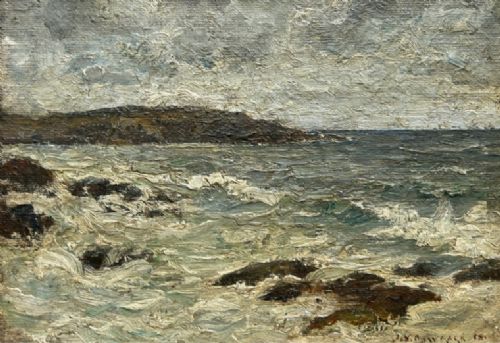
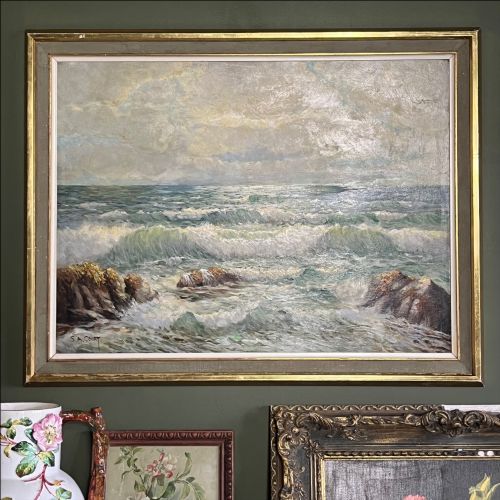
Artists relied primarily on traditional watercolours on paper or oil paint applied to canvas and board to capture the shifting light of the sea and sky. Watercolour pigment allowed for translucent washes suited to coastal air, while oil paint provided rich texture and depth for rough seas and heavy clouds.
Many works were painted en plein air to capture immediate atmospheric conditions along the coast, while larger studio pieces utilised preparatory sketches made on location in places like Cornwall, Yorkshire, and the Thames.
Several Victorian artists clearly possessed strong sea legs, painting choppy North Sea swells without losing a single brushstroke.
Judging the work
Quality rests on the artist's ability to render water, light, and atmosphere convincingly rather than on the mere presence of shipping vessels or coastal architecture. Superior examples demonstrate confident brushwork and accurate perspective in difficult subjects like rigging, waves, and tidal harbours.
The handling of the medium distinguishes standard decorative scenes from accomplished artistic observations, particularly in the delicate control of watercolour washes or the judicious application of impasto in oil paintings.
James Orrock·Charles Edward Dixon·Bernard Gribble·Frank William Scarbrough·John Wilson Carmichael·TB Hardy
The British Marine Art Painting Glossary
- Watercolour
- A painting method where fine pigment is suspended in a water-based solution and applied to paper. This medium allows for luminous washes that suit coastal skies and transparent seas.
- Impasto
- Paint applied thickly to a canvas or board so that it stands out from the surface. Artists utilise this technique to give texture to crashing waves, clouds, or rocky shorelines.
- En plein air
- The practice of painting outdoors directly from the subject. This approach captures natural light and changing weather conditions along the coast more accurately than studio work.
- Seascape
- A work of art that depicts the sea, ships, or coastal views. It forms the primary category for maritime paintings found in British art.
- Provenance
- The documented history of a painting's ownership and origin. Clear provenance helps verify the attribution and age of nineteenth and twentieth-century works.
British Marine Art Painting: Frequently Asked Questions
What subjects appear most often?
These works primarily feature fishing boats, merchant ships, bustling harbours, and quiet coastal inlets around the British Isles. Scenes involving the River Thames, Yorkshire fishing villages, and Cornish ports are particularly common.
Artists also recorded specific historical vessels, naval themes, and sweeping panoramic views of estuaries and coastal cliffs under various weather conditions.
How do I care for these paintings?
Works executed on paper, particularly watercolours, require protection from direct sunlight to prevent fading of the pigments. Framing with acid-free mounts helps preserve the paper over time.
Oil paintings on canvas or board benefit from stable indoor humidity and occasional gentle dusting of the surface. Avoid hanging either medium in areas prone to dampness or extreme temperature shifts.
Can I identify the exact location?
Many paintings include legible signatures, studio inscriptions, or contemporary titles written on the reverse or within the composition. Artists frequently named specific harbours, bridges, or landmarks such as Whitby, St Ives, or the Pool of London.
When a title is absent, architectural details, vessel types, and coastal topography often provide enough clues to determine the region.