


Gold Framed Harbour Oil
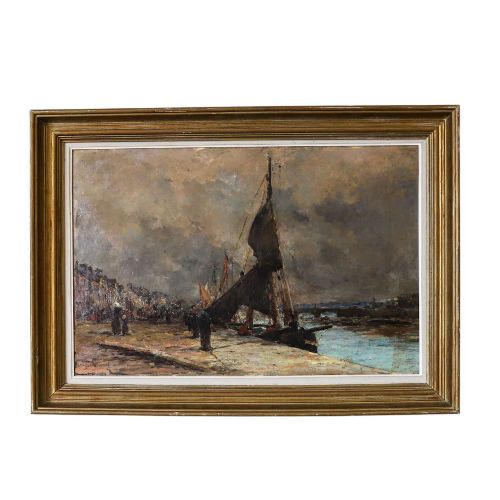
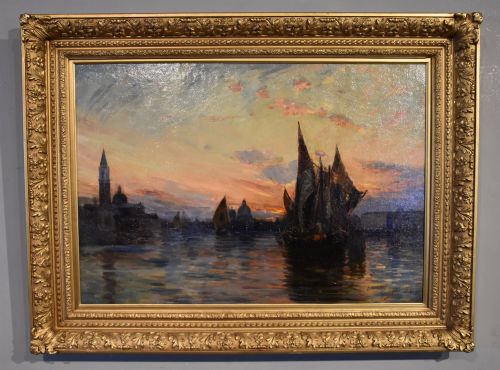
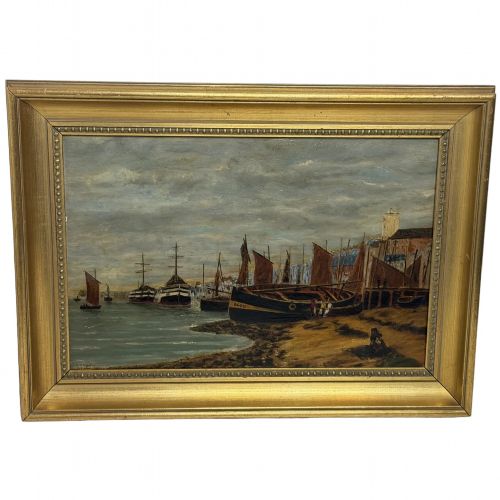
A gold framed harbour oil captures the restless energy of maritime life through rich pigments and ornate metallic surrounds.
Gold Framed Harbour Oil
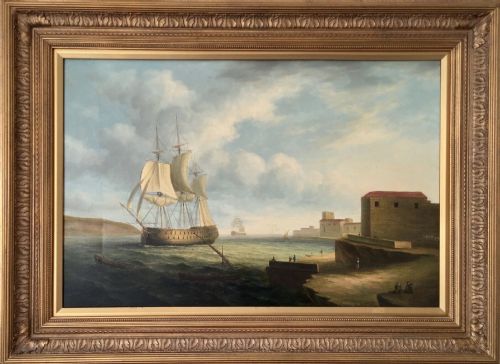
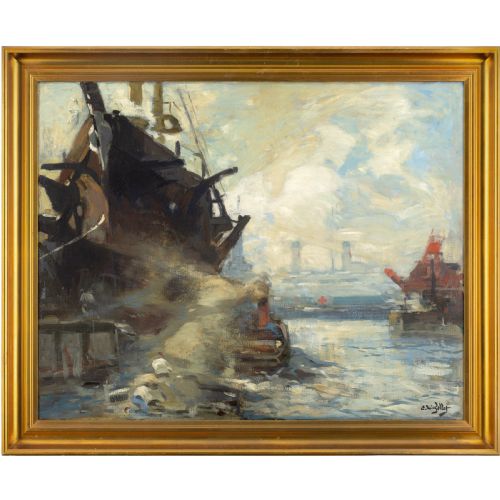
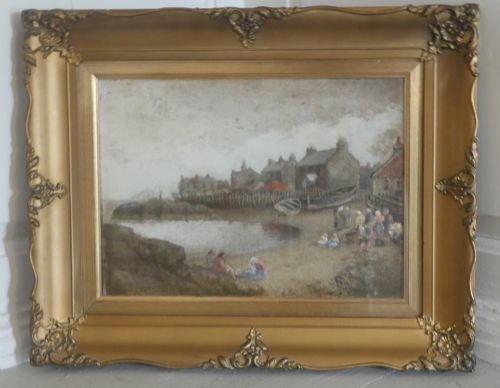
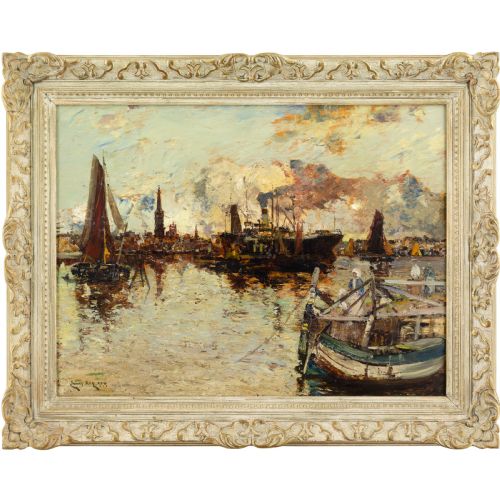
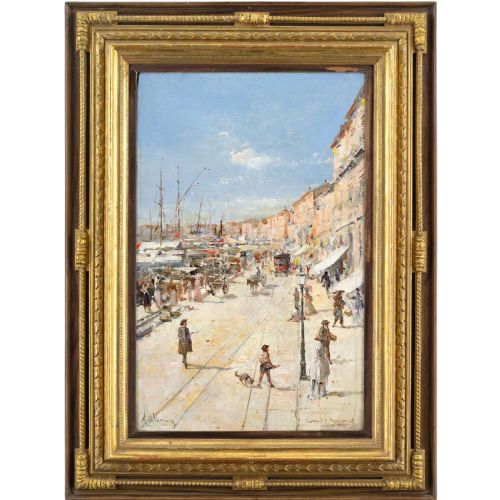
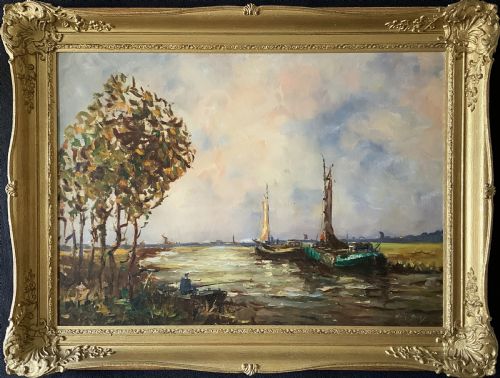
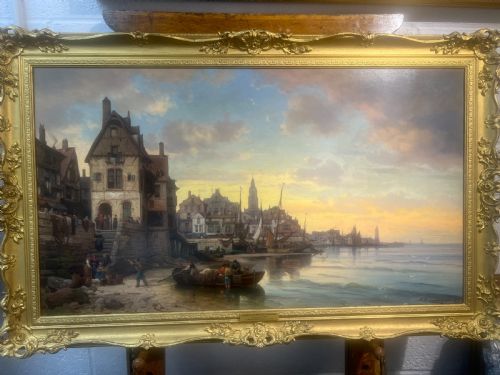
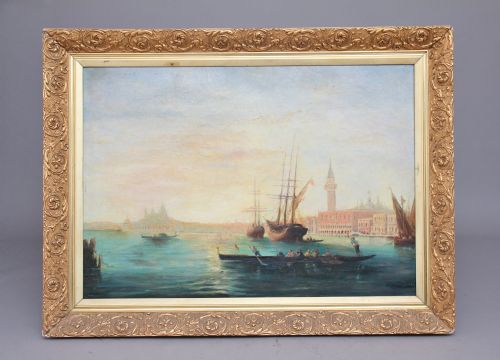
A gold framed harbour oil depicts bustling maritime scenes, tranquil coastal inlets, and international waters rendered in oil paint on canvas or panel. These works range from Victorian marine art to early twentieth-century impressionism, capturing specific ports from Malta to Venice and domestic harbours such as North Shields and the River Thames.
Buyers encounter compositions signed by named painters alongside unsigned atmospheric studies, all unified by their maritime subject matter and period frames. The selection spans the nineteenth century through to the mid-twentieth century, recording shipping vessels, fishing trawlers, and tidal quays.
The most common formats on this page are framed oils depicting European and British coastal towns, executed with varying brushwork from tight Victorian realism to looser impressionistic strokes. Each piece balances topographical detail with the play of light over water.
Materials and construction
Artists painted primarily with oil on stretched canvas or wooden panels, layering pigments to achieve depth in the water and sky. These surfaces are housed in wooden surrounds finished with gesso and gold leaf or giltwood, providing a bright border that reflects light onto the canvas.
The frames utilise moulded plaster details over a wooden base, creating decorative mouldings characteristic of the Victorian era and subsequent decades. Pigments are bound in oil, allowing for subtle blending of marine atmospheres and sharp delineation of rigging and architecture.
Several canvases record bustling Victorian quays where tiny painted sailors hoist canvas under surprisingly serene painted moons.
Markers of quality
The quality of a gold framed harbour oil rests upon the artist's command of light, perspective, and maritime anatomy, where accurate depiction of vessels and water movement distinguishes superior works from generic studies. Stronger pieces convey atmospheric depth and specific topography rather than formulaic coastal compositions.
The condition and period authenticity of the gilt frame also influence the work, as original gesso and gold leaf mouldings that match the age of the canvas elevate the integrity of the whole object. Finer paintings demonstrate confident brushwork and harmonious colour palettes that hold the viewer's eye across the entire surface.
James Hardy·Eugène-Louis Gillot·Edward Mills·James Kay·Augusto Alberici·Willem Bos·Charles Euphraisie Kuasseg·Thomas Hodgson Liddell·Charles William Wyllie·William Edward Webb·George Turland Goosey·James Kyd·Adrian Van Porten·Stanley Leader·Claude Lorrain·T.S. Wallis·James Webb·Alfred Henry Vickers·John Callow·Antonio Godoy·Edward Henry Holder·Owen Bowen·William Langley·Jane Vivian·Hubert Thornley
The Gold Framed Harbour Oil Glossary
- Giltwood
- Wood carved and coated with gold leaf or metallic powder to create a reflective, golden finish. This material forms the primary structure of many period frames.
- Gesso
- A plaster-like mixture applied to wooden frame bases to create a smooth surface for gilding and moulding. It allows crisp ornamental details to be cast along the border.
- Marine art
- Paintings, drawings, or prints that depict maritime subjects, including ships, coastal views, and naval engagements. This genre forms the core of the harbour oil category.
- Panel
- A rigid flat support made of wood used by artists instead of canvas. Panels offer a stable surface for detailed brushwork.
- Impressionism
- An art movement characterised by relatively small, thin, yet visible brush strokes and an emphasis on accurate depiction of changing light. It appears in several twentieth-century harbour scenes on this page.
Gold Framed Harbour Oil: Frequently Asked Questions
How do I date a harbour oil painting?
Examine the style of the vessels, the attire of any figures on the quayside, and the construction techniques of the stretcher and frame. Stylistic shifts from tight Victorian realism to looser impressionism provide reliable chronological markers.
Furthermore, signatures, inscriptions on the reverse, and the type of canvas or panel used help narrow the decade of creation.
Were these paintings always framed in gold?
Many period marine works were paired with gilt frames to enhance the luminosity of the water and sky when displayed in nineteenth-century interiors. Giltwood and gesso surrounds were standard for important paintings of this genre.
While some pieces retain their original frames, others may have been re-framed in complementary period styles over the decades.
How should I care for an oil painting on canvas?
Keep the artwork away from direct sunlight, high humidity, and rapid temperature fluctuations that can cause the canvas to slacken or the paint layer to crack. Dust the surface gently with a soft, dry brush without applying pressure.
Avoid using liquid cleaners or touching the painted surface directly, as natural oils from skin can damage the pigment over time.
What is the difference between a coastal scene and a harbour scene?
Coastal scenes typically focus on open shores, cliffs, and the natural interaction between land and sea with minimal human intervention. Harbour scenes specifically highlight human activity, ports, shipping vessels, quaysides, and urban waterfronts.
Both genres frequently overlap in maritime art, sharing similar palettes and atmospheric conditions.