


Maritime Harbour Wall Art
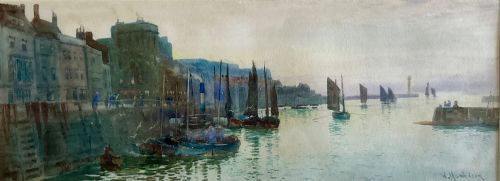
Maritime harbour wall art brings the historical atmosphere of bustling coastal quays and quiet anchorages directly into domestic interiors.
Maritime Harbour Wall Art
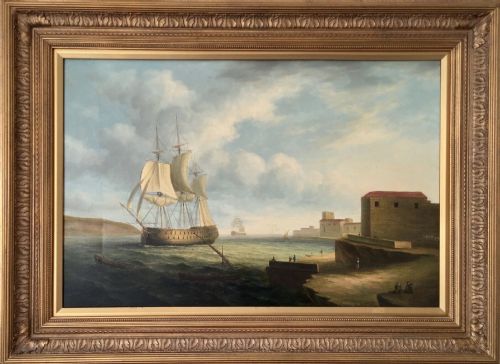
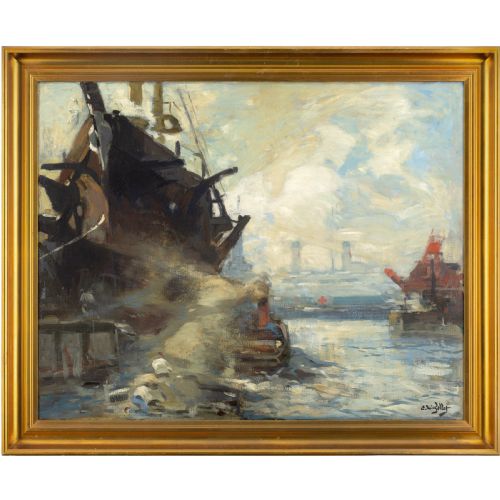
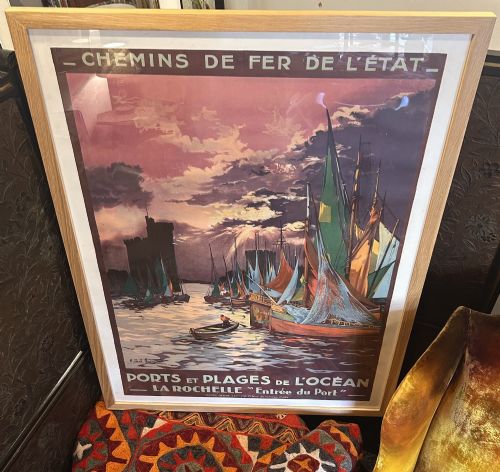
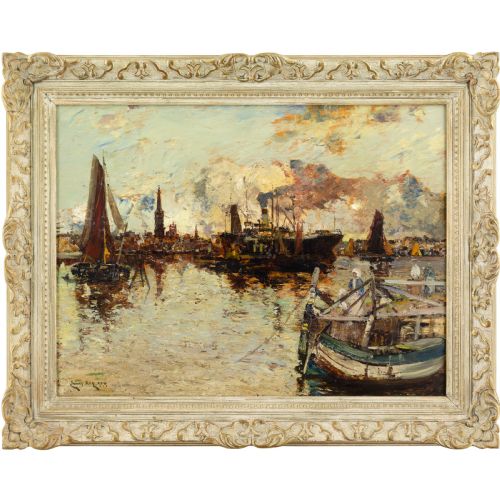
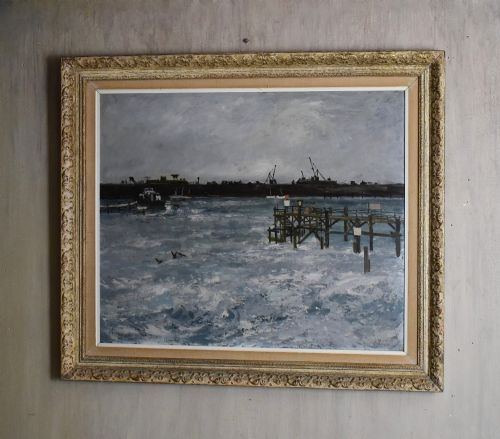
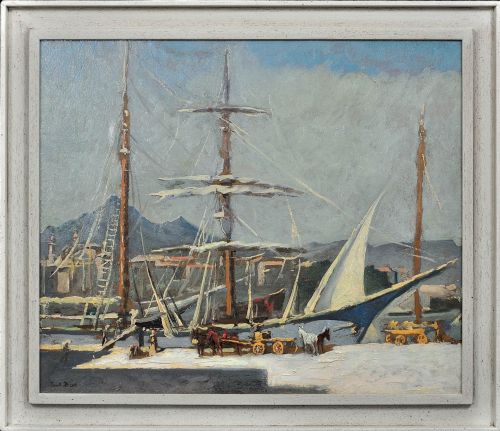
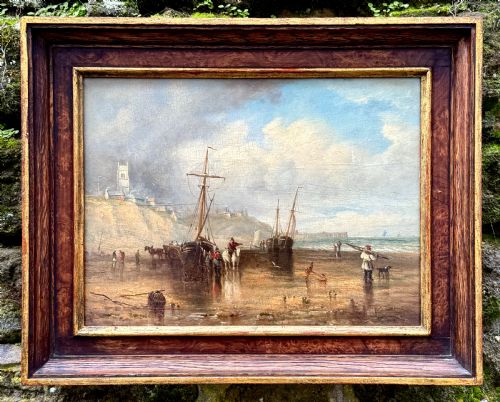
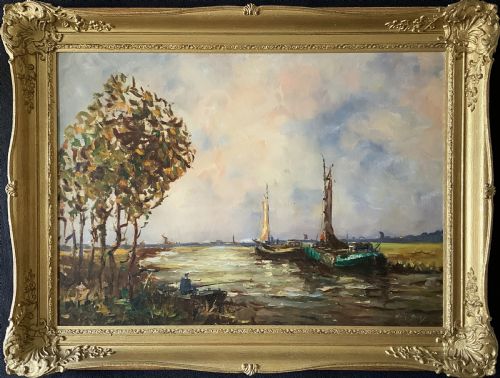
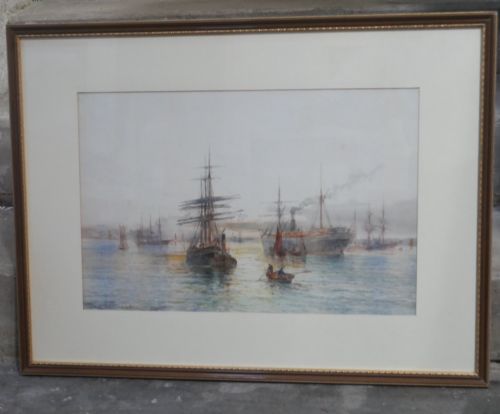
When you search for maritime harbour wall art, you encounter framed paintings and works on paper depicting coastal scenes, quaysides, and shipping activity. The selection spans the nineteenth century through the mid-twentieth century, capturing ports from British coasts to European waters.
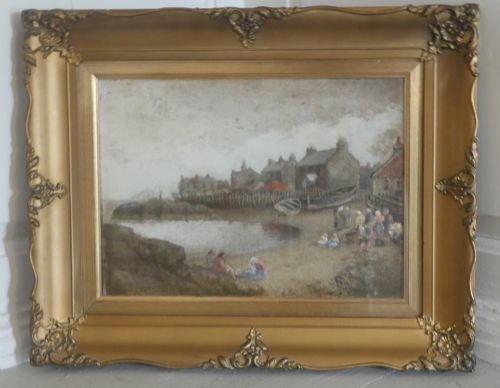
Most pieces you meet on this page are oil paintings or watercolours produced during the Victorian, Edwardian, and mid-century periods. These works frequently record specific locations such as Cornish fishing villages, Mediterranean harbours, and busy northern waterways.
Materials and Technique
Artists relied primarily on oil paint applied to canvas, wood panels, or boards, alongside watercolour applied to paper sheets. Oil mediums allowed for textured brushwork that captured the movement of water and the heavy timbers of docked vessels.
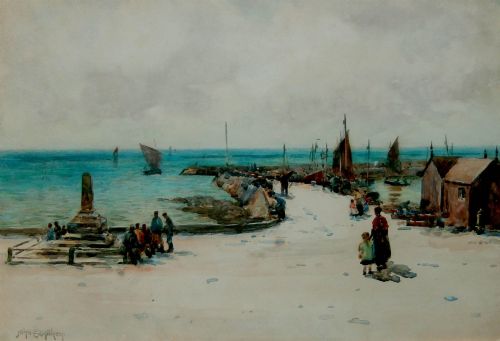
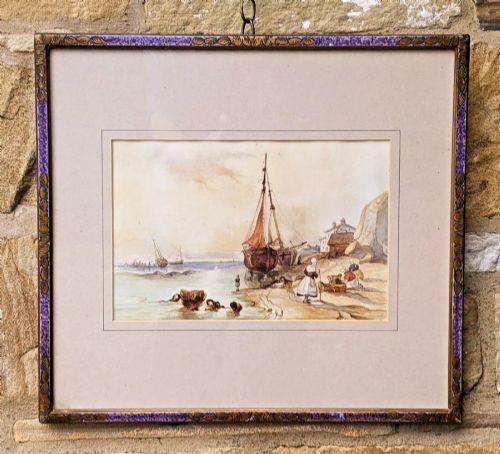
Watercolour works depended on transparent washes of pigment on paper to render atmospheric coastal light, often finished with delicate pencil work. Frames commonly incorporated moulded wood and gilt finishes to complement the artwork.
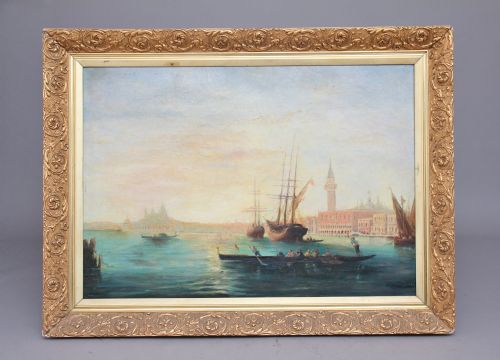
Port scenes range from British fishing villages in Cornwall and Yorkshire to bustling Mediterranean harbours in France, Italy, and Malta.
Distinctions in Quality
The distinction between ordinary and superior works rests on the artist's command of light, shadow, and architectural perspective within a busy quayside. Skilled hands convey the specific weight of rigging and the texture of stone harbour walls rather than relying on generic formulae.
Compositional balance and the accurate depiction of maritime craft elevate certain pieces above standard topographical illustration. Provenance and attribution to documented painters also distinguish more accomplished examples from anonymous works.
James Hardy·Kenneth Cozens·Eugène-Louis Gillot·Edward Mills·John E. Aitken·William Banks Fortescue·James Kay·Peter Brannan·Paul Bret·Thomas Creswick·Willem Bos·William Matthison·Thomas Hodgson Liddell·Walter Goodin·George F Pennington·Alfred George Morgan·Charles William Wyllie·Paul Delvaux·Commander Eric Tufnell·Lokre·Edward Matthew Elliott·Richard Harry Carter·Gyrth Russell·Jean-Baptiste Olive·William Lee Hankey
The Maritime Harbour Wall Art Glossary
- Watercolour
- A painting method in which pigment is suspended in a water-soluble binder, traditionally applied to paper surfaces. It creates luminous washes suited to capturing shifting coastal atmospheres.
- Oil on Canvas
- A technique utilising pigments bound in drying oils spread across stretched woven fabric. This method permits rich colour depth and layered textures.
- Panel
- A rigid wooden support used by artists as an alternative to canvas. It offers a firm surface for detailed brushwork.
- Gilt
- A thin layer of gold leaf applied to wooden frames or decorative objects. It provides a reflective border that enhances the framed artwork.
- Lugger
- A traditional two-masted fishing vessel with standing lug sails. These boats appear frequently in nineteenth-century coastal art.
Maritime Harbour Wall Art: Frequently Asked Questions
What periods do these harbour paintings come from?
The works originate largely from the nineteenth and twentieth centuries, encompassing Victorian, Edwardian, and mid-century movements. Artists during these eras documented the transition of working ports and coastal towns.
Specific decades represented include the 1900s, 1920s, and 1930s, reflecting both traditional marine painting and modernist interpretations of coastal life.
How were these coastal artworks framed?
Many pieces retain their period frames, which are typically constructed from wood and finished with gilt ornamentation. These surrounds were chosen to complement the tones of the oil or watercolour within.
Original framing adds historical context to the artwork, though framing styles vary significantly between nineteenth-century academic pieces and mid-century modern works.
Can I identify the specific harbours shown?
Numerous works explicitly record named locations in their titles or inscriptions, ranging from Cornish ports like St Ives to Mediterranean harbours such as Palermo and Venice. Artists often inscribed the exact setting on the reverse of the canvas or panel.
Other pieces capture unlabelled northern havens or general coastal scenes, focusing on the activity of shipping rather than precise geography.
How do I care for antique watercolours?
Works on paper require protection from direct sunlight to prevent the fading of watercolour pigments and the yellowing of the paper support. Glazing with appropriate glass helps shield the delicate medium from atmospheric moisture and dust.
Displaying these pieces in rooms with stable humidity levels ensures the paper and any underlying board remain free from warping or foxing.