



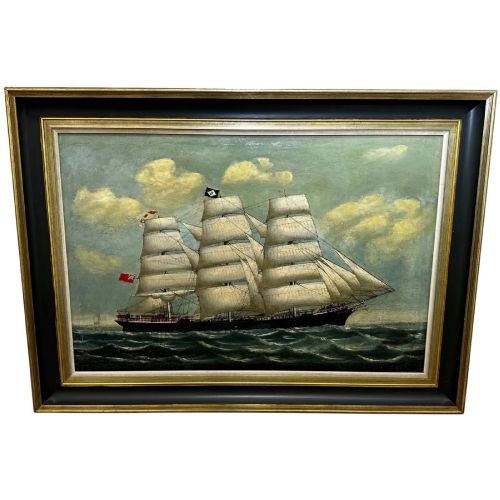
Framed Maritime Vessel Painting
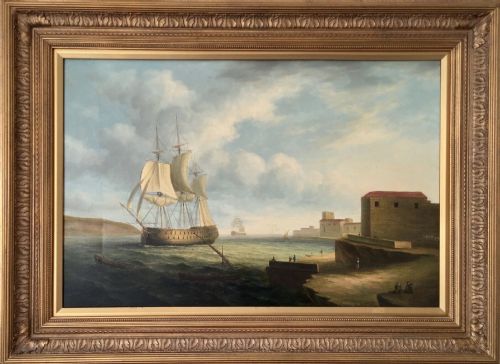
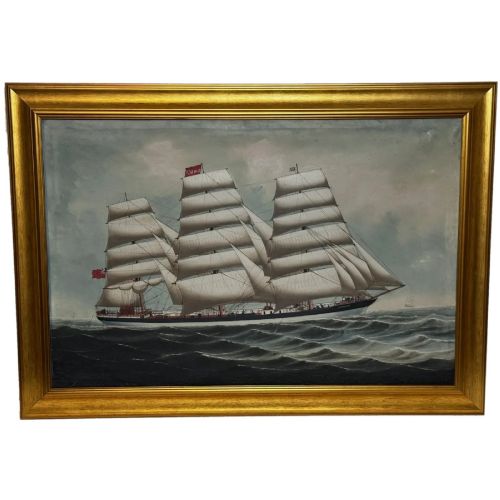
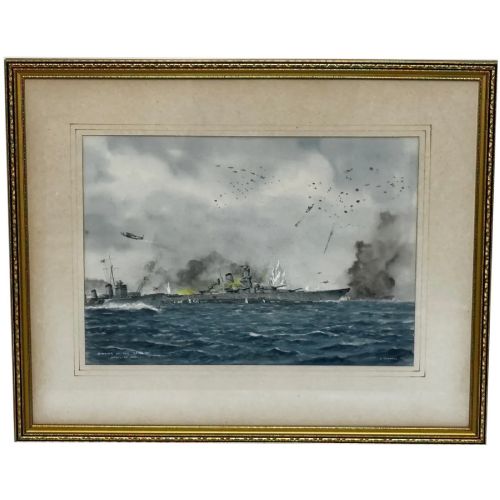
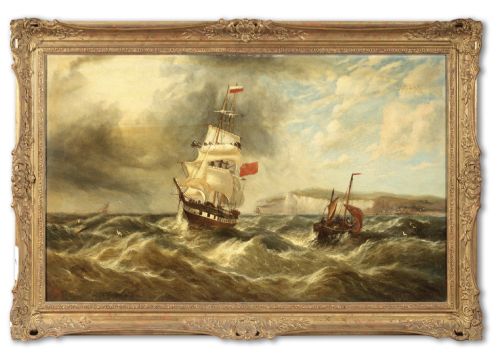
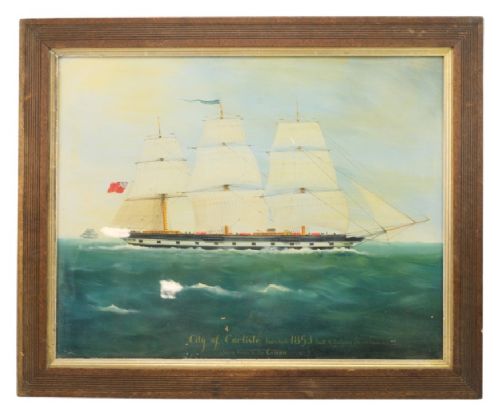
Framed maritime vessel painting works as a primary window onto naval history, capturing sailing ships and steamers across choppy seas.
Framed Maritime Vessel Painting
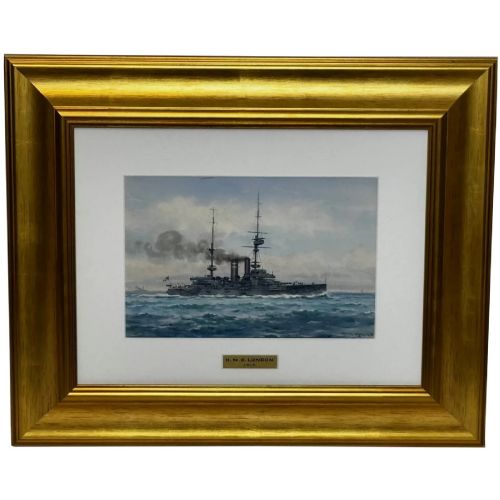
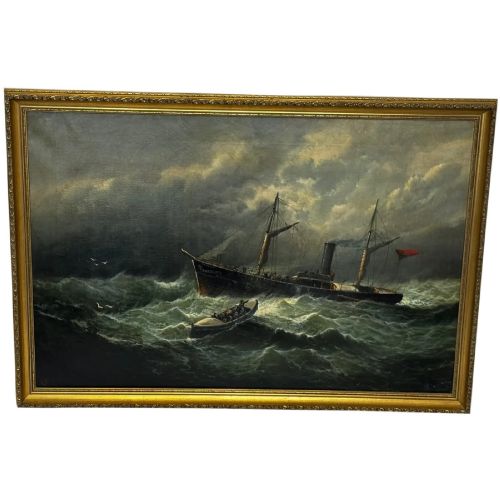
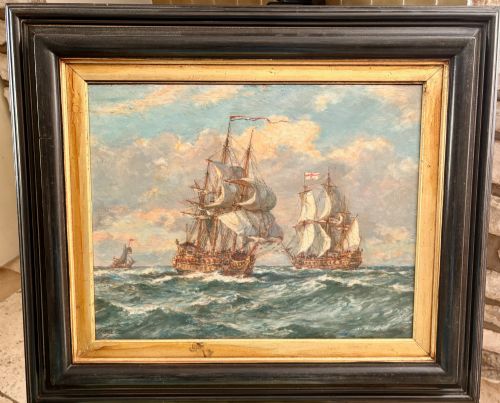
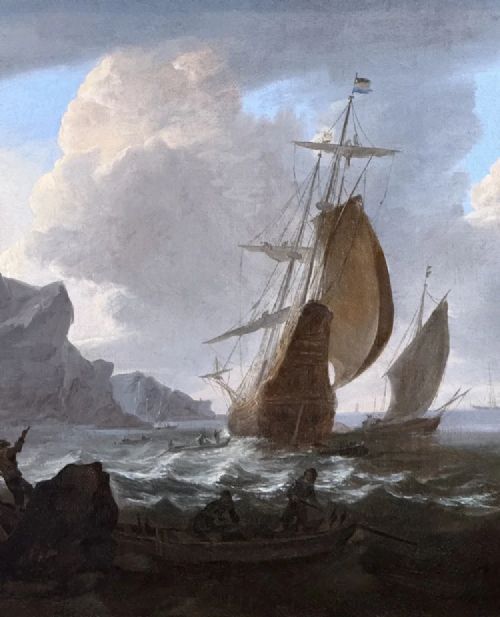
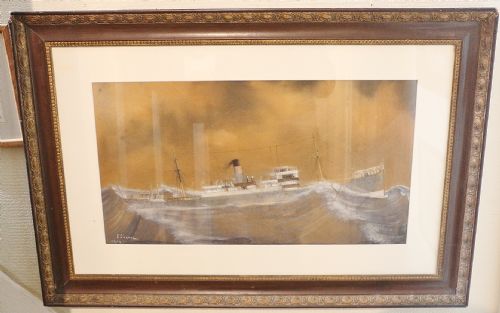
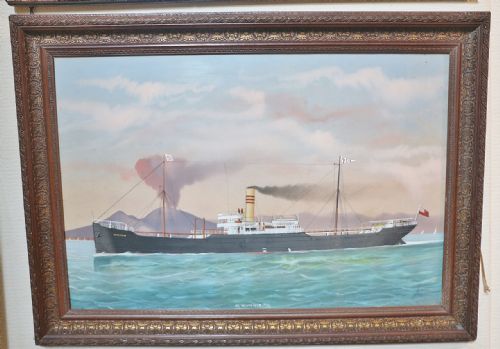
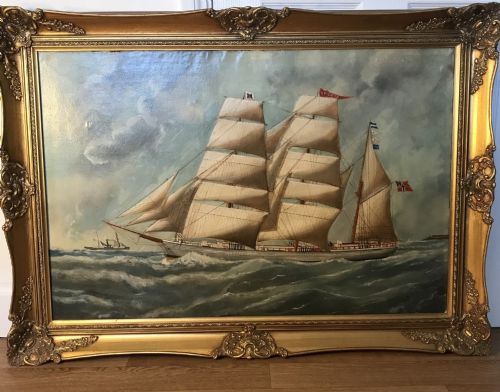
A framed maritime vessel painting represents naval ships, merchant vessels, and coastal scenes rendered in oil or watercolour. When exploring this selection, buyers encounter Victorian and Edwardian works alongside mid-century interpretations of sailing ships and steamships. These portrayals range from calm harbour anchorages to dramatic storm encounters on open waters.
The objects span oil paintings on canvas or panel, detailed watercolours, gouache studies, and three-dimensional shadow box dioramas. Pieces frequently highlight specific historical vessels, naval engagements, or named merchant ships operating across global trade routes. Such works serve as both historical records and decorative focal points for interiors.
Materials and technique
Artists painted primarily using oil on canvas or wood panel, as well as watercolour and gouache on paper or board, secured within protective wooden and gilt frames under glass where appropriate. Oil paints allowed for rich layering to depict churning waves and atmospheric skies, while watercolours offered precision for rigging and hull details.
Makers constructed three-dimensional dioramas utilising carved wooden ship models set against painted maritime backgrounds, enclosed in deep frames with glass panels. These mixed-media constructions combined model-making skills with traditional painting techniques to create depth and movement within the display case.
Assessing quality
Quality rests upon the artist's command of maritime architecture, rigging accuracy, and the dynamic movement of water under varying weather conditions. Works by documented marine painters exhibit precise knowledge of vessel types, flags, and nautical conventions that lesser decorative pieces omit.
The integration of the frame with the artwork contributes to the overall cohesion, particularly where original gilt moulding or period framing survives intact. Superior examples maintain surface stability across canvas or paper, preserving the intended colour balance without extensive pigment loss or disruptive restoration.
Reginald Arthur Borstel·Eric Tufnell·Frank Watson Wood·William Broome·Bernard Gribble·Bonaventura Peeters·Bernard Benedict Hemy·Alexander Harwood·Charles William Adderton·Vincenzo D’Esposito·William Frederick Settle·Daniel Sherrin·George Shaw
The Framed Maritime Vessel Painting Glossary
- Pierhead painting
- A specialised genre of ship portraiture, often commissioned by crew members or captains, depicting a specific vessel arriving at or departing from a port.
- Diorama
- A three-dimensional display featuring a carved or constructed model ship set within a shallow, glazed box against a painted background.
- Gouache
- An opaque water-based medium that provides denser colour saturation than traditional watercolour, frequently utilised for sharp detail in marine art.
- Barque
- A sailing vessel with three or more masts, having the fore and mainmasts square-rigged and the mizzenmast fore-and-aft rigged.
Framed Maritime Vessel Painting: Frequently Asked Questions
What subjects appear in maritime paintings?
These artworks depict named merchant ships, naval battles, sailing barques, and steamers navigating coastal waters or open seas. Scenes range from calm harbour anchorages to dramatic encounters in heavy gales.
Artists frequently documented specific historical vessels and naval engagements, providing a visual record of maritime commerce and naval architecture across different eras.
How do dioramas differ from standard paintings?
Dioramas incorporate three-dimensional carved wooden ship models set within a deep, glazed frame against a painted seascape background. This construction creates physical depth and perspective.
Standard paintings rely entirely on two-dimensional techniques using oil, watercolour, or gouache on canvas, panel, or paper to achieve the illusion of space.
How are marine paintings framed?
Many examples retain their original wooden frames, often finished with gilt moulding suited to the Victorian or Edwardian period of creation. Watercolours and works on paper are typically protected behind glass.
Frames serve to isolate the turbulent seascapes and detailed rigging work, contributing to the visual weight and historical context of the displayed artwork.
What periods do these artworks represent?
The selection spans from early nineteenth-century harbour scenes and Victorian depictions of merchant shipping to Edwardian naval works and mid-century interpretations. Pieces often reflect the height of steam and sail transitions.
Artisans and marine painters captured the changing technology of shipping, moving from traditional sailing barques to ironclad battleships and modern steamships.