

Brass Writing Box
When you search for a brass writing box, you uncover portable desks built for travel and correspondence during the Georgian and Victorian eras.
Brass Writing Box
A brass writing box is a portable desk designed to fold open into a sloping writing surface, often fitted with compartments for inkwells, pens and paper. These pieces belong predominantly to the Georgian, Regency and Victorian periods, spanning the eighteenth and nineteenth centuries.
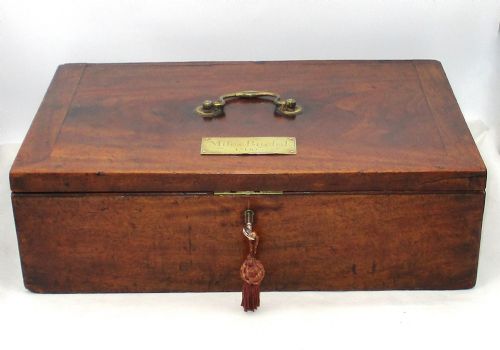
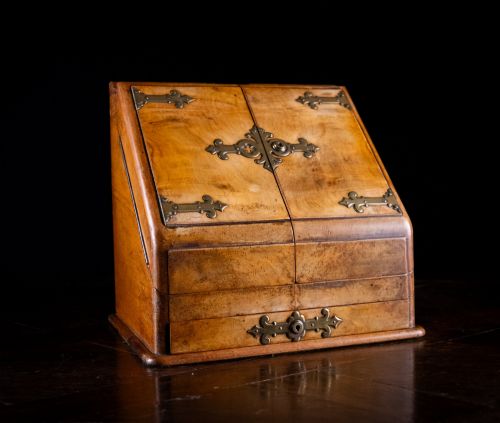
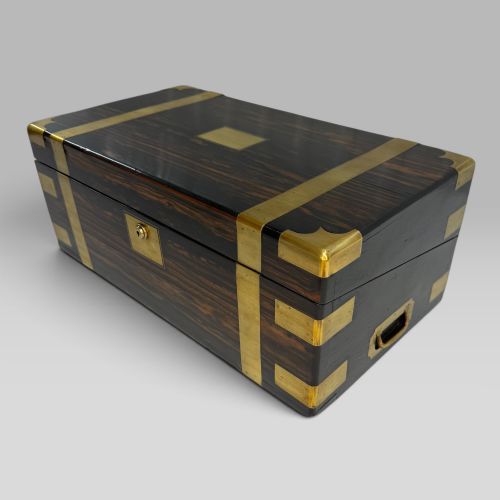
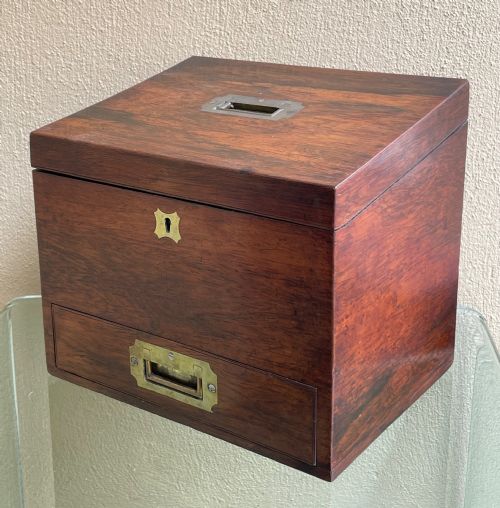
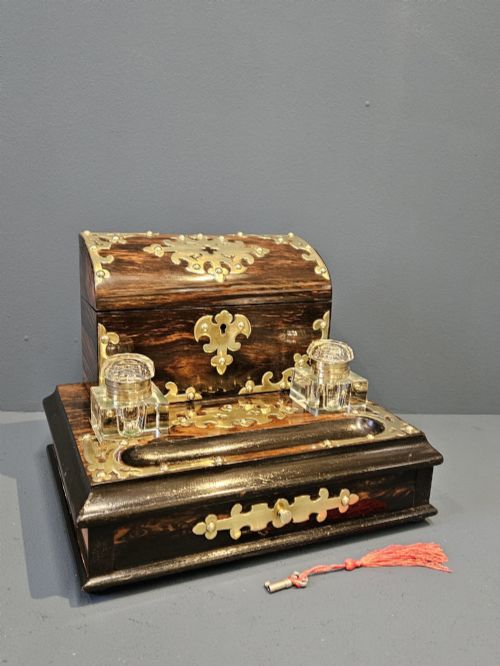
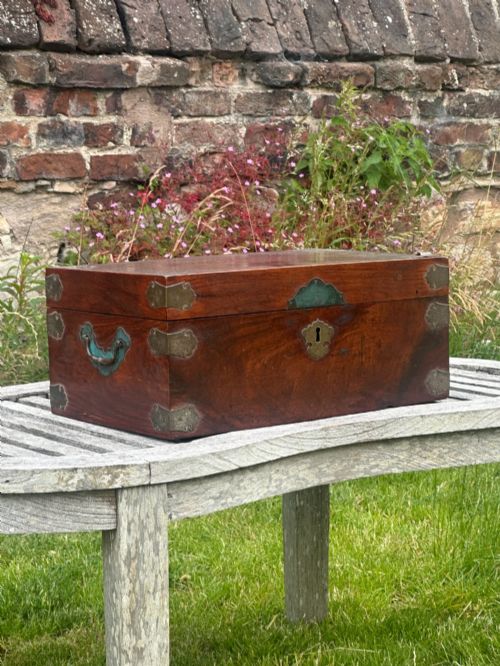
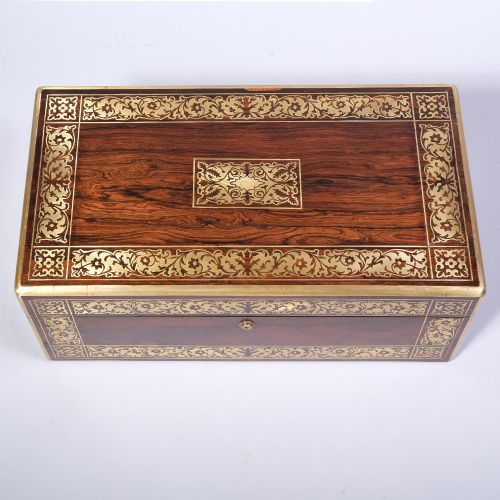
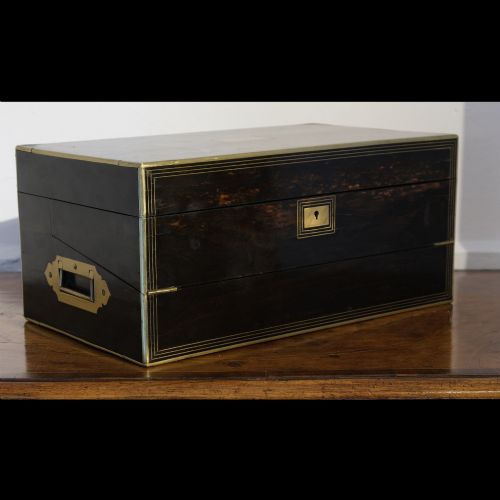
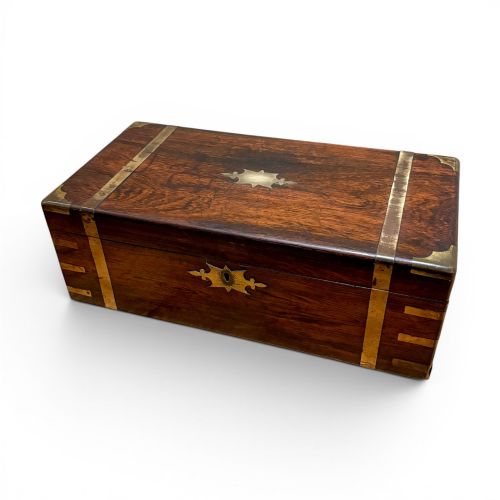
The most common forms on this page include mahogany and burr walnut campaign slopes, alongside desktop stationery cabinets and document boxes. Many feature brass binding to protect corners during travel, reflecting their origins as functional campaign equipment.
Makers utilised various timbers beyond British hardwoods, incorporating exotic materials such as rosewood, coromandel, padouk and camphor wood. Certain examples survive from French, Chinese and Anglo-Indian workshops, showing diverse regional interpretations of the portable desk.
Materials and construction methods
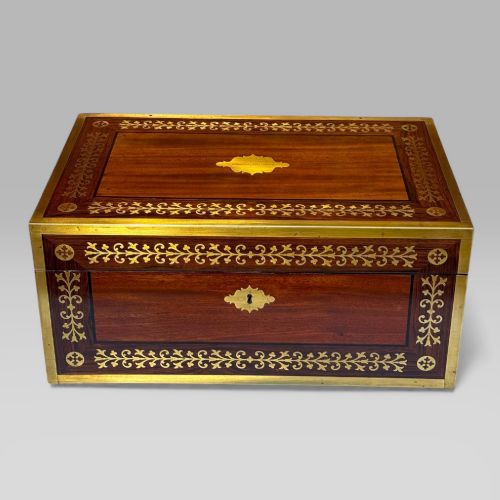
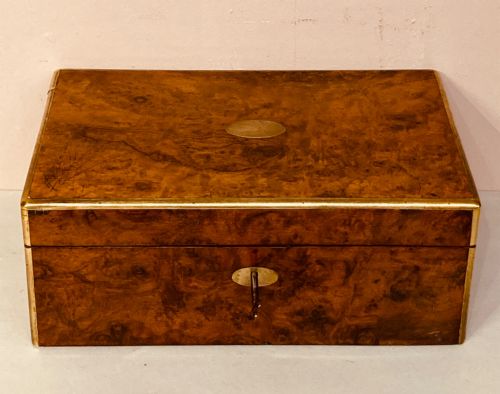
Cabinet makers constructed the primary carcass from dense timbers like mahogany, walnut or rosewood, frequently selecting burr veneers for decorative lids and fall fronts. Solid brass was shaped into strapwork, corner mounts, escutcheons and inlaid stringing to reinforce joints and provide contrast.
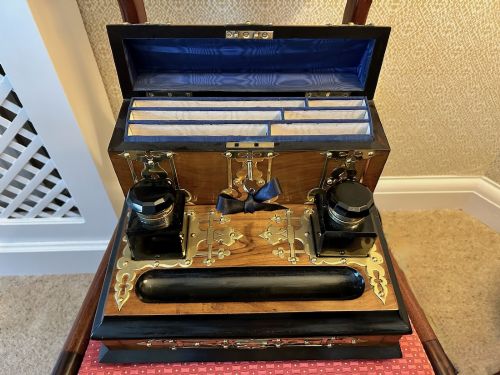
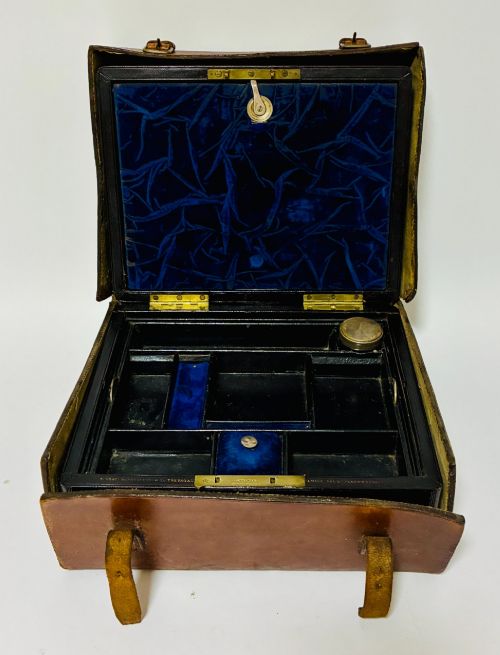
Interiors combined secondary woods with tooled leather writing surfaces, velvet linings and glass inkwells featuring brass screw caps. Campaign models relied on flush-fitting brass drop handles and secret drawers hidden behind false compartments to secure valuables on the move.
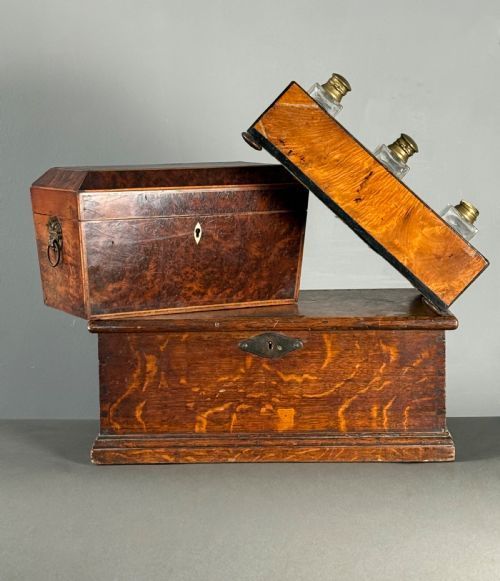
Listings feature writing boxes constructed from mahogany, rosewood, walnut, coromandel, padouk, camphor wood and oak across the Georgian and Victorian periods.
Distinctions in construction and finish
The standard of a brass writing box depends on the thickness of the timber, the precision of the brass inlay, and the complexity of the internal fitments. Superior examples exhibit tightly fitted secret compartments, original tooled leather panels, and robust working locks with matching keys.
Lesser pieces show simpler carcasses with thinner veneers and plain interiors lacking original inkwells or trays. The refinement of the brass corner mounts and the symmetry of the wood grain separate standard utilitarian boxes from high-status cabinet work.
F. West·Austin·Hicks of London
The Brass Writing Box Glossary
- Writing slope
- A portable box with a hinged sloping lid designed to hold paper and provide an angled writing surface when opened. Most examples fold flat into a rectangular chest when packed for travel.
- Campaign box
- A piece of furniture built for military officers on the move, characterised by flush brass handles, protective brass corners and robust framing. These boxes were designed to withstand the rigours of transport.
- Stationery cabinet
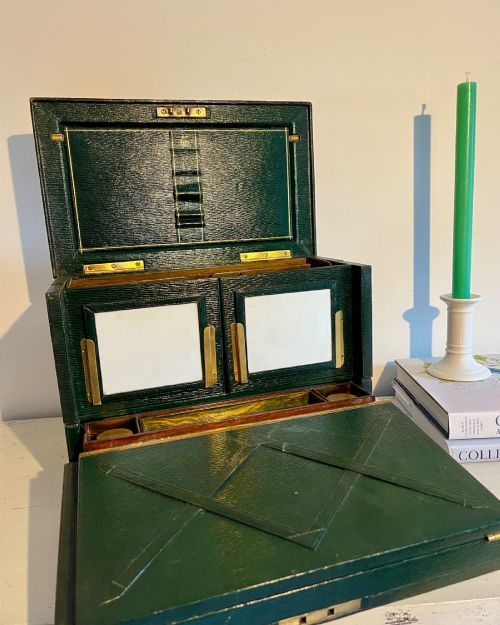
- An upright desk accessory featuring a fall front or tiered internal shelving for holding envelopes, writing paper and correspondence. They became popular in the Victorian period for static desktop use.
- Escutcheon
- A protective brass plate surrounding a keyhole, often shaped as a shield or diamond. On these pieces, the escutcheon is typically let flush into the wood.
- Secret drawer
- A concealed compartment hidden behind removable panels or triggered by secret release catches within the interior. They were used to store valuables and confidential documents.
Brass Writing Box: Frequently Asked Questions
How do I use one today?
You can utilise a writing box on a modern desk to store stationery, letters, fountain pens and small documents. The internal compartments keep modern writing implements organised.
Opening the slope provides a firm surface for writing notes or cards, maintaining the traditional function of the piece within a contemporary study.
How do I tell Regency from Victorian boxes?
Regency boxes often display simpler linear brass inlay on rosewood or mahogany carcasses, reflecting neoclassical tastes of the early nineteenth century. They frequently show lighter proportions and campaign styling.
Victorian boxes tend to employ burr walnut with heavier brass binding, more complex fitted interiors, and robust stationery cabinet variants. The decorative language shifts toward elaborate grain patterns and rich surface textures.
Why do some boxes have secret drawers?
Secret drawers provided a hidden space to secure currency, jewellery, private correspondence and stamps away from casual view. They required the user to understand a specific sequence of internal removals to access the compartment.
Cabinet makers included these concealed spaces as a standard feature of higher-quality portable desks to protect personal valuables during travel.