

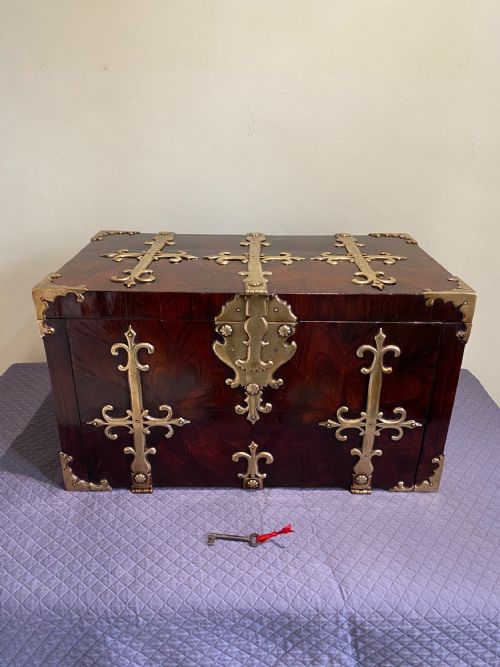
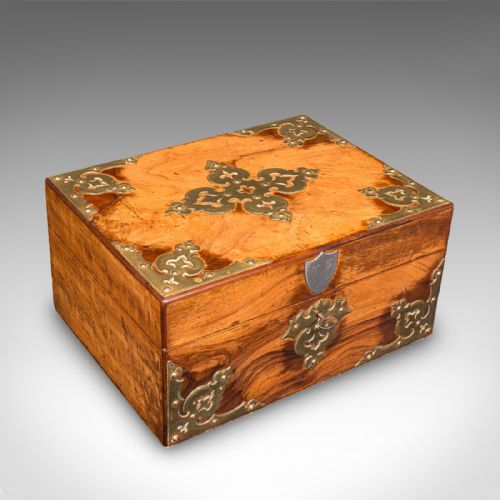


Ornate Brass Box
An ornate brass box brings weight and intricate surface detail to a tabletop, holding small valuables or keeping fireside fuel close at hand.
Ornate Brass Box
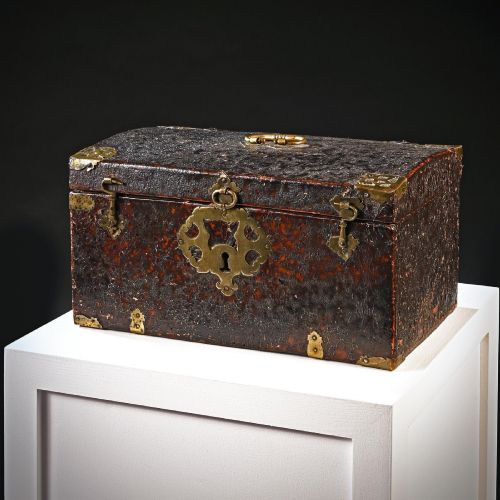
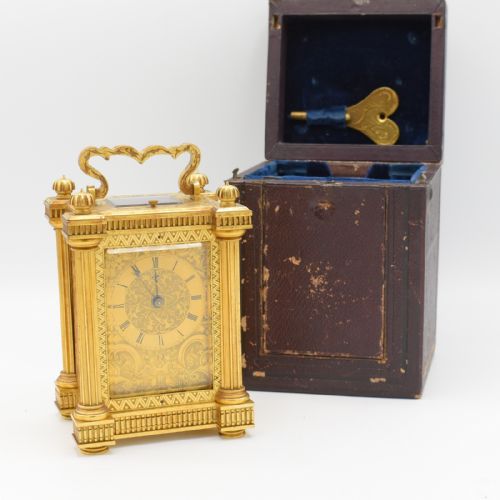
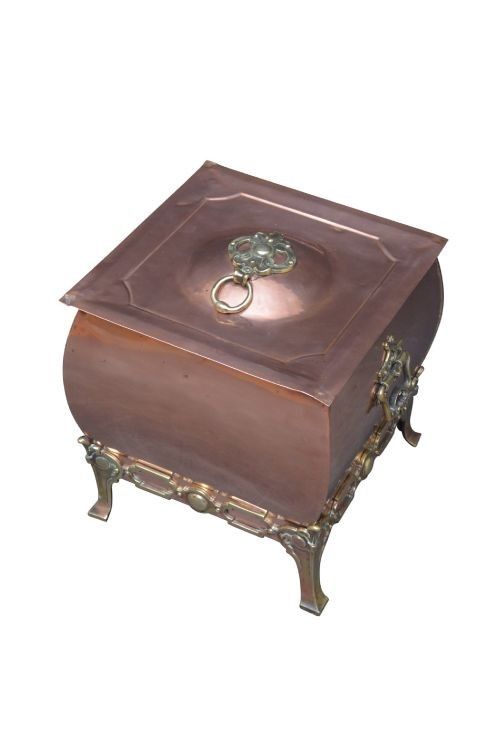
When you search for an ornate brass box, you encounter a range of functional tabletop and fireside containers spanning several centuries. The selection includes Victorian jewellery caskets, writing boxes, and tea caddies alongside larger items such as coal scuttles and traders chests.
Victorian and nineteenth-century examples dominate the offerings, often displaying decorative studwork, repoussé panels, or cast mounts. Earlier seventeenth and eighteenth-century pieces appear as leather-bound travelling boxes, oak coffers, and hardwood chests with metal bindings.
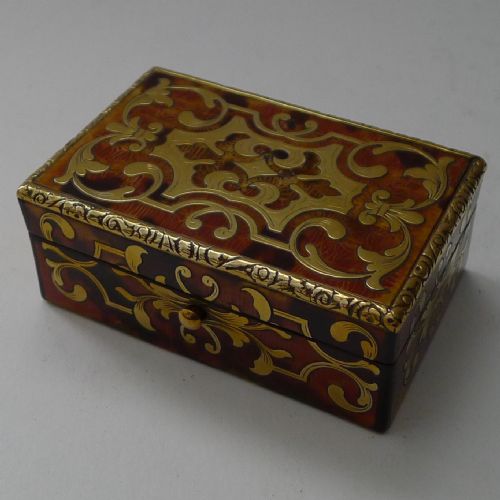
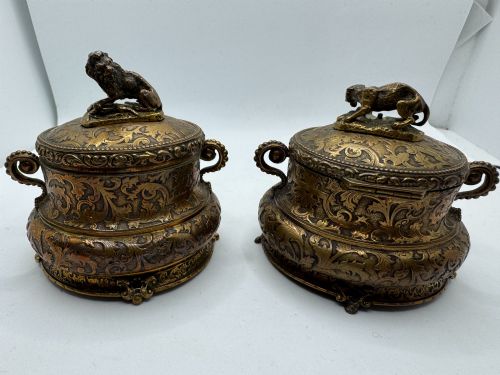
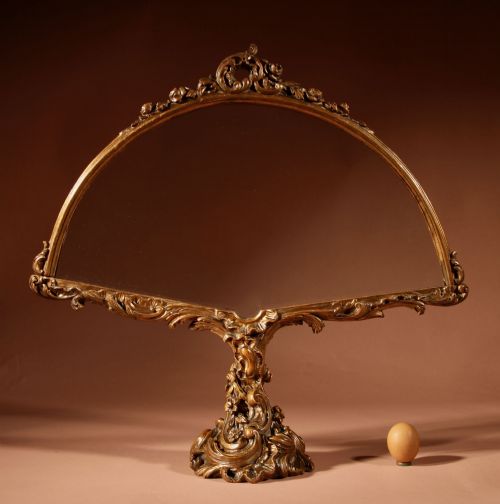
French influence runs strongly through the selection, with French Empire, Rococo, Boulle, and Napoleon III caskets utilising ormolu and gilt-metal mounts. English pieces favour rosewood, burr walnut, and coromandel timbers accented with brass inlay and corner mounts.
Materials and construction
Makers built these pieces using a foundation of dense hardwoods such as rosewood, walnut, oak, and coromandel, then reinforced and embellished them with brass plates, strapwork, and cast mounts. Brass frequently appears alongside copper, bronze, and ormolu, creating varied metallic textures across the surface.
Surface ornamentation relied on specialised techniques including repoussé work, where metal is hammered from the reverse to form raised patterns, and detailed casting. Woodwork incorporates brass inlay, stringing, and applied corner brackets secured by small brass pins.
Interior fittings often involve lined compartments, velvet or silk pads, and fitted trays for stationery, sewing implements, or jewellery. Leather, glass, and marble elements occasionally supplement the primary wood and metal structure.
Listings feature boxes and containers spanning the seventeenth, eighteenth, and nineteenth centuries, utilising brass, copper, bronze, and various hardwoods.
Craftsmanship and design
Quality reveals itself in the crispness of the cast brass decoration and the depth of the repoussé work. Sharp, well-defined motifs and carefully finished edges separate finer examples from routine production.
The integration of metal mounts to the wooden body demonstrates superior craftsmanship, with flush fittings and secure fastenings. Finer boxes utilise luxurious timber veneers like burr walnut and coromandel paired with heavy, substantial brass locks and hinges.
Howell & James London·Benham & Froud·AB Paris·GEORGE PRICE
The Ornate Brass Box Glossary
- Repoussé
- A metalworking technique where the artisan hammers the metal from the reverse side to create a raised design on the front. This method allows for intricate, tactile surface patterns on brass boxes and planters.
- Ormolu
- Gilded bronze mounts applied to furniture and decorative caskets, popular in French pieces. The process involves coating bronze in a gold amalgam and heating it to leave a rich, golden finish.
- Tea Caddy
- A container designed to store dry tea leaves securely, often featuring fitted interior compartments with lids. These boxes frequently incorporate fine wood veneers and brass escutcheons.
- Boulle
- A form of marquetry utilising tortoiseshell and brass inlaid in delicate patterns, named after a French royal cabinetmaker. This decorative technique appears on select nineteenth-century trinket boxes.
- Jardiniere
- An ornamental pot or stand designed to hold growing plants or flowers. In brass and copper, these vessels often feature decorative animal heads, repoussé panels, or swing handles.
Ornate Brass Box: Frequently Asked Questions
What were brass bound boxes used for?
These containers served primarily to secure and transport valuable personal possessions during travel or to organise items on domestic tabletops. Common contents included letters, jewellery, sewing gear, and dry tea.
Heavier brass bound chests and trunks accommodated larger quantities of goods for merchants and households. The robust construction protected contents from moisture and rough handling.
How do I distinguish French caskets from English boxes?
French caskets typically rely heavily on cast ormolu, gilt-metal, and shaped glass panels, often reflecting Rococo or Empire design idioms. They frequently house jewellery or trinkets.
English equivalents tend to focus on timber construction such as rosewood, mahogany, or walnut, enhanced with brass inlay, corner brackets, and escutcheons. The emphasis remains on cabinetry paired with functional brass hardware.
How should I clean a brass box?
Dust the surface regularly with a soft, dry cloth to prevent grime accumulation in the recesses of repoussé or cast decoration. Avoid aggressive commercial metal polishes that strip away the aged patina.
If the metal requires attention, use a mild, non-abrasive cleaner formulated for antique brass, applying it sparingly with a cotton bud. Protect surrounding wood or leather surfaces during any cleaning process.
What is a Zanzibar chest?
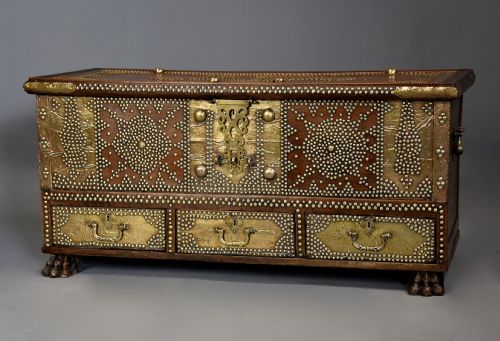
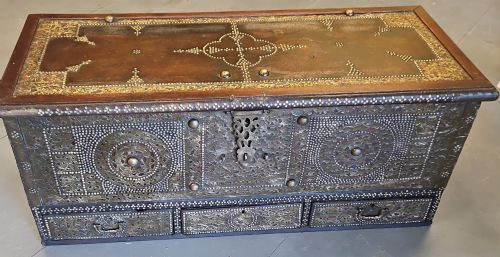
A Zanzibar chest is a form of trading chest characterised by heavy brass stud decoration and straps over a dark hardwood body. These pieces reflect trade routes linking the Middle East, India, and East Africa.
They function as substantial storage chests, often featuring interior till compartments for documents and valuables. The brass work provides structural reinforcement alongside decorative impact.