
Brass Travelling Clock
A brass travelling clock is a portable timepiece designed for movement, combining heavy metal cases with precise mechanical skill.

Brass Travelling Clock
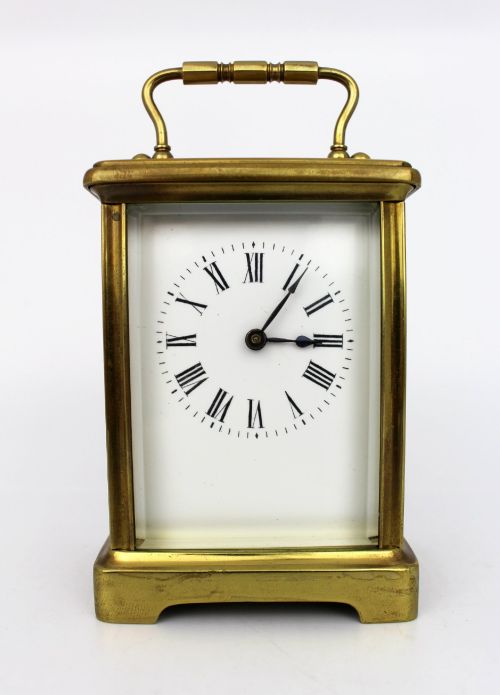
When you search for a brass travelling clock, you encounter portable timepieces built to withstand motion while maintaining accuracy. These pieces typically take the form of carriage clocks and desk clocks originating from the nineteenth and early twentieth centuries.
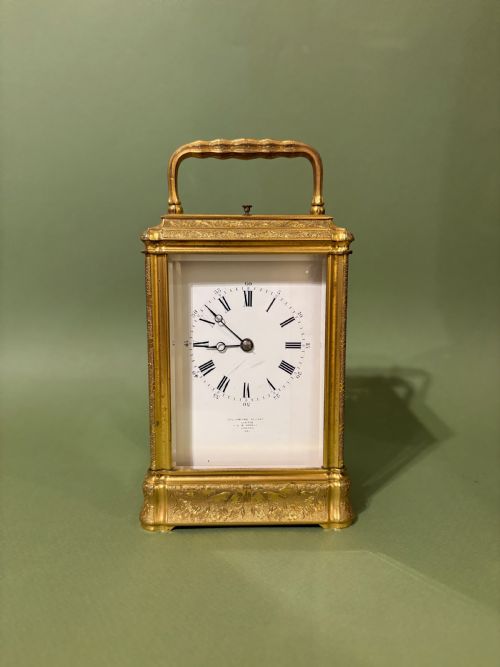
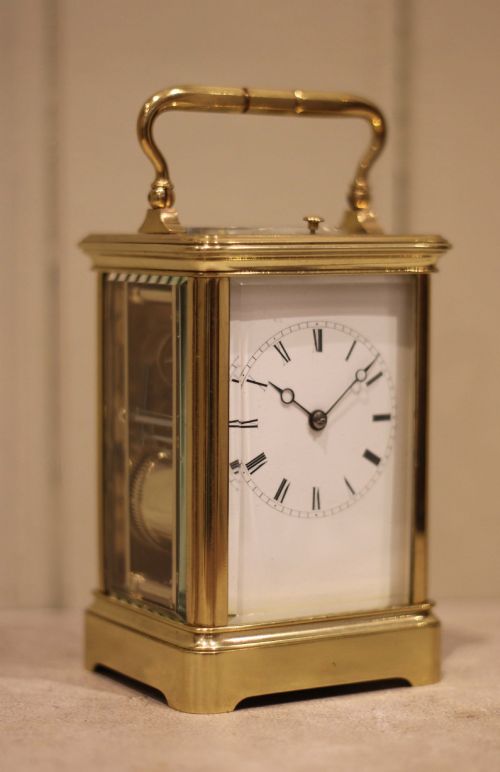
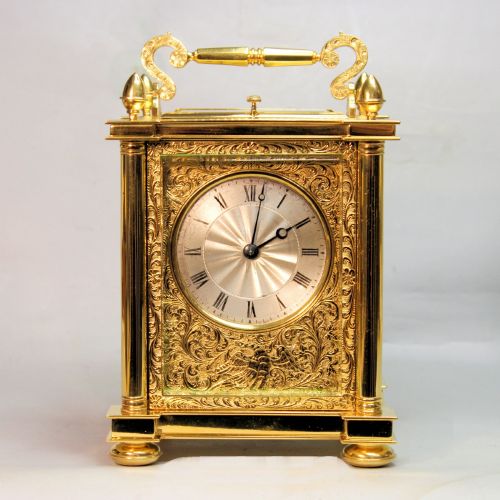
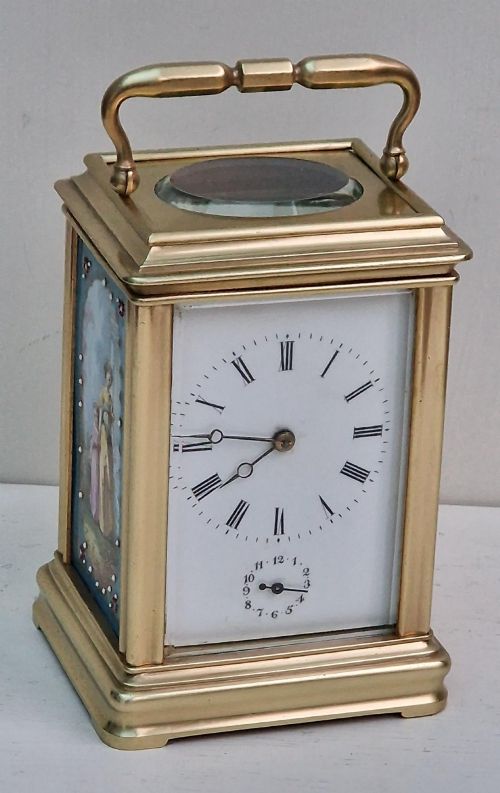
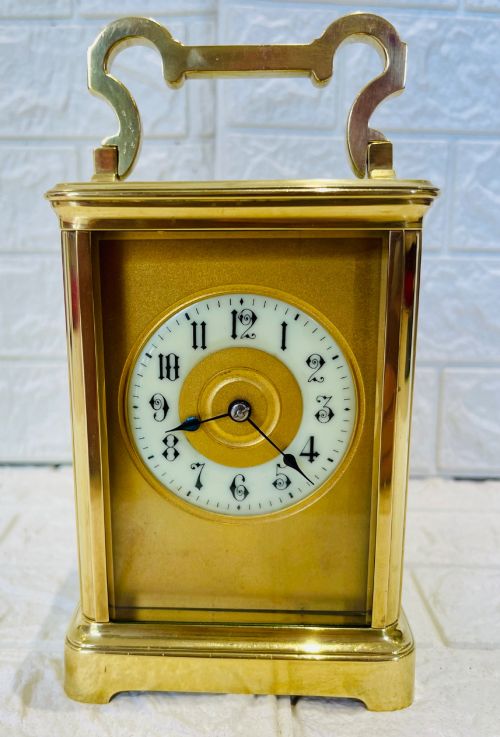
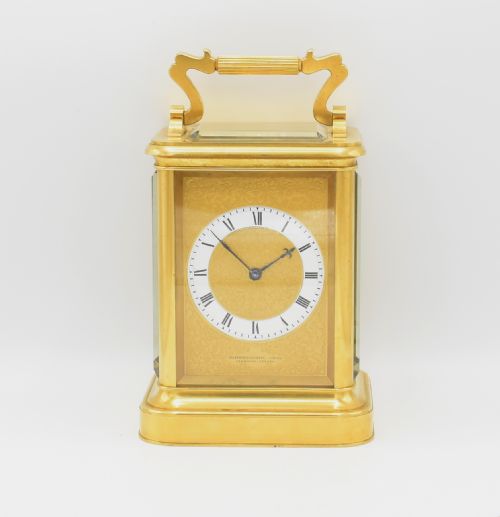
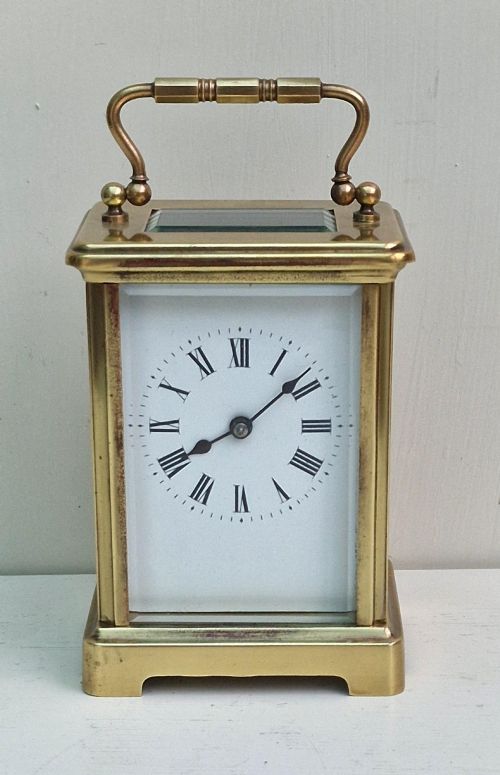
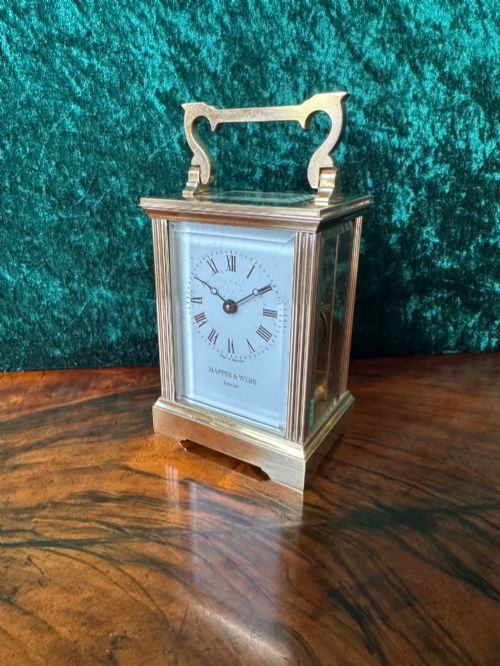
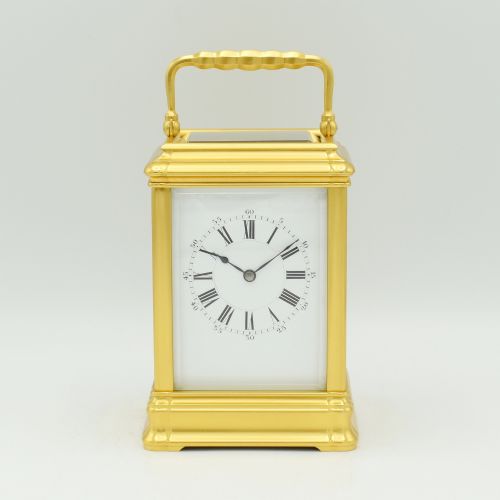
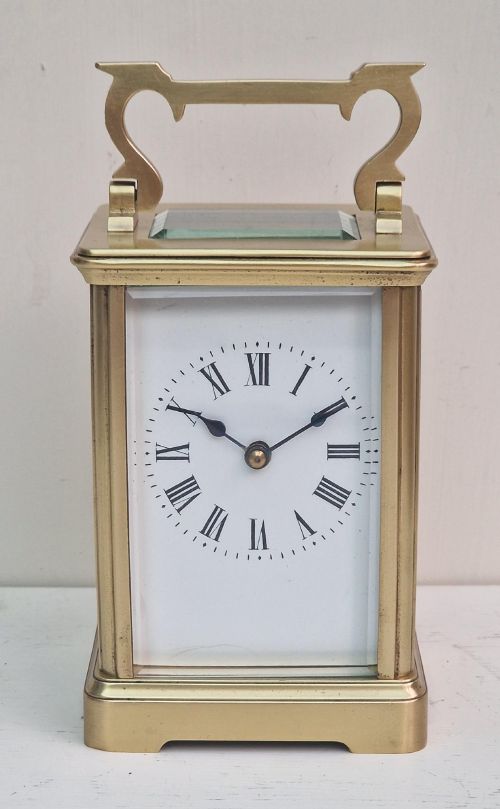
The version you are most likely to meet on this page is the French carriage clock encased in brass or gilt brass, often accompanied by glass panels that reveal the internal escapement and movement. Examples range from standard models to miniature carriage clocks and large repeating pieces.
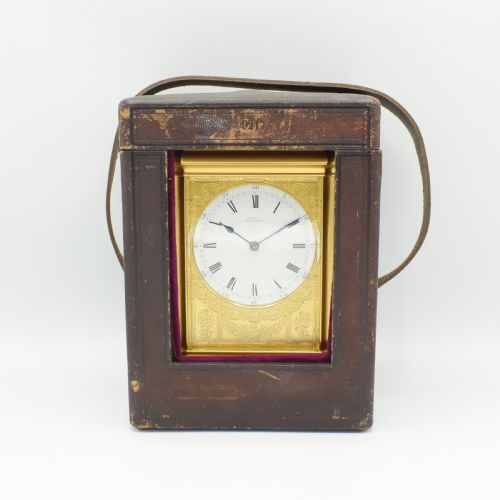
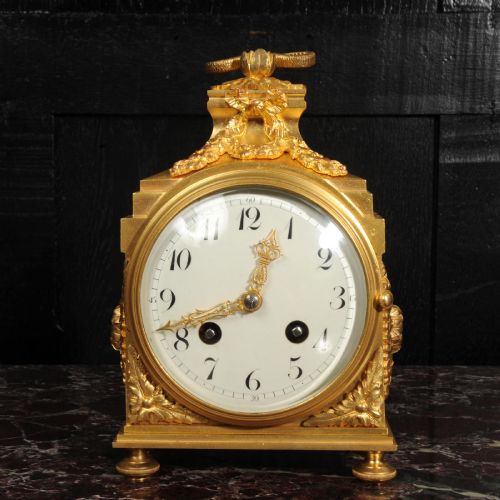
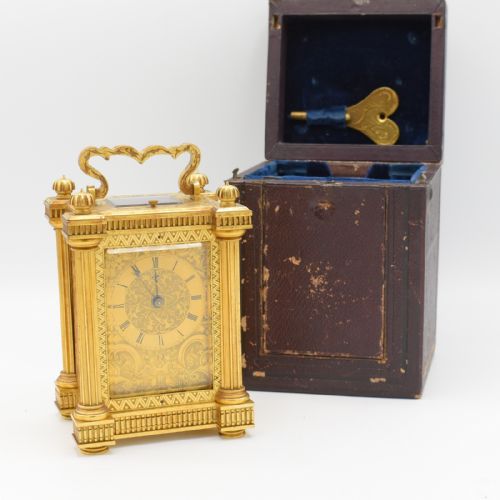
Originating largely from French workshops and English makers, these objects reflect traditional Victorian, Edwardian, and French Empire styles. Many retain their original leather travel cases, pointing to their intended use by travellers of the period.

Materials and construction
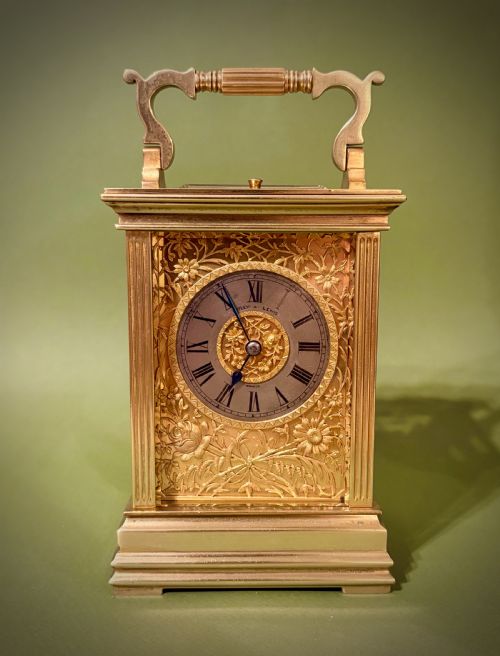
Makers constructed these clocks using heavy brass, gilt brass, and ormolu frames fitted with bevelled glass panels to protect the delicate brass and steel movements inside. Dial faces frequently incorporate white enamel, while certain pieces feature porcelain panels or silvered metal details.
Movements rely on intricate brass wheels, steel pinions, and balance springs, with some incorporating fusee mechanisms or striking and repeating gear trains. Cases often display engraved decoration on the brass surfaces, paired with sturdy swing handles designed for transit.
Brass Travelling Clock Retail Price Guide 2026
Typical asking prices for brass travelling clock among the pieces listed under this phrase on Sellingantiques today, from the lower quarter to the upper quarter. They describe what is for sale here now, not the wider market.
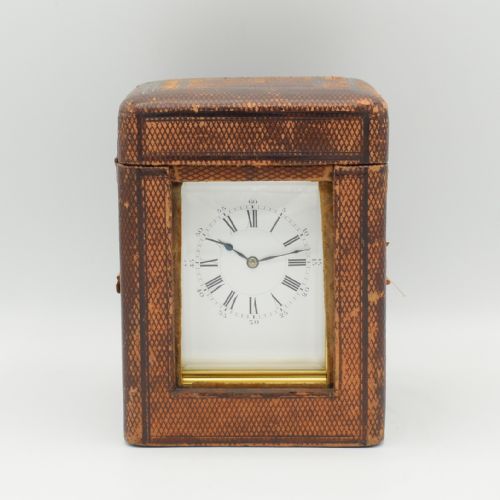
Several clocks preserve their original leather travel cases, having outlived the carriages they once rode in.
Judging quality in portable clocks
Quality rests in the complexity of the internal movement and the crispness of the exterior case casting. Simple timepieces differ significantly from repeating carriage clocks that strike hours and quarters on gongs or bells.
Finishing separates standard productions from master works, visible in fully engraved gilt brass cases, hand-painted porcelain inserts, and the reputation of makers such as Henri Jacot or Drocourt. The presence of an original leather travelling case adds considerable merit to a piece.
HENRI JACOT·COUSENS & WHITESIDE·Howell & James London·Mappin and Web·Drocourt Paris·T. Martin & Co·C. Detouche Paris·Pickford of London
The Brass Travelling Clock Glossary
- Carriage clock
- A portable spring-driven clock designed for travellers, featuring a rectangular brass case with glass panels and a top handle. These clocks emerged in the nineteenth century for use on journeys.
- Repeating clock
- A clock mechanism that chimes the last hour or quarter-hour on demand when a lever or cord is pressed. This complication required advanced gear work.
- Pendule d'officier
- An early French military or travelling clock style associated with the late eighteenth and nineteenth centuries. These pieces typically feature distinct bronze or brass cases.
- Gorge case
- A stepped architectural brass case style commonly found on nineteenth-century carriage clocks. The curved mouldings define the top and bottom frames.
- Fusee
- A conical pulley used in older clocks to maintain even tension on the gear train as the mainspring unwinds. This device improves timekeeping accuracy.
Brass Travelling Clock: Frequently Asked Questions
What is a brass travelling clock?
A brass travelling clock is a portable mechanical timepiece enclosed in a metal frame with glass viewing windows. They were built for mobility during the nineteenth and twentieth centuries.
Most examples utilise a spring-driven movement rather than a pendulum, allowing them to keep time while moving inside carriages or luggage.
How do repeating mechanisms work?
Repeating mechanisms allow the clock to strike the hours and quarters when activated by pressing a button or pendant on top of the case. This allowed travellers to check the time in total darkness.
Complicated gear trains inside the brass housing coordinate the striking hammers with the ongoing timekeeping train.
Did these clocks travel originally?
Yes, they were specifically designed for journeys by coach, train, or ship. Sturdy brass frames and thick glass protected the delicate internal mechanisms from shocks.
Many of these timepieces survive alongside their fitted leather travelling cases lined with velvet or silk.
How do I date a brass carriage clock?
Dating relies on stylistic shifts in the brass case, the shape of the escapement platform, and maker signatures or serial numbers. Earlier nineteenth-century examples often display heavy gilt framing and simpler platforms.
Edwardian and later pieces from the twentieth century frequently incorporate Swiss movements or refined mechanical improvements.