




Brass Studded Bench
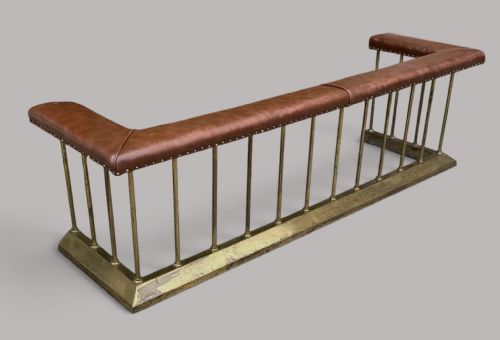
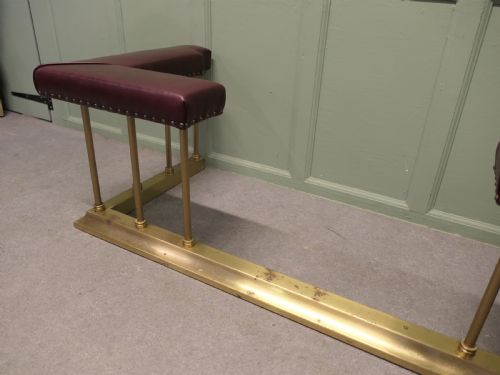
A brass studded bench brings substantial leather seating and fireside furniture into a room, defined by rich upholstery secured with metal tacks.
Brass Studded Bench
A brass studded bench encompasses a range of seating forms including long footstools, ottomans, club fenders, and dressing table stools originating from the eighteenth century through to the early twentieth century. Buyers seeking this phrase encounter low fireside seating, heavy mahogany frames, and substantial box ottomans upholstered in leather.
The selection on this page draws together traditional English seating styles spanning the Regency, Victorian, and Edwardian periods. Pieces range from large country house ottomans to walnut hall seats and steel or brass club fenders designed for hearths.
Mahogany, oak, and walnut form the primary timber frameworks, whilst upholstery relies heavily on tan, brown, and burgundy leather or woven fabric. Many examples incorporate deep buttoning and decorative metal tacks along the borders.
What varies in quality
The distinction between ordinary production and superior craftsmanship rests in the weight of the timber frame, the depth of the carving, and the proportion of the legs. Heavier hardwoods and well-drawn proportions indicate a higher grade of workshop production, particularly in Georgian and Victorian pieces.
Leather selection and the neatness of the brass studding also separate standard items from finer examples. Hand-dyed hides with patination and even, closely spaced metal tacks demonstrate greater attention to finish.
Listings feature mahogany, oak, walnut, and rosewood timber frames paired with leather and fabric upholstery across the nineteenth and twentieth centuries.
The Brass Studded Bench Glossary
- Club fender
- A low fireside seat with an open metal frame and upholstered top cushions, traditionally placed around a fireplace hearth.
- Ottoman
- A low, upholstered seat or bench without a back or arms, frequently featuring internal storage or deep buttoned leather.
- Cabriole leg
- A furniture leg that curves outward at the knee and tapers inward toward the foot, commonly found on eighteenth and nineteenth-century seating.
- Buttoning
- An upholstery technique where recessed buttons are pulled deep into the padding to create a diamond pattern across the leather or fabric surface.
Brass Studded Bench: Frequently Asked Questions
What is a club fender?
A club fender is a specialised fireside seat featuring a metal base, often brass, with upholstered top rails where people sat near the hearth.
These pieces combine functional seating with protective barriers around open fireplaces, utilising sturdy metal construction to withstand heat and daily use.
How do I date a leather ottoman?
Dating relies on examining the timber frame underneath, the style of the legs, and the method of upholstery construction.
Earlier pieces from the Georgian and Regency periods display hand-turned or carved framing details, whilst later Victorian and Edwardian examples often incorporate mass-produced elements and heavier padding.
Where should I place a long stool?
Long stools and benches fit effectively at the foot of a bed, beneath a window, or arranged in a hallway as seating.
Their low profile allows them to provide extra seating without obstructing sightlines or overwhelming smaller living spaces.
What timber was used for these benches?
Cabinetmakers utilised native and imported hardwoods including mahogany, oak, walnut, and rosewood for the structural frames.
These dense woods provided the necessary strength to support heavy upholstery and frequent sitting over centuries of domestic use.