



Brass Stud Footstool
A brass stud footstool brings solid timber frames and hand-applied metalwork into a room, serving as a low seat or rest.
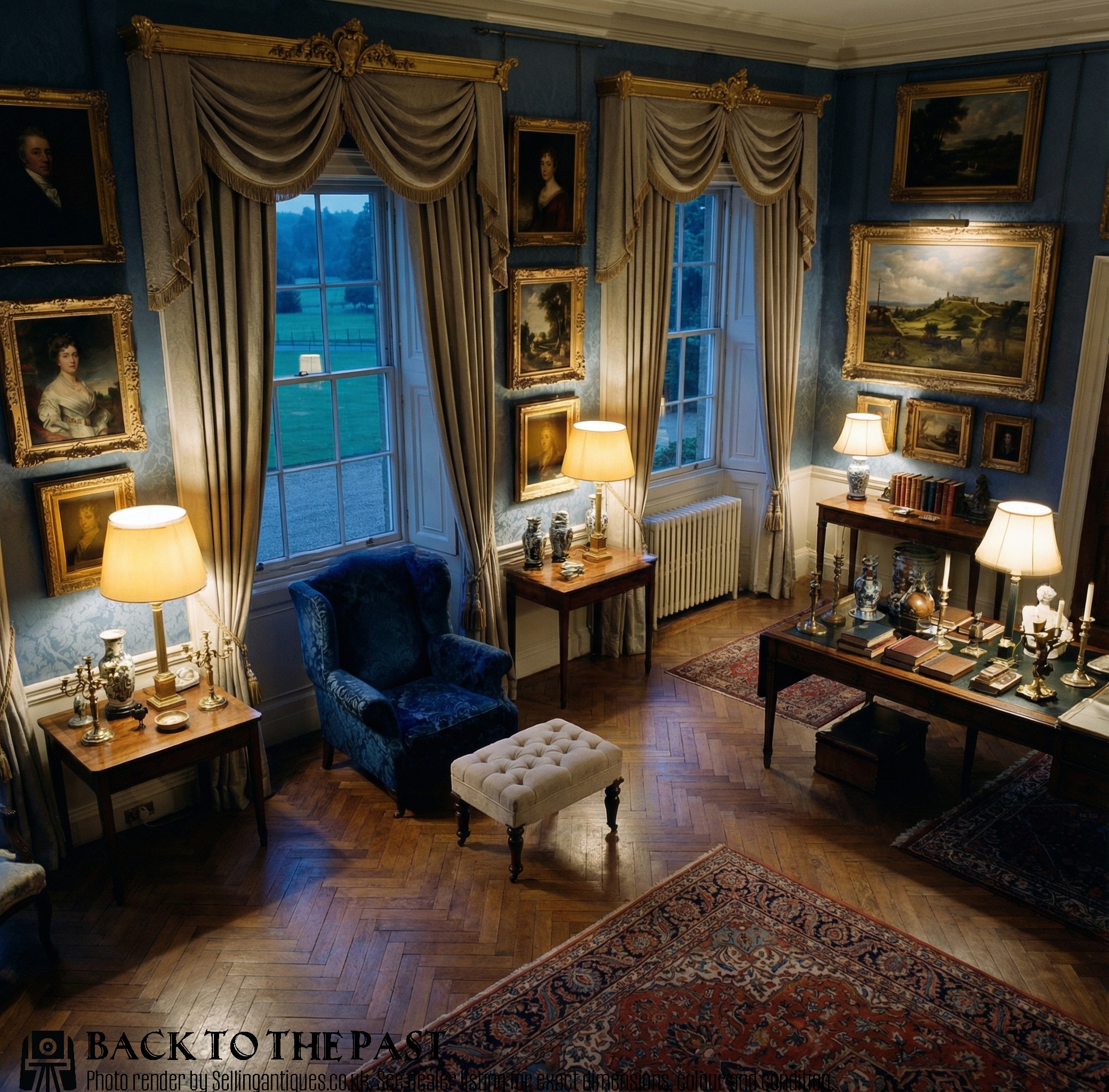
Brass Stud Footstool
A brass stud footstool is a low seated piece of furniture defined by its exposed metal tacks and upholstered top. These items range from compact domestic footrests to large country house ottomans and long window seats.
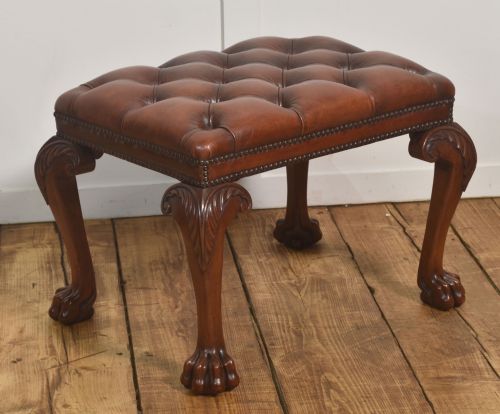
The version you meet most often on this page is the Victorian mahogany or rosewood footstool, frequently upholstered in leather and supported on turned or cabriole legs.
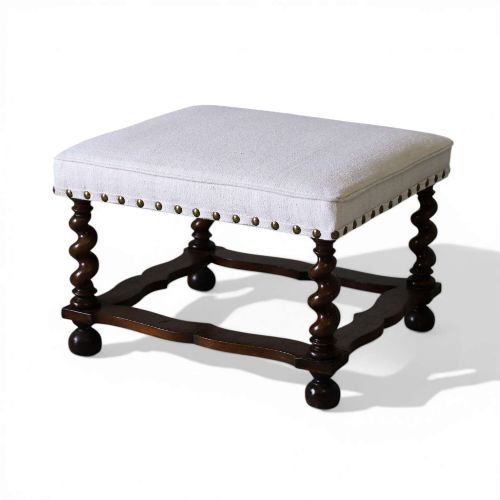
Makers drew on diverse historical designs, producing items shaped in the Chippendale, Regency, and William and Mary styles across the eighteenth, nineteenth, and early twentieth centuries.
Materials and construction
Cabinetmakers built the structural frames using hardwoods such as mahogany, walnut, oak, rosewood, and yew wood. Selected pieces incorporate decorative elements like oyster veneers, barley-sugar turnings, and hand-carved cabriole legs.
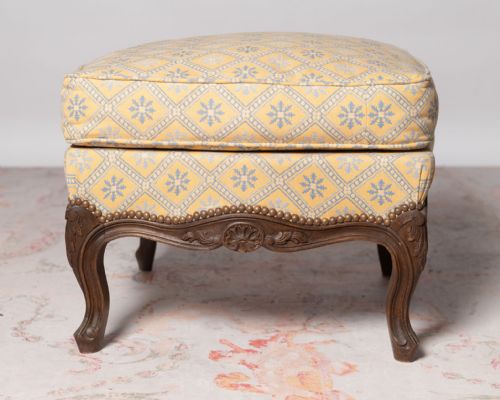
Upholstery involved heavy hides, hand-dyed leathers, silk, and woven textiles stretched over stuffing. Individual brass studs were then driven along the edges to secure the fabric and trace the structural lines of the frame.
Several examples double as secret boxes, hiding storage space beneath their studded leather lids.
Distinctions in craftsmanship
The distinction between ordinary and superior pieces lies in the selection of timbers and the precision of the joinery. Dense hardwoods and well-figured veneers denote a higher standard of workshop production.
Refinement appears in the carving of the legs, the regularity of the brass studding, and the depth of the buttoning on the leather upholstery.
The Brass Stud Footstool Glossary
- Brass stud
- A decorative metal tack used to secure upholstery edges to the wooden frame. They appear singly or in continuous rows.
- Ottoman
- A low, upholstered seat or box without arms or a back, frequently fitted with a hinged lid for storage.
- Cabriole leg
- A furniture leg that curves outward at the knee and tapers inward toward the foot, inspired by animal limbs.
- Box ottoman
- A hollow seated piece with an internal compartment accessed by lifting the upholstered top.
- Oyster veneer
- Slices of branch wood cut to display circular growth patterns resembling oyster shells.
Brass Stud Footstool: Frequently Asked Questions
What is a brass stud footstool used for?
These pieces served primarily as low seats, dressing stools, or footrests in traditional interiors.
Larger variants functioned as ottomans or blanket boxes in bedrooms and country house drawing rooms.
How do I date a footstool?
Dating relies on identifying the underlying timber, leg shapes, and upholstery styles characteristic of specific centuries.
Victorian pieces often feature heavy mahogany frames and deep buttoning, while eighteenth-century examples display walnut construction and carved details.
Are these footstools upholstered in leather?
Many examples on this page feature leather upholstery, including hand-dyed and buttoned hides.
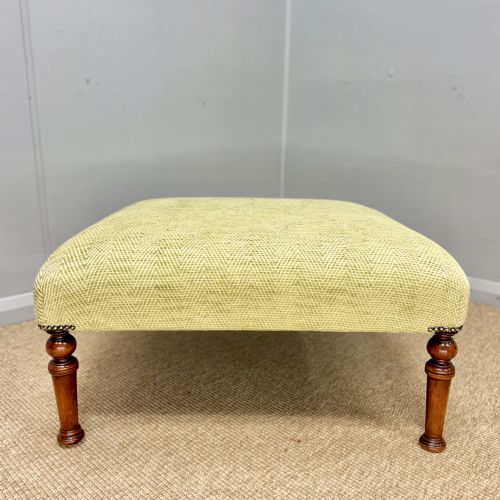
Others utilise silk, woven textiles, or arrive ready for new upholstery.
How do I fit one into a modern room?
A low wooden stool works well placed in front of a sofa or used as an occasional seat.
Box ottomans also provide concealed storage while functioning as surface tables or footrests.