



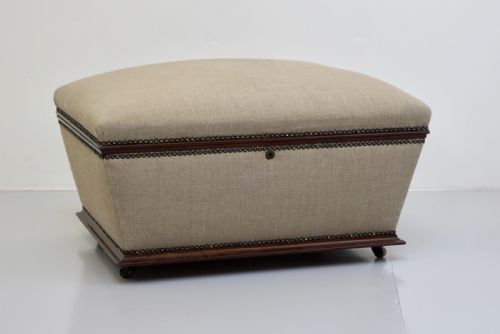


Mahogany Footstool on Castors
A mahogany footstool on castors is a sturdy, low-slung seat built for drawing rooms, sitting rooms and libraries across several British centuries.
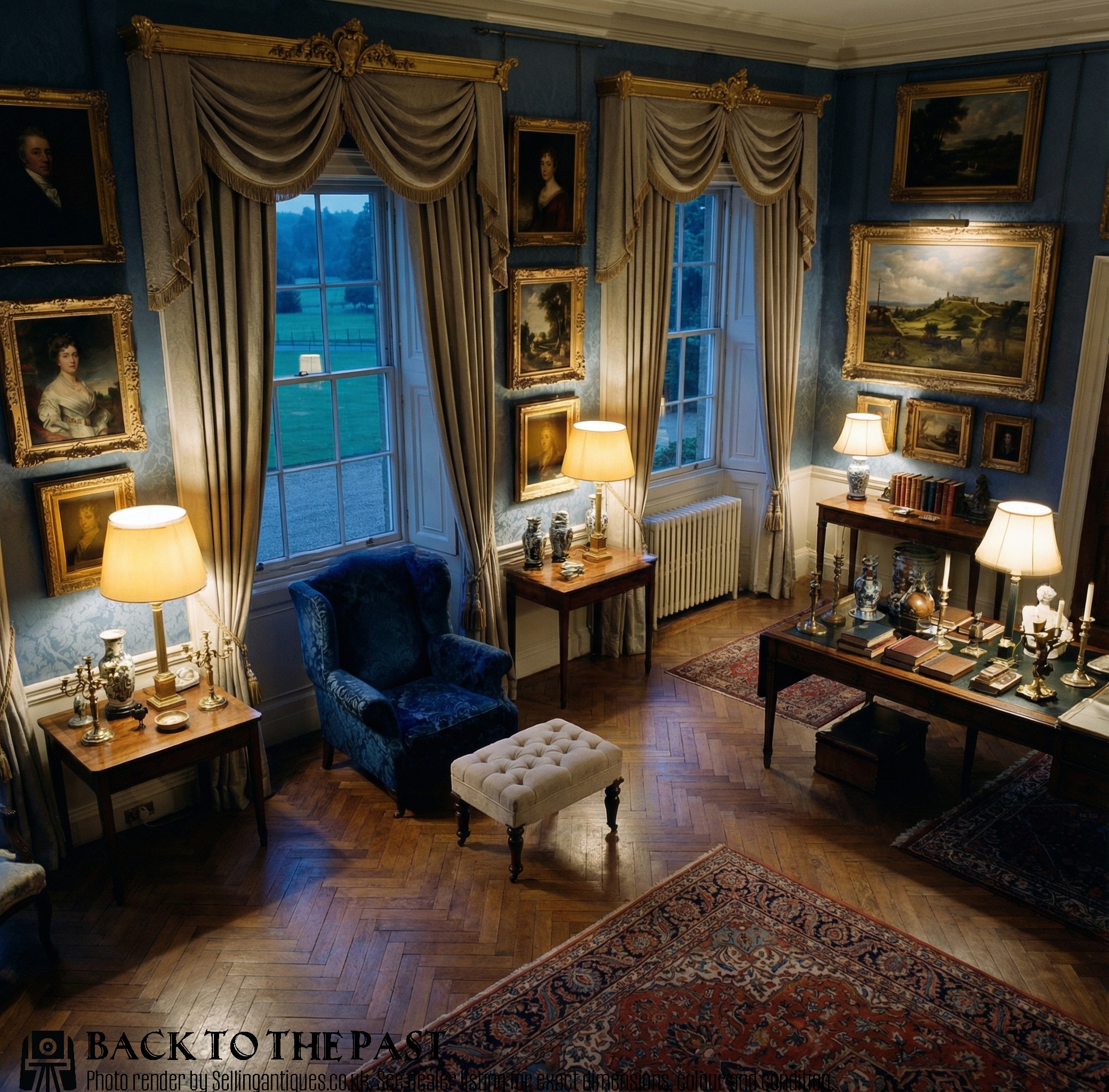
Mahogany Footstool on Castors
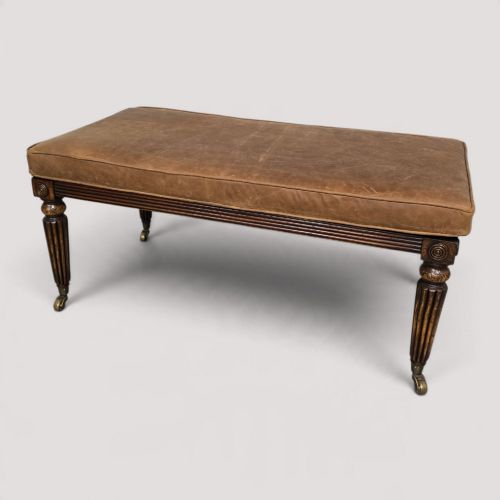
A mahogany footstool on castors typically takes the form of a low timber frame raised on small wheels, designed for resting feet or sitting near the hearth. The listings show forms spanning the Georgian, Regency and Victorian periods, alongside Edwardian examples.
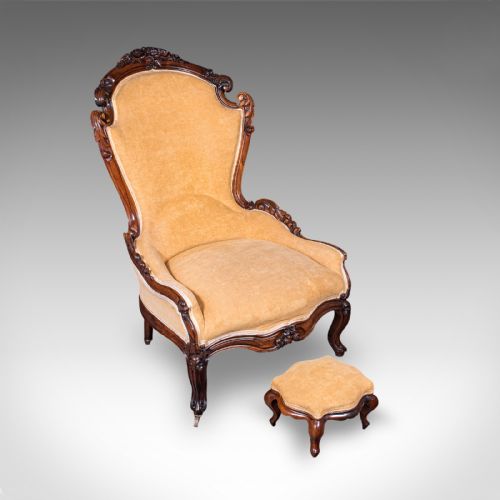
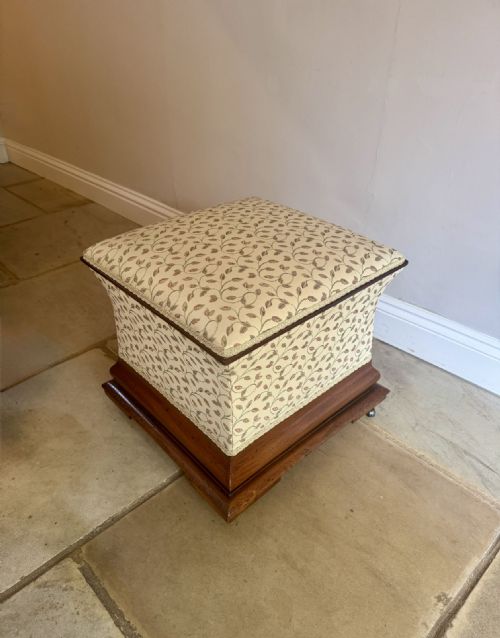
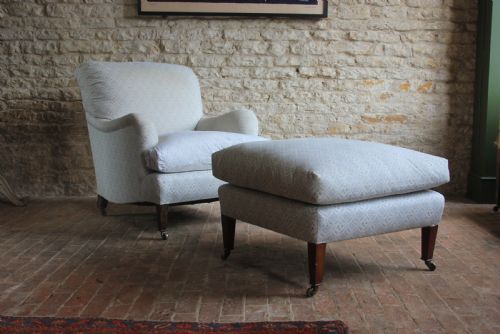
Makers fashioned these pieces as simple footstools, deep buttoned stools, box ottomans and larger dressing stools. You will encounter rectangular frames, concave shapes and pieces paired with matching armchairs.
Materials range from solid mahogany frames to cane seats and various upholstery fabrics, including cotton, velvet and chenille. The presence of castors made these heavy timber items easy to manoeuvre across carpets and floorboards.
Materials and construction
Cabinet makers built the primary frames from dense mahogany, often shaping the timber into cabriole legs or box compartments for storage ottomans. Brass fittings secure the small wheels to the base of the legs.
Upholstered versions rely on internal webbing and stuffing covered in fabrics such as velvet, chenille or cotton, sometimes finished with deep buttoning. Cane seated variations weave plant material directly into the wooden framework.
Mahogany Footstool on Castors Retail Price Guide 2026
Typical asking prices for mahogany footstool on castors among the pieces listed under this phrase on Sellingantiques today, from the lower quarter to the upper quarter. They describe what is for sale here now, not the wider market.
Some Victorian footstools hide their wheels so effectively that the heavy furniture appears to glide invisibly across the drawing room floor.
Judging quality and character
Quality rests in the weight and grain of the mahogany timber, the crispness of any carved leg details, and the integrity of the underlying frame structure. Heavier, larger frames and box ottomans demonstrate more ambitious workshop construction.
The choice of upholstery, from plain cotton to rich velvet, and the survival of original brass castors alter the visual presence of the piece. Maker attribution, such as pieces associated with Howard and Sons, elevates the historical interest of a stool.
Howard and Sons
The Mahogany Footstool on Castors Glossary
- Mahogany
- A durable, reddish-brown tropical hardwood utilised extensively for furniture frames across the Georgian and Victorian eras. It takes a fine polish and resists warping.
- Castor
- A small wheel attached to the base of furniture legs to allow easy rolling across floors. They are frequently made of brass.
- Ottoman
- A low upholstered seat or bench without a back or arms, sometimes featuring an internal storage box beneath the hinged lid.
- Buttoning
- An upholstery technique where stitches pull the fabric deep into the stuffing at regular intervals to create a padded, patterned surface.
- Cane
- Strips of woven rattan or similar plant material used to create resilient, ventilated seats on chairs and stools.
Mahogany Footstool on Castors: Frequently Asked Questions
What is a mahogany footstool on castors used for?
These pieces served primarily for resting tired feet near a fireplace or as low occasional seating in grand reception rooms. Box variants also provided hidden storage for textiles or small household items.
The inclusion of castors meant occupants could reposition the heavy timber furniture effortlessly across thick carpets without lifting the frame.
How do I date a mahogany footstool?
Dating relies on stylistic clues, timber characteristics and upholstery methods associated with periods like the Georgian, Regency and Victorian eras. Regency pieces often display clean classical lines, while Victorian examples lean towards deep buttoning and rococo revival curves.
Later Edwardian pieces combine traditional timber frames with turn of the century upholstery fabrics and construction techniques.
Are these stools comfortable to sit on?
Many examples feature padded upholstery filled with traditional stuffing and covered in velvet, chenille or cotton. Deep buttoned variations offer a firm, supportive surface for sitting or resting legs.
Cane seated versions provide a lighter, springier surface that suited warmer rooms or dressing areas.
How do I care for the mahogany wood?
Mahogany requires minimal maintenance, benefiting from occasional dusting with a dry cloth and treatment with appropriate furniture wax to preserve the sheen. Avoid placing timber furniture in direct sunlight or near heat sources to prevent splitting.
Check the brass castors periodically to ensure they move freely and remain securely fastened to the wooden legs.