




Victorian Brass Castor Stools
Victorian brass castor stools offer enduring comfort and sturdy charm, making them a practical addition to any traditional room scheme.
Victorian Brass Castor Stools
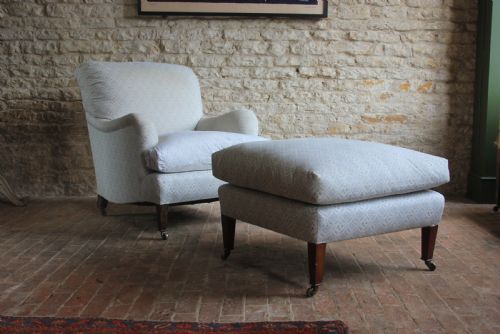
Victorian brass castor stools combine low seating with functional mobility, providing a resting place for feet or an extra seat by the fire. The selection brings together footstools, ottomans, window seats, and armchairs with matching footstools designed for daily use.
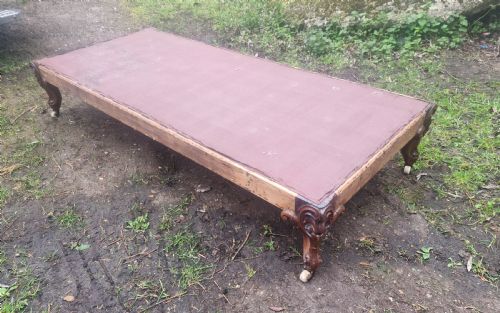
Most examples date across the nineteenth century, spanning the eighteen fifties to the eighteen eighties, alongside Edwardian iterations. They appear in forms ranging from large country house ottomans to carved rosewood centre stools and walnut gout stools.
Makers such as Howard and Sons and James Shoolbred produced notable versions during this period. These seating pieces typically feature upholstered tops supported by timber frames and terminated with brass castors.
How they were made
Frames rely on timbers like mahogany, walnut, and rosewood, shaped through carving and structural joinery. These woods provide a robust skeleton capable of supporting heavy upholstery and constant weight.
Upholstery involves fabric stretched over padding, often enhanced with deep buttoning for texture and resilience. Brass castors are fitted to the base of the legs to allow smooth movement across carpets and wooden floors.
Victorian Brass Castor Stools Retail Price Guide 2026
Typical asking prices for victorian brass castor stools among the pieces listed under this phrase on Sellingantiques today, from the lower quarter to the upper quarter. They describe what is for sale here now, not the wider market.
Listings feature pieces spanning the nineteenth century alongside Edwardian examples, constructed from mahogany, walnut, and rosewood.
What varies in quality
The sophistication of the timber frame and the refinement of its carving distinguish standard production from superior pieces. Hand-carved rosewood or walnut structures demonstrate greater craftsmanship than simpler timber frames.
The attribution to notable makers like Howard and Sons elevates the standing of a piece. Original upholstery techniques and the integrity of the brass castors further influence the overall character.
Howard and Sons·James Shoolbred
The Victorian Brass Castor Stools Glossary
- Castor
- A small wheel mounted on a swivel assembly attached to the foot of a piece of furniture. It allows the stool to be rolled rather than lifted across the floor.
- Gout stool
- A specialised footstool featuring an adjustable incline designed to support the foot of a sufferer. These typically date from the mid nineteenth century in walnut or mahogany.
- Centre stool
- A substantial freestanding seating piece designed to be viewed from all sides. These often feature elaborate rosewood frames intended for the middle of a principal room.
- Buttoned
- An upholstery technique where deep indentations are secured by twine pulled through to the frame. This creates a tufted surface that holds the internal padding firmly in place.
Victorian Brass Castor Stools: Frequently Asked Questions
How do I identify the period of a stool?
Dating relies on timber choices, frame styles, and construction methods characteristic of the nineteenth century. Mid-century examples often feature rosewood or walnut, while later decades introduce distinct Victorian and Edwardian upholstery styles.
Makers' stamps, particularly on pieces by firms like Howard and Sons, provide definitive chronological markers. The presence of specific turning and carving details also points to precise decades within the era.
Were these stools used in specific rooms?
They served primarily in reception rooms, drawing rooms, and studies of large country houses. Gout stools found specific use in private parlours for comfort and health.
Window seats were placed in deep embrasures to provide views of the grounds. Large ottomans occupied central floor space for flexible seating.
How should I care for the upholstery?
Maintenance depends on whether the fabric is original or replaced during reupholstering. Regular gentle vacuuming prevents dust accumulation within buttoned folds.
Wooden frames benefit from occasional polishing with suitable wax. Brass castors require dry cleaning to prevent tarnish and ensure smooth rolling.