





Antique Low Seating Pair
An antique low seating pair brings matched proportion and compact comfort to a room, spanning nursing chairs, stools and armchairs.
Antique Low Seating Pair
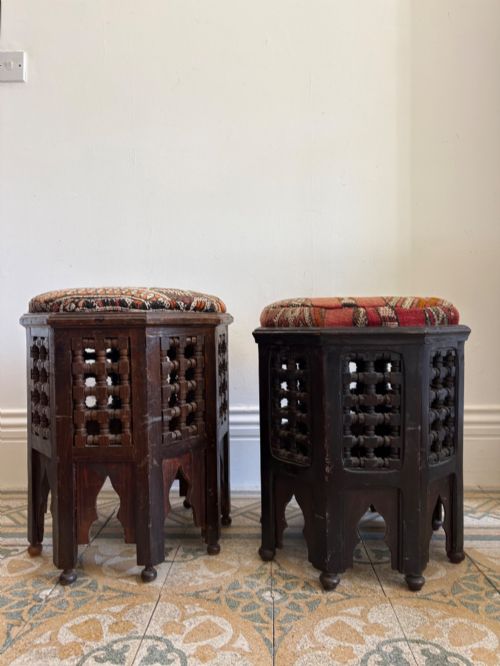
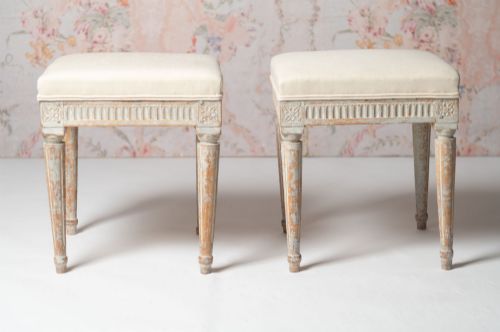
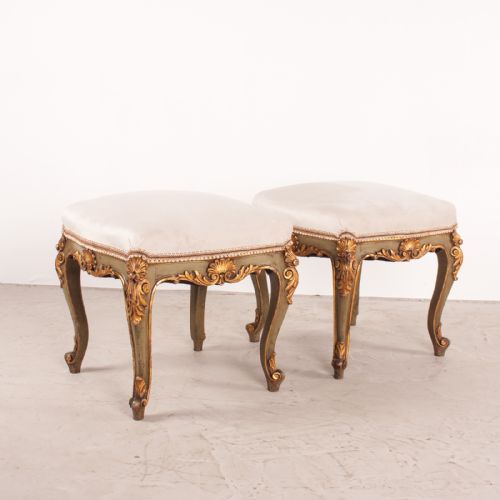
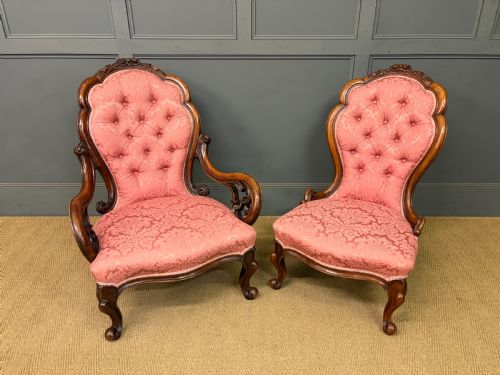
An antique low seating pair comprises matched low-slung chairs or stools designed for intimate domestic spaces, often taking the form of Victorian nursing chairs, low armchairs or compact footstools. These pairs draw from periods ranging from the eighteenth century through to the Edwardian era, incorporating styles such as Gustavian, Napoleon III and Continental Rococo. Buyers frequently encounter nineteenth-century walnut and mahogany examples alongside painted vernacular pieces.
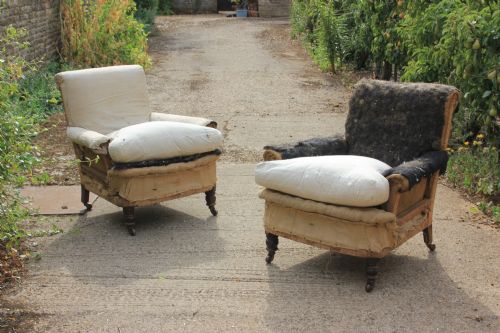
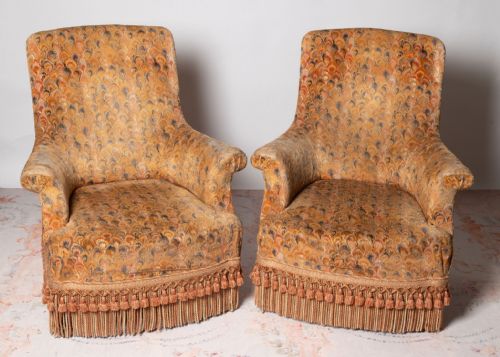
The assortment includes specialised forms like slipper chairs, bedroom chairs and corner chairs, alongside deep-seated country house armchairs. Materials span traditional hardwoods combined with various textiles, from simple hessian to velvet and ticking. Finding a matched pair offers the distinct advantage of balanced symmetry for a drawing room or bedroom setting.
Materials and construction methods
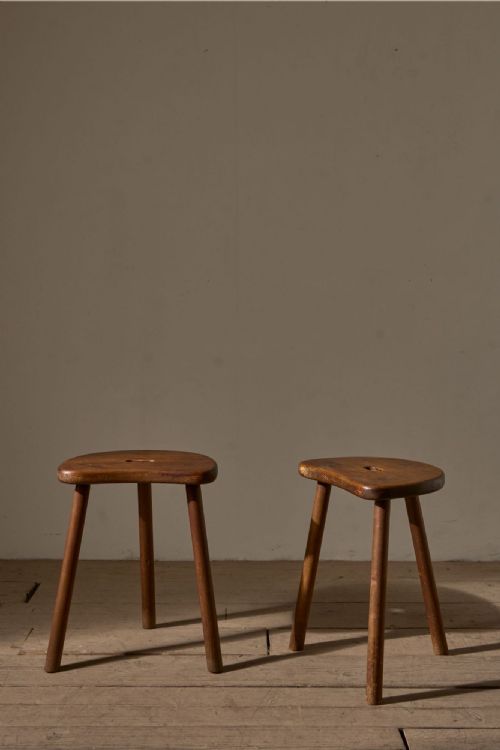
Carpenters and cabinet makers utilised dense timbers such as mahogany, walnut, oak, elm, ash and pine to build the sturdy frames of these low seats. Decorative techniques included carving, turning, painting and gilding, particularly visible on continental stools and nineteenth-century vernacular pieces.
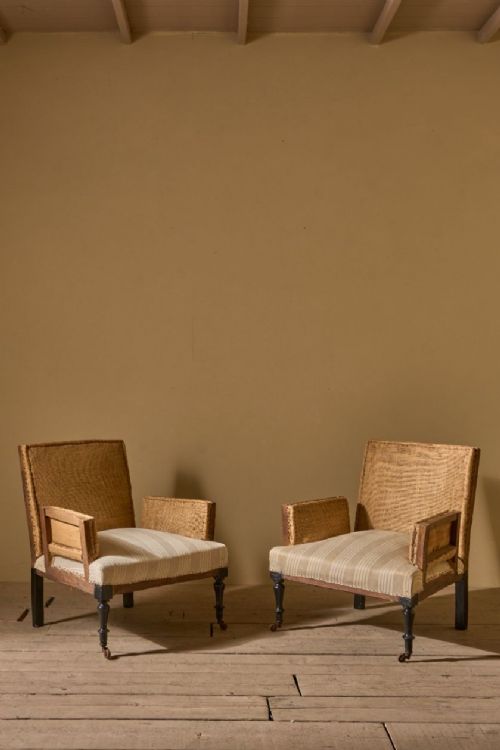
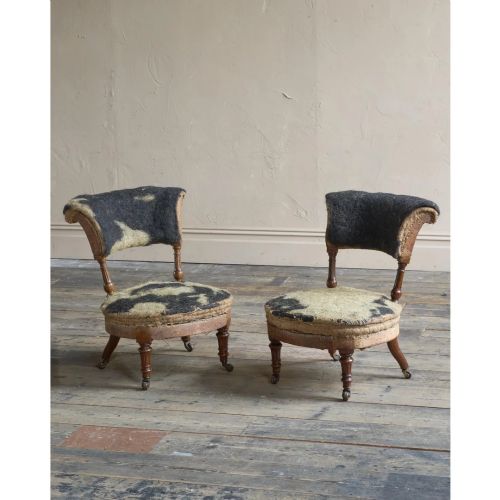
Upholstery formed a central part of the construction, utilising materials like brass tacks, hessian, fabric, textile and velvet over sprung or padded interiors. Many frames survive ready for re-upholstery, allowing craftspeople to apply new coverings while retaining the original wooden structure.
Antique Low Seating Pair Retail Price Guide 2026
Typical asking prices for low seating pair among the pieces listed under this phrase on Sellingantiques today, from the lower quarter to the upper quarter. They describe what is for sale here now, not the wider market.
Some nineteenth-century nursery chairs arrived with low frames specifically designed so Victorian mothers could tend infants without tangling their voluminous crinolines.
Distinctions in quality and finish
The caliber of an antique low seating pair rests upon the integrity of the timber frame, the crispness of any carved or turned detail, and the retention of original painted or polished surfaces. Superior examples demonstrate thoughtful proportion and balanced symmetry between the two pieces, whereas lesser items may show heavy alterations or mismatched wear.
Makers' marks, stamps or signature upholstery methods elevate certain pieces, particularly those originating from notable workshops. The choice and execution of original materials, from burr walnut to finely cast brass accents, further separate standard production items from exceptional workshop output.
Howard and Sons·Whytock and Reid
The Antique Low Seating Pair Glossary
- Nursing chair
- A low-seated chair traditionally used in the nineteenth century for feeding infants or personal grooming. These seats typically feature a low centre of gravity and upholstered backs.
- Gustavian
- A Swedish neoclassical style popular in the late eighteenth and nineteenth centuries, characterised by light painted finishes and restrained classical ornamentation.
- Vernacular
- Objects made by local artisans using regional traditions and readily available timber rather than following strict high-style metropolitan designs.
- Cabriole leg
- A furniture leg featuring a double curve, typically bowing outward at the knee and tapering inward toward the foot, inspired by animal limbs.
- Ticking
- A tightly woven, durable cotton or linen fabric traditionally used as a robust lining or outer covering for stuffed furniture and mattresses.
Antique Low Seating Pair: Frequently Asked Questions
What rooms suit an antique low seating pair?
These compact seats fit well in bedrooms, dressing rooms and smaller sitting areas where standard height furniture might overwhelm the space. Their reduced height also makes them practical additions beside low fireplaces or reading corners.
Matching pairs provide balanced symmetry when placed opposite a sofa or flanking a fireplace. Their modest proportions ensure they do not block lines of sight across a room.
How do I identify a Victorian nursing chair?
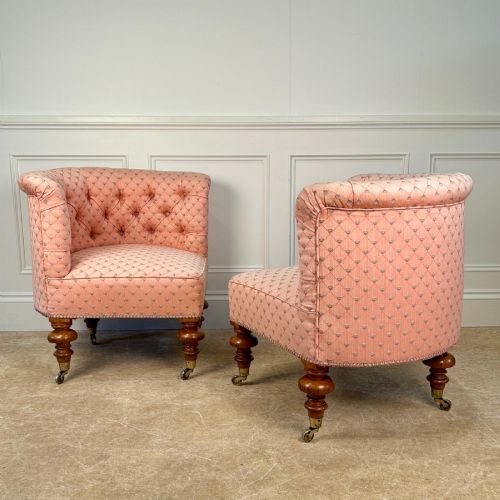
Victorian nursing chairs typically feature very low seats paired with relatively high, upholstered backs designed to support someone holding an infant. They often rest on short turned wooden legs fitted with castors for easy movement across carpets.
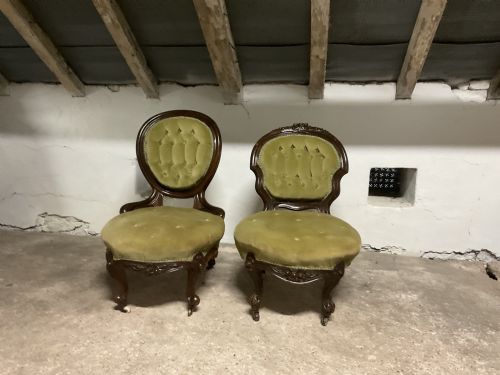
Many examples from this period utilise walnut or mahogany frames, sometimes with button-backed upholstery. The absence of arms is another common characteristic that allowed fuller skirts to spread comfortably.
Why buy chairs requiring re-upholstery?
Purchasing frames designated for re-upholstery allows the buyer to select modern fabrics that match an existing interior design scheme. It also reveals the internal webbing, springs and frame construction for inspection.
Stripping away old fabric often exposes maker stamps or traditional stuffing methods that confirm the age and origin of the piece. This approach preserves the antique frame while ensuring clean, contemporary padding.
How do I distinguish Gustavian from Victorian pieces?
Gustavian pieces from Sweden display lighter painted or limed finishes with restrained neoclassical motifs, often dating to the eighteenth or early nineteenth centuries. Their forms lean toward clean lines and pale wood tones.
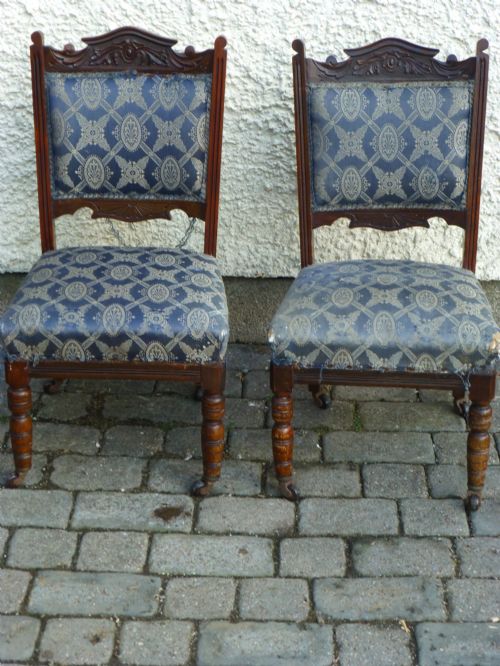
Victorian items generally employ darker polished hardwoods like walnut and mahogany, accompanied by heavier carving or elaborate turned details. The upholstery styles and frame proportions also reflect mid-to-late nineteenth-century British tastes.