

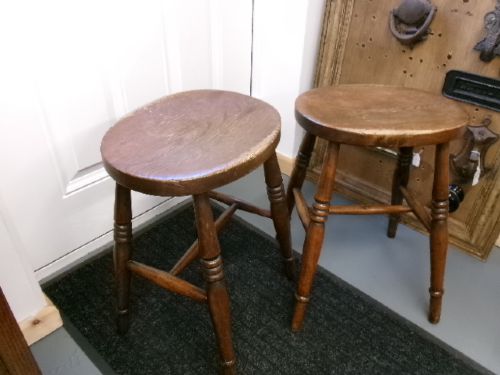
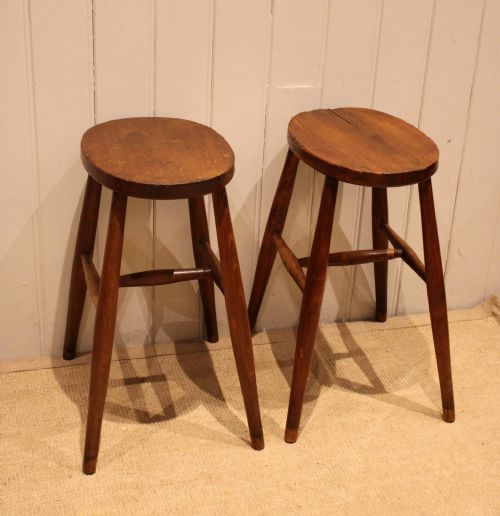
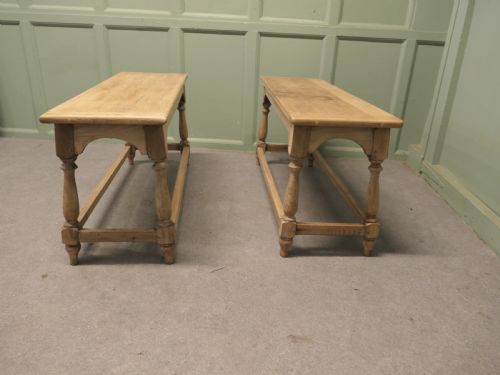
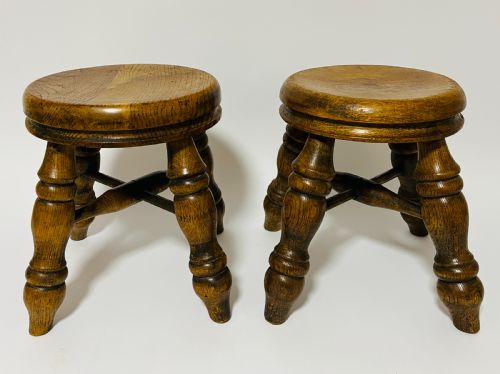


Pair Turned Leg Stools
Pair turned leg stools bring robust character and utilitarian charm to any room, offering versatile seating forged from honest timber.
Pair Turned Leg Stools
These pair turned leg stools encompass a variety of regional forms, ranging from sturdy joint stools to rustic farmhouse seating and elegant candle stands. Buyers will frequently encounter oak and mahogany examples spanning the nineteenth century alongside country pieces shaped from elm, beech, and yew wood.
Forms extend from compact footstools to low benches, retaining the practical utility for which they were originally built.
Materials and construction methods
Construction relies upon dense hardwoods such as oak, mahogany, elm, and yew wood, selected for their structural strength and durability. Turnery techniques shape the legs on a lathe, producing distinctive profiles that support flat or dished timber tops.
Joint construction methods, visible in traditional joint stools, provide rigid stability without excessive metal hardware. Secondary materials like beech and cherry wood appear in the framework, while select examples incorporate fabric upholstery or rush seating.
Pair Turned Leg Stools Retail Price Guide 2026
Typical asking prices for pair turned leg stools among the pieces listed under this phrase on Sellingantiques today, from the lower quarter to the upper quarter. They describe what is for sale here now, not the wider market.
The listings feature oak, mahogany, elm, yew wood, and beech, reflecting both British and continental traditions from the nineteenth and early twentieth centuries.
Assessing quality in turned leg seating
Quality rests in the crispness of the turning and the integrity of the timber selection, where tightly grained hardwoods outlast softer woods. Superior pieces display harmonious proportions and tight joinery that resists wobble over generations of use.
The refinement of surface finish, whether a bleached oak patina or an ebonised detail, distinguishes standard utility items from more considered regional craftsmanship. Originality of components and minimal structural intervention elevate the standing of any given pair.
The Pair Turned Leg Stools Glossary
- Joint stool
- A sturdy wooden stool constructed with mortise and tenon joints rather than turned legs alone. These pieces date back centuries and often serve as low side tables.
- Turned leg
- A wooden leg shaped on a lathe to create decorative cylindrical or bulbous profiles. This method provides both structural support and visual rhythm.
- Dished top
- A wooden seat hollowed into a shallow concave curve for greater comfort. This feature appears frequently on tavern and kitchen seating.
- Rush seat
- A seating surface woven from dried marsh grasses. This traditional technique yields a resilient, textured top common in country furniture.
- Ebonised
- Wood treated with a dark finish to imitate ebony. This decorative touch adds contrast and formality to nineteenth-century frames.
Pair Turned Leg Stools: Frequently Asked Questions
How do I clean old wooden stools?
Dust surfaces regularly with a dry lint-free cloth to prevent particulate accumulation. Nourish dry timber periodically with a quality beeswax to maintain the patina.
Avoid chemical polishes and excessive moisture, which can degrade historic finishes and lift glued joints.
Can these stools support daily sitting?
Most solid hardwood variants remain robust enough for regular use in living spaces or hallways. Check the stability of the leg joints before placing heavy loads upon them.
Softer woods or pieces with fragile rush seats benefit from more careful placement as decorative surfaces.
What rooms suit these small stools?
Their compact footprint allows them to function easily as bedside stands, bathroom surfaces, or extra seating in tight corners. Low candle stand stools work effectively beside armchairs for holding books or cups.
Pairing identical stools creates symmetry when placed flanking a fireplace or beneath a console table.
How are nineteenth-century stools dated?
Dating relies upon observing tool marks, timber species, and construction methods characteristic of specific decades. Wear patterns around the footings and beneath the seat also indicate age.
Comparing turned leg profiles against established regional design styles helps narrow down the period of manufacture.