





Cream Tufted Ottoman
A cream tufted ottoman offers deep buttoned comfort and historic charm, bringing tactile upholstery and traditional craftsmanship straight into a sitting room.
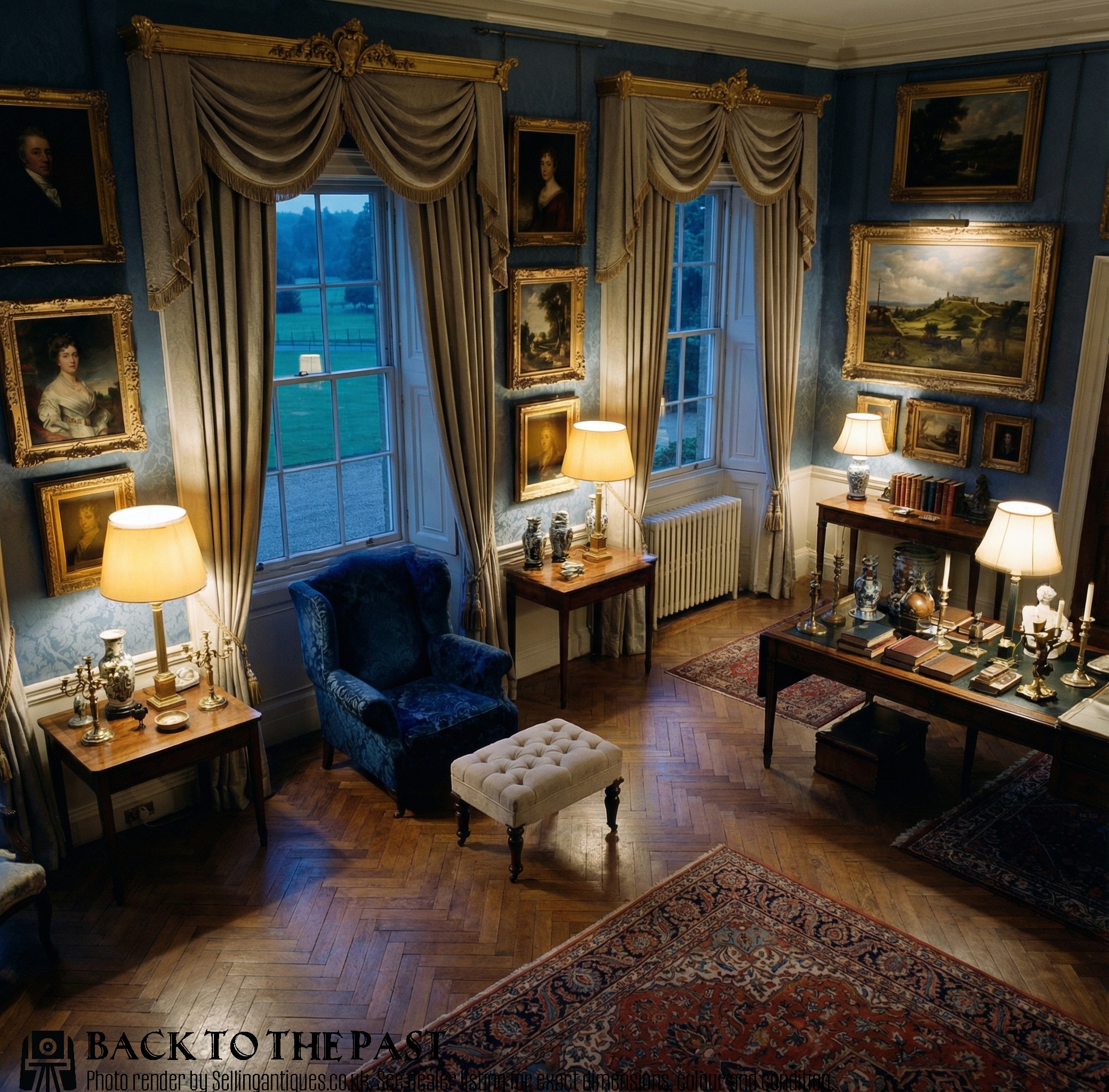
Cream Tufted Ottoman
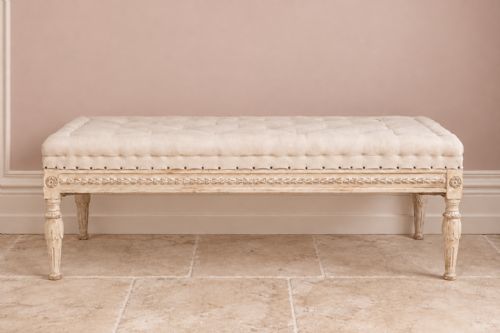
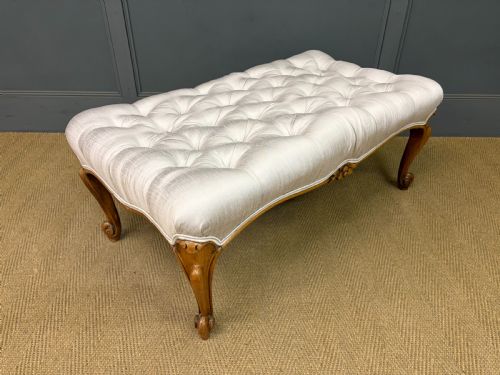
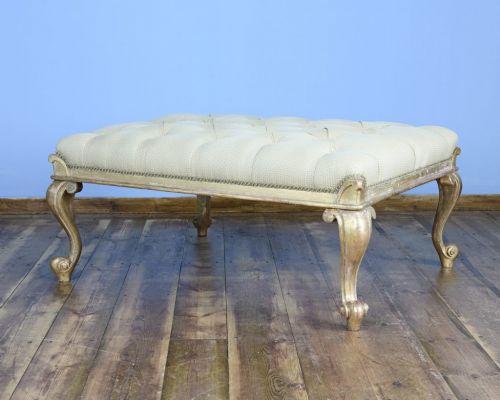
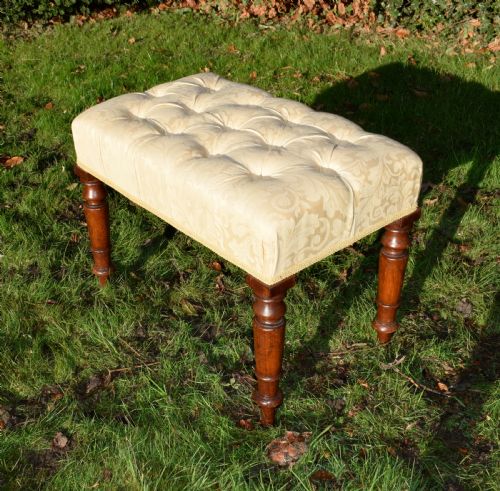
When buyers search for a cream tufted ottoman, they find low upholstered seating spanning nineteenth-century Victorian designs, William IV forms, and twentieth-century painted variations. These pieces appear as footstools, long stools, and window seats, often featuring buttoned upholstery and turned or cabriole legs.
The versions most commonly met on this page include Victorian buttoned stools and library window stools in walnut or mahogany. Makers from the nineteenth century built these low seats for drawing rooms and dressing rooms, pairing textile or leather upholstery with sturdy wooden frames.
Materials and construction methods
Carpenters shaped the structural frames using hardwoods such as walnut, mahogany, and painted wood, joining them with traditional techniques to support heavy daily use. Turners carved cabriole legs and parcel gilt details, sometimes mounting the feet on brass castors for smooth mobility across carpets.
Upholsterers applied layers of stuffing beneath durable outer fabrics and leather, securing the padding with deep tufting and buttons. This traditional buttoning method pulls the textile tight into distinct geometric patterns, anchoring the cushioning firmly to the wooden base.
Cream Tufted Ottoman Retail Price Guide 2026
Typical asking prices for cream tufted ottoman among the pieces listed under this phrase on Sellingantiques today, from the lower quarter to the upper quarter. They describe what is for sale here now, not the wider market.
Current listings demonstrate a strong presence of Victorian walnut, mahogany, and nineteenth-century buttoned textiles across various stool and window seat forms.
Distinctions in quality and finish
Finer examples display superior timber selection and deeply carved cabriole legs, whereas simpler pieces rely on plain painted wood or straightforward rectangular frames. The crispness of the wood carving and the depth of the timber grain separate standard utility pieces from grand scale library furniture.
Upholstery work also dictates the tier of the piece, with precise buttoning and heavy textile or leather surfaces outlasting loose padding and thin cloth. Original brass castors and intact parcel gilt enrichments elevate the refinement of Victorian and Georgian survivals.
The Cream Tufted Ottoman Glossary
- Cabriole leg
- A furniture leg that curves outward and then tapers inward, mimicking an animal's leg. This style is frequently seen on Victorian and Georgian seating.
- Buttoned
- An upholstery technique where buttons are pulled deep through the padding and secured to create a tufted surface. It keeps the stuffing evenly distributed.
- Parcel gilt
- A decorative technique where specific carved details on a wooden frame receive a thin application of gold leaf. It highlights decorative motifs against the dark wood background.
- Castor
- A small wheel fitted to the base of a furniture leg to allow easy rolling. Victorian examples often utilise brass for these fittings.
Cream Tufted Ottoman: Frequently Asked Questions
How were these stools used historically?
These low seats served multiple purposes in nineteenth-century homes, functioning as footstools before armchairs or as window seats in libraries and drawing rooms.
They also provided flexible seating when entertaining guests in formal parlours.
How do I clean leather upholstery?
Historic leather benefits from gentle dusting with a soft, dry cloth and occasional treatment with appropriate leather dressings to maintain suppleness.
Avoid harsh chemical cleaners that can strip the original finish and dry out the material.
How can I tell Victorian pieces apart?
Victorian items frequently exhibit deep buttoning, turned walnut or mahogany legs, and sometimes brass castors for movement across heavy carpets.
Looking underneath reveals the type of timber used and the age of the underlying webbing or canvas.
Will these fit modern interiors?
The neutral tones of cream upholstery allow these historic items to blend effortlessly with contemporary room schemes and colour palettes.
Their compact proportions make them versatile additions as footrests at the end of a bed or extra seats in a living room.