


Brass Ship Clock
A brass ship clock brings heavy metal utility and precision marine engineering directly into domestic interiors.
What a brass ship clock is
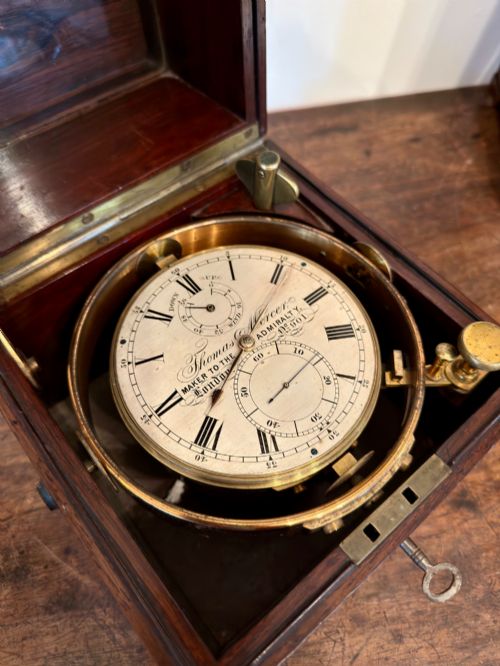
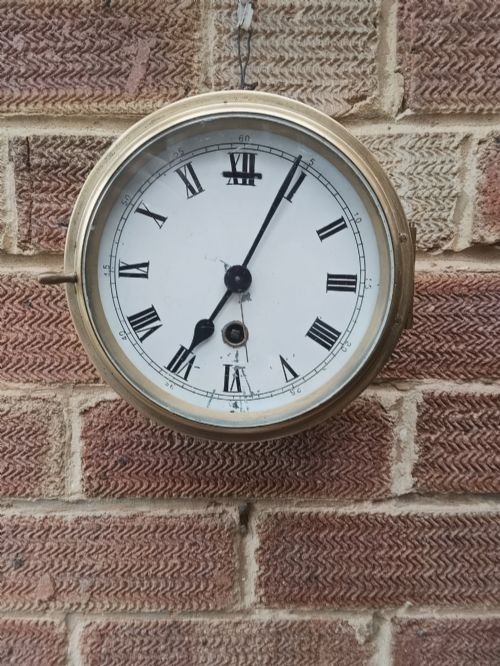
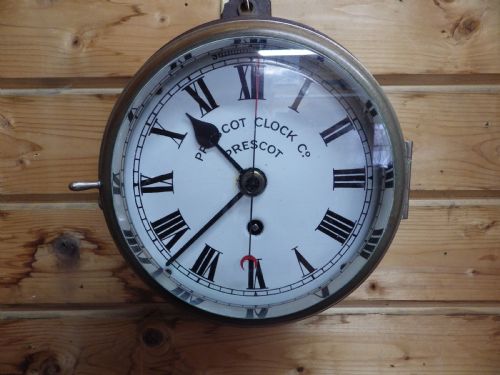
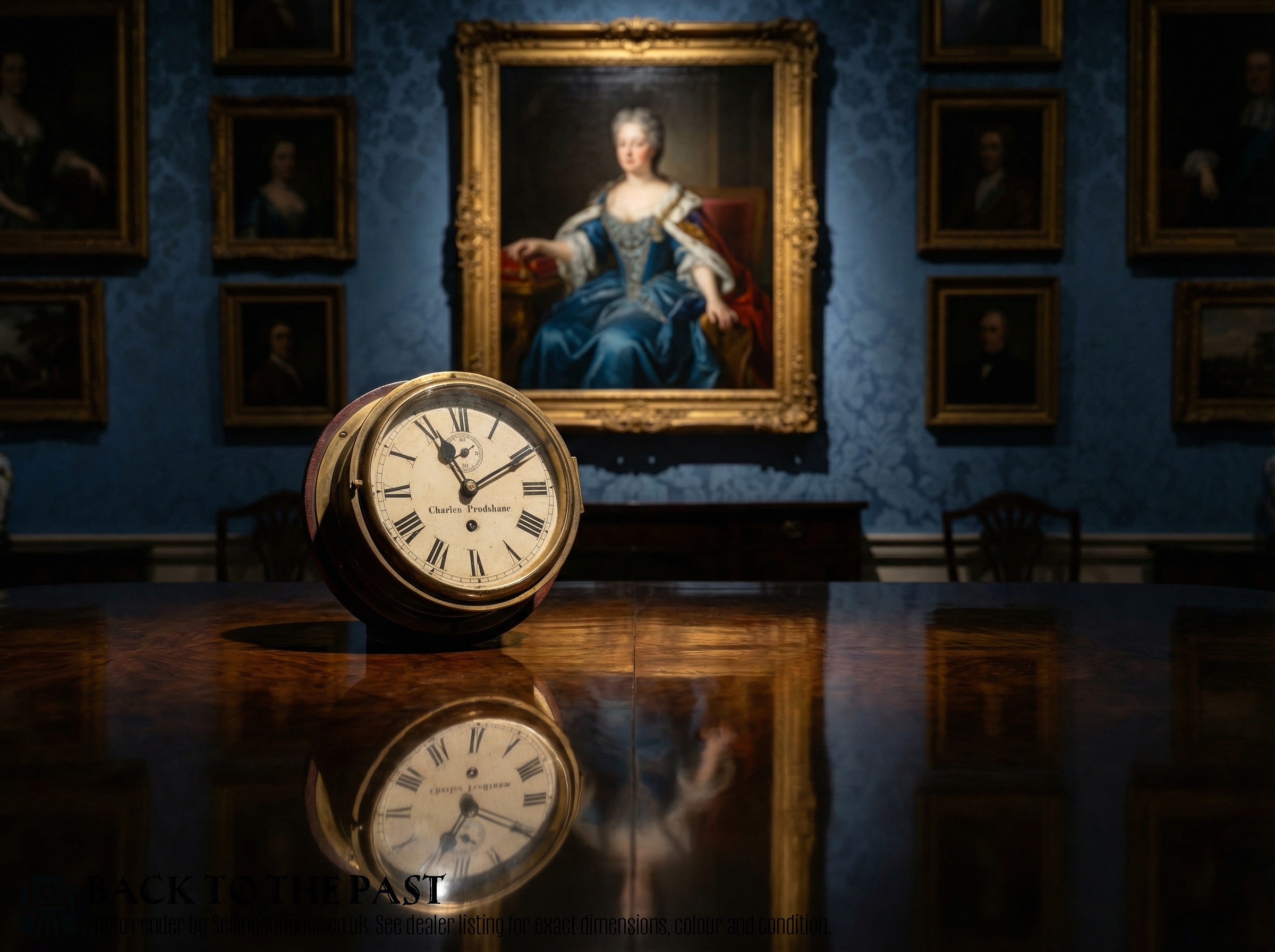
A brass ship clock is a heavy marine timekeeper designed to withstand demanding environments at sea while keeping accurate time. These pieces primarily take the form of wall clocks and bulkhead clocks housed in robust brass cases with secure glass viewing dial covers.
The versions most commonly met across these listings span the nineteenth century through to nineteen thirty, including Victorian maritime examples and Edwardian bulkhead patterns. Many originate from English makers and retailers, alongside specific pieces from American producers.
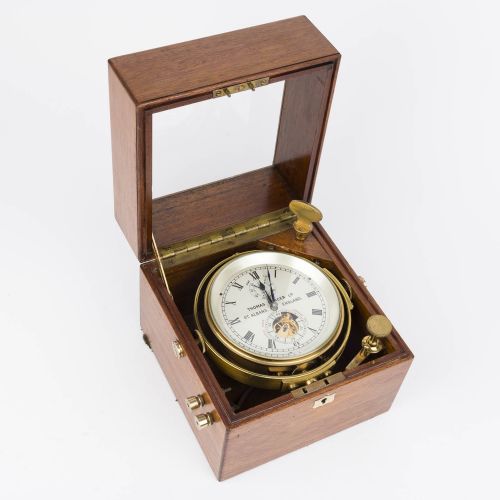
Collectors encounter both standard spring driven models and sophisticated fusee movements built for maritime service. These timepieces served vital navigational and duty functions aboard ships before finding permanent homes on dry land.
How they were made
Makers constructed the primary housing from heavy brass, often casting the thick bezels and cases to endure damp conditions and heavy movement at sea. Many examples feature mounted mahogany or other wooden backs designed for secure bulkhead installation.
Dials typically incorporate clear enamel or metal chapter rings with visible Roman or Arabic numerals protected behind stout glass covers. Interior movements utilise mechanical brass gear trains, ranging from standard eight day systems to complex twin fusee setups and marine chronometers.
Retail Price Guide 2026
Typical UK retail prices for brass ship clock, calculated from the Sellingantiques database of over a million retail prices indexed since 2003. This retail price guide relies exclusively on Sellingantiques data; no external sources or auction records are used, so the figures do not describe the wider market.
The archive records periods spanning the nineteenth century, eighteen fifty, eighteen sixty, nineteen ten and nineteen thirty.
What varies in quality
Quality in a brass ship clock rests upon the sophistication of its internal movement and the heft of its casting. Twin fusee movements and signed chronometers represent the apex of mechanical achievement, ensuring even power delivery and superior accuracy.
The weight of the brass casing and the clarity of the enamel dial further distinguish standard utility patterns from master pieces made for admiralty use or high end retailers.
James McCabe·Astral of Coventry·Negretti and Zambra·SD Neill Ltd Belfast·Seth Thomas USA
The Brass Ship Clock Glossary
- Bulkhead clock
- A marine timekeeper designed to be mounted directly onto a ship interior wall or partition. These sturdy clocks usually feature hinged brass bezels and secure fastening lugs.
- Fusee
- A conical pulley used inside better mechanical clocks to maintain equal force on the gear train as the mainspring unwinds. This mechanism ensures consistent timekeeping accuracy over the running period.
- Marine chronometer
- A highly accurate portable timekeeper used at sea for determining longitude through celestial navigation. Early nineteenth century examples represent the pinnacle of precision engineering.
- Enamel dial
- A metal dial face coated with fused glass powder to create a smooth, durable white surface for painted numerals. These dials resist tarnishing in salt air environments.
- Bezel
- The brass ring that holds the protective glass cover over the clock face, frequently hinged to allow hand setting and winding access.
Frequently Asked Questions
How do I wind a brass ship clock?
Most mechanical brass ship clocks require a matching winding key inserted into the dial aperture to tension the mainspring every week or eight days.
Care must be taken not to overwind the mechanism, stopping gently when resistance is felt to protect the internal brass gears.
Where should I mount a bulkhead clock?
A bulkhead clock looks best mounted securely on a sturdy wall or wood panel where its heavy brass case and maritime origins can be appreciated. Ensure the mounting screws anchor firmly into wall studs due to the substantial weight of the brass and glass casing.
Keeping the clock away from damp areas helps preserve the polished brass finish and the integrity of any wooden backing board.
How can I tell an older ship clock from a later one?
Earlier nineteenth century examples often feature fusee movements and simpler cast brass bezels associated with strict marine utility. Edwardian and later twentieth century pieces frequently display maker signatures on the dials and standard eight day spring driven movements.
Examining the construction of the brass case and the style of the enamel dial provides clear clues regarding the manufacturing period.
Did all these clocks actually go to sea?
Many brass ship clocks were built to official admiralty patterns for active service aboard naval and merchant vessels. Other pieces were produced for domestic and commercial use on land, adopting the popular marine aesthetic for homes and offices.