
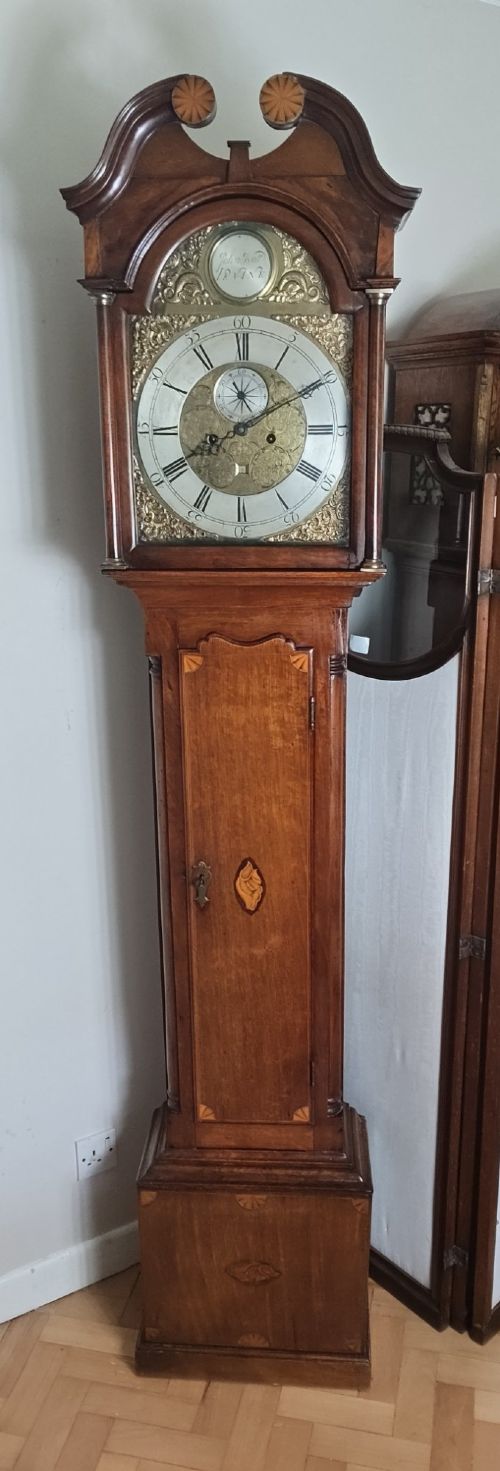
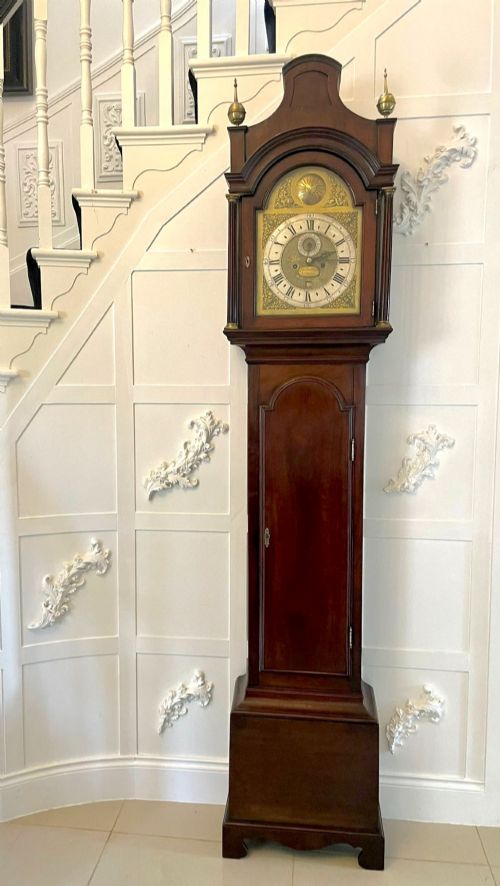
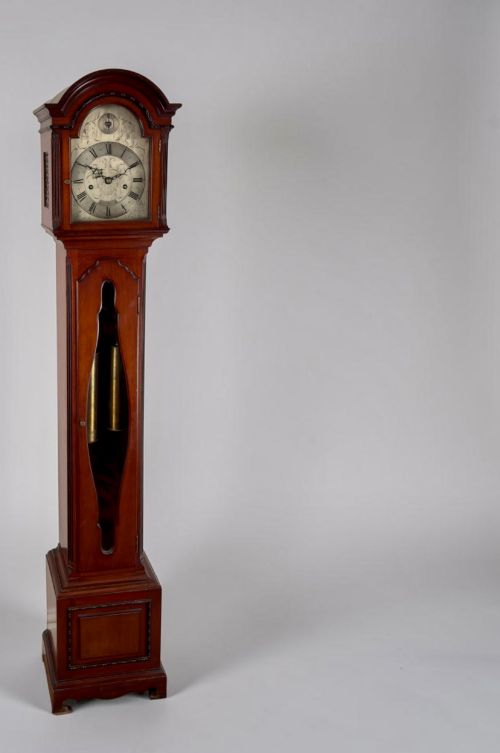
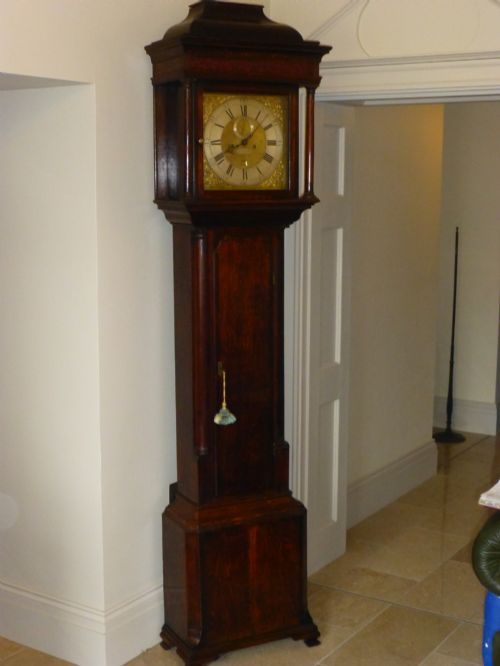

Brass Pendulum Floor Clock
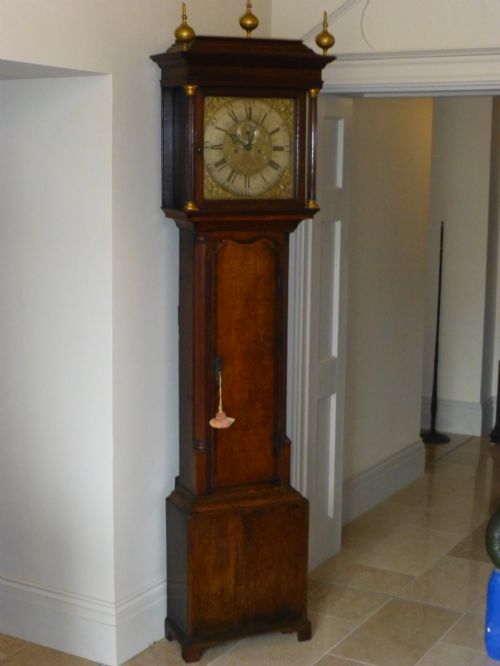
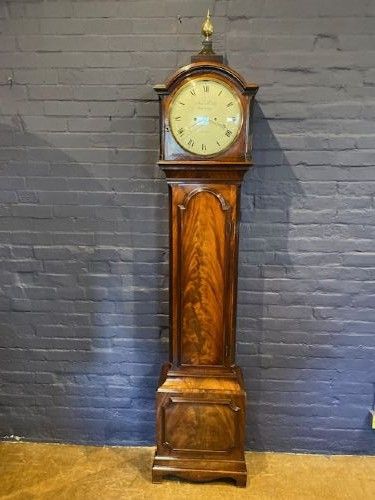
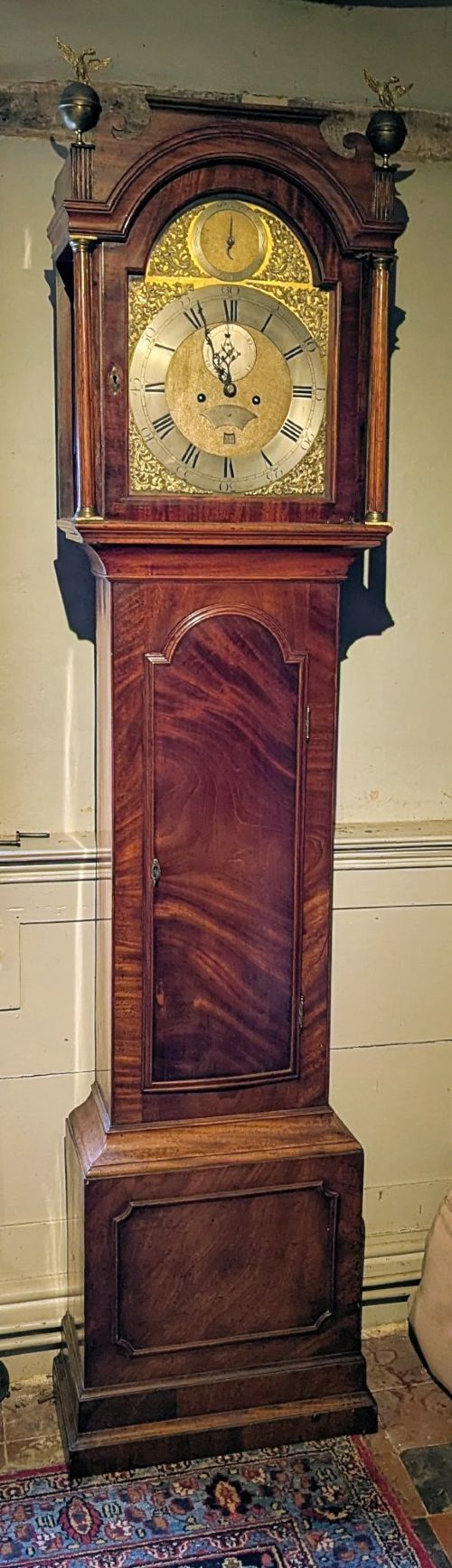
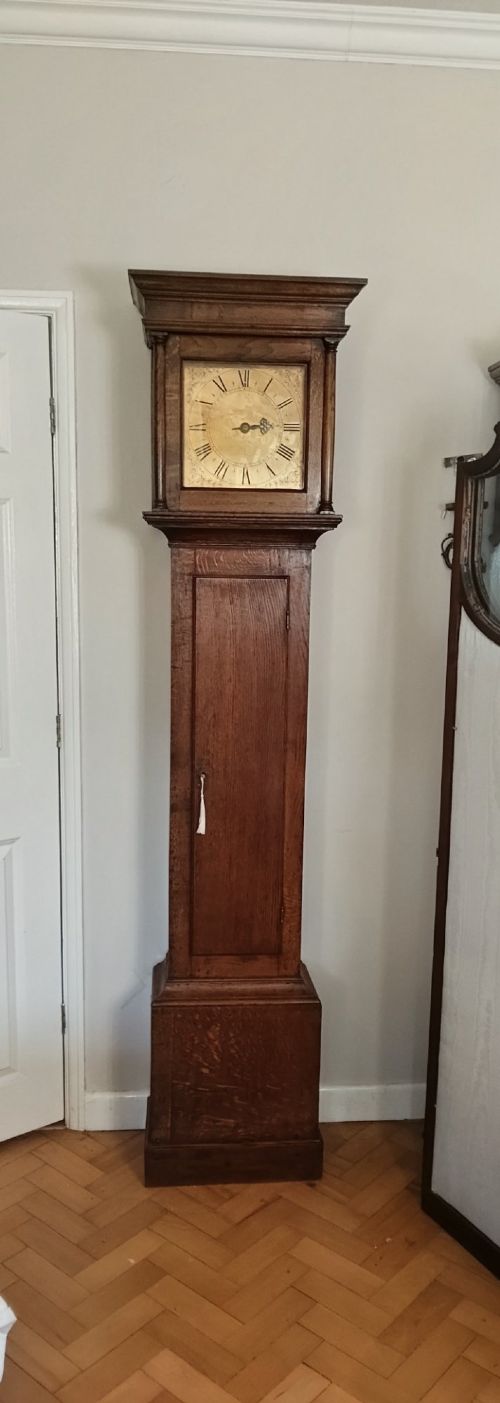
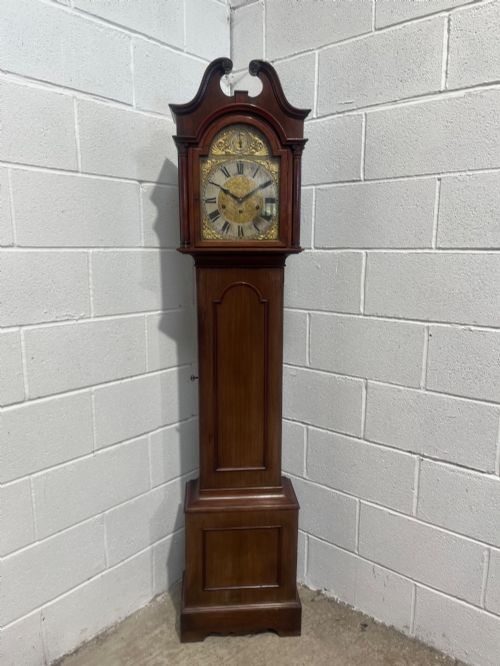
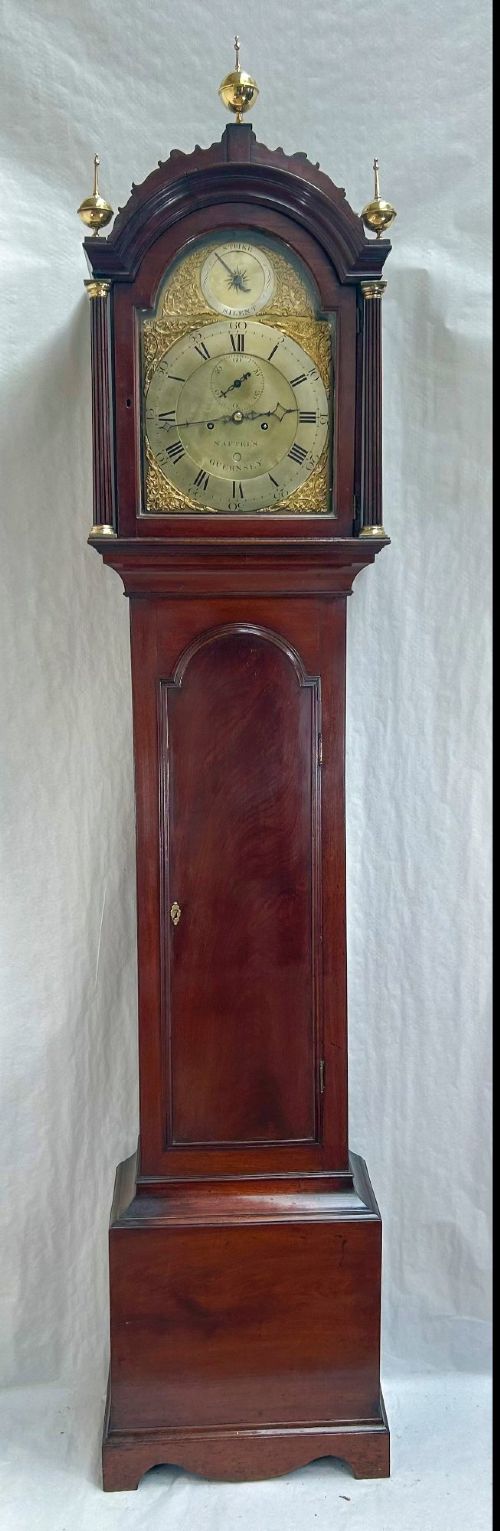
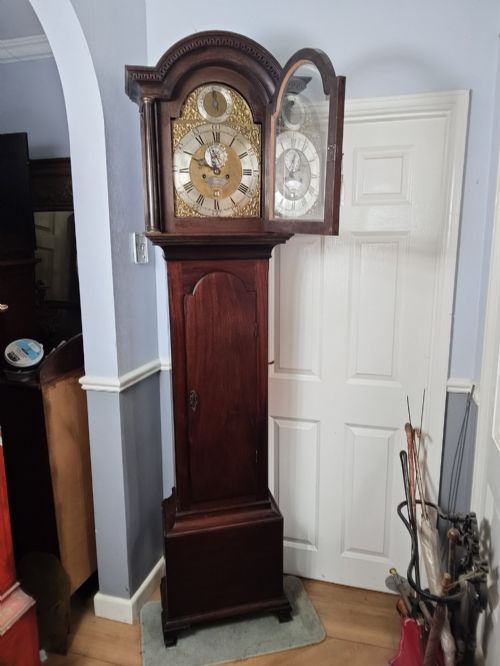
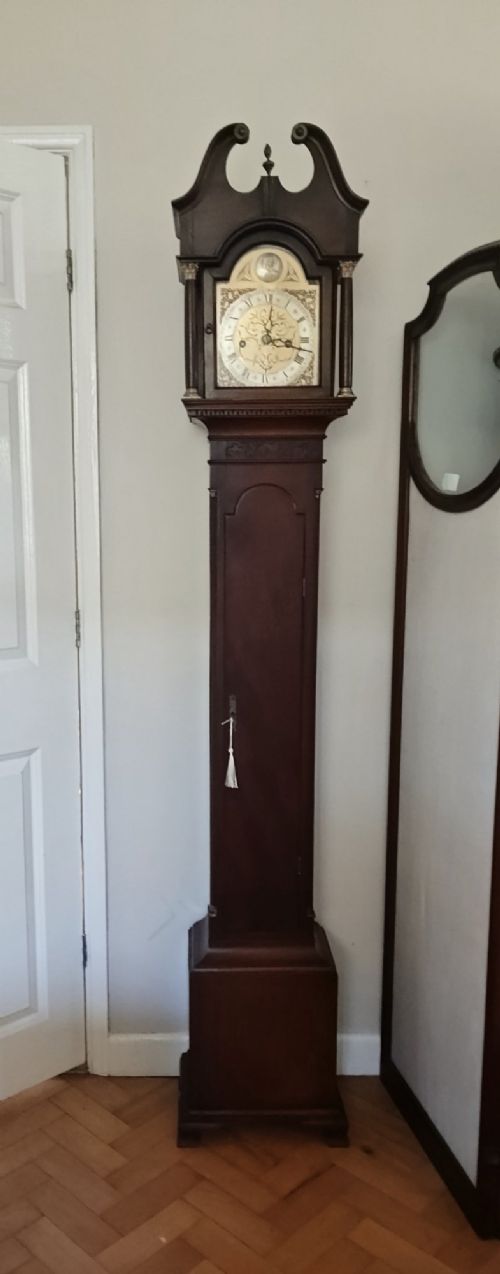
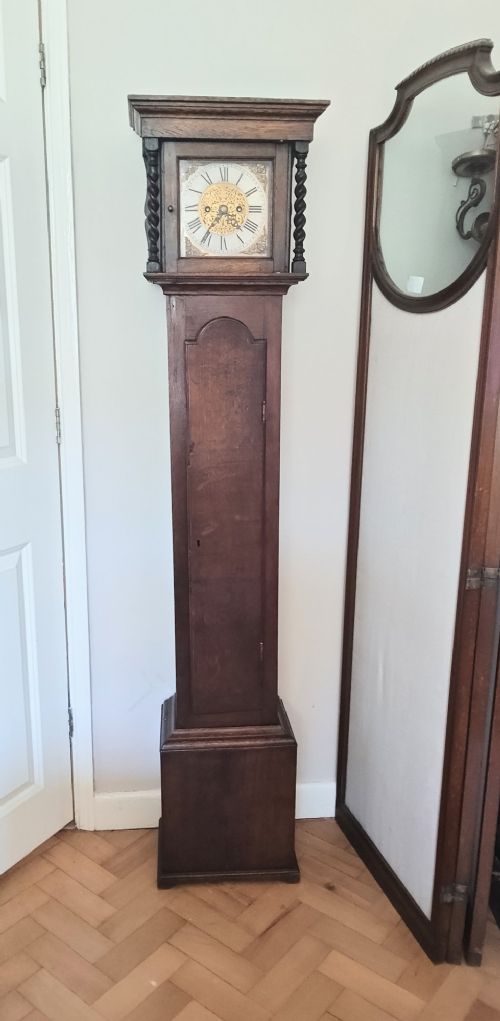
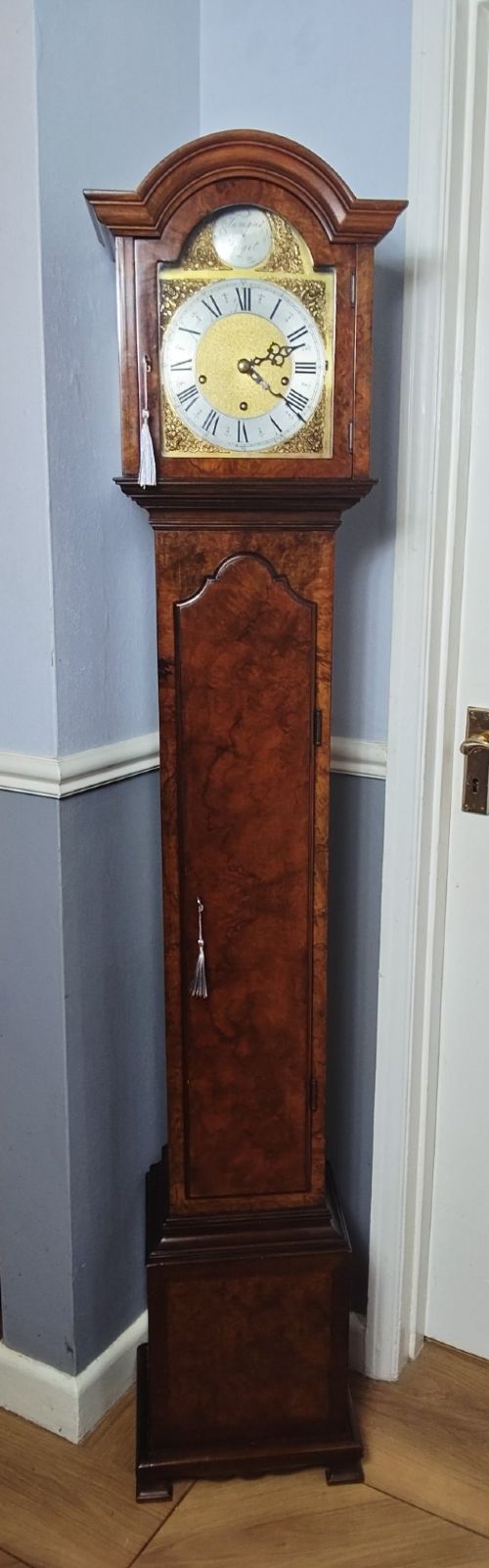
These brass pendulum floor clock examples are tall timepieces housing swinging weights, bringing traditional mechanical presence and historical woodwork into a room.
Brass Pendulum Floor Clock
A brass pendulum floor clock typically takes the form of a longcase or grandfather clock, standing tall with a weighted movement driving the hands. Buyers searching for a brass pendulum floor clock will encounter grander eighteenth-century examples alongside smaller nineteenth-century grandmother or granddaughter clocks.
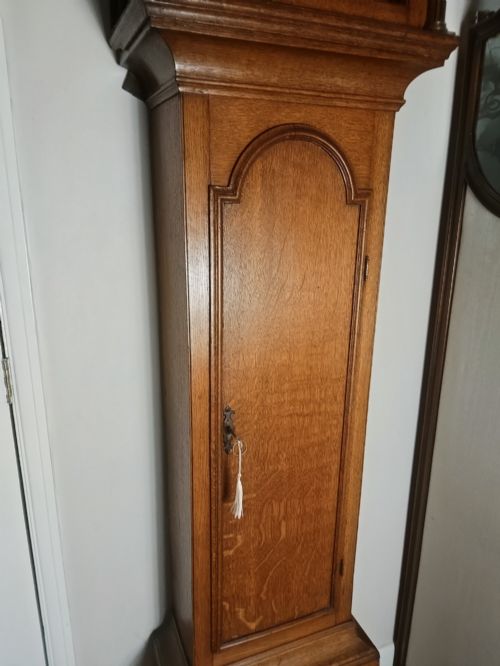
The selection ranges from early Georgian oak and walnut pieces to Edwardian and later twentieth-century variations in mahogany and figured walnut. Regional makers from London, Chester, and Scotland appear across the periods, showing diverse local cabinetry traditions.
Distinctions in execution and scale
Quality rests in the harmony of the proportion, the crispness of the brass dial ornamentation, and the depth of figure in the mahogany or walnut timber. Finer examples display superior dial signing, specialised strike or silent mechanisms, and balanced musical chime options.
The cabinetry ranges from simple, regional vernacular pine and oak cases to sophisticated London workshop productions with architectural hoods and meticulous secondary wood selections.
Some provincial clock faces feature painted moon phases with slightly eccentric lunar art that smiles down from the dial.
Charles Shuckburgh·Richard Corless·Benjamin Taylor·Henry Weedon·George Hallifax·Matt Wylie
The Brass Pendulum Floor Clock Glossary
- Longcase clock
- A tall, weight-driven pendulum clock enclosed in a wooden case standing directly on the floor. These pieces are often referred to as grandfather clocks.
- Grandmother clock
- A smaller, more slender version of the traditional longcase clock, typically produced during the Edwardian period and twentieth century.
- Strike silent
- A mechanism allowing the striking train of the clock to be disengaged so the piece chimes quietly or remains silent at night.
- Moonphase
- A dial mechanism displaying the lunar cycle alongside standard timekeeping, often painted with moon faces and celestial maps.
- Regulator
- A precision pendulum clock designed for exceptional timekeeping accuracy, frequently utilised as a standard for setting other clocks.
Brass Pendulum Floor Clock: Frequently Asked Questions
What is a grandmother clock?
A grandmother clock is a scaled-down version of the traditional longcase clock, built with a shorter and narrower wooden body.
These smaller timepieces emerged largely during the Edwardian period and later, suiting rooms with lower ceilings while retaining mechanical pendulum movements.
How do eight-day movements work?
An eight-day movement requires winding approximately once a week using a key or crank to pull the driving weights back up.
This system uses gravity and a pendulum to regulate the gear train, keeping accurate time between each weekly winding.
What woods were used for cases?
Early examples frequently utilise oak and walnut, sometimes combined with lighter secondary woods.
Later nineteenth- and twentieth-century pieces favour mahogany, flame mahogany, burr walnut, and occasionally maple or lacquered finishes.