


Standing Regulator Clock
A standing regulator clock is a precision timekeeper designed for exact time measurement, offering commanding presence and refined mechanical engineering for any interior.
Standing Regulator Clock
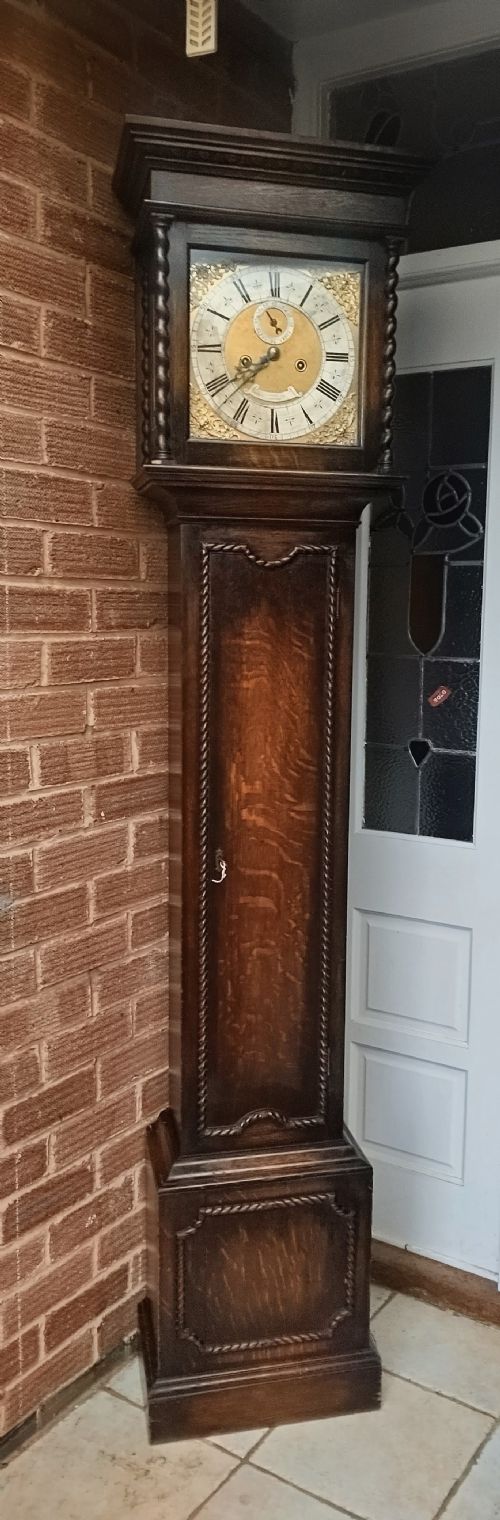
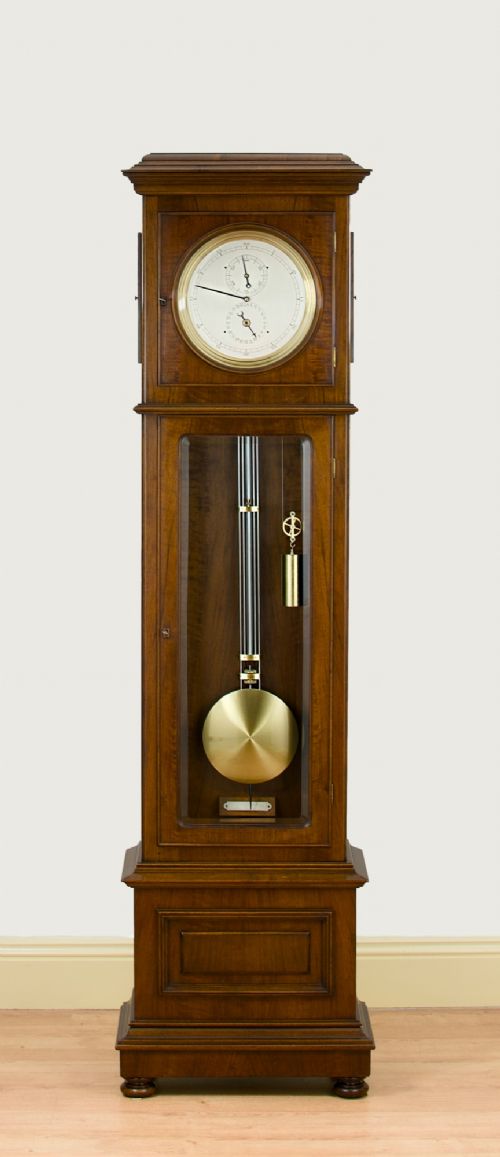
When you search for a standing regulator clock, you find tall floorstanding timekeepers built for high accuracy, mostly appearing from the nineteenth century and the early twentieth century. These pieces take the form of longcase clocks and grandfathers, housing precise movements designed to keep exact time.
The examples on this page span Victorian, Edwardian, and Regency periods alongside French Louis styles and modernism from nineteen-thirty. Makers such as James Wood, Richard Rowell of Oxford, and Gillett and Johnston produced these sophisticated instruments in mahogany, maple, oak, and kingwood.
Buyers encounter everything from miniature longcase regulators to large chiming floorstanding examples. French makers and British provincial clockmakers both contributed distinct regional interpretations to this group of precision instruments.
Materials and construction
Cabinetmakers utilised dense timbers including mahogany, kingwood, walnut, and oak to build the tall wooden cases that house the delicate weight-driven mechanisms. Glass panels protect the dial and pendulum while allowing a clear view of the precision work inside.
The mechanical interiors incorporate brass for gears and plates, enamel for clear dial faces, and cast or gilt ormolu for decorative mounts. French and British workshops combined robust cabinetry with intricate metalworking to ensure stable environments for accurate timekeeping.
Some tall regulators include hidden compartments inside the base, originally designed to keep the winding key safe from curious family members.
Assessing quality and craftsmanship
Superior standing regulator clocks display exceptional precision in their gear trains and escapements, which were engineered for minimal friction and exact timekeeping. The quality of a piece often shows in the cabinetwork, where finely figured mahogany or kingwood veneers match disciplined joinery.
Finer examples bear the signature of accomplished makers on the dial or movement, reflecting high standards of provincial or metropolitan British and French workshop production. The integration of quality brass, clear enamel dials, and crisp ormolu mounts separates standard production from exceptional work.
Lenzkirch·Gillett and Johnston·James Wood·French Royal Exchange·Aitchison of Glasgow·Richard Rowell
The Standing Regulator Clock Glossary
- Regulator
- A precision pendulum clock designed to keep extremely accurate time, often used as a standard against which other timepieces were set.
- Longcase clock
- A tall, floorstanding clock enclosed in a wooden case with a weight-driven movement and a swinging pendulum, commonly called a grandfather clock.
- Ormolu
- Gilded bronze or brass applied as a decorative mount to furniture and clock cases, particularly prominent in French pieces.
- Escapement
- The internal mechanism that translates the swinging of the pendulum into controlled rotational steps of the gear train.
- Veneer
- A thin layer of superior wood, such as mahogany or kingwood, applied over a secondary timber base to create decorative exterior surfaces.
Standing Regulator Clock: Frequently Asked Questions
How do I set up a standing regulator clock?
Place the clock on a solid, level floor and anchor the case to the wall if necessary to prevent vibrations from disturbing the pendulum. Hang the weights carefully on their lines and set the pendulum in motion gently by hand.
Allow the movement to settle before adjusting the minute hand to the correct time. Fine adjustments to the timing are made by raising or lowering the pendulum bob using its regulating nut.
Where should I place a standing regulator clock?
Position your clock in a room with a stable temperature and minimal humidity fluctuations, away from direct sunlight and heating vents. Changes in temperature can affect the metal components and wood casework, altering the running speed.
Ensure there is enough floor space for the tall case to stand plumb without rocking. A hallway, study, or drawing room with solid flooring provides an ideal environment.
How often do these clocks need winding?
Most floorstanding regulators feature eight-day movements that require winding once a week using a matching winding key. Keeping to a consistent winding schedule helps maintain even tension on the drive train.
Take care not to over-wind the movement when the weights reach the top of their descent. Regular gentle winding preserves the internal brass teeth and suspension springs.
How do I identify the period of a regulator?
Examine the cabinet style, wood choice, and dial design to determine the era of manufacture, comparing them against known Victorian, Edwardian, or Regency characteristics. French examples often display Louis styles or ormolu mounts distinctive to nineteenth-century continental work.
Signatures or workshop names inscribed on the dial or movement backplate provide direct evidence of the maker and active working dates.