
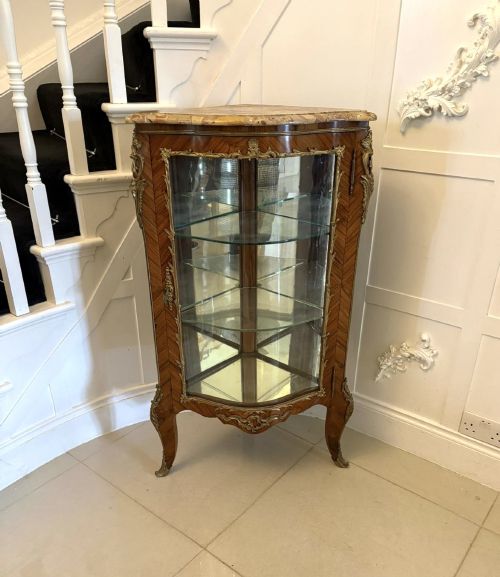
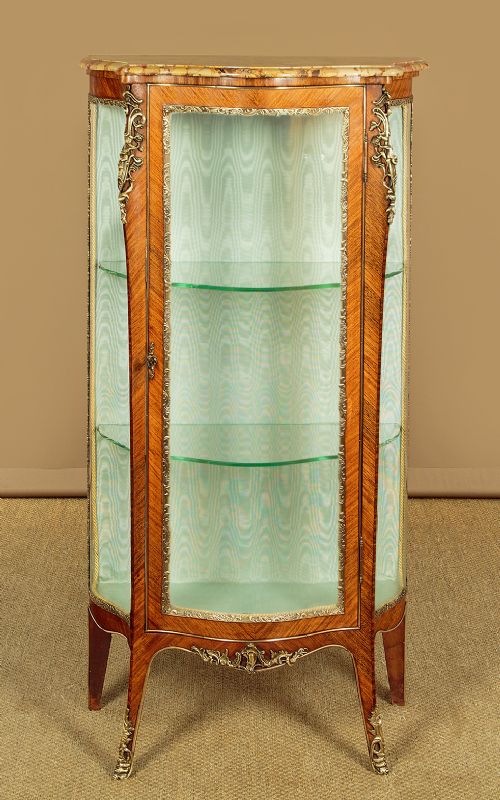
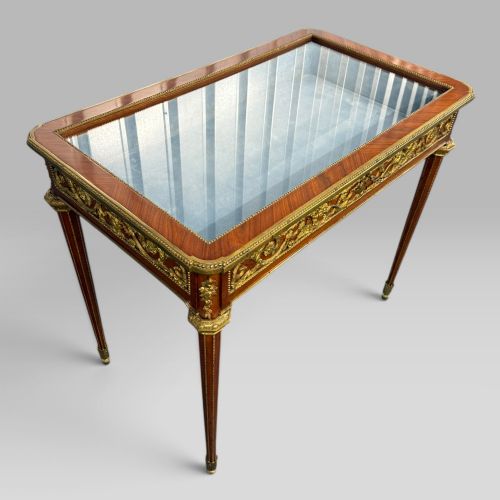
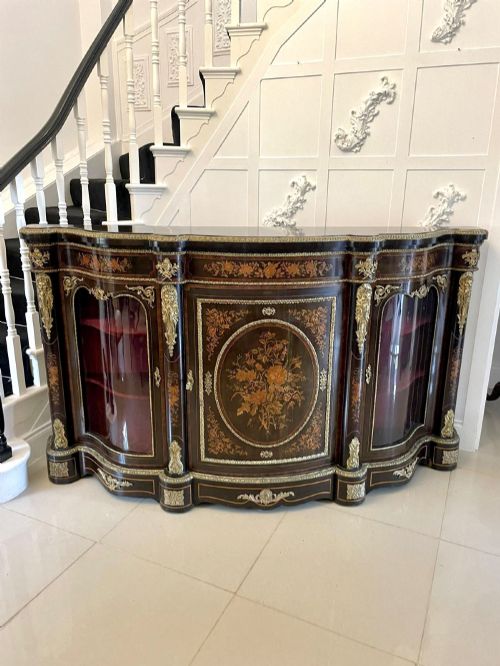
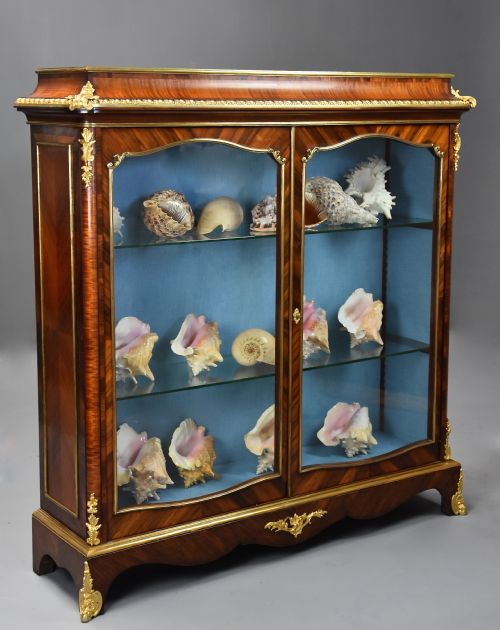
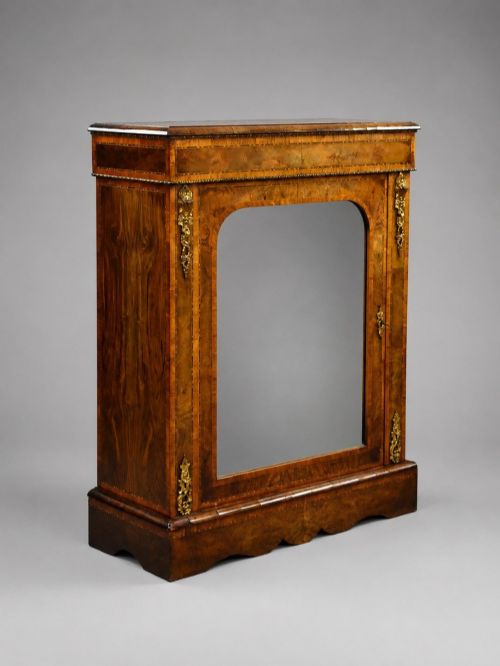
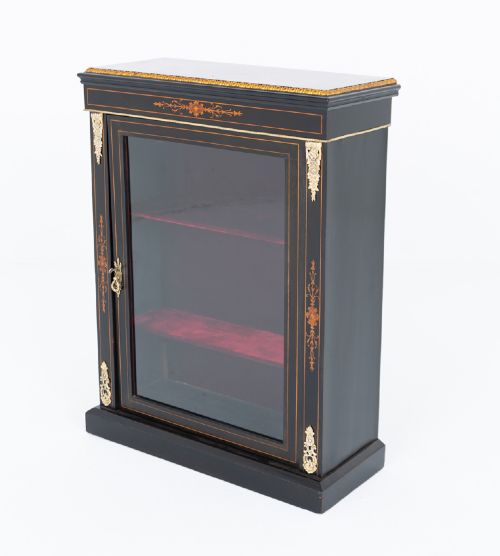
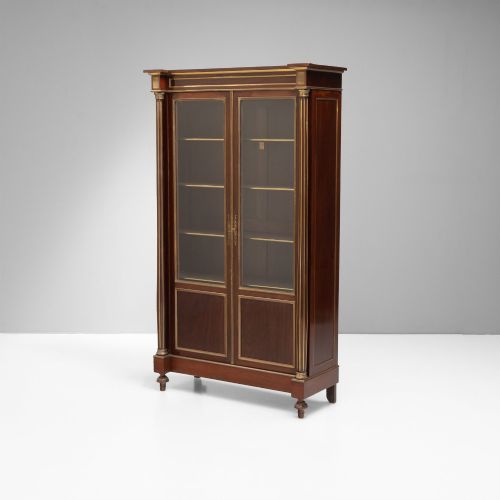
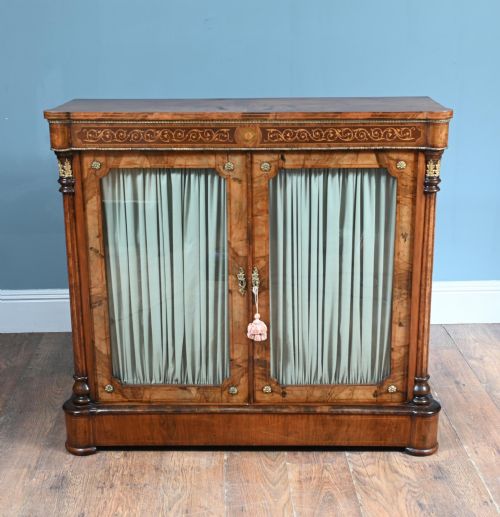
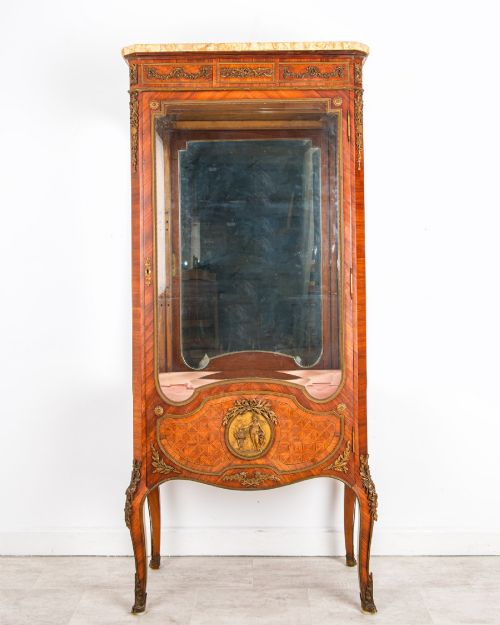


Brass Mounted Glass Cabinet
A brass mounted glass cabinet brings light and presence into a room, framing collections behind clear panes secured by polished metalwork.
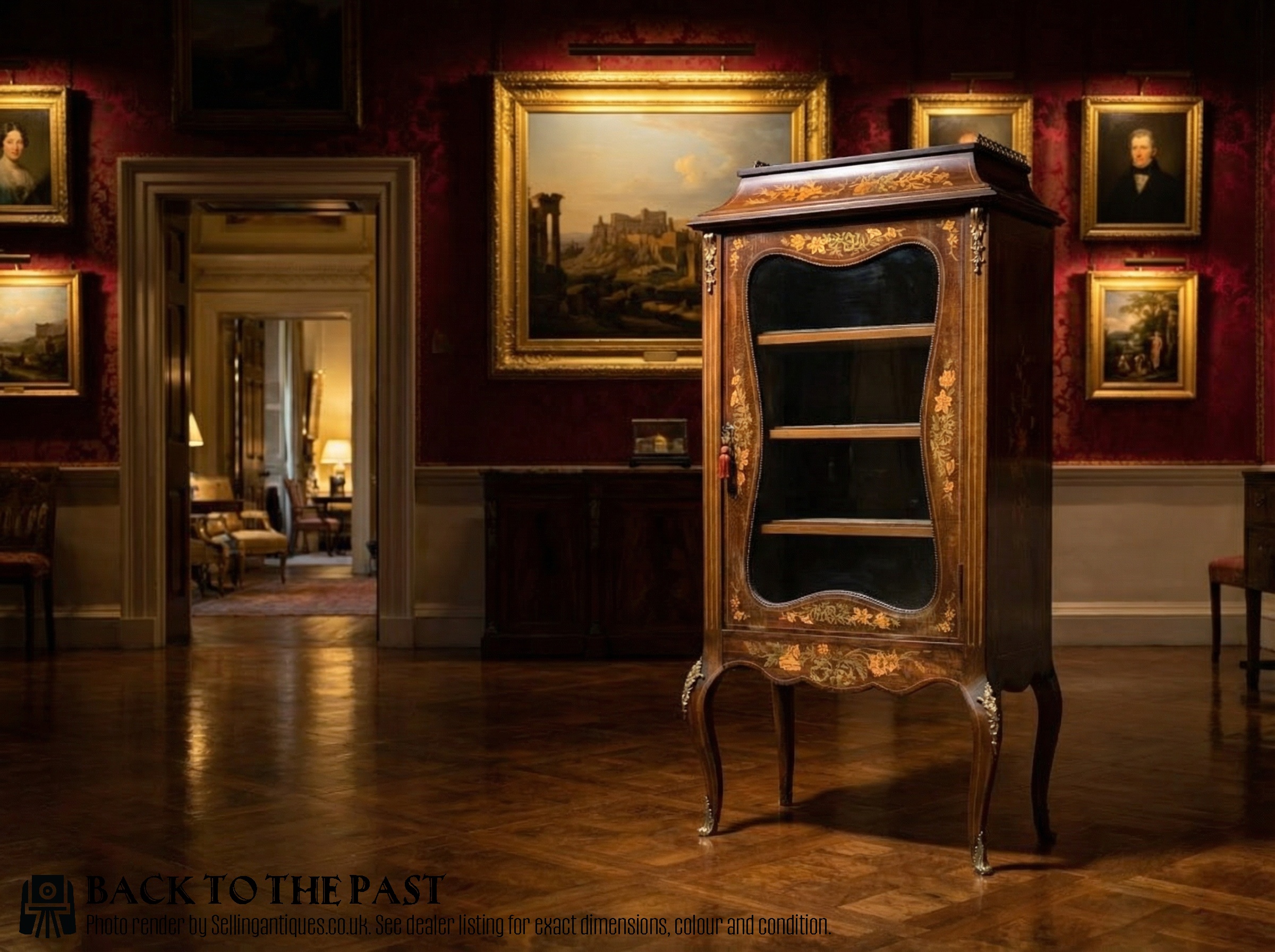
Brass Mounted Glass Cabinet
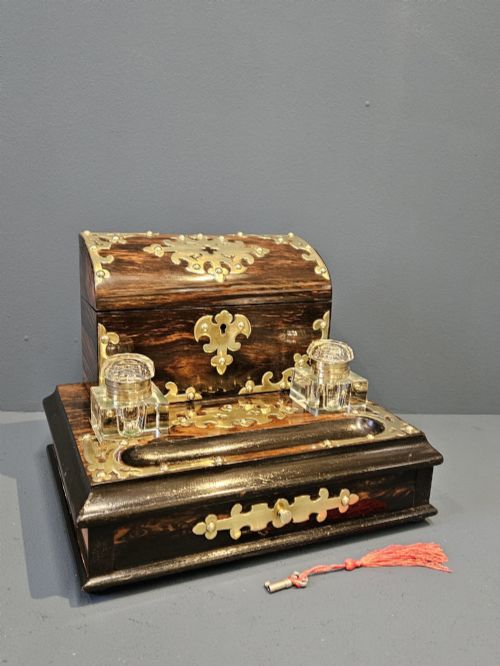
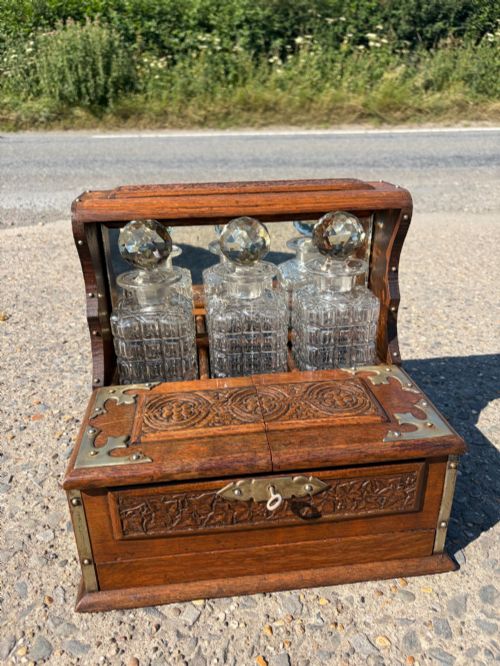
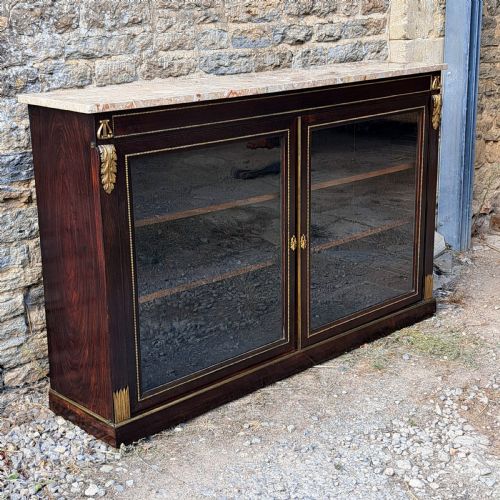
A brass mounted glass cabinet primarily appears in Victorian and Edwardian forms designed to showcase precious objects, books, or spirits. Pieces range from tall pier cabinets and breakfront bookcases to low credenzas and compact tantalus sets.
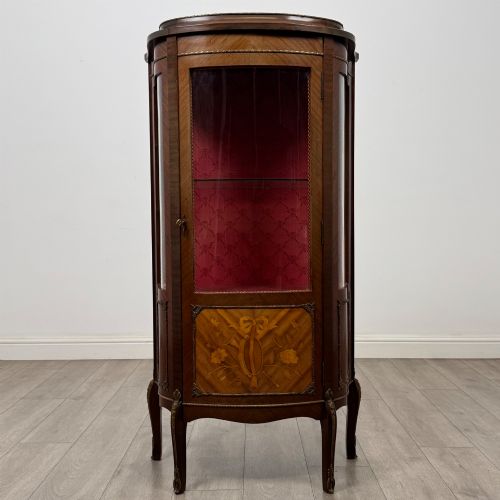
French influences dominate the selection through Louis XV and Louis XVI revival vitrines and bijouterie tables. These often feature serpentine fronts, marble tops, and detailed ormolu mounts.
Local British walnut, mahogany, and ebonised wood pieces sit alongside continental kingwood and amboyna examples. The historical span covers the mid nineteenth century through to early twentieth century revivals.
Materials and Construction
Cabinets rely on solid and veneered timbers including mahogany, walnut, kingwood, and ebonised wood applied over sturdy carcases. Marquetry inlay and floral panels frequently decorate the surfaces alongside contrasting stringing.
Cast ormolu and brass provide structural and decorative mounts framing glass doors and highlighting corners. Velvet linings often appear inside display spaces to cushion delicate items.
Glazing techniques secure individual glass panes within wooden frameworks, while marble tops add weight and classical proportion to serpentine and straight-fronted commodes.
The current selection spans nineteenth century Victorian and Edwardian periods, featuring mahogany, walnut, kingwood, and ebonised wood alongside brass and ormolu mounts.
Design and Execution
The refinement of the cast ormolu mounts and the precision of the brass work distinguish superior pieces from standard workshop output. Sharply chased metal details and deeply figured wood veneers indicate higher status commission.
Proportion and the fluidity of serpentine or breakfront shaping govern the aesthetic success of each cabinet. Finer examples balance intricate marquetry inlay with clean architectural lines without appearing overcrowded.
François Linke·Paul Sormani
The Brass Mounted Glass Cabinet Glossary
- Ormolu
- Gilt bronze mounts applied to furniture for decorative accent and edge protection. This technique flourished during French revival periods.
- Vitrine
- A glass-fronted display cabinet intended for porcelain and small curiosities. The sides are frequently glazed to maximise interior illumination.
- Credenza
- A low sideboard or cabinet, often fitted with doors and central display sections. Victorian examples frequently incorporate Sevres style porcelain plaques.
- Tantalus
- A locking wooden stand holding decanters securely in place while displaying the contents. The mechanism prevents unauthorised access to spirits.
- Bijouterie table
- A glass-topped display table designed for jewellery and small valuables. These pieces typically stand on slender cabriole legs.
Brass Mounted Glass Cabinet: Frequently Asked Questions
What is the difference between a vitrine and a bookcase?
A vitrine prioritises display through glazed sides and front panels intended for fragile objects and porcelain. Bookcases rely primarily on wooden doors or open shelving for holding volumes.
Many nineteenth century examples blur these categories by incorporating adjustable wooden shelves behind glass doors. The presence of velvet lining usually points toward display use.
How were tantalus sets used?
A tantalus held stoppered decanters securely within a wooden frame beneath a locking metal bar. This allowed hosts to display fine spirits while restricting access.
Victorian households placed them in studies and dining rooms. The locking mechanism required a key inserted into the top handle assembly.
Where should I place a credenza in a modern room?
A credenza suits long walls in reception rooms where its low profile provides surface space without blocking sightlines. The internal shelves store ceramics, glass, or dining accessories.
Consider room lighting to ensure the glass and ormolu mounts catch natural daylight. Placing them away from direct heat sources protects antique veneers.