
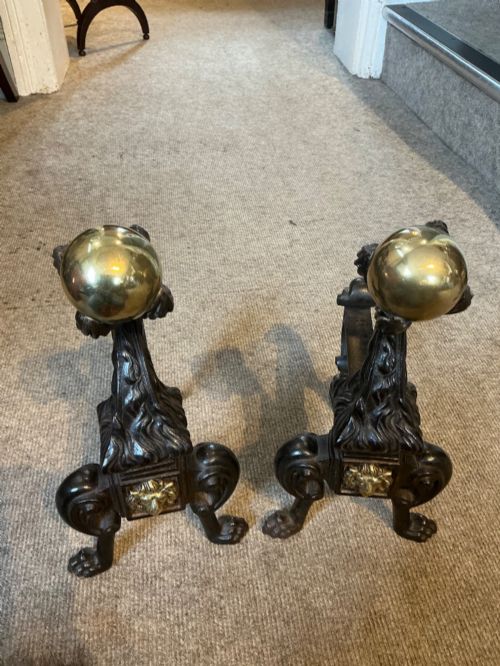

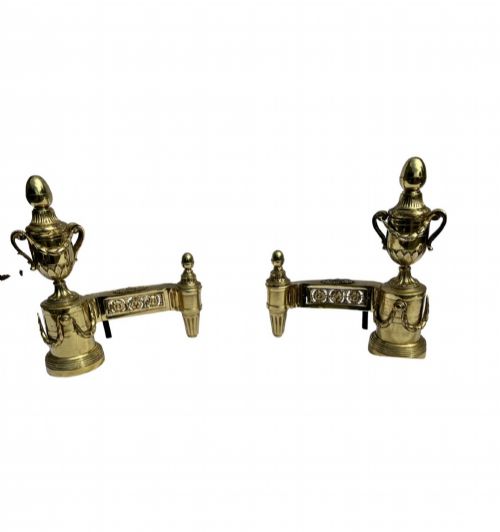

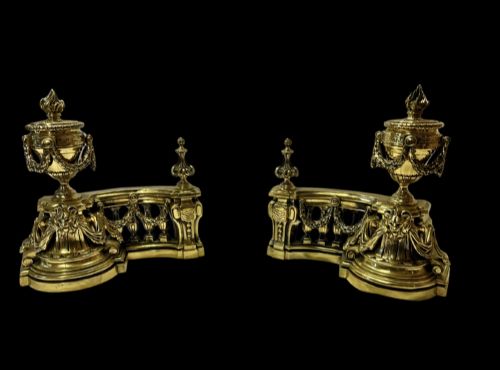


Brass Log Dogs
Brass log dogs support heavy timber inside an open hearth, bringing polished metallic warmth and structural purpose to period fireplaces.
Brass Log Dogs
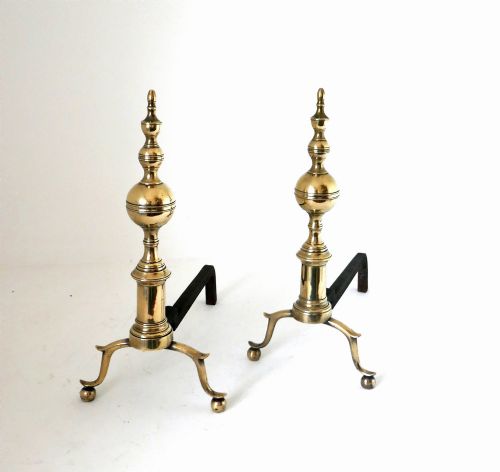
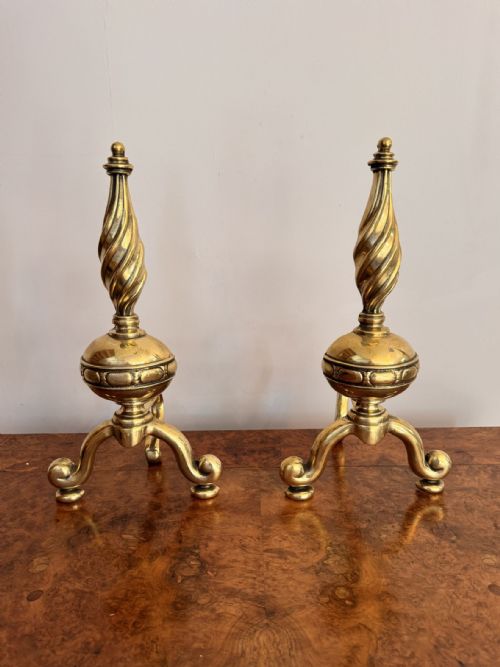
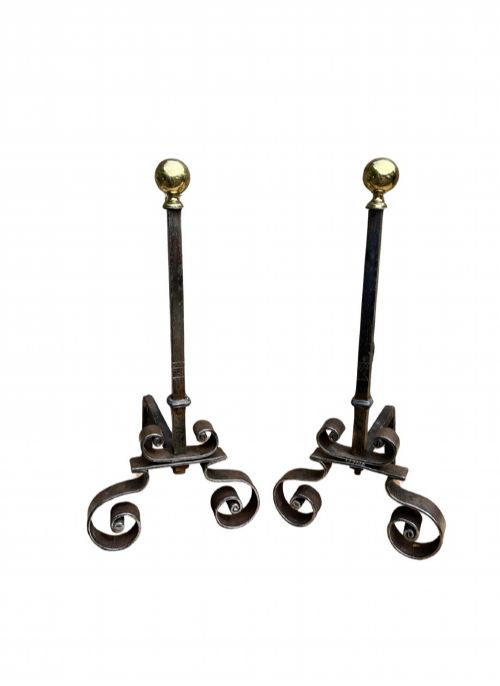
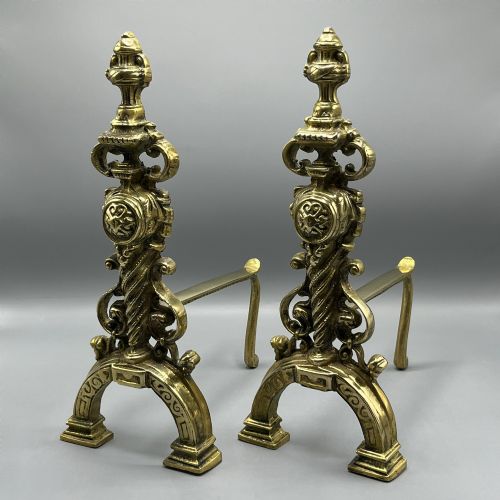
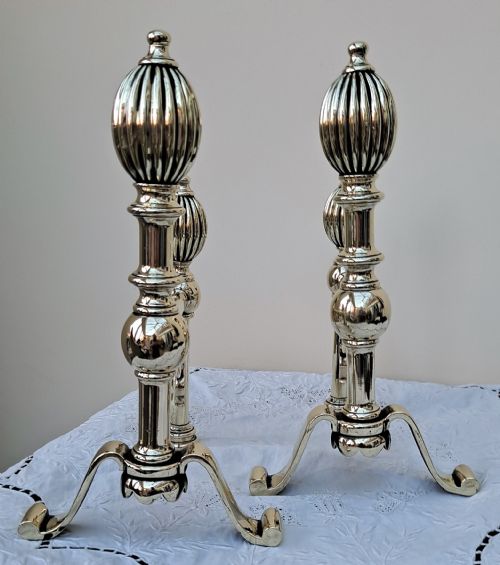
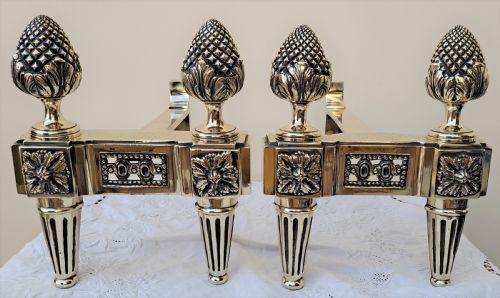
Brass log dogs, frequently catalogued as andirons or firedogs, serve the primary function of holding logs aloft within an open fire to maintain proper airflow beneath the burning wood. When searching for brass log dogs, buyers encounter robust hearth furniture designed primarily during the nineteenth and eighteenth centuries.
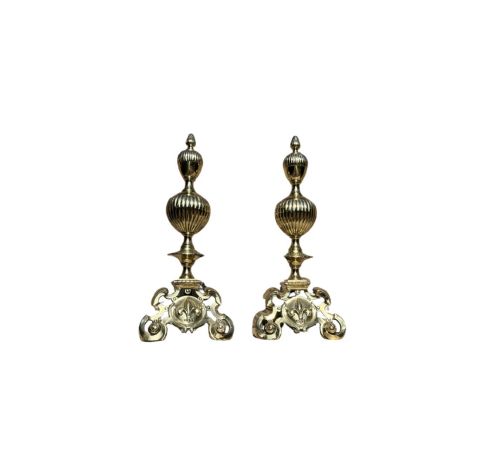
The pieces listed here lean heavily toward Victorian and Georgian examples, alongside French provincial and Regency variants. These items range from compact domestic pairs to monumental ornamental sets intended for large formal hearths.
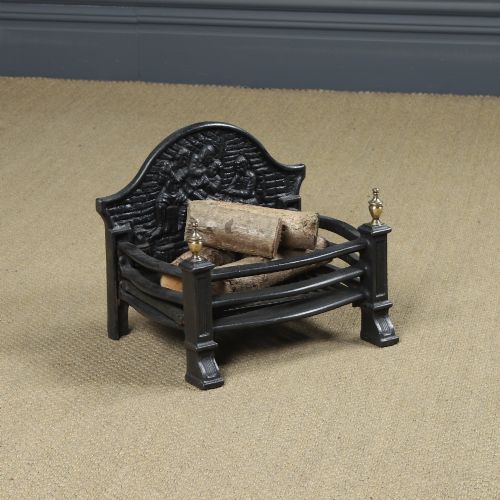
Makers paired the bright alloy with structural iron components to withstand intense heat while presenting a decorative front facade. Such items frequently arrive alongside companion fire irons or grates to complete the hearth arrangement.
Materials and construction methods
Hearth furniture of this scale combined cast and wrought metals, utilising durable iron for the load-bearing billets and rear supports. Brass formed the visible frontal elements, chosen for its ability to take a bright polish and cast into intricate decorative profiles.
Foundries employed sand-casting techniques to shape the substantial brass terminals, which workers subsequently filed and chased by hand to sharpen details. Iron shafts were forged and joined to these brass fronts using heavy rivets or threaded bolts.
Finer nineteenth-century examples occasionally incorporated gilt brass or paired the bright metal with contrasting copper elements. Iron grates and baskets utilised similar blacksmithing and casting traditions, marrying structural rigidity with ornamental surface work.
Assessing quality in the metalwork
Weight serves as a reliable indicator of substance, with better pieces utilising thick-gauge brass that resists the warping effects of centuries of intense hearth heat. Inferior counterparts rely on thin sheet elements or shallow castings that lack structural presence and acoustic resonance.
The relationship between the decorative front and the functional rear standard dictates overall balance. Master smiths and founders ensured the centre of gravity kept the heavy uprights stable when loaded with massive fuel logs.
The Brass Log Dogs Glossary
- Andiron
- A horizontal iron bar supported on legs, with an upright pillar at the front, designed to hold logs off the hearth floor. These form the principal category of fire dog.
- Billet bar
- The horizontal iron bar extending backward from the front standard which directly supports the burning logs. This component bears the greatest thermal and mechanical stress.
- Chenet
- The French term for an andiron or firedog, frequently applied to decorative hearth furniture imported from or styled after French models. They often feature elaborate neoclassical or baroque casting.
- Fire basket
- An open metal grate containing a bottom grid and side bars to hold coal or wood, sometimes integrated directly with andirons or backplates. These units sit permanently within the fireplace opening.
- Chasing
- The manual art of refining cast metal surfaces with small punches and chisels to sharpen details and create texture. Fine chasing distinguishes high-end foundry work from mass production.
Brass Log Dogs: Frequently Asked Questions
How do I use antique brass log dogs?
Place the pair inside the hearth opening with the long iron billet bars pointing toward the back wall. Position large split logs across the two horizontal iron bars to allow air circulation underneath for a steady burn.
Ensure the heavy decorative fronts remain clear of direct flame impingement where possible. Regular light dusting maintains the polished surface without wearing down historical patination.
Are these fire dogs safe for daily fires?
Most antique examples constructed with heavy iron billet bars remain entirely suitable for burning wood in an active fireplace. Inspect the structural joints where the brass meets the iron to confirm no weakness exists from historical heat exposure.
Very delicate gilt or thin ornamental pieces suit decorative display rather than heavy daily service. Use common sense regarding the weight and size of timber placed upon the iron supports.
How do I date a pair of fire dogs?
Stylistic cues provide the clearest dating evidence, moving from severe Georgian simplicity through ornate Victorian casting to later revival periods. Examine the casting texture and assembly methods, as older pieces often feature hand-filed surfaces and forged iron components.
Victorian and later nineteenth-century examples frequently exhibit heavier, highly ornate machine-finished brass castings. Documentation or family provenance occasionally confirms the exact decade of manufacture.
What is the difference between andirons and fire dogs?
The terms are generally interchangeable names for the same fundamental hearth furniture supporting logs. Regional preferences and historical dealer catalogues tended to favour one term over the other.
Some collectors reserve andiron for larger structural supports and fire dog for smaller domestic pairs, but makers used both designations freely.