




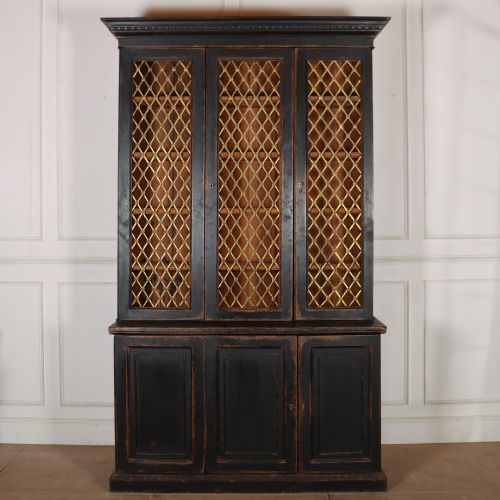


Brass Lattice Cabinet
A brass lattice cabinet brings architectural discipline and filtered light to a room, framing your books and collections behind fine metalwork.
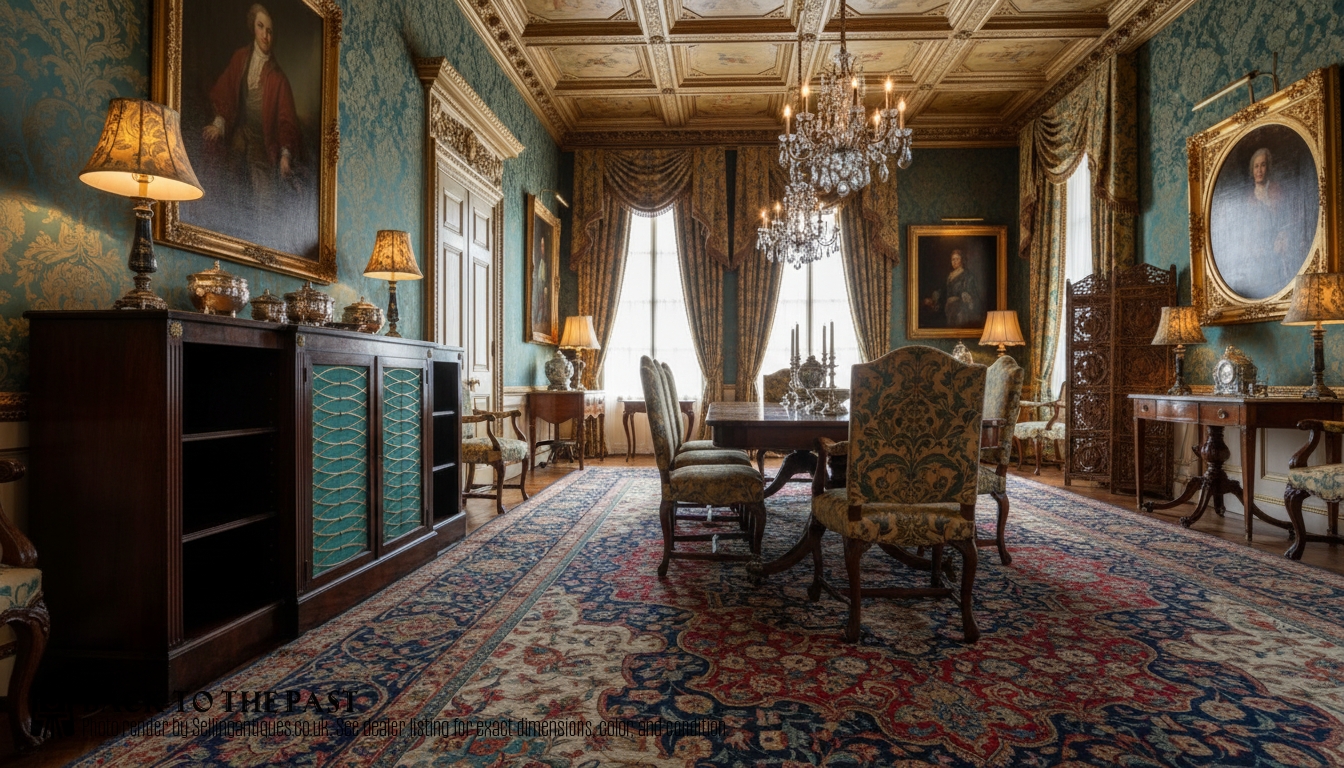
Brass Lattice Cabinet
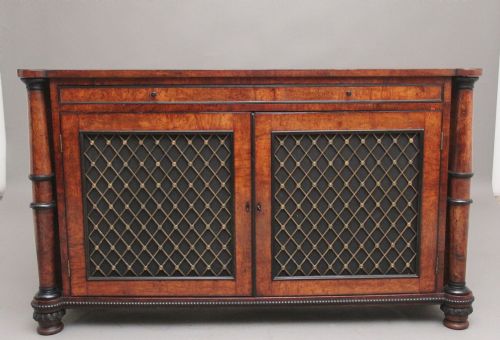
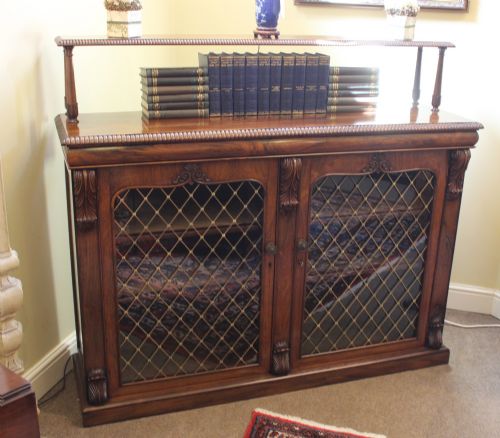
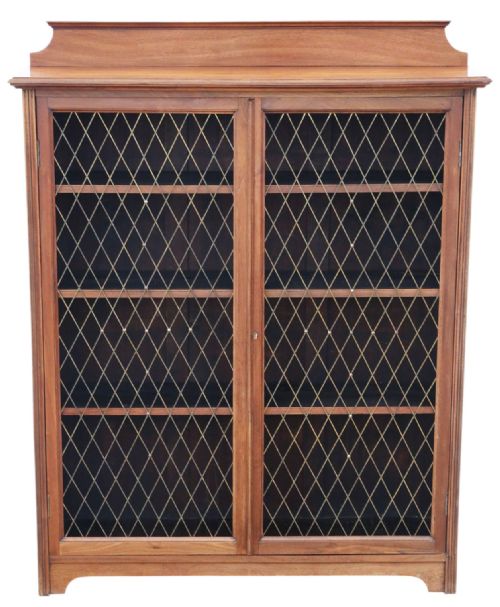
A brass lattice cabinet is a functional storage piece defined by its metal-grilled doors, appearing across several distinct periods from the nineteenth century onwards. When you search for a brass lattice cabinet, you will encounter diverse forms including side cabinets, bookcases, and chiffoniers.
The selection ranges from Regency rosewood and mahogany pieces to later walnut, pollard oak, and Edwardian examples. Many pieces feature timber frames combined with glass and fabric elements behind the characteristic metal grill.
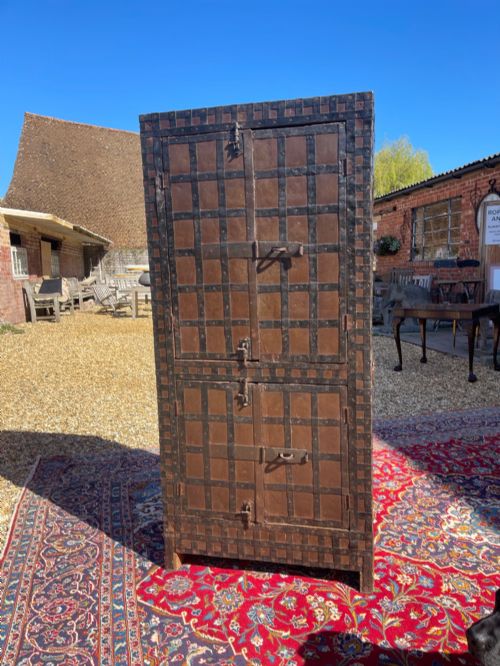
Origin variations include English formal designs alongside Colonial Indian metal bound cupboards and Chinese noodle cabinets. This mix of styles means you might find a dwarf bookcase or a grand breakfront side cabinet sitting in the same category.
Materials and construction
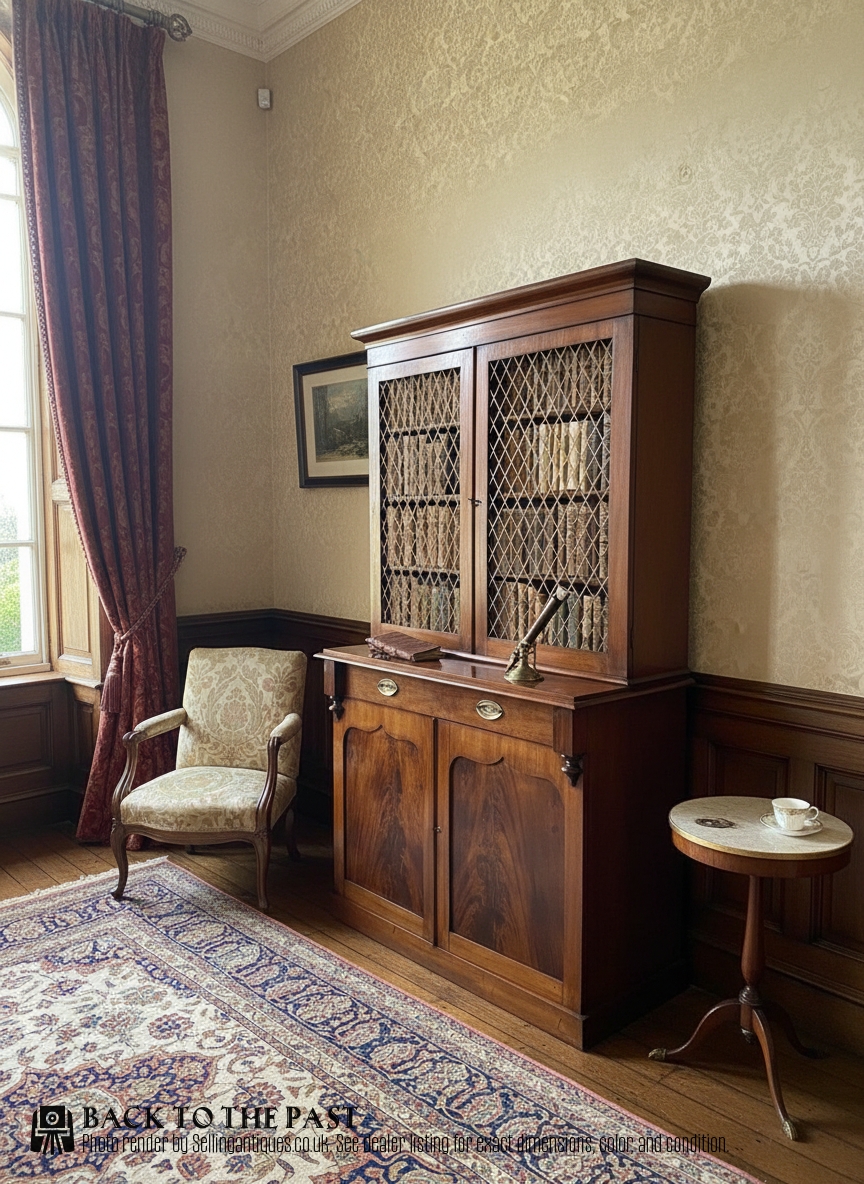
Cabinet makers utilised dense hardwoods such as mahogany, rosewood, and walnut as the primary carcase materials, frequently enhancing surfaces with boxwood inlay, pollard oak, and ebony details. These timbers provided the structural stability necessary to support heavy glass doors and metal grills.
Brass formed the essential decorative and functional lattice work for the doors, sometimes paired with silk or other fabric linings to conceal interior shelving. Metal binding and inlay work required precise hand-fitting by skilled artisans working in nineteenth-century workshops.
Brass Lattice Cabinet Retail Price Guide 2026
Typical asking prices for brass lattice cabinet among the pieces listed under this phrase on Sellingantiques today, from the lower quarter to the upper quarter. They describe what is for sale here now, not the wider market.
Some cabinets hide their contents behind delicate brass wire while others prefer solid metal bars, keeping secrets with varying degrees of success.
Assessing quality and execution
Quality rests in the precision of the timber selection and the crispness of the brass work integrated into the door frames. Superior examples display thoughtful grain matching on mahogany or rosewood surfaces alongside finely woven or cast metal grilles.
The integrity of the internal construction, such as adjustable display shelves and sound drawer linings, distinguishes standard utility furniture from finer commission pieces. Proportion and timber patination ultimately dictate the standing of each cabinet within its period.
John McClean
The Brass Lattice Cabinet Glossary
- Chiffonier
- A low sideboard or cabinet featuring shelves or enclosed storage beneath, frequently topped with a mirrored or shelved superstructure.
- Breakfront
- A cabinet design where the central section projects forward from the flanking outer sections, creating a pronounced architectural profile.
- Pollard oak
- Timber taken from trees that have been pollarded, producing a dense, highly figured grain pattern prized for decorative cabinet doors.
- Regency style
- Design characteristics inspired by the British Regency period, often recreated in later decades with classical motifs and dark polished timbers.
- Dwarf bookcase
- A low-standing bookcase designed to sit beneath dado height, keeping the upper wall space clear for art or mirrors.
Brass Lattice Cabinet: Frequently Asked Questions
What is a brass lattice cabinet?
A brass lattice cabinet is a storage piece featuring glazed doors fronted by a decorative brass metal grill or trellis work. These cabinets range from tall bookcases to low sideboards.
The metal lattice allows partial visibility of the interior contents while providing a secure, architectural door panel. They appear in timbers such as mahogany, rosewood, and walnut across various nineteenth-century and later periods.
How do I date a cabinet?
Dating relies on identifying the primary timber, construction methods, and stylistic cues of the period. Regency pieces often show clean classical lines and rosewood veneers, while Victorian examples might incorporate heavier proportions.
Secondary woods inside drawers, backboards, and hinge types also help establish the era of manufacture. Examining the joinery and overall weight provides further clues to whether a piece originates from the early nineteenth century or a later revival.
Where should I place one?
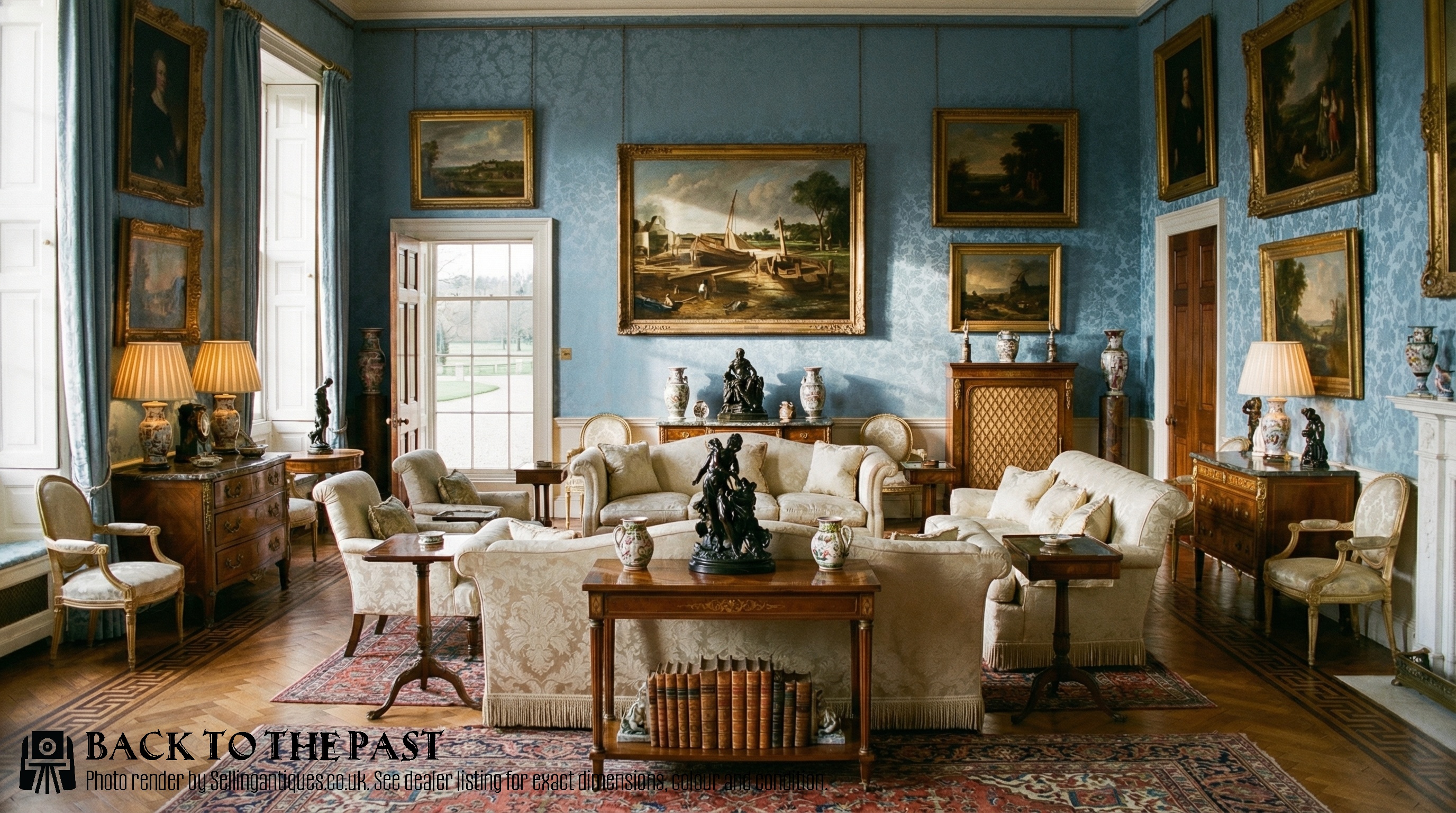
These cabinets suit dining rooms, living spaces, and studies where they can house books, ceramics, or glassware. Their glazed and metal-grilled doors keep dust off contents while adding texture to a wall.
Neat-sized chiffoniers and dwarf bookcases work well in smaller rooms without overwhelming the floor space. Ensure the piece sits away from direct heat sources to protect the polished wood and delicate veneers.
How do I care for the wood?
Maintain the timber surfaces by dusting with a soft, dry cloth and applying high-quality beeswax occasionally to nourish the polish. Avoid modern silicone sprays that can build up and dull the antique finish.
Keep the brass lattice clean with a gentle wipe, taking care not to snag cloths on the metalwork or push moisture behind the glass and fabric linings.