
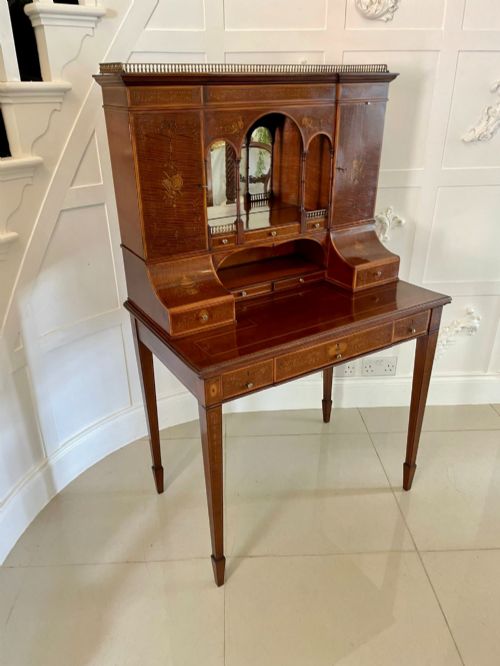
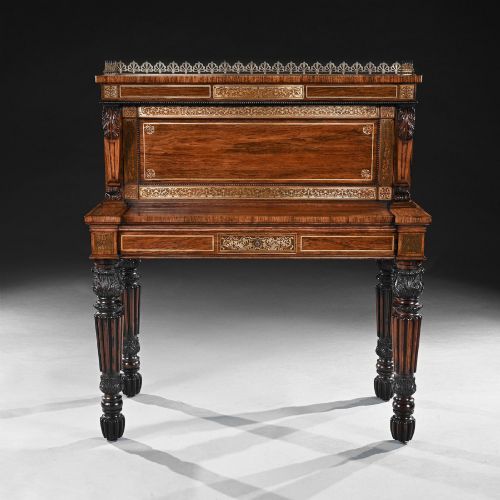
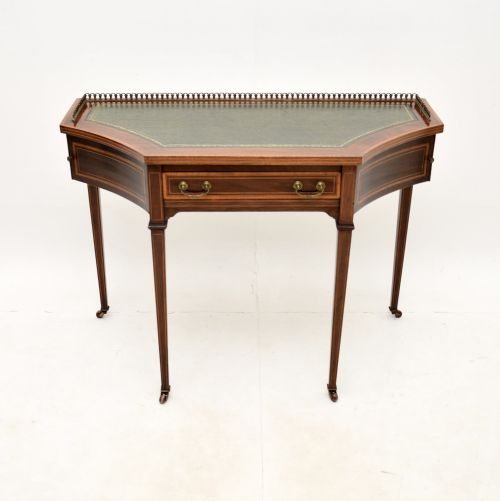

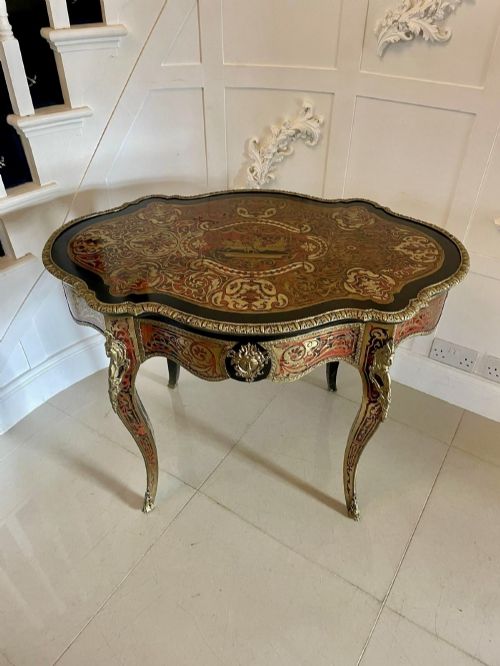
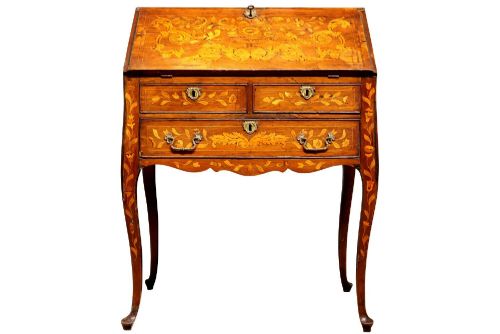

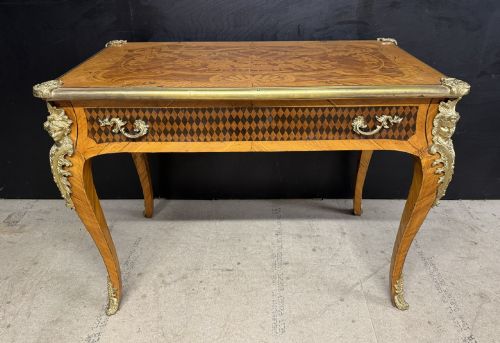
Brass Inlay Desk
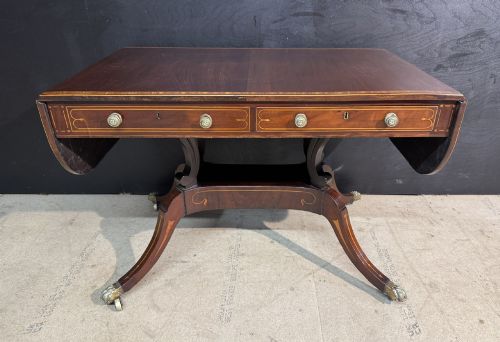
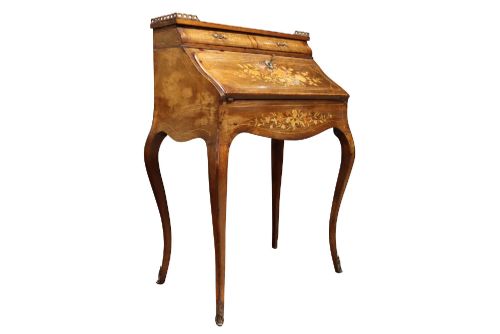
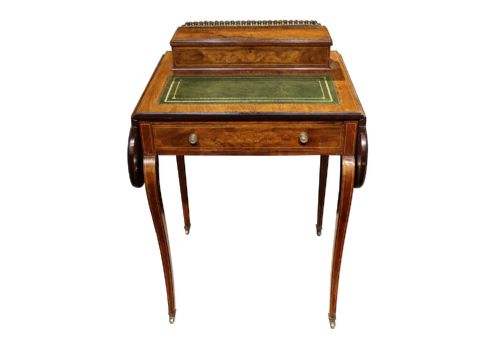
A brass inlay desk brings together timber, metalwork and a dedicated writing surface, offering a practical workspace with decorative distinction.
Brass Inlay Desk
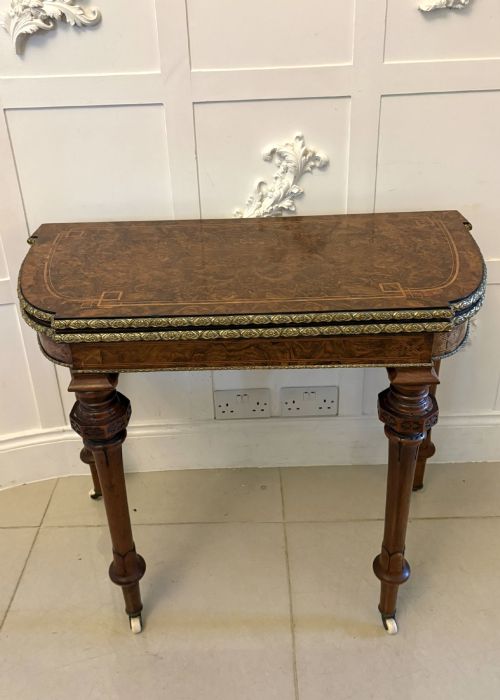
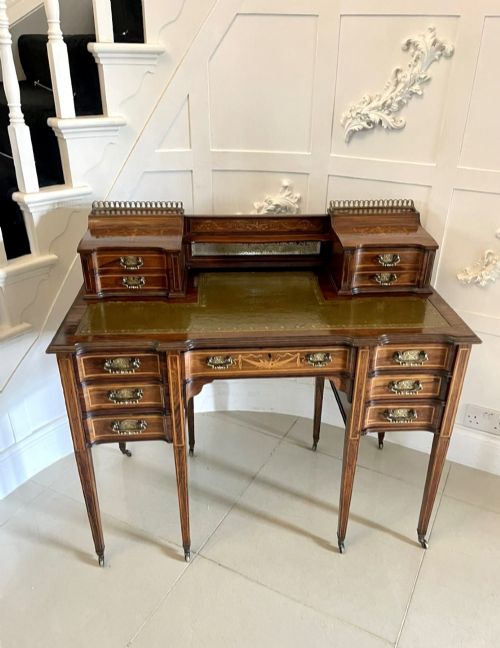
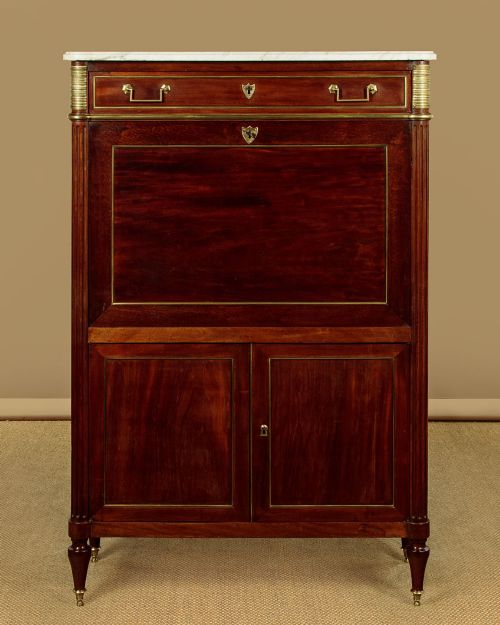
Makers and workshops of the nineteenth century applied finely cut brass strings and scrolls directly into timbers such as rosewood, mahogany and burr walnut. These surfaces often incorporate fitted interiors, leather writing inserts and hidden compartments designed for correspondence and paperwork.
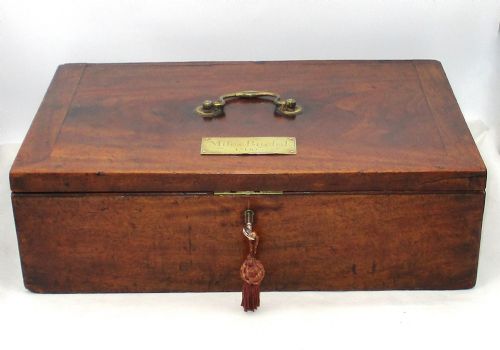
Buyers encounter both large freestanding tables intended for central placement in a room and portable writing boxes equipped for travel. The style bridges formal Georgian proportion with the ornate decorative tastes of the later Victorian and Edwardian periods.
Materials and Construction
Cabinetmakers utilised dense hardwoods including mahogany, rosewood and satinwood as foundations for intricate metalwork. These timbers provided the stable base required for precise channel cutting.
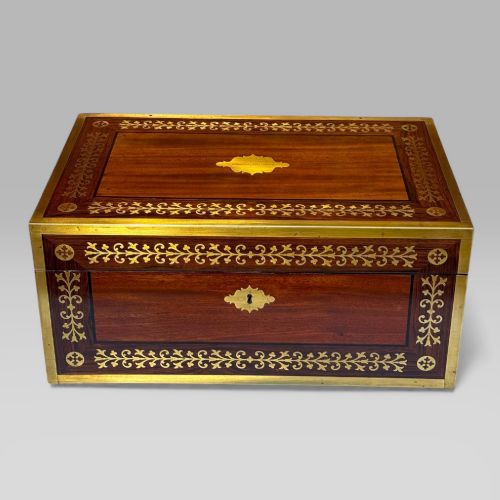
Craftsmen inlaid thin sheets of brass using hand-cut recesses, securing the metal flush with the wooden surface before polishing the combined materials to an even sheen.
Secret drawers concealed behind false partitions in nineteenth-century writing slopes rewarded owners who discovered the hidden spring mechanisms.
Quality Variations
The precision of the metalwork separates standard production from superior craftsmanship, visible in the tightness of the brass joints and the complexity of the scrollwork. Well-made pieces maintain flush surfaces where the brass meets the grain without noticeable gaps.
Selection of timber grain and the preservation of original fitted interiors heavily influence the standing of a piece. Furniture bearing documented maker attribution or superior secondary woods commands greater attention.
Maple & Co.·Gillows Oxford Street Workshop·Edwards & Roberts
The Brass Inlay Desk Glossary
- Brass inlay
- The technique of embedding thin strips or sheets of brass into timber surfaces to create decorative patterns and borders.
- Writing slope
- A portable box with a hinged sloping lid that opens to reveal a velvet or leather writing surface and compartments for stationery.
- Boulle work
- Elaborate marquetry incorporating brass and tortoiseshell, named after the French cabinetmaker André-Charles Boulle.
- Campaign desk
- Portable furniture constructed for travel, typically featuring brass corners, recessed handles and sectional disassembly.
- Satinwood
- A light-yellow hardwood prized by cabinetmakers for its lustrous grain and contrast against darker timbers.
Brass Inlay Desk: Frequently Asked Questions
How do I maintain brass inlay?
Keep the timber nourished with appropriate wax and clean the metal gently without abrasive compounds. Avoid placing the furniture in direct sunlight or near heat sources.
Changes in humidity cause wood to expand and contract, which can loosen metal elements over decades. Regular interior dusting protects both components from premature wear.
Are these desks suitable for daily use?
Many of these pieces function effectively as modern writing desks or laptop stations. Their historical drawers and compartments accommodate stationery and small items.
Protecting the leather or wood top with a blotter preserves the original writing surface during daily tasks. Ensure the height matches your seating requirements for comfort.
How do I date a brass inlay desk?
Examine the secondary woods, construction methods and style of brass ornamentation to determine the period. Regency pieces often feature geometric brass lines in rosewood, while Victorian examples show denser floral motifs.
Drawer linings, handle types and locking mechanisms offer further clues regarding manufacturing dates. Compare these details against documented examples from the same era.
What is the difference between a slope and a desk?
Writing slopes are portable boxes designed to sit on a table, opening at an angle for correspondence. Desks are freestanding pieces of furniture with fixed legs and built-in workspaces.
Slopes focus on compact storage for ink and paper, whereas desks provide permanent surface area and drawer banks. Both categories frequently incorporate brass inlay for decoration.