



Victorian Boulle Desk
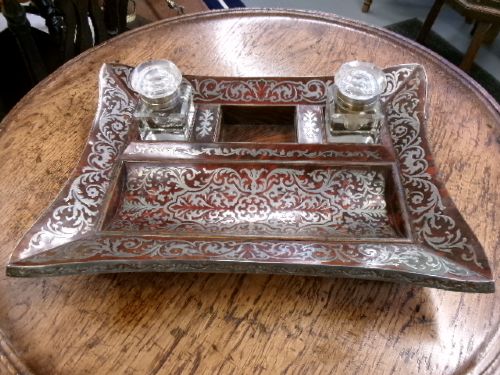
A Victorian boulle desk brings unmistakable French revival grandeur to a room through intricate tortoiseshell and brass marquetry.
Victorian Boulle Desk
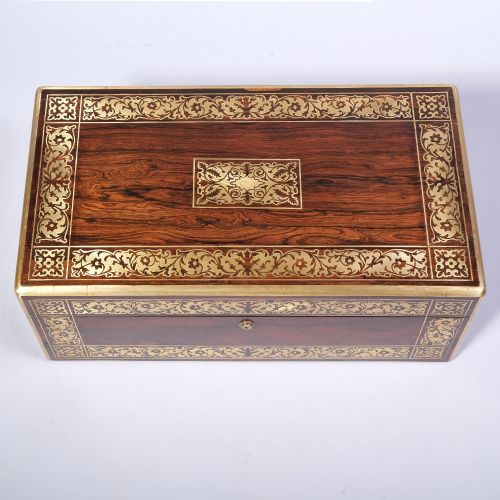
A Victorian boulle desk encompasses elaborate writing furniture and accessories decorated in the distinctive technique of tortoiseshell and brass inlay, often associated with French Napoleon III and Louis XV revival aesthetics. When exploring this selection, buyers frequently encounter writing boxes, desk stands, and centre tables alongside larger bureau forms like the bonheur du jour.
The objects stem predominantly from the nineteenth century, bridging Victorian and Edwardian periods with strong French design influences. Pieces range from small travelling writing boxes and perpetual calendars to freestanding centre tables and mantel clocks designed to unify a study or drawing room scheme.
Mastery of the tortoiseshell and brass medium defines the category, combining utility with ornamental display. Each survivor demonstrates the enduring appeal of seventeenth-century court furniture reinvented for nineteenth-century interiors.
Materials and construction
Artisans constructed these pieces using ebonised wood or rosewood as a dark ground, upon which thin plates of tortoiseshell and brass were meticulously layered and cut. This technique, known as boulle work, involved sawing matched patterns from bonded sheets of metal and shell to create contrasting positive and negative designs.
Gilded bronze, or ormolu, mounts were cast and chased to edge the forms, protect corners, and accentuate curves derived from French rococo revival styles. Glass components, enamel dials, and fitted interior velvet or leather completed the functional writing surfaces and clock housings.
Victorian Boulle Desk Retail Price Guide 2026
Typical asking prices for victorian boulle desk among the pieces listed under this phrase on Sellingantiques today, from the lower quarter to the upper quarter. They describe what is for sale here now, not the wider market.
Some Victorian travellers insisted on perpetual calendars to keep track of time while moving between country houses and town residences.
Factors of quality
The precision and density of the brass and tortoiseshell marquetry separate exceptional examples from standard production. Superior pieces exhibit crisp, tight joints in the metal inlay without excessive filler, maintaining intricate floral or scroll motifs that remain flush with the surrounding wood.
The quality of the underlying carcase wood and the crispness of the cast ormolu mounts dictate the overall standing of an object. Better examples maintain harmonious proportions and retain original internal fittings, such as matched inkwells or calendar mechanisms.
Asprey, London
The Victorian Boulle Desk Glossary
- Boulle work
- Marquetry technique utilising tortoiseshell and brass, named after André-Charles Boulle, the cabinetmaker to Louis XIV. It creates a rich, shimmering contrast of golden metal against dark shell.
- Ormolu
- Gilded bronze mounts and ornaments applied to furniture and clocks. The technique involves coating cast bronze with a mercury-gold amalgam and heating it to drive off the mercury.
- Bonheur du jour
- A light lady's writing desk featuring a small cabinet or set of drawers on the upper surface. These desks became popular in the nineteenth century for correspondence and display.
- Napoleon III style
- Eclectic nineteenth-century French design movement reviving Louis XIV, XV, and XVI aesthetics. It heavily influenced Victorian luxury furniture with lavish ornamentation.
- Ebonised wood
- Timber treated to resemble ebony, providing a deep black surface. This dark ground heightens the visual impact of bright brass and tortoiseshell inlay.
Victorian Boulle Desk: Frequently Asked Questions
What is a boulle desk?
A boulle desk is a nineteenth-century writing table or box decorated with tortoiseshell and brass marquetry in the French taste. These pieces often feature ebonised wood grounds and gilt bronze mounts.
Originating from court styles revived during the Victorian era, they serve as both functional writing furniture and ornamental centrepieces.
How do I care for tortoiseshell?
Tortoiseshell requires gentle treatment and stable environmental conditions away from direct sunlight and excessive heat. Sunlight can bleach the warm amber tones and dry out the material.
Dust regularly with a soft, dry cloth and avoid harsh chemical polishes that might damage the delicate brass joints.
Where were these pieces made?
While many items reflect French design and were imported from Paris workshops during the nineteenth century, British makers also produced similar pieces. London firms adapted the Napoleon III style for domestic Victorian interiors.
Retailers like Asprey retailed high-end desk accessories and calendars to affluent British clients.
How can I date a piece?
Dating relies on examining the materials, construction methods, and stylistic cues recorded across nineteenth-century examples. Pieces typically span from mid-Victorian periods around 1850 through to Edwardian items.
Hardware, clock movements, and the specific composition of the brass inlay help narrow the production era.