

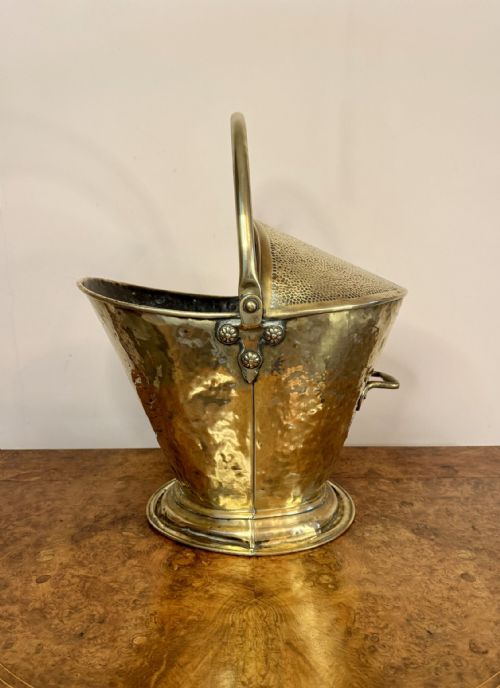

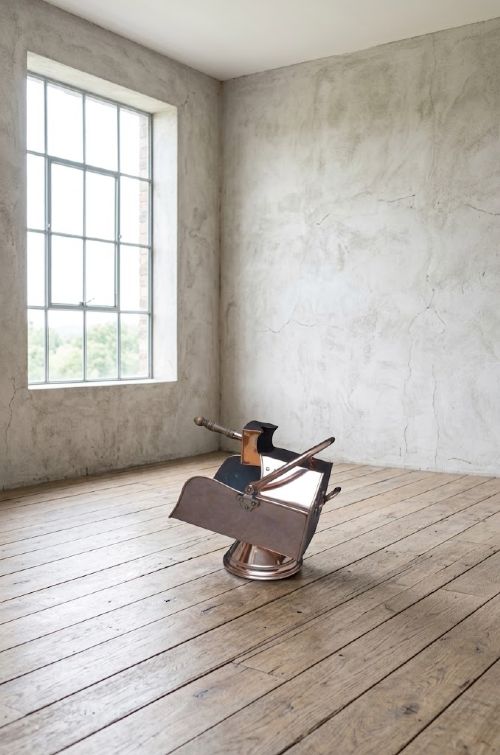
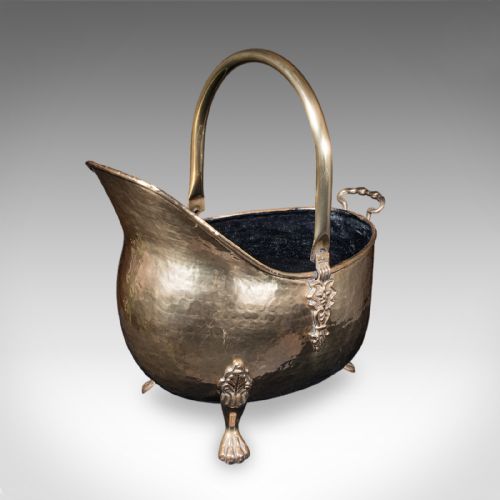
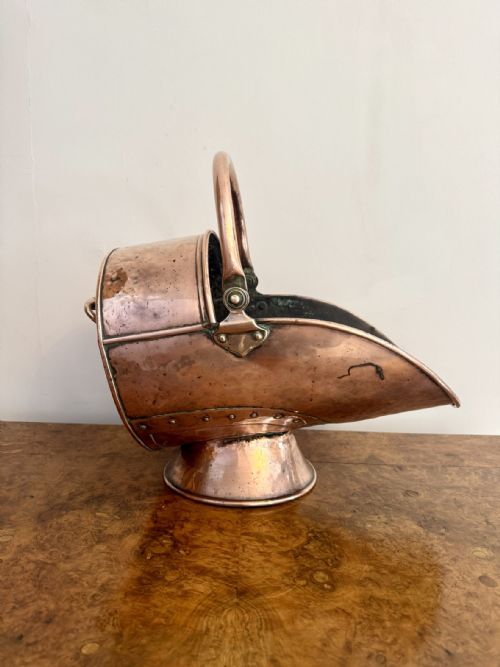


Brass Helmet Coal Scuttle
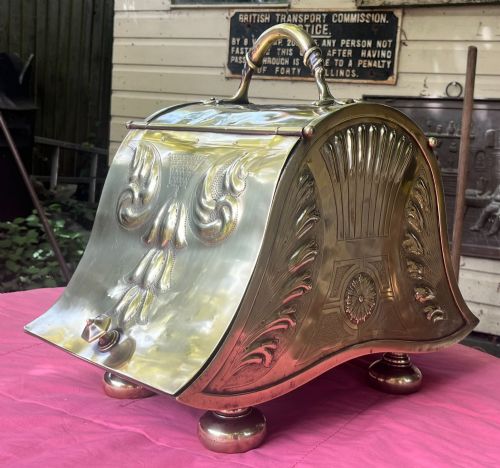
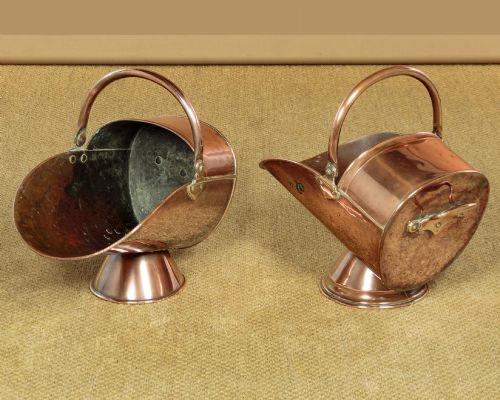
These brass helmet coal scuttles bring the unmistakable shine of nineteenth-century firesides straight to the hearth with their flared, sloping bodies.

Brass Helmet Coal Scuttle
Most examples encountered on this page belong to the Victorian and Edwardian periods, though earlier Georgian and Regency specimens occasionally surface. Makers fashioned these hearth accessories in various sizes, often pairing them with matching shovels or incorporating dual lids for neat storage.
How they were made
Makers constructed these vessels primarily from sheet brass and copper, sometimes combining the two metals to create contrasting bodies and trims. They joined structural plates using robust seams and reinforced edges to withstand the heavy daily weight of coal and logs.
Handles and feet often incorporated iron, wood, ebonised wood, ebony, or china elements to provide a secure grip and insulate against heat. Surface finishes ranged from plain polished brass to finely embossed copper panels displaying decorative motifs.
Brass Helmet Coal Scuttle Retail Price Guide 2026
Typical asking prices for brass helmet coal scuttle among the pieces listed under this phrase on Sellingantiques today, from the lower quarter to the upper quarter. They describe what is for sale here now, not the wider market.
Listings feature brass, copper, iron, wood, ebonised wood, and ebony across Victorian, Edwardian, Georgian, and Regency periods.
What varies in quality
The weight of the metal dictates the structural integrity of a coal scuttle, separating sturdier vessels from thinner, easily dented sheet work. Heavier gauges ensure the helmet shape holds its rigid profile through decades of regular fireside service.
Quality shows in the detailing of handles, feet, and fixings, such as cast brass lions' paws or securely riveted fittings. The survival of an original matching brass shovel or scoop also elevates an example.
Benham and Froud·Henry Loveridge·William Souter and Sons
The Brass Helmet Coal Scuttle Glossary
- Helmet coal scuttle
- A fireside container featuring a high back and a downward-sloping front rim that resembles a traditional military helmet. This specific silhouette allowed coal to be poured directly onto the fire without spilling.
- Coal bucket
- A deep, open-topped vessel utilised for holding solid fuel beside the fireplace. These pieces often lack the distinct sloping snout of the helmet form.
- Fireside accessory
- Any functional or decorative item kept near the hearth, including coal scuttles, companion sets, and log bins. These objects combined domestic utility with parlor display.
- Ebonised wood
- Timber treated with a dark finish to imitate expensive ebony. Makers frequently utilised this material for handles and knobs on brass metalwork.
Brass Helmet Coal Scuttle: Frequently Asked Questions
What is a brass helmet coal scuttle?
A brass helmet coal scuttle is a traditional fireside container shaped with a sloping front lip to easily pour fuel onto a fire. These pieces served a purely domestic function while adding bright metallic display to nineteenth-century hearths.
Most examples date from the Victorian and Edwardian eras, constructed from sheet brass or copper with contrasting handles. They remain practical vessels for holding logs, kindling, or coal beside modern or period fireplaces.
How were they used?
These vessels sat beside the fireplace to store coal, coke, or wood fuel within easy reach of the grate. Users lifted the scuttle by its handle and tilted the flared snout forward to empty fuel cleanly into the fire.
Many featured a matching shovel or scoop tucked into side loops or rests. This kept the hearth tidy and provided the specific tool needed to feed the flames without soiling hands.
How do I date a coal scuttle?
Dating relies on observing material choices, manufacturing techniques, and stylistic clues recorded across Victorian, Edwardian, and earlier Georgian periods. Heavier hand-finished construction often points toward earlier nineteenth-century production. Nineteeth-century pieces frequently display specific maker marks stamped into the brass, while Edwardian examples often utilise lighter sheet construction. Comparing the handle materials, such as ebony or ebonised wood, also helps narrow the manufacturing window.
How do I clean and maintain them?
Maintaining a brass helmet coal scuttle involves gentle dusting and occasional cleaning to preserve the historic metal surface. Harsh commercial abrasive cleaners can strip away desirable age patinas built up over generations. Many collectors prefer to leave old brass unpolished to retain its darkened historical character. If polishing, use a mild metal cleaner specifically formulated for antique brass and copper.