
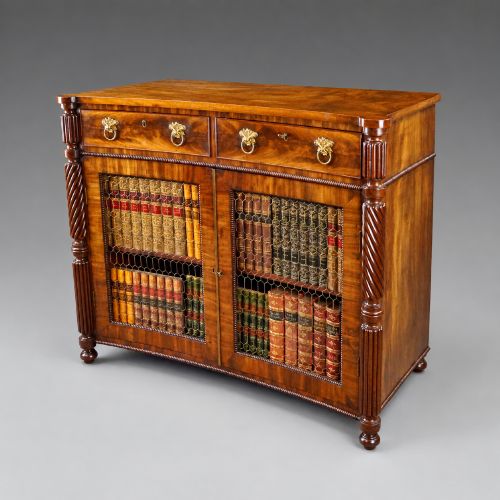
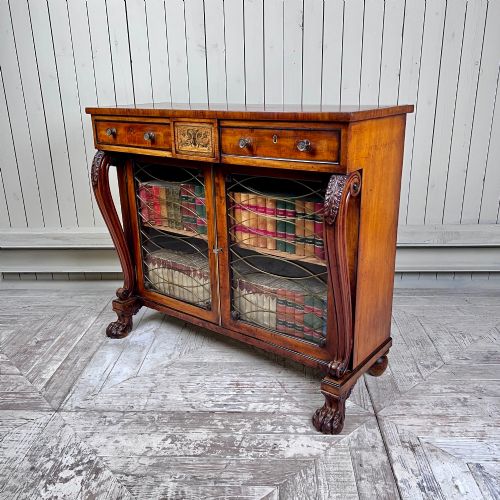
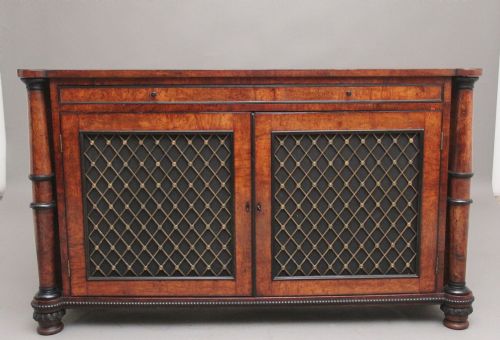
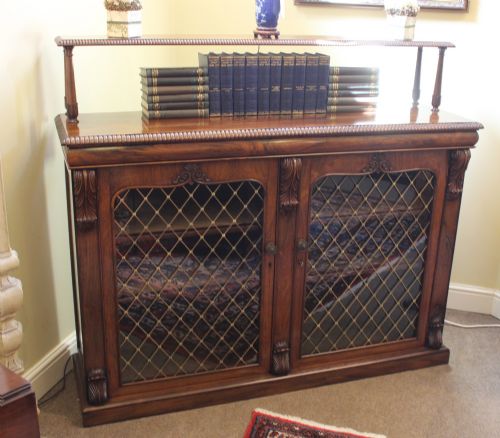


Brass Grille Sideboard
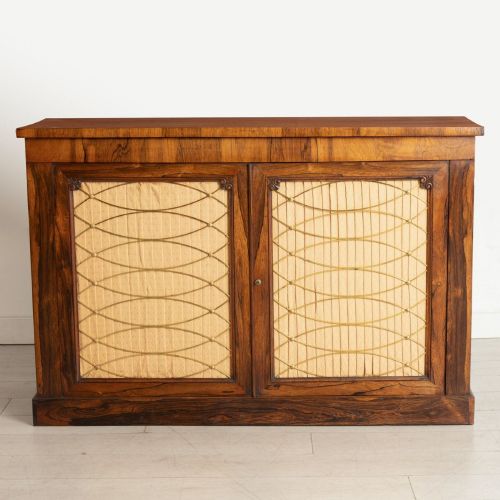
A brass grille sideboard brings architectural metalwork and figured timber together, offering enclosed storage with a view.
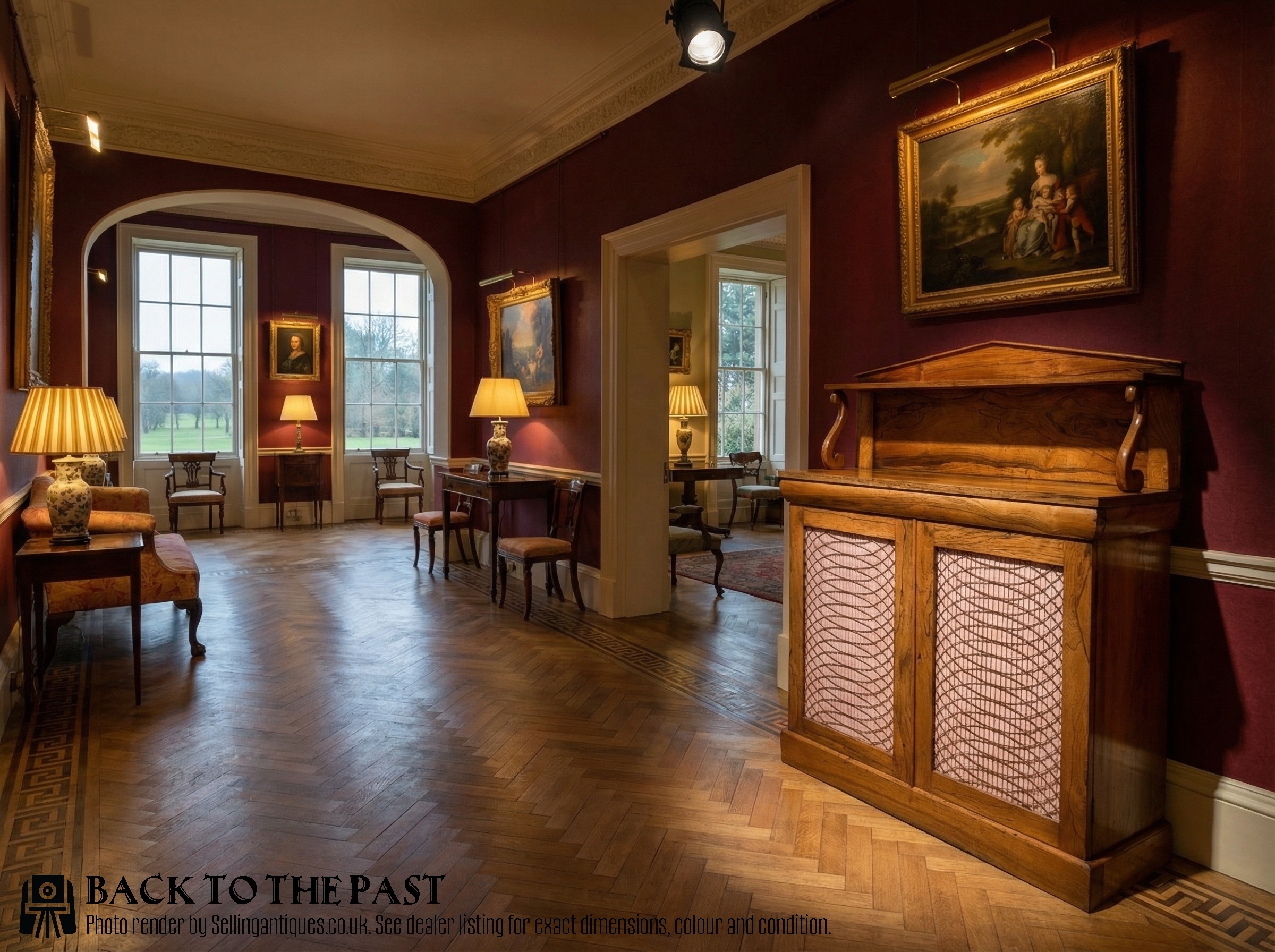
Brass Grille Sideboard
When you search for a brass grille sideboard, you enter a field dominated by chiffoniers, side cabinets and low bookcases designed to house books and prized objects. These pieces originate primarily from the Regency, William IV and Victorian periods, alongside later revival interpretations.
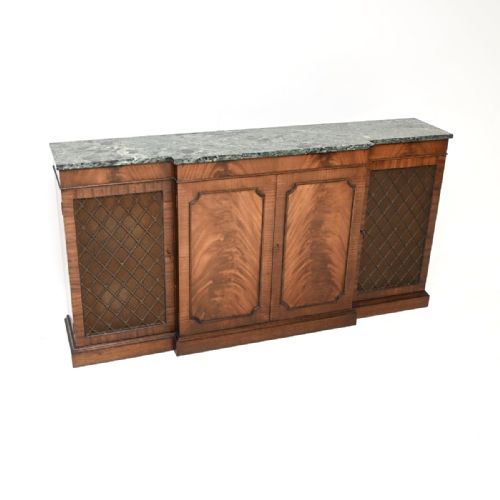
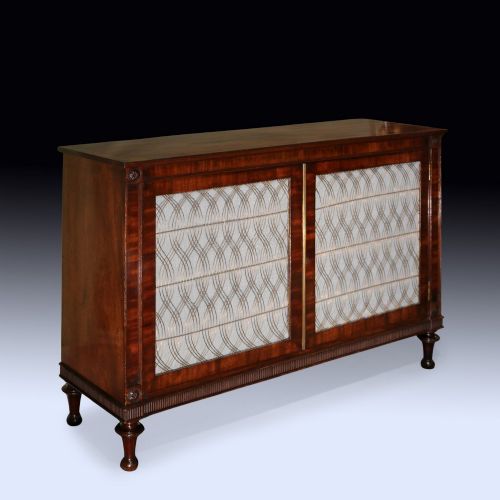
The form typically presents as a low rectangular cabinet fitted with glazed or wire-mesh doors backed by fabric. Mahogany and rosewood form the backbone of these listings, often enriched with brass inlay, ebony stringing and marble tops.
The version you are most likely to meet on this page is a Regency or 19th century rosewood chiffonier featuring brass grilles and adjustable interior shelving. These low-profile pieces served dining rooms and libraries alike, keeping contents visible yet secure.
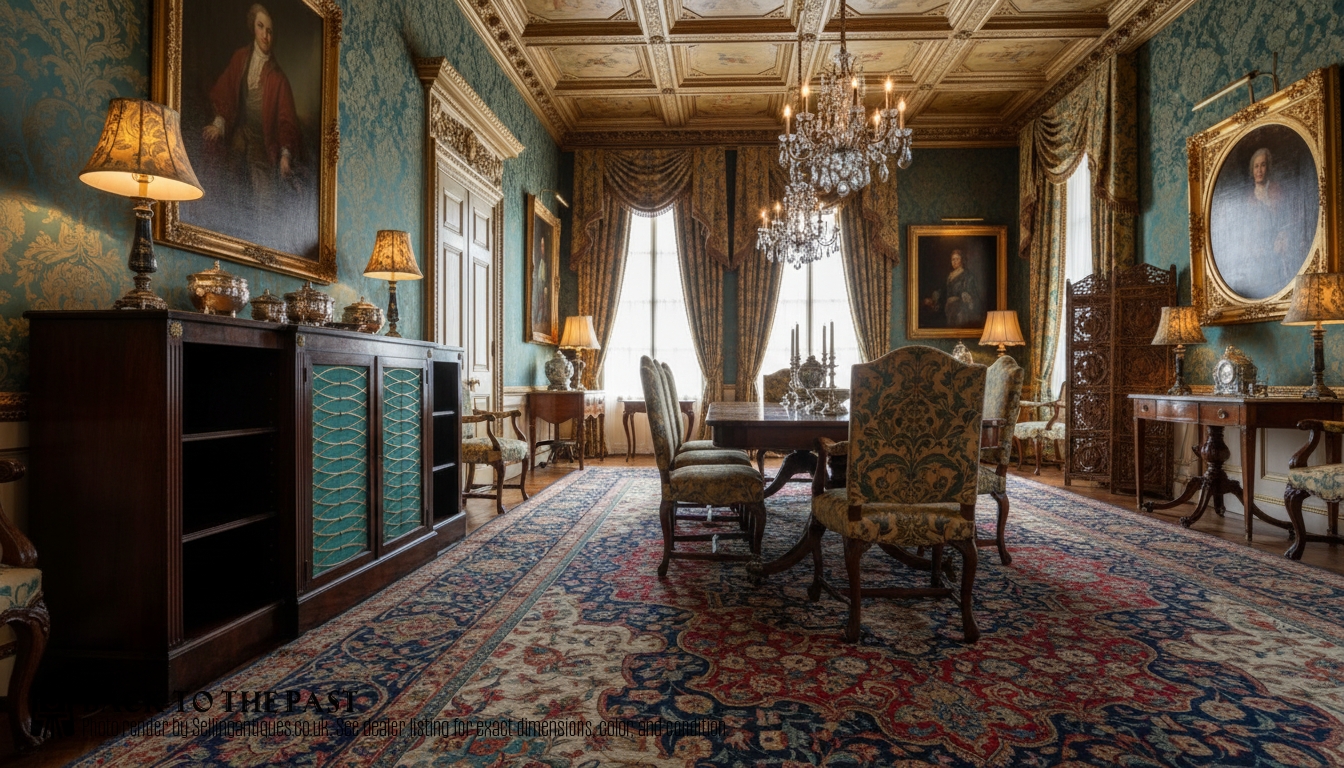
Materials and construction
Cabinet makers utilised dense tropical hardwoods such as mahogany and rosewood, applying them as solid timbers or finely figured veneers over secondary foundations. Ebony and pollard oak appear as contrasting accents, framing doors and drawer fronts with dark linear precision.
Fine brass wire was woven into grilles to protect delicate glass and provide ventilation, often backed with pleated silk or fabric liners. Marble slabs supplied durable, cool surfaces for serving or display on select side cabinets and chiffoniers.
Behind every brass grille lies decades of hidden dust and the ghost impressions of long-departed pleated silk.
Standards of craftsmanship
The distinction between ordinary and exceptional work lies in the selection of timber veneers and the precision of the brass inlay. Grain matching across large breakfront surfaces requires patience and a skilled hand, marking out pieces produced by premier workshops.
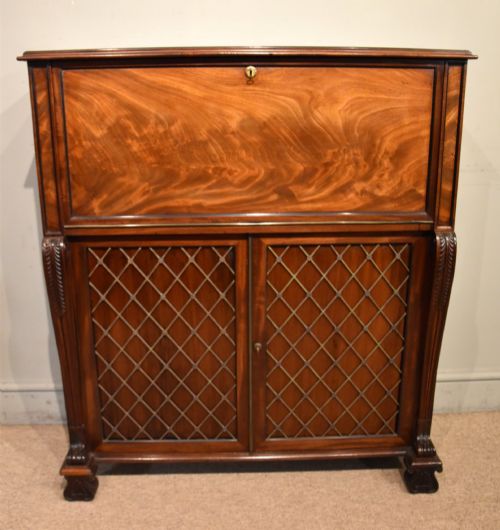
Secondary woods, drawer linings and the weight of the cast brass grilles reveal the underlying grade of manufacture. Cabinets featuring integrated secretaire drawers or architectural marble tops demonstrate greater ambition from the maker.
Gillows·Holland and Sons
The Brass Grille Sideboard Glossary
- Chiffonier
- A low cabinet with doors below, frequently surmounted by a shelf or bookcase tier on top. This form evolved during the Regency period to hold books and porcelain.
- Breakfront
- A piece of furniture where the central section projects forward from the flanking wings. It creates depth and visual rhythm in large side cabinets.
- Grille
- A lattice of fine brass wire fitted into door frames in place of plain glass. It allowed air to circulate while offering a decorative metallic sheen.
- Secretaire
- A writing drawer that pulls down to reveal a fitted interior of small drawers and pigeonholes. It adds a concealed desk function to a standard sideboard.
- Stringing
- Thin inlaid lines of contrasting timber or metal used to outline panels and drawers. It highlights the geometric contours of Regency cabinetry.
Brass Grille Sideboard: Frequently Asked Questions
What is a brass grille sideboard?
A brass grille sideboard is a low cabinet designed for dining rooms or libraries, featuring woven metal wire panels set into the doors. These pieces evolved from Regency chiffoniers and side cabinets.
They provide enclosed storage while allowing visibility of the contents within, often backed by gathered fabric to soften the metallic mesh.
How do I date a chiffonier?
Dating relies on timber choice, secondary woods, and stylistic motifs such as brass inlay and column supports. Regency examples frequently employ rosewood with delicate brass stringing.
Later Victorian interpretations tend to use heavier proportions and walnut or mahogany, reflecting changing domestic tastes of the nineteenth century.
Where were these cabinets used?
These cabinets stood principally in dining rooms, drawing rooms and libraries of grand homes. They stored table linen, china or folio volumes.
Today, their compact height makes them versatile for modern living spaces as media consoles or hallway storage.
Did all these cabinets have marble tops?
Marble tops appear on specific cabinet variations, particularly those associated with William IV and mid nineteenth century production. They provided a robust, stain-resistant surface.
Timber tops remain far more common across standard Regency chiffoniers and sideboards listed here.