


Brass Grille Cabinet
A brass grille cabinet brings together rich timbers and woven metalwork to store books and display treasured objects.
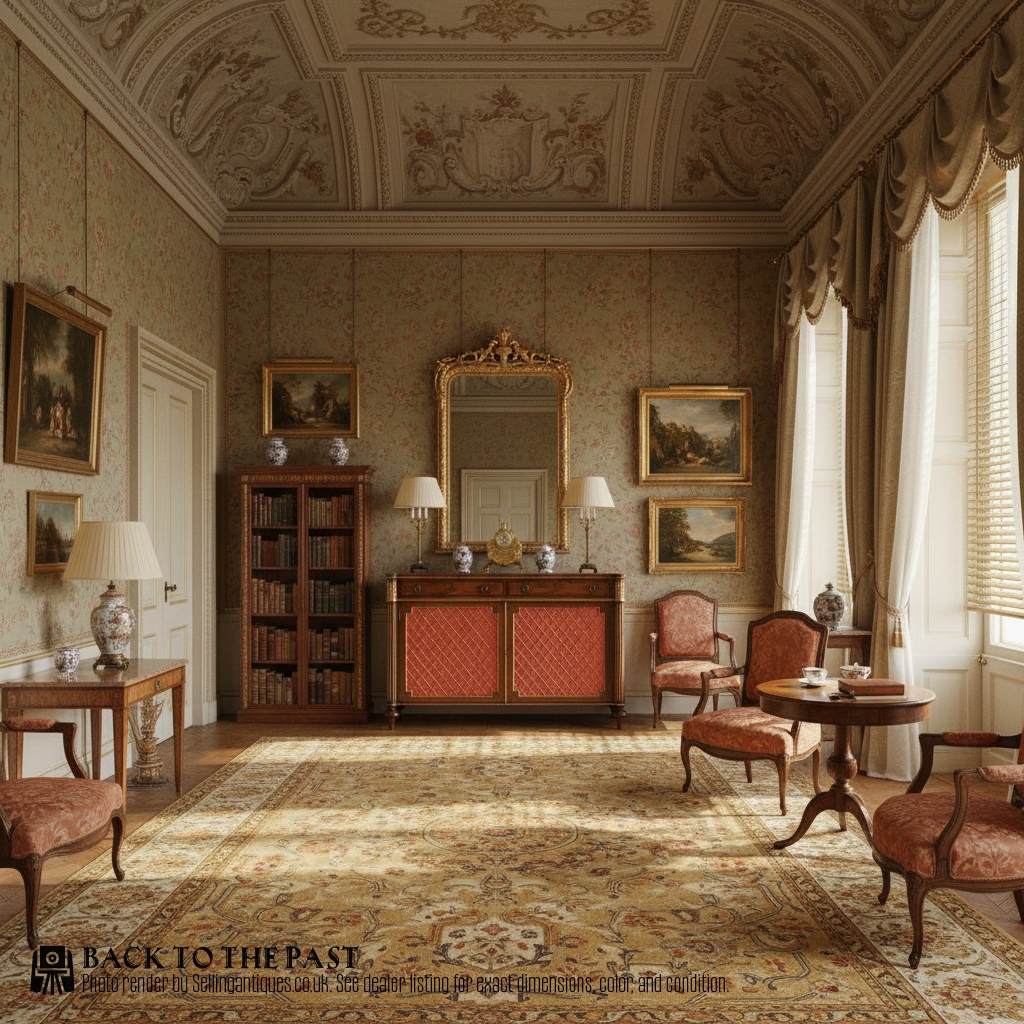
Brass Grille Cabinet
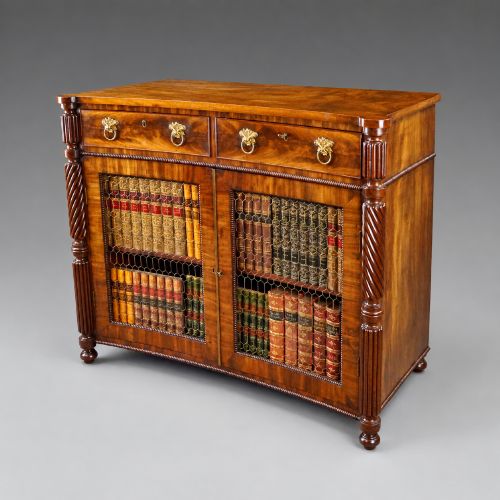
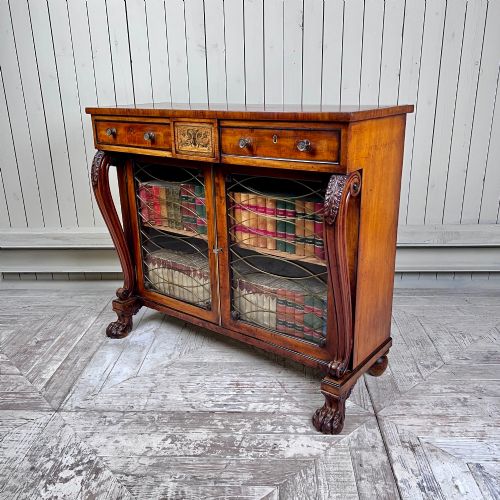
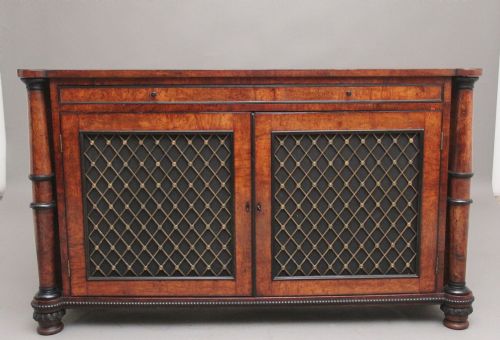
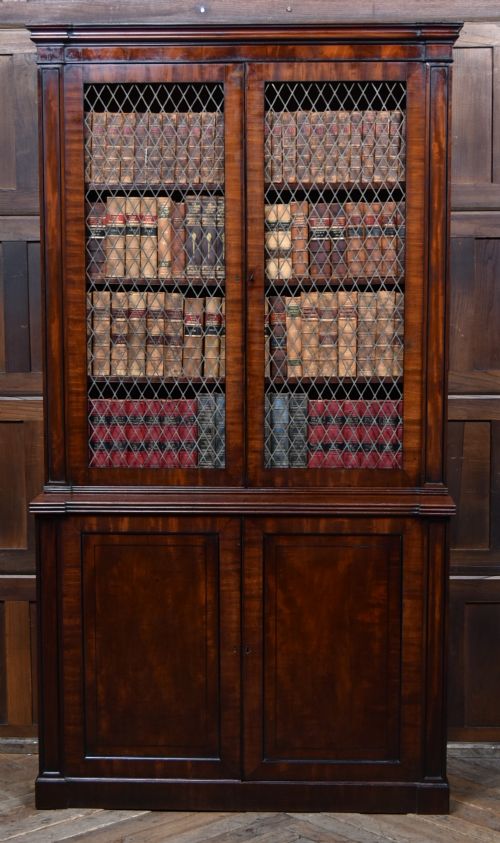
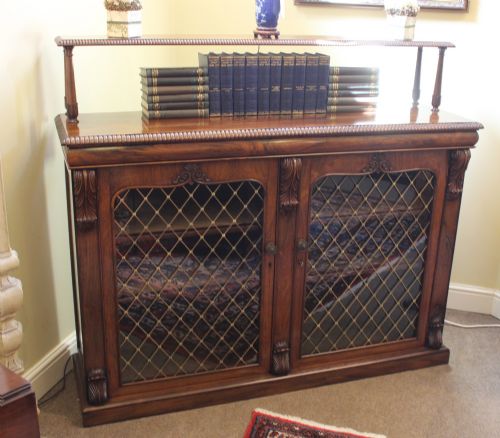
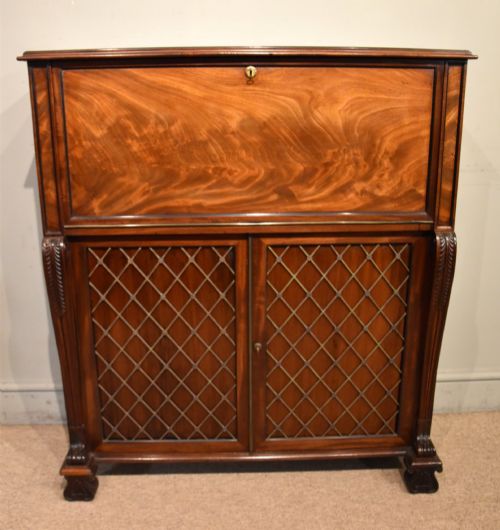
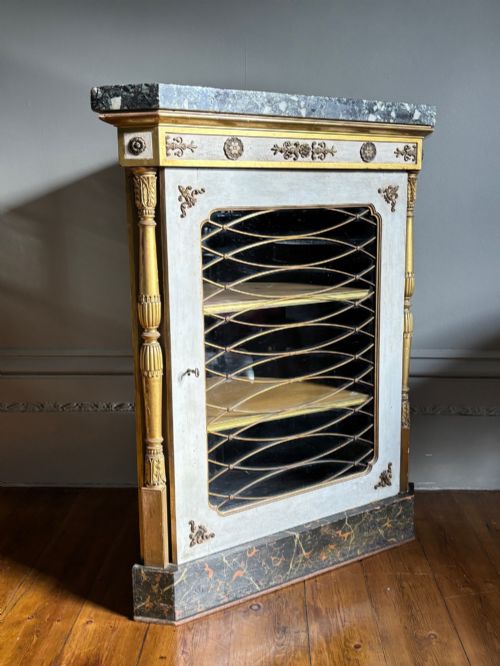
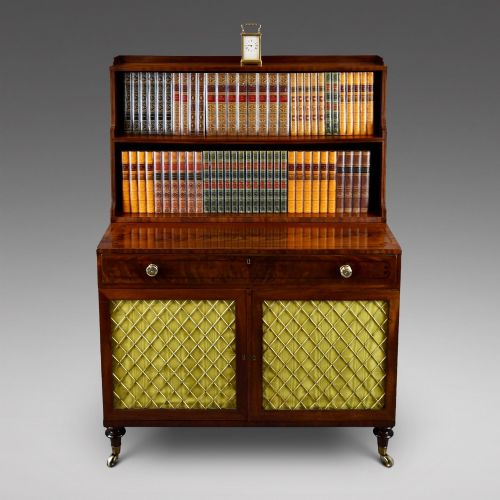
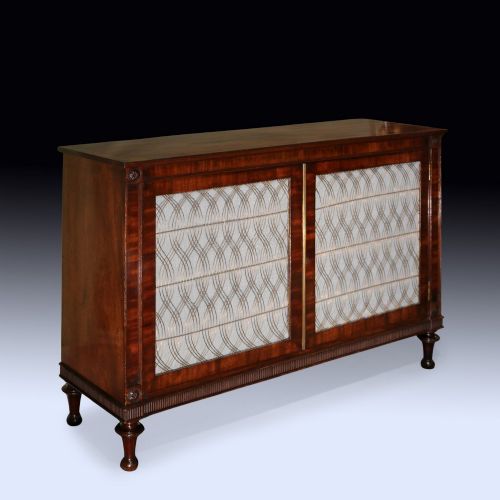
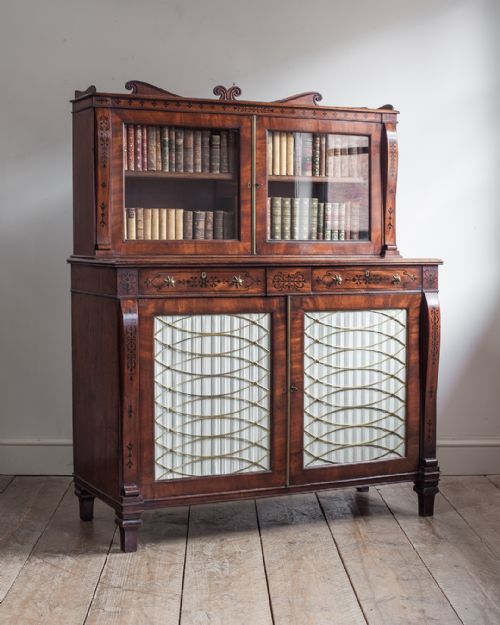
A brass grille cabinet combines timber cabinetry with woven metal mesh door panels, allowing light and air to reach the interior while keeping contents secure. The brass grille cabinet appears most frequently in Regency and nineteenth century forms, constructed primarily as side cabinets, chiffoniers, and bookcases.
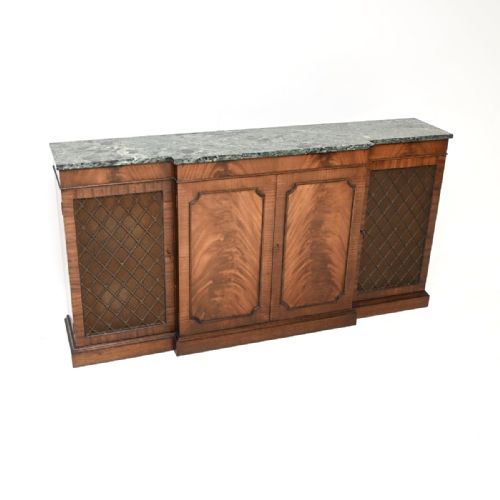
Makers designed these pieces in mahogany, rosewood, and oak, frequently incorporating marble tops, fabric linings, and ebony stringing. Regency and William IV iterations dominate the selection, showing classical architectural proportions and refined inlay work.
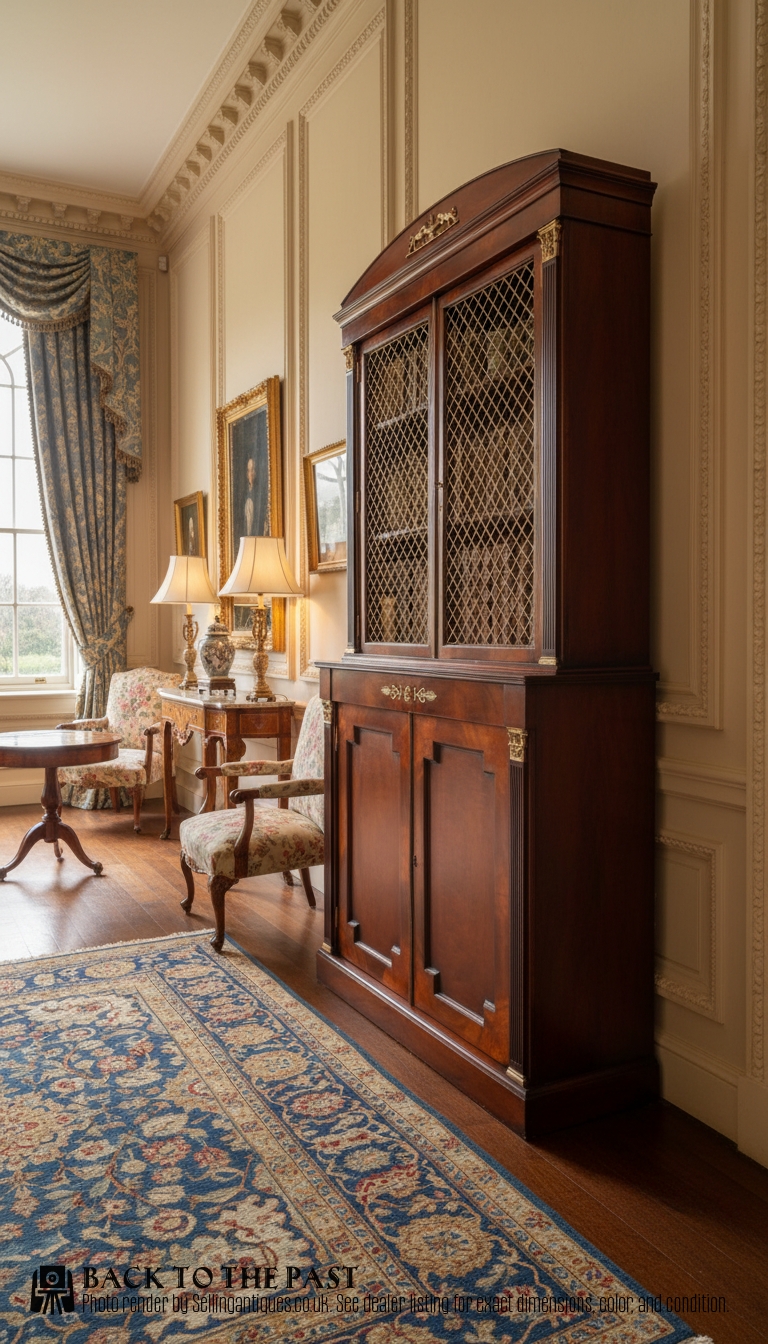
Materials and construction methods
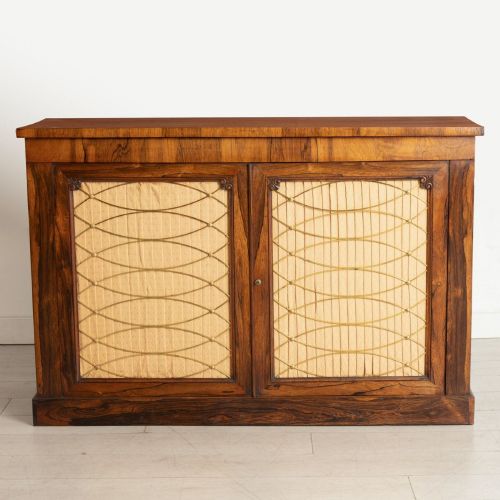
Cabinetmakers selected dense hardwoods such as mahogany and rosewood for structural stability and rich grain figures, occasionally employing pollard oak, satinwood, and kingwood for specific decorative surfaces. Fine brass wire formed the characteristic grilles, sometimes backed with silk or fabric to soften the interior view.
The construction relied on traditional joinery techniques, combining pegged mortise and tenon frames with hand-cut dovetails for internal drawers. Workshops integrated brass stringing, inlay, and Ormolu mounts to accent the dark timber surfaces.
Brass Grille Cabinet Retail Price Guide 2026
Typical asking prices for brass grille cabinet among the pieces listed under this phrase on Sellingantiques today, from the lower quarter to the upper quarter. They describe what is for sale here now, not the wider market.
Gentlemen used these cabinets to secure private papers, while silk behind the brass wire kept prying eyes away from the port.
Distinguishing quality across examples
Quality rests upon the selection of timber figures and the precision of the brass work. Superior examples exhibit tightly woven brass grilles, well-matched wood veneers, and secondary timbers such as oak for drawer linings.
The refinement of carved details, the integrity of original hinges and locks, and the presence of documented makers distinguish exceptional workshop production from standard commercial output.
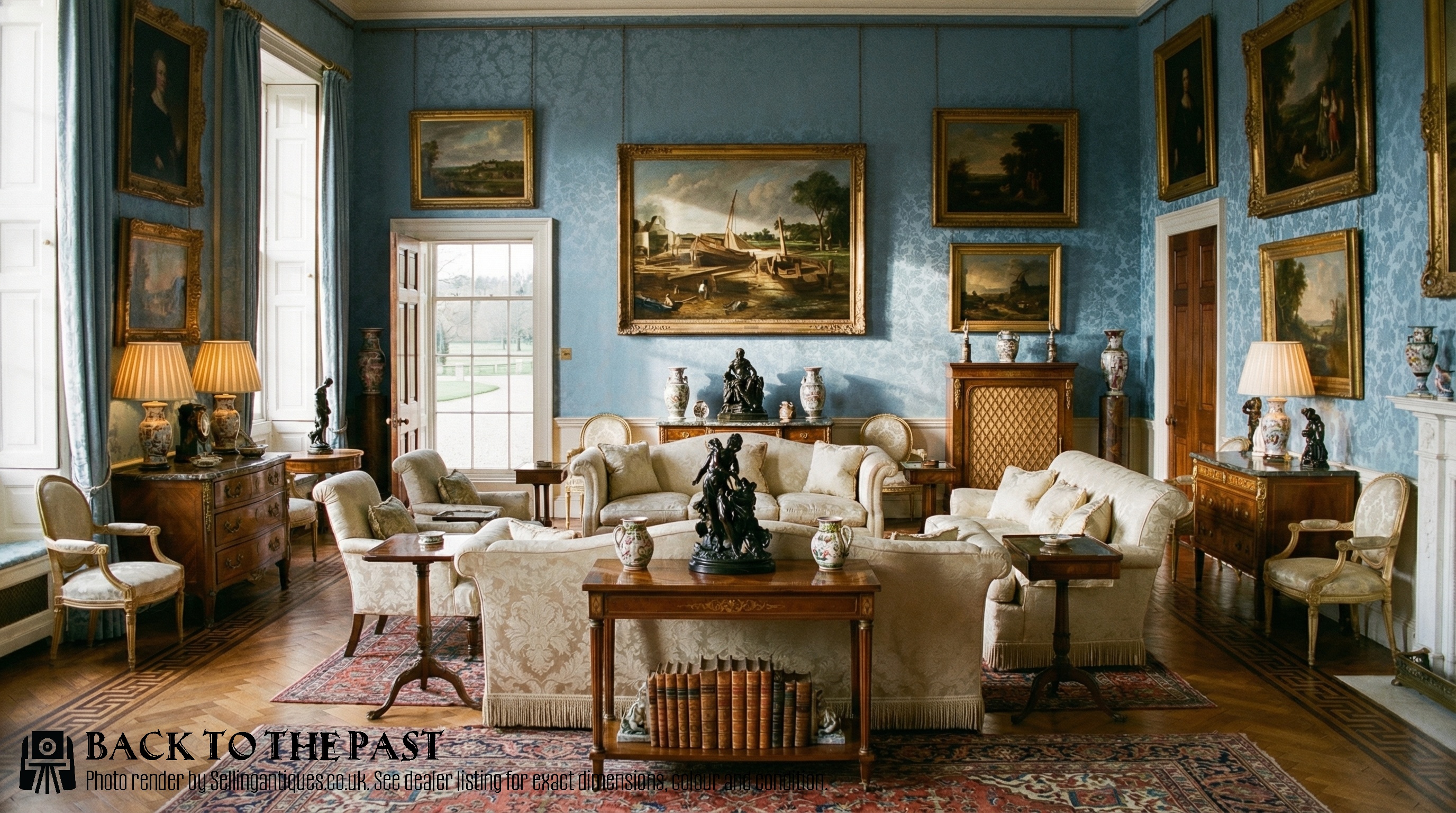
Gillows·Holland and Sons·Paul Sormani
The Brass Grille Cabinet Glossary
- Chiffonier
- A low sideboard or cabinet featuring shelves or enclosed storage below, popular during the Regency and Victorian periods.
- Breakfront
- A piece of furniture where the central section projects forward from the flanking cabinets, creating architectural depth.
- Bonheur du jour
- A small, light ladies writing desk with an enclosed cabinet or superstructure on the writing surface.
- Ormolu
- Gilded bronze used for mounts and decorative accents on fine cabinetry, particularly during the neoclassical and French revival periods.
- Stringing
- Thin lines of contrasting timber or brass inlaid into the surface of a cabinet to create decorative borders.
Brass Grille Cabinet: Frequently Asked Questions
What is a brass grille cabinet used for?
These cabinets served primarily to store books, china, and valuable papers while allowing ventilation through the open wire mesh doors. Today, they function well in reception rooms for media storage or displaying collections.
Their enclosed lower shelves or cupboards also provide concealed storage for household items, combining practical utility with decorative display.
How do I date a Regency cabinet?
Dating relies on timber selection, hardware, and structural characteristics typical of the early nineteenth century. Regency pieces frequently feature rosewood or figured mahogany with classical brass inlay and restrained proportions.
Examining internal secondary woods and backboards helps confirm the period of manufacture alongside stylistic cues like neoclassical motifs.
Are the fabric backings behind the grilles original?
Fabric behind brass grilles often represents later replacement to protect contents from dust or to match interior decorating schemes. Silk and pleated materials were common historically to soften the look of the wire mesh.
Original fabric is uncommon due to wear over time, so modern replacements do not detract from the historical integrity of the timber frame.
How do I care for antique mahogany and rosewood?
Maintain these timbers by dusting with a soft, dry cloth and avoiding direct sunlight or rapid humidity changes. Natural waxes nourish the wood grain without building up heavy silicone residues.
Gentle cleaning of the brass grilles with a dry brush prevents dust accumulation without disturbing the surrounding wood finish.