
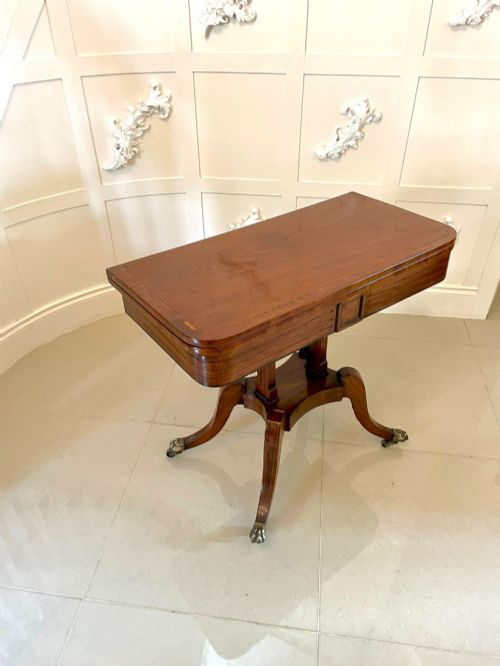
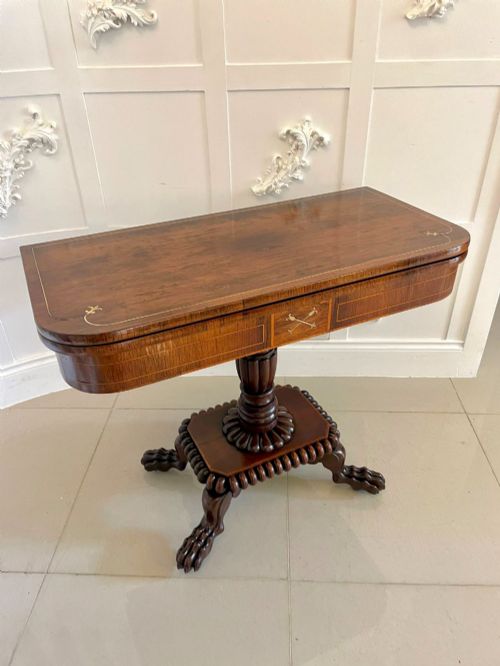
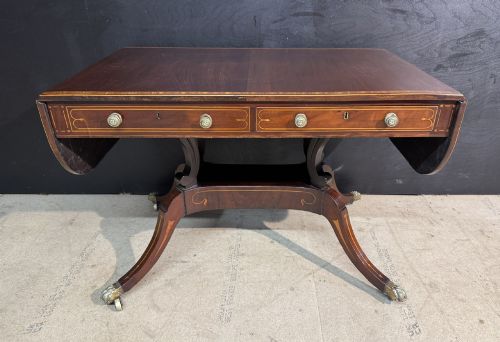
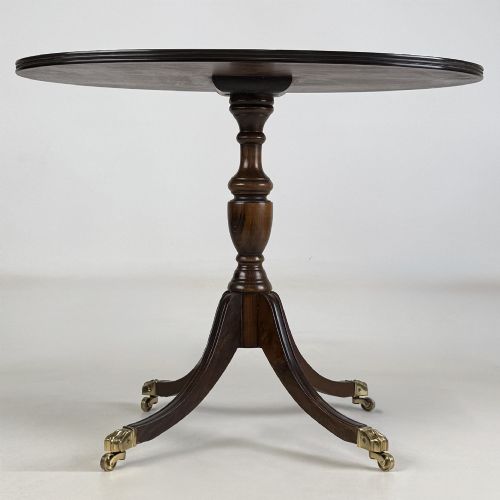
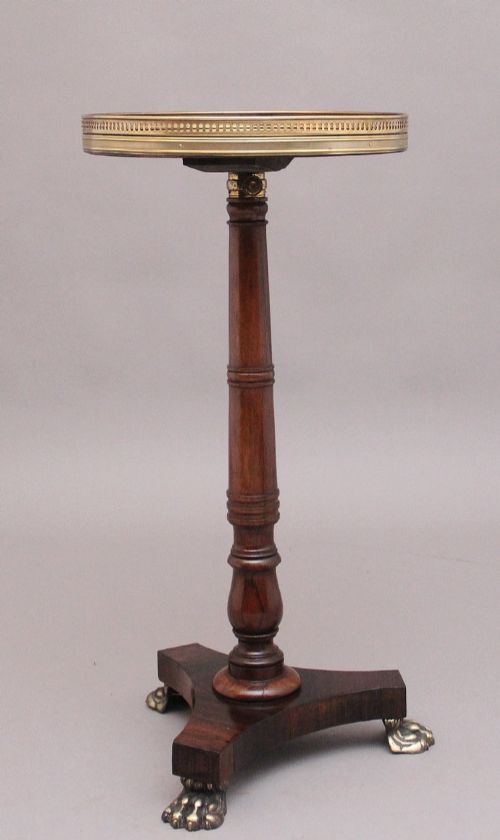

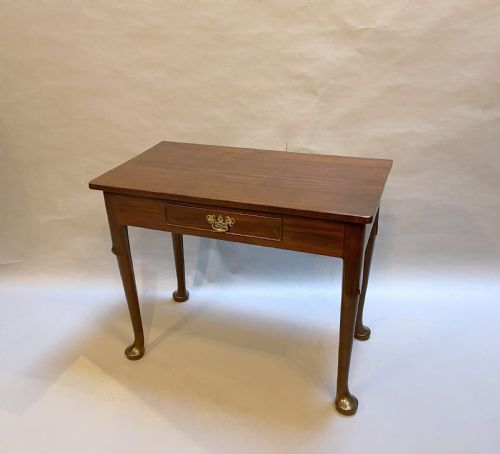

Brass Footed Side Table
A brass footed side table brings architectural metalwork to small-scale furniture, offering functional display space anchored by distinctive hardware.
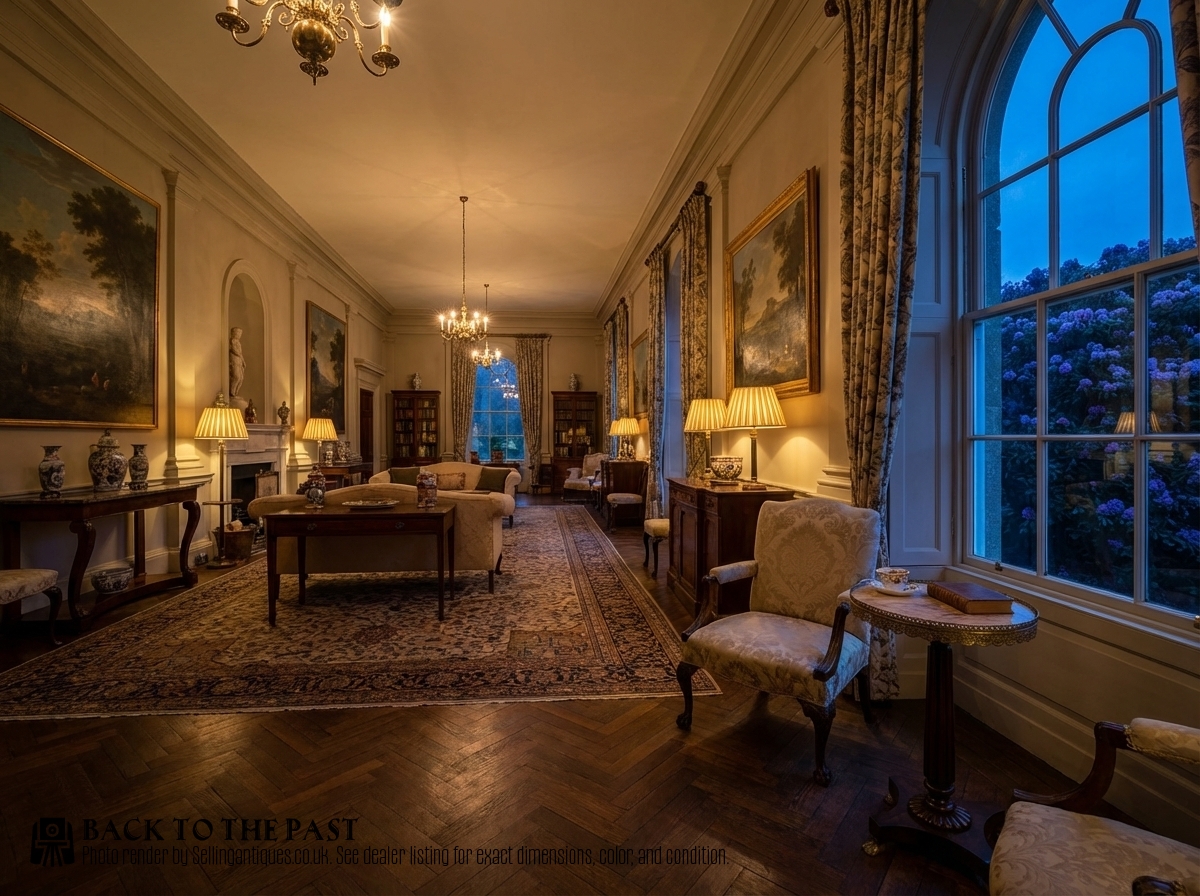
Brass Footed Side Table
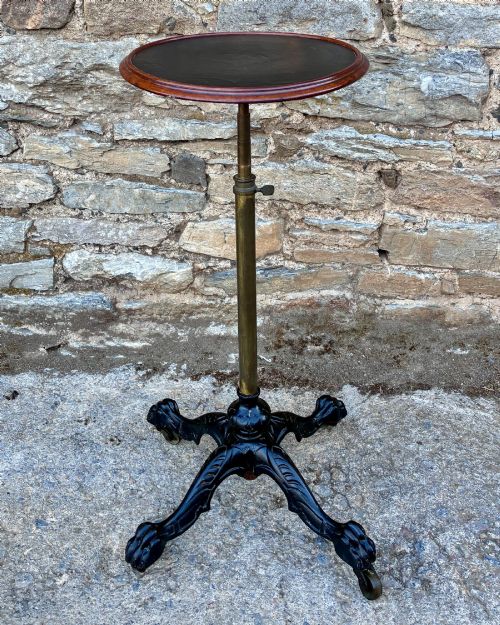
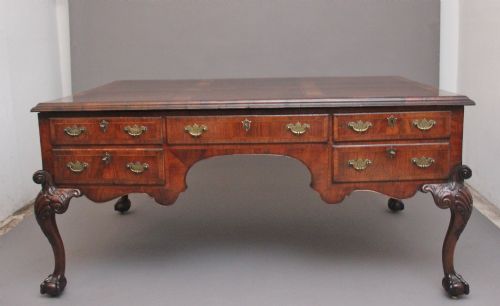
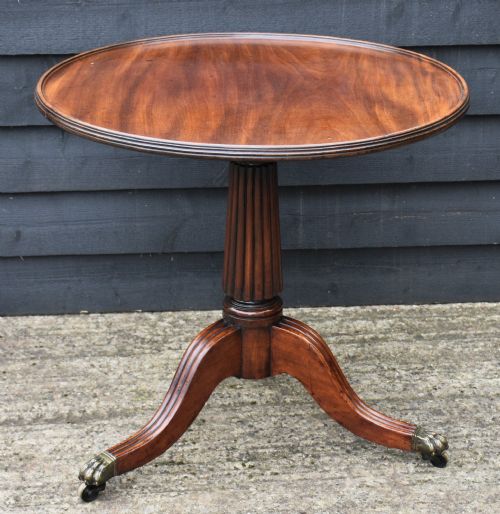
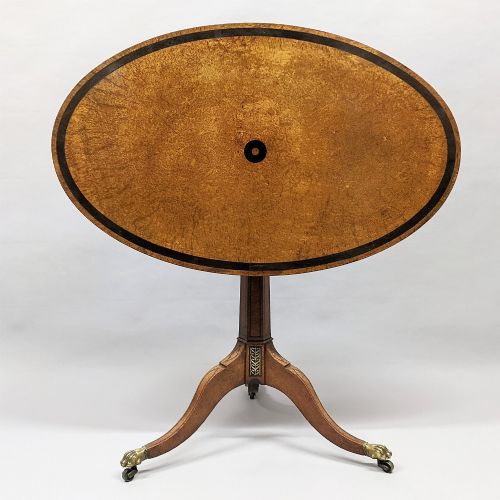
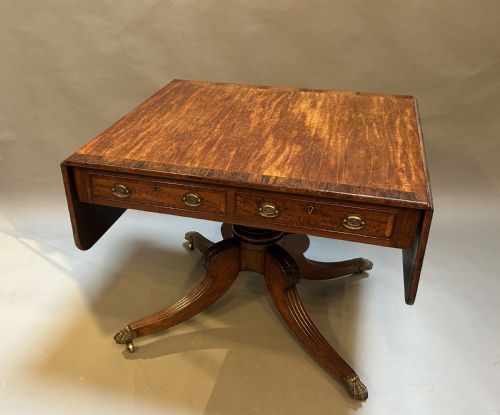
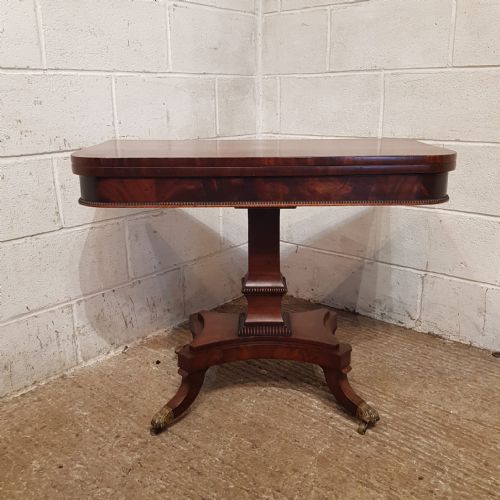
A brass footed side table encompasses compact timber surfaces raised on legs finished with cast brass mounts, castors, or sabots. These pieces appear across Georgian, Regency, and Victorian periods as console, card, sofa, and occasional tables designed for domestic utility.
The versions most frequently met on this page belong to the Regency period, combining rich timbers with characteristic metal detailing. They range from folding card tables to pedestal sofa tables and low-slung occasional surfaces.
Makers integrated brass hardware not merely for decoration but to protect vulnerable timber ends from floor moisture and daily movement. Their proportions suited them to perches beside seating or against drawing-room walls.
How they were made
Cabinetmakers utilised dense tropical and native hardwoods such as mahogany and rosewood as the primary structural bodies, often enhancing surfaces with contrasting veneers like satinwood, ebony, or burr oak.
Metal components were cast in brass or ormolu, then chased and polished before being fixed to the feet or incorporated into tabletops as stringing and inlay. Timber panels relied on traditional joinery, including dovetails for drawers and solid turned pedestals.
Specialised techniques like tilt-top mechanisms, telescopic actions, and drop flaps required precise engineering to ensure smooth daily operation alongside decorative stability.
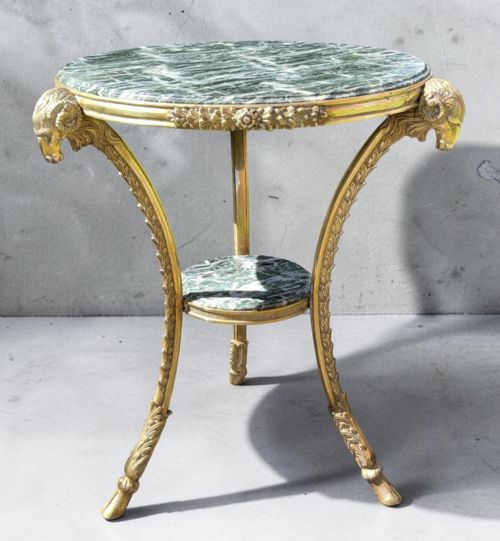
Listings feature woods spanning mahogany, rosewood, oak, cherrywood, and walnut, paired with marble and cast brass.
What varies in quality
The refinement of the timber figure and the crispness of the brass casting dictate the hierarchy of these pieces. Higher-grade examples display finely figured mahogany or rosewood matched with hand-chased mounts rather than plain stamped sheet metal.
Construction methods reveal the hand of the maker through tight dovetailing, smooth sliding drawer actions, and seamlessly integrated brass inlay that sits flush with the surrounding wood grain.
Proportion and architectural balance separate ambitious library or drawing-room pieces from simpler provincial work, where secondary woods and heavier framing alter the visual lightness.
John McLean·Muirhead Moffat And Co
The Brass Footed Side Table Glossary
- Ormolu
- Gilded bronze applied to furniture mounts and decorative fittings. This technique produced rich golden highlights that contrasted sharply against dark rosewood and mahogany.
- Lowboy
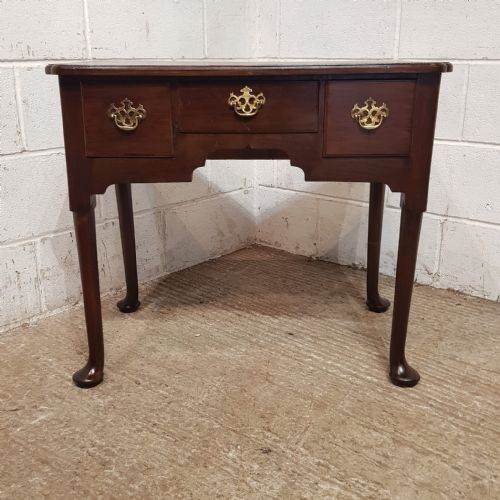
- A small utility table featuring one or more drawers and long slender legs. Originating in the early periods, these served diverse domestic functions.
- Sofa Table
- An elongated rectangular table designed to stand immediately in front of a sofa. They typically incorporate drop leaves and double pedestals or trestle supports.
- Sabot
- A protective metal sleeve fitted to the foot of a furniture leg. They frequently appeared in brass to guard against wear and floor dampness.
- Console Table
- A wall-mounted or freestanding table designed to stand flat against a room divider. Many utilised front legs while relying on wall brackets for total stability.
Brass Footed Side Table: Frequently Asked Questions
Where should I place a side table?
These tables find natural placement beside sofas, beneath windows, or against hallway walls where surface space is required without heavy bulk.
Their compact dimensions allow them to function effectively as lamp tables or display surfaces in smaller reception rooms.
How do I identify a Regency table?
Regency pieces often display classical architectural motifs, bold rosewood or mahogany grains, and precise brass inlay or mounts. Look for reeded legs, sabots, and mechanical ingenuity such as revolving or tilt tops.
Cabinetmakers of this era favored symmetry, dark exotic timbers, and Greco-Roman styling cues drawn from French Empire design.
What is the difference between a sofa table and an occasional table?
Sofa tables are traditionally longer and narrower, engineered with drop leaves to sit comfortably against the rear of a sofa or function independently as a writing surface. They frequently feature double pedestals or trestle ends.
Occasional tables are generally smaller, lighter, and more versatile, built with single central pedestals or four legs to move easily around a room as needed.
How do I care for antique timber and brass?
Maintain timber surfaces by applying quality wax sparingly and buffing with a soft cloth to preserve the natural grain depth. Avoid placement near direct heat sources that might dry out old veneers.
Clean brass components gently with a dry microfiber cloth, avoiding aggressive commercial polishes that can strip original patination from the metal.