
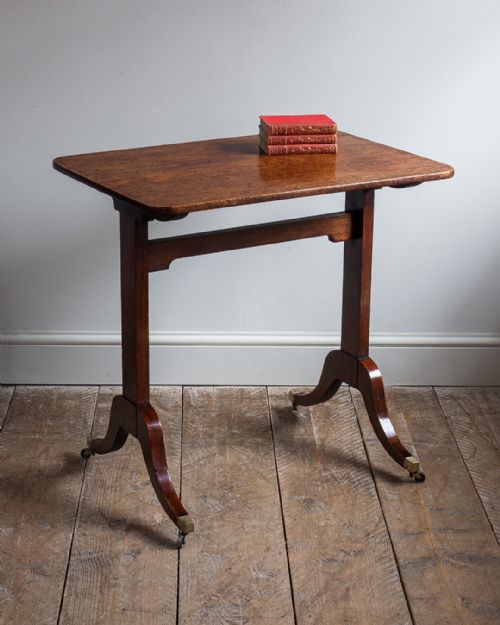


Splayed Leg Occasional Table
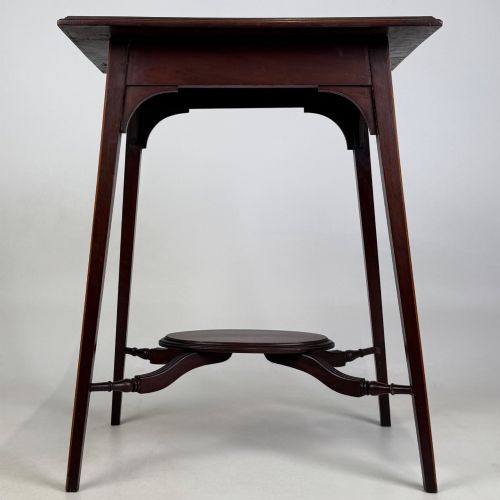
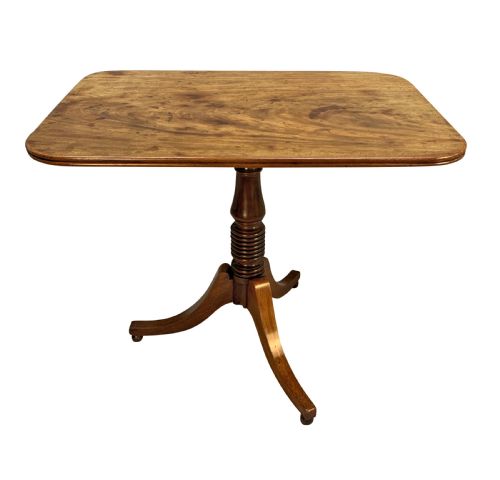
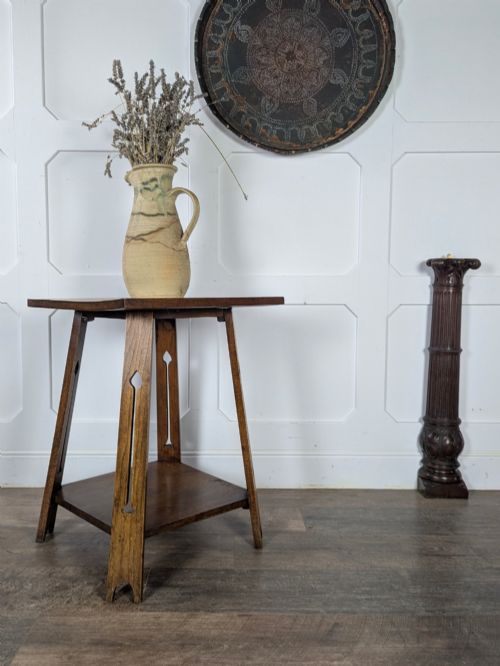
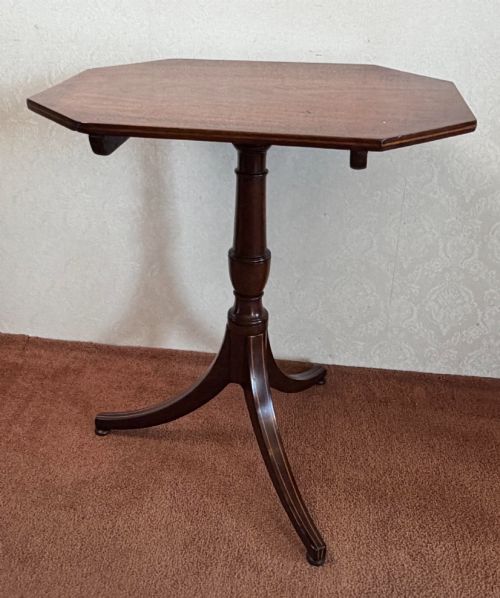
A splayed leg occasional table brings lightweight mobility and refined period proportion to a corner or beside a sofa.
Splayed Leg Occasional Table
A splayed leg occasional table serves as a flexible surface designed for portability and daily use across several centuries of British domestic life. You encounter these primarily in mahogany, rosewood, and birch, taking forms such as tripod tables, Pembroke tables, and sofa tables.
The pieces on this page span the Georgian, Regency, Victorian, and Edwardian periods, including later revivals like the Sheraton and Regency styles. Buyers searching for a splayed leg occasional table will find tripod bases with outward-slanting supports that offer both stability and a lighter visual footprint than standard four-legged designs.
Materials and construction methods
Cabinetmakers built these tables predominantly using solid timbers and veneers of mahogany, rosewood, and oak, frequently incorporating contrasting elements like boxwood and satinwood inlay. Turned pedestals and outward-angled legs distribute weight evenly while maintaining slender profiles.
Details such as brass casters, drop leaves, and tilting mechanisms appear across Georgian and Regency examples, demonstrating functional versatility. Joinery relies on traditional techniques suited to pivoting tops and folding leaves that endure regular handling.
Splayed Leg Occasional Table Retail Price Guide 2026
Typical asking prices for splayed leg occasional table among the pieces listed under this phrase on Sellingantiques today, from the lower quarter to the upper quarter. They describe what is for sale here now, not the wider market.
Some tables include adjustable reading stands for hands-free study.
Assessing craftsmanship and finish
Quality in these tables rests on the crispness of the timber selection, such as figured mahogany or burr yew, and the precision of any inlay work. Superior examples exhibit balanced proportions between the top and the splayed base, ensuring stability without heavy bracing.
The refinement of turnings on pedestals and the integration of brass hardware distinguish finer workshops from standard production pieces. Original surfaces and patination elevate an example above later restorations or replacement components.
Gillington of Dublin·Gillows
The Splayed Leg Occasional Table Glossary
- Tripod table
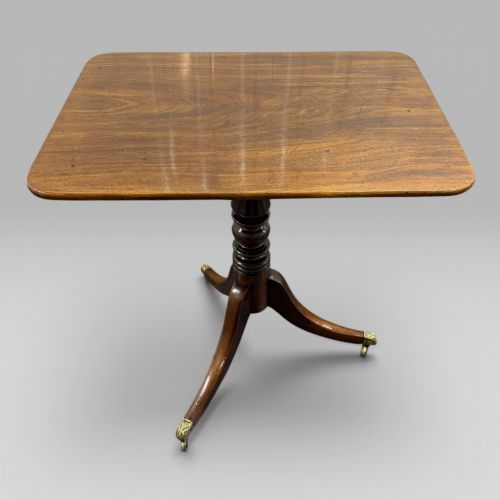
- A small standalone table supported by a central pillar above three splayed legs. These pieces often feature tilt-top mechanisms for storage.
- Pembroke table
- A rectangular drop-leaf table designed with hinged flaps on two opposing sides. They frequently incorporate a single drawer and slender legs.
- Sofa table
- A rectangular table traditionally placed against the back of a sofa, featuring drop leaves and often twin pedestals or splayed trestle supports.
- Inlay
- A decorative technique where contrasting woods or metals like brass are inserted into recesses cut into the surface timber.
- Tilt-top
- A hinged tabletop mechanism that allows the surface to pivot vertically when not in use, saving floor space.
Splayed Leg Occasional Table: Frequently Asked Questions
What is a splayed leg occasional table used for?
These tables provide a convenient surface for lamps, books, or drinks beside seating areas within a room. Their compact size allows them to move easily where needed.
Historically, specific variants accommodated writing, games, or needlework, adapting to the daily routines of Georgian and Victorian households.
How do I identify a Regency period table?
Regency pieces often feature dark timbers like mahogany or rosewood, frequently accented with brass inlay or mounted on brass casters. The lines lean toward classical revival forms.
Splayed legs on these tables commonly attach to a central pillar or support dual pedestals with distinct geometric clarity.
Are tilt-top tables stable?
Tripod bases with splayed legs provide a wide footprint that balances the weight of the central column effectively. The catch mechanism secures the top horizontally during use.
While designed for convenience, the stability depends on the snugness of the original block and catch fitting beneath the top.