


Brass Fitted Campaign Coffer
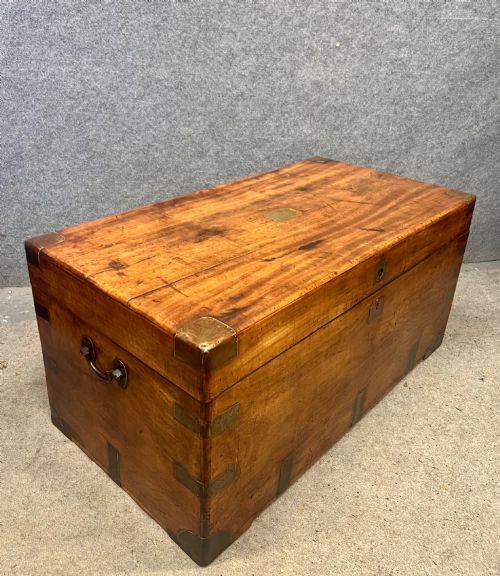
A brass fitted campaign coffer is a robust travelling chest designed for officers on the move, combining utility with fine timber and metalwork.
Brass Fitted Campaign Coffer
When you search for a brass fitted campaign coffer, you encounter sturdy storage trunks and chests built for military officers and merchants who required portable security for their belongings during transit. These pieces span from the Georgian period through the Victorian era and into the early twentieth century, reflecting the global movement of British and colonial forces.
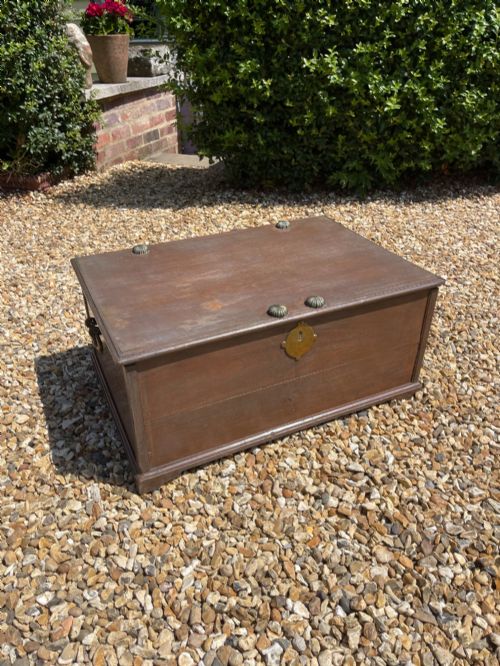
You are most likely to meet camphor wood and teak trunks on this page, often constructed in two parts for easier carriage on ships and across land. The forms range from large blanket boxes and steamer trunks down to smaller deed boxes, presentation insignia cases, and miniature travel chests.
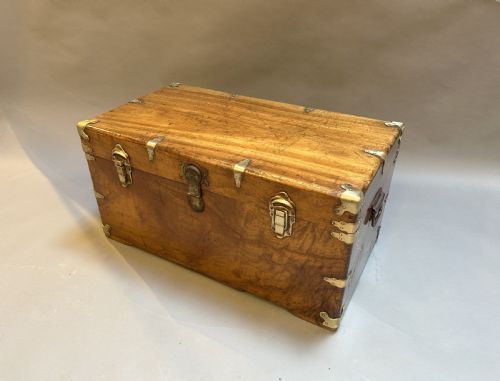
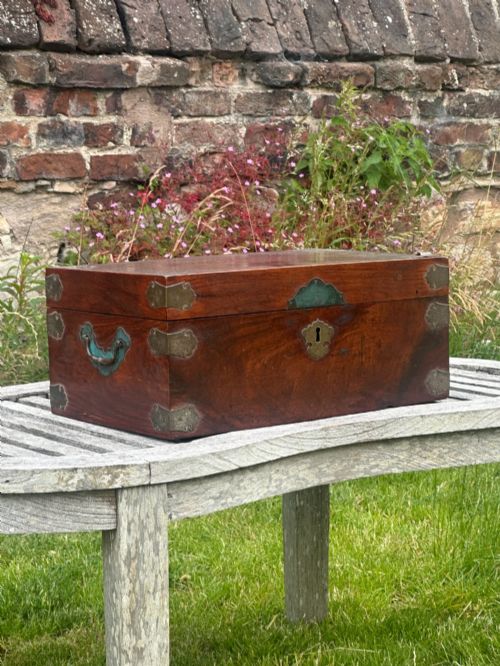
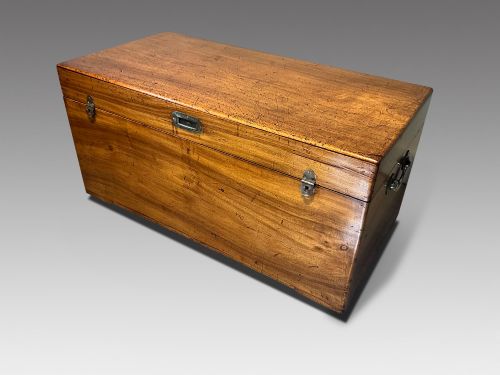
The style typically incorporates flush brass carrying handles, corner braces, and bound edges designed to withstand the knocks of long journeys without snagging on rigging or packing ropes. Interiors occasionally reveal fitted compartments, organising trays, and secret drawers tailored to hold stationery, silver, or personal valuables.
How They Were Made
Cabinetmakers constructed these coffers using durable timbers selected for resistance to humidity and insect damage, notably camphor wood, teak, padouk, oak, and rosewood. Solid planks were jointed robustly to endure the stresses of colonial travel.
Heavy brass binding, corner brackets, straps, and flush-fitting drop handles were screwed or riveted to the exterior framework to reinforce the joints and protect the wooden edges from heavy impacts. Iron fittings also appear on specific silver and travel chests.
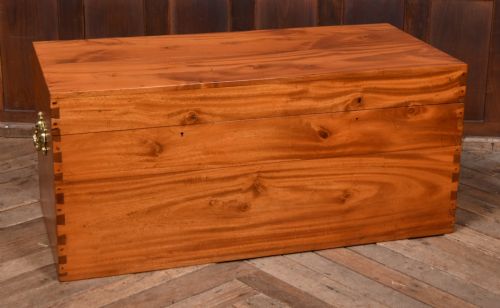
Surfaces were frequently finished to highlight the natural grain of the timber, whether camphor, teak, or mahogany, rather than painted over, ensuring both practical resilience and a respectable appearance in officers' quarters.
Opening an antique camphor wood trunk delivers an immediate wave of vintage fragrance that has lingered inside the timber for over a century.
What Varies in Quality
The distinction between standard transport luggage and exceptional pieces lies in the crispness of the brasswork, the integration of flush fittings, and the selection of deeply figured timber such as well-grained camphorwood or dense padouk.
Finer examples retain original fitted interior trays, working locks with keys, and secret compartments, whereas utilitarian pieces sacrificed internal refinement for pure structural strength during military service.
The Brass Fitted Campaign Coffer Glossary
- Campaign coffer
- A portable storage chest fitted with metal hardware for military or travel use. These boxes accompanied officers on posting.
- Camphor wood
- An aromatic timber frequently utilised for campaign trunks because its natural scent repelled insects. It provides a distinct fragrance inside the chest.
- Flush handle
- A recessed metal handle set level with the wood surface so it does not catch on other cargo. This allows trunks to pack tightly together.
- Padouk
- A heavy, dense exotic hardwood valued for its rich reddish-brown colour and durability. It was often employed in Anglo-Indian furniture.
- Deed box
- A smaller secure container designed for storing important documents, often lined with velvet or fitted with internal dividers.
Brass Fitted Campaign Coffer: Frequently Asked Questions
What is a campaign coffer?
A campaign coffer is a portable chest built for military officers or travellers to transport uniforms, papers, and personal effects during relocations.
These pieces use durable timbers and protective metal corners to survive harsh journeys by sea and land.
How were these chests used?
They served as personal luggage, desks, and secure storage in temporary quarters, tents, or cabins.
Many featured divided interiors to keep valuables, silverware, or documents organised while on the move.
Why use camphor wood?
Camphor wood was chosen because its strong natural aroma repelled moths and other insects, protecting stored woolens and uniforms.
Its stability in fluctuating climates also made it ideal for colonial service.
How do I date a trunk?
Dating relies on timber types, construction methods, and the style of the brass hardware, such as recessed handles and corner braces.
Georgian and Victorian examples often display distinct hand-cut dovetailing and specific locking mechanisms.