
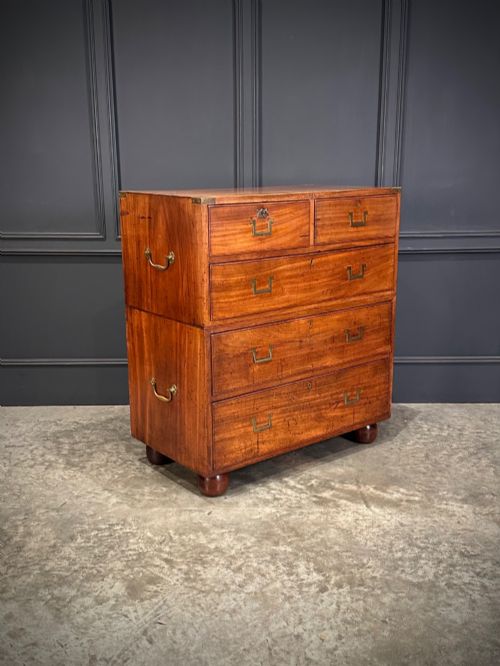
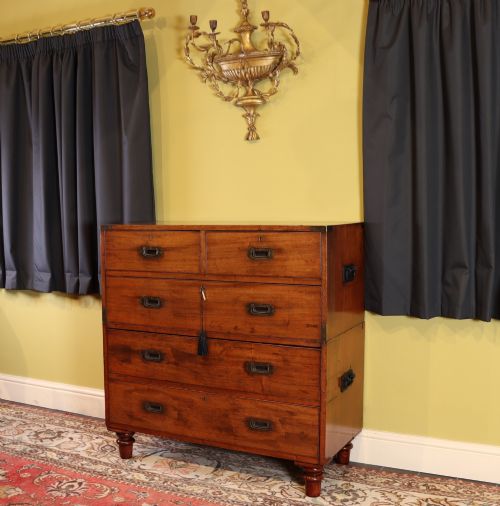
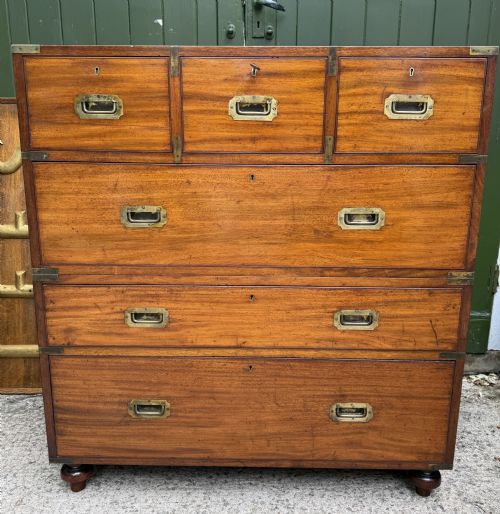
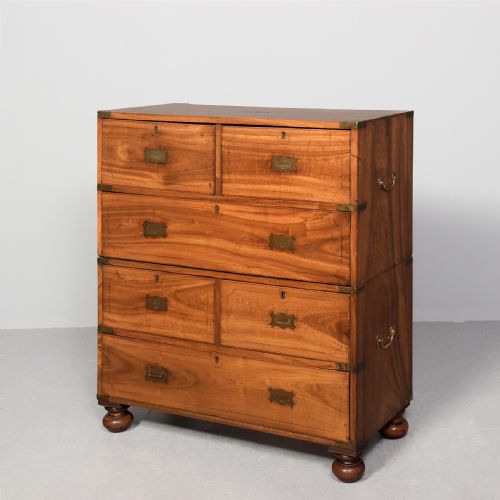


Flush Brass Handle Drawers
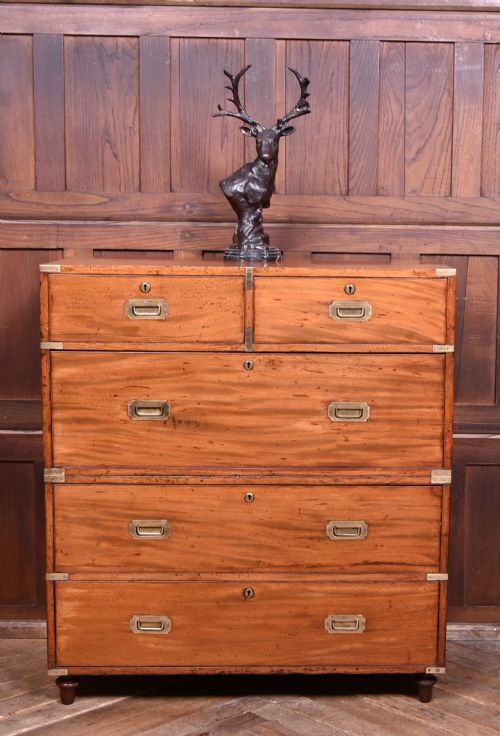
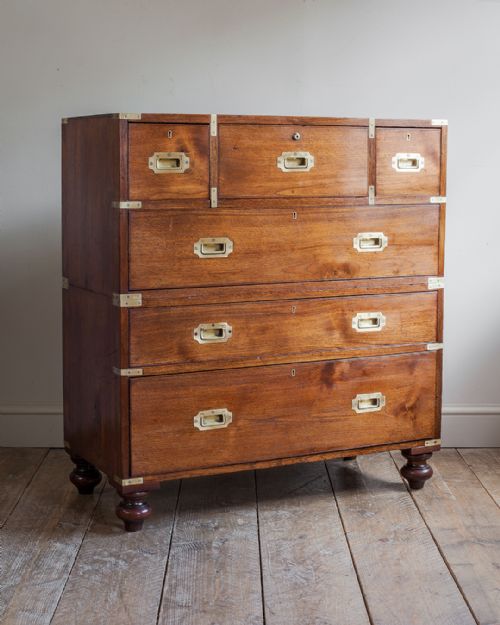
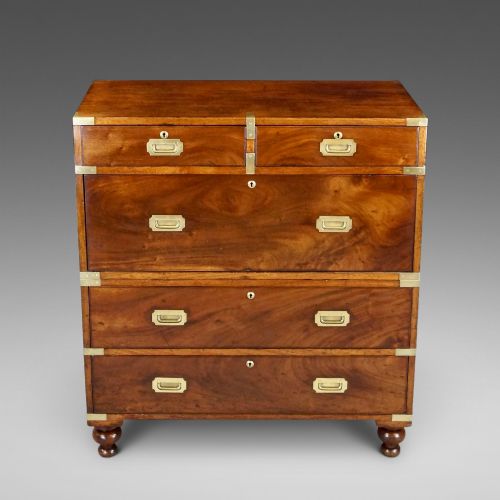
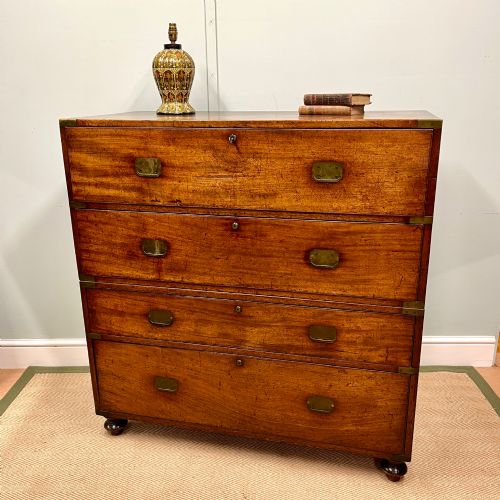
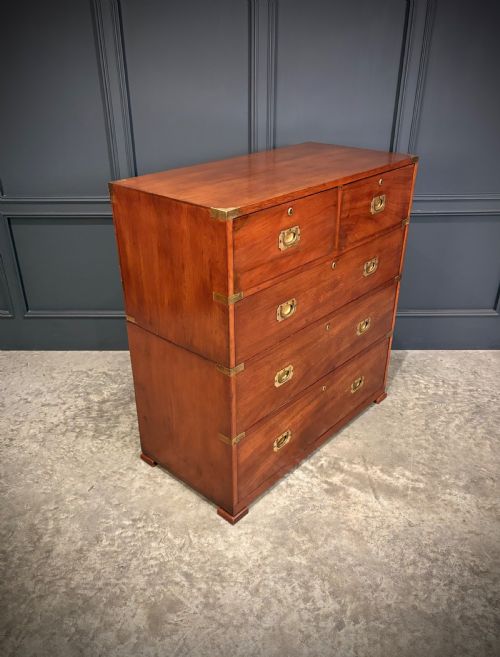
Flush brass handle drawers appear primarily as campaign chests of drawers designed for travel and military life.
Flush Brass Handle Drawers
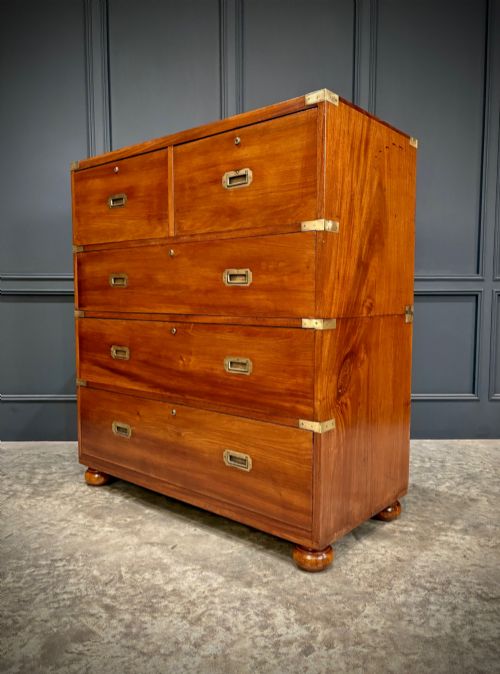
When you search for flush brass handle drawers, you encounter utilitarian furniture built for officers on the move during the nineteenth century. These pieces are predominantly two-part chests of drawers constructed so that each section lifts independently for transport.
You will most commonly meet mahogany, teak, and camphor wood chests featuring recessed brass handles designed to avoid snagging during travel. Many include secretaire drawers fitted with writing surfaces and small compartments for correspondence.
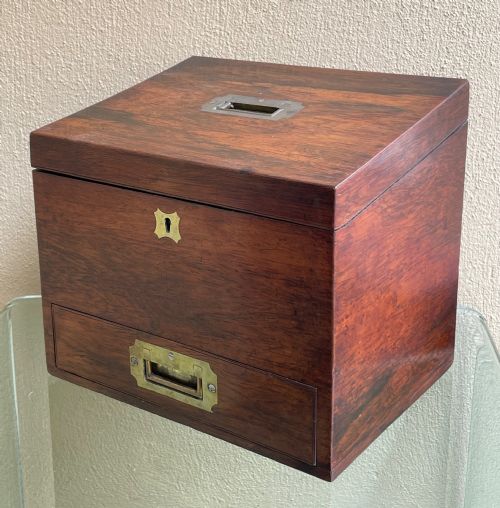
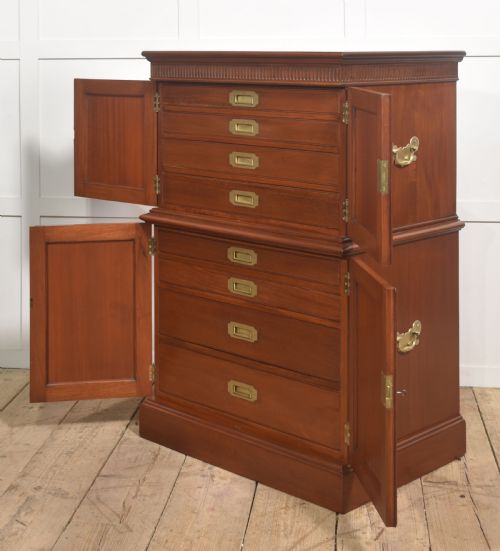
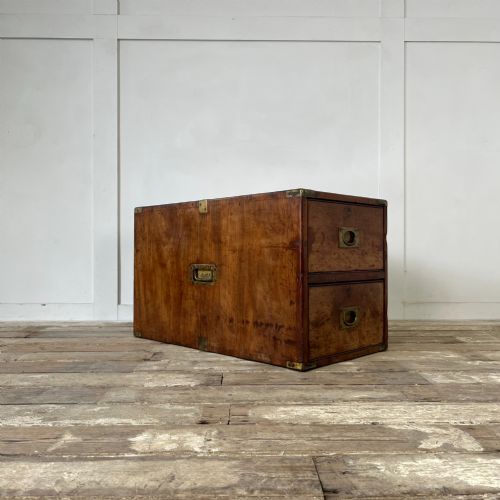
The style spans standard chest of drawers formats down to smaller desktop storage, correspondence boxes, and low lockers. The overarching design prioritises durability, portability, and clean lines dictated by military utility.
Materials and construction
Makers utilised dense timbers such as mahogany, teak, camphor wood, and padouk that could withstand tropical climates and rough handling during colonial transport. These hardwoods are frequently bound in brass corners and straps to reinforce the structural edges against impact.
Handles, escutcheons, and strapping are countersunk flush into the timber faces so that projections do not catch on canvas transport bags or ship holds. The two-part modular construction relies on tight corner brackets and securing bolts rather than permanent fixtures.
Camphor wood chests retain their distinct herbal aroma for centuries, effectively turning an antique drawer set into a natural wardrobe freshener.
What separates the finest examples
Quality rests in the precision of the brass work and the integration of handles that sit perfectly flush within their housings without wobble or play. Finer examples display meticulous dovetail joinery in secondary woods and well-fitted internal writing drawers that operate smoothly.
The choice of primary timber also dictates standing, with figured mahogany, dense burr walnut, and fragrant solid camphor wood representing the more considered selections. Maker signatures stamped into the brass drawer pulls elevate an individual piece further.
S. W. Silver And Co·Ross And Co·Army And Navy
The Flush Brass Handle Drawers Glossary
- Campaign chest
- A modular chest of drawers built in two separate stacking sections for ease of transport during military campaigns. These pieces typically feature recessed brass handles and corner brackets.
- Secretaire chest
- A chest of drawers where the top drawer pulls down or opens forward to reveal a fitted writing desk with pigeonholes and small drawers. This combination saved space in cramped officers quarters.
- Recessed handle
- A handle set into a cavity carved into the drawer face so that the exterior remains entirely flat. This prevents snagging during transit.
- Two-part chest
- Furniture constructed as separate upper and lower carcases that lock together for stability. This design halved the weight and bulk for baggage trains.
- Chinese Export
- Goods manufactured in China specifically for Western markets during the nineteenth century. These pieces frequently utilised local camphor wood.
Flush Brass Handle Drawers: Frequently Asked Questions
Why do these chests separate into two parts?
Modular construction allowed officers to pack furniture easily onto pack animals, wagons, or ships during nineteenth-century campaigns. Each half remained manageable for a single person to lift.
Separating the carcase also protected the timber joints from twisting on uneven ground and made shifting camp significantly simpler.
What are flush brass handles used for?
Recessed handles prevent protruding hardware from catching on canvas covers, ropes, or narrow doorways during transport. They keep the perimeter of the chest completely flat.
This design protects both the handle mechanisms and the surrounding timber from impact damage while in transit.
How do I identify a secretaire chest?
A secretaire chest incorporates a false drawer front that drops down to form a writing surface. Inside, you find small drawers and pigeonholes for letters and ink.
When closed, the exterior looks identical to a standard chest of drawers, maintaining uniform lines.
Which woods were commonly used?
Carcases were built from durable tropical hardwoods including mahogany, teak, camphor wood, and padouk. These materials resisted humidity and warping.
Camphor wood also offered the practical benefit of repelling insects from stored uniforms and papers.
Are these pieces suitable for modern homes?
Their compact proportions and flat sides allow them to sit flush against walls in bedrooms or studies. The modular nature also makes stairwells and tight hallways straightforward to navigate.
Internal drawer space provides practical storage for contemporary clothing or paperwork while retaining nineteenth-century character.