
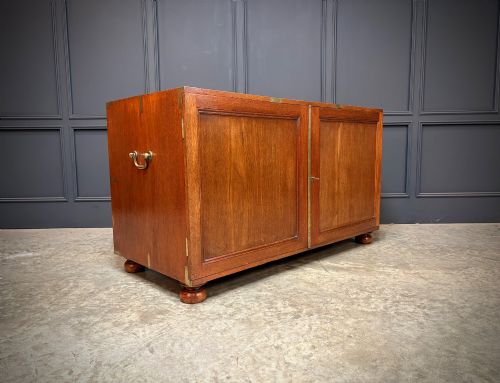

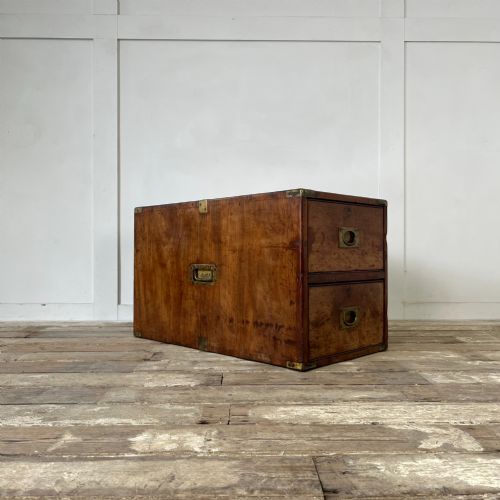


Victorian Teak Campaign Chest
When you examine a victorian teak campaign chest, you hold a sturdy piece of travel furniture designed for colonial officers and military life.
Victorian Teak Campaign Chest
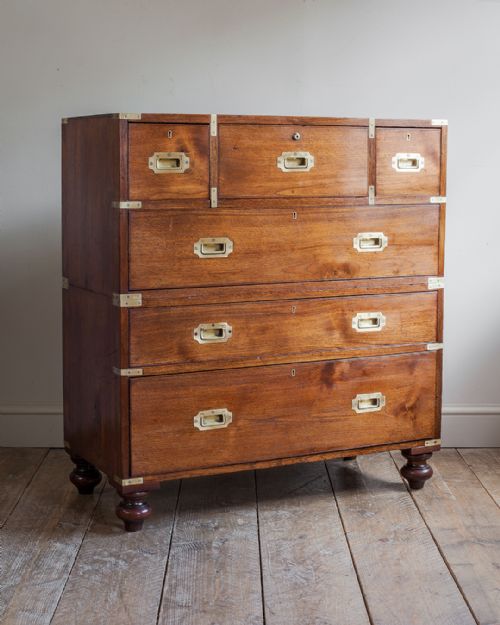
A victorian teak campaign chest is a utilitarian storage item built to dismantle into two or more sections for easy transport on military expeditions. The version most commonly found on this page is the classic two-part chest of drawers, fitted with recessed brass handles and corner brackets to prevent damage during transit.
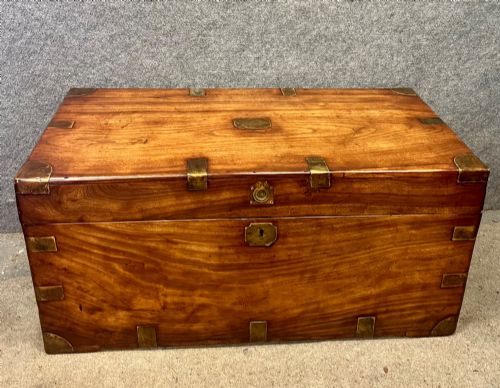
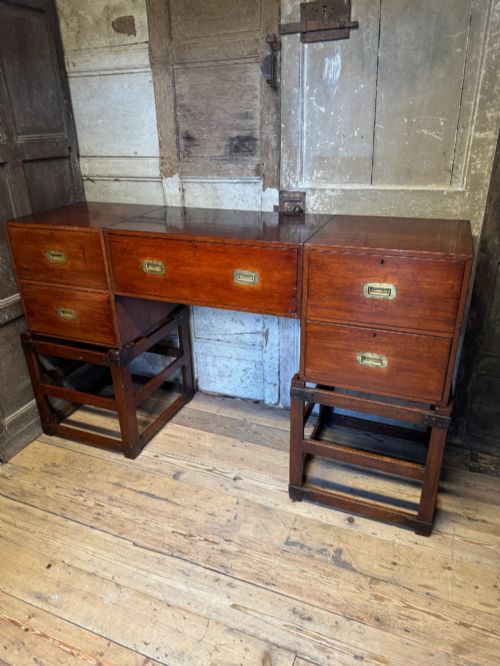
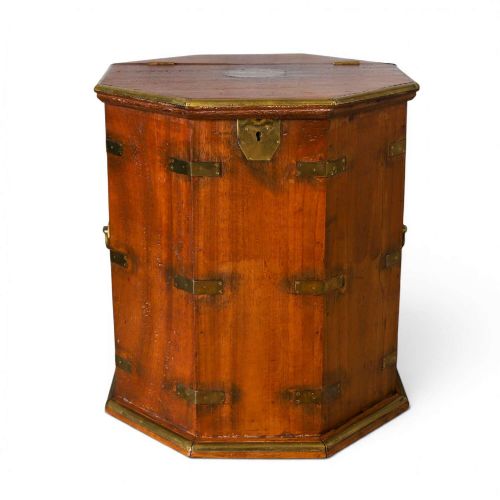
The evidence shows various forms associated with the search phrase, including secretaire bureaus, trunks, side cabinets, and miniature desktop storage boxes. These items frequently originate from British military service or colonial contexts, encompassing Anglo-Indian and colonial workshop styles alongside standard English military production.
Materials and Construction
Makers utilised dense tropical timbers, primarily teak supplemented by occasional pieces of padouk and mahogany, to withstand shifting climates and rough handling. These woods were joined to robust carcass frames designed to endure moisture and frequent dismantling without losing structural integrity.
Heavy brass mounting, including corner straps, flush-fitting drop handles, and escutcheons, reinforced every vulnerable edge and joint. Iron and bone elements appeared selectively for internal mechanisms, locking systems, and structural pins that secured the stacked sections together.
Some miniature campaign trunks served as desktop storage or children's travelling deed boxes, built with the exact brass mounts of full-size furniture.
Craftsmanship and Proportion
Quality separates along the precision of the joinery and the integration of the brass hardware into the timber surfaces. Superior examples feature flush-set mounts, well-fitted dust boards between drawer tiers, and finely cut dovetail joints that remain flush even after decades of movement.
The presence of fitted interior compartments, such as a secretaire drawer with pigeonholes and small writing surfaces, distinguishes more elaborate officer pieces from standard storage trunks. The crispness of the turned feet and the weight of the timber further mark the distinction between utilitarian supply items and bespoke officer commissions.
Army And Navy
The Victorian Teak Campaign Chest Glossary
- Secretaire
- A desk drawer fitted with a drop-front writing surface and internal pigeonholes. This compartment allows an officer to write dispatches while on the move.
- Recessed brass
- Hardware let flush into the timber surface so that handles and plates do not project beyond the plane of the wood.
- Two-part chest
- A chest constructed as separate upper and lower carcases that lock together with hidden brackets or side pins.
- Anglo-Indian
- A style designation for furniture made in India by local craftsmen using British colonial forms and native hardwoods.
Victorian Teak Campaign Chest: Frequently Asked Questions
Why are these chests made in two sections?
The two-part construction allowed officers and regiments to pack, load, and transport heavy belongings on mules, carts, and ships without damaging the furniture.
Each section was light enough for a single person to lift once separated from its partner.
What is a secretaire campaign chest?
A secretaire campaign chest includes a specialised top drawer that folds down to reveal a writing surface, small drawers, and letter compartments.
Officers used these drop-front compartments for paperwork and correspondence while stationed away from permanent desks.
How do I identify a genuine period piece?
Authentic pieces display period construction methods, such as hand-cut dovetails, solid teak secondary timbers, and heavy brass hardware fixed with slotted screws.
Look for the characteristic socket holes and brackets used to secure the stacked sections together during transit.
Where were these chests manufactured?
These chests were produced by military outfitters in Britain as well as by workshops in colonial regions such as India and Burma.
Local craftsmen in those regions adapted traditional British cabinet forms to native teak and padouk stocks.